
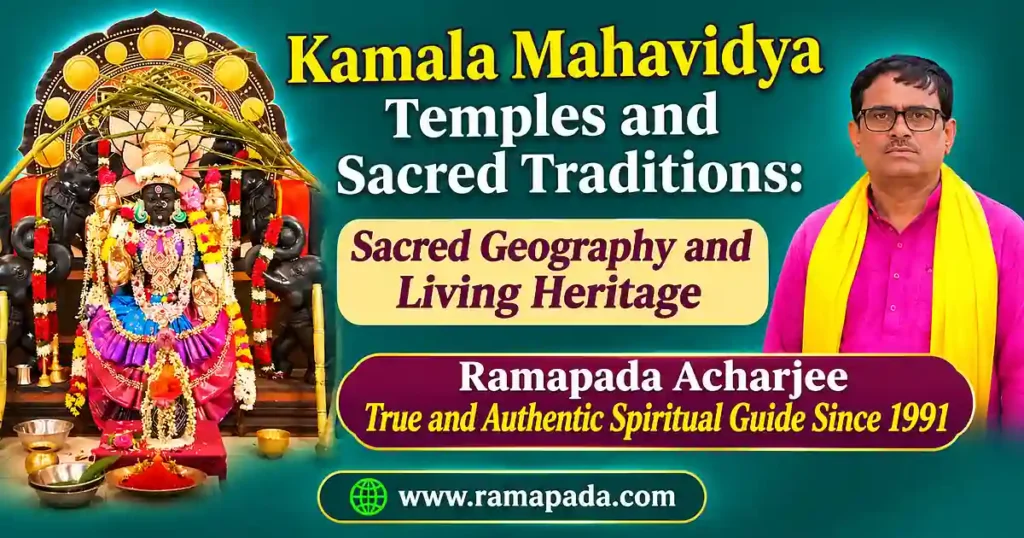
Sacred Geography and Living Heritage
Sacred shrines are never just brick-and-mortar structures where devotees gather to offer prayers. Instead, they preserve collective memories, ancient customs, artistic lineages, and profound ways of understanding the Divine across generations. Within India’s vast Shakta heritage, certain pilgrimage sites carry spiritual meanings that reach far beyond their visible stone architecture.
Exploring Kamala Mahavidya temples and sacred traditions offers a deeply rewarding journey for any serious student of Indian spirituality. As the tenth goddess among the Dasha Mahavidyas, Kamala shares an intimate bond with Sri Lakshmi. Yet, her specific placement within Shakta Tantra carries a distinct theological context that deserves careful examination.
When we trace her sacred geography across India, one essential question naturally emerges. Where can we identify a historically established centre of Kamala worship, and where are we actually witnessing a broader Sri Lakshmi or Gaja-Lakshmi tradition? Making this distinction matters greatly. A shrine may honour Mahalakshmi with deep devotion without maintaining a separate ritual lineage dedicated exclusively to Kamala as the tenth Mahavidya.
My personal engagement with these questions grows out of decades spent studying Vedic astrology, Shakta philosophy, and the spiritual heritage passed down through my family. Since beginning my part-time practice in 1991 and stepping into full-time consultation in 1996, I have observed one consistent truth. Paying honest attention to historical evidence never weakens faith; rather, it brings clarity and maturity to our spiritual understanding. Readers who wish to explore her foundational identity first may begin with Kamala Mahavidya: The Tenth Mahavidya and the True Path to Abundance.
কমলা মহাবিদ্যার মন্দির ও উপাসনার ঐতিহ্য নিয়ে আলোচনা করতে গেলে প্রথমেই একটি বিষয় পরিষ্কার করা প্রয়োজন। কমলা মহাবিদ্যা এবং প্রচলিত মহালক্ষ্মী উপাসনার মধ্যে গভীর সম্পর্ক থাকলেও সব লক্ষ্মীমন্দিরকে সরাসরি কমলা মহাবিদ্যার স্বতন্ত্র মন্দির হিসেবে চিহ্নিত করা যায় না।
ভারতের শাক্ত ঐতিহ্যে কিছু নির্দিষ্ট তীর্থক্ষেত্রে দশমহাবিদ্যার সম্মিলিত উপাসনা লক্ষ্য করা যায়। অন্যদিকে, বিভিন্ন অঞ্চলে লক্ষ্মী ও গজলক্ষ্মীর মূর্তি, মন্দিরশিল্প এবং পারিবারিক ধর্মাচরণের মাধ্যমে অনুরূপ প্রতীক সংরক্ষিত হয়েছে। এই পার্থক্য অনুধাবন করা হলে ধর্মীয় ঐতিহ্য সম্পর্কে ধারণা আরও স্পষ্ট হয়ে ওঠে।
Understanding the Sacred Geography of Kamala Mahavidya
Sacred geography refers to the living relationship between spiritual beliefs and physical landscapes. Over centuries, a hill, river confluence, shrine, or pilgrimage route acquires sacred significance through scriptural references, regional oral traditions, and unbroken generations of worship.
However, a revered location rarely holds just one universally uniform meaning. For instance, one group of practitioners may approach a shrine through esoteric Tantric rituals. Meanwhile, local householders might connect with the exact same site through devotional stories, seasonal festivals, and ancestral family customs. Because of these overlapping layers, Kamala’s religious geography must be examined through multiple forms of evidence.
Three Ways to Understand Kamala’s Sacred Presence
- Established Shakta Worship: Certain recognized Shakta centres explicitly integrate Kamala into their Dasha Mahavidya worship. These locations provide the clearest liturgical link to her identity as the tenth Mahavidya.
- Related Lakshmi Traditions: Shrines and rituals dedicated to Sri Lakshmi preserve vital spiritual concepts that overlap closely with Kamala’s symbolism. Nevertheless, historians and seekers should not automatically label them as independent Kamala shrines.
- Historical Art and Architecture: Ancient sculptures, manuscript paintings, and temple carvings reveal how the goddess’s visual vocabulary evolved over time. Such artistic records offer invaluable historical insight, even where no standalone Kamala shrine exists today.
Following this three-part framework prevents unnecessary confusion between broad devotional association and verifiable temple history.
পবিত্র তীর্থক্ষেত্রের গুরুত্ব কেবল ভৌগোলিক অবস্থানের মধ্যে সীমাবদ্ধ থাকে না। ধর্মীয় বিশ্বাস, স্থানীয় আচার এবং ঐতিহাসিক স্মৃতির সঙ্গে তার গভীর সম্পর্ক গড়ে ওঠে।
কমলা মহাবিদ্যার ক্ষেত্রে প্রথমে দেখা প্রয়োজন কোথায় তাঁর স্বতন্ত্র শাক্ত পরিচয় স্পষ্টভাবে স্বীকৃত হয়েছে। এরপর মহালক্ষ্মী ও গজলক্ষ্মীর সংশ্লিষ্ট উপাসনার ইতিহাস আলোচনা করা যেতে পারে।
সবশেষে মূর্তি, চিত্রকলা ও স্থাপত্যের নিদর্শন থেকে দেবীর প্রতীকের বিবর্তন বোঝার চেষ্টা করা উচিত।
Kamakhya Temple: A Major Sacred Centre of Kamala Mahavidya
Among India’s foremost Shakta pilgrimage centres, Kamakhya holds a uniquely vital position in the living study of the Dasha Mahavidyas. Rising atop Nilachal Hill in Guwahati, Assam, this sacred complex preserves an intricate network of shrines dedicated to diverse manifestations of the Divine Mother. Its spiritual reach extends well beyond the main sanctum, weaving together Shakta theology, Tantric sadhana, and centuries of continuous pilgrimage.
According to the official historical account published by the Maa Kamakhya Devalaya regarding Nilachal Hill, both Kamala and Matangi are worshipped within the main temple’s sanctum, close to the sacred Yoni Mudra Peeth. In my view, this record is especially significant because it firmly anchors Kamala’s presence inside an established, living Shakta peetha.
Does Kamala Have a Separate Temple at Kamakhya?
Here, an honest clarification becomes essential for visiting devotees. While Kamala is undeniably worshipped as one of the ten Mahavidyas within the Kamakhya complex, the Devalaya’s own account situates her inside the main sanctum rather than in a standalone structure with a separate public entrance.
Consequently, claiming that every pilgrim can walk into an independent Kamala Mahavidya shrine with separate visiting hours would be inaccurate. The scriptural and institutional connection is well documented, yet actual physical access, ritual procedures, and darshan arrangements always remain subject to the temple’s established rules.
কামাখ্যা শক্তিপীঠের সঙ্গে দশমহাবিদ্যার সম্পর্ক অত্যন্ত তাৎপর্যপূর্ণ। নীলাচল পাহাড়ে বিভিন্ন মহাবিদ্যার উপাসনার প্রাচীন ঐতিহ্য সংরক্ষিত রয়েছে।
বিশেষভাবে উল্লেখযোগ্য বিষয় হলো, কমলা ও মাতঙ্গী মহাবিদ্যার অবস্থান মূল কামাখ্যা মন্দিরের গর্ভগৃহের সঙ্গে সম্পর্কিত। ফলে কমলার জন্য সেখানে আলাদা দর্শনযোগ্য মন্দির রয়েছে—এমন বক্তব্য সতর্কতার সঙ্গে যাচাই করা প্রয়োজন।
কোনো তীর্থক্ষেত্রের ধর্মীয় মাহাত্ম্য বোঝার সময় তার প্রকৃত উপাসনাব্যবস্থা এবং দর্শনার্থীদের প্রবেশসংক্রান্ত নিয়ম পৃথকভাবে জেনে নেওয়া উচিত।
Kamala and the Ten Mahavidyas on Nilachal Hill
Within the Dasha Mahavidya framework, ten distinct expressions of the Divine Mother come together to represent the totality of cosmic experience. Each deity embodies a unique spiritual truth, even though their internal relationships are interpreted differently across various Tantric texts.
Kamala’s placement at the culmination of this sequence offers a striking philosophical contrast. Several Mahavidyas display fierce, awe-inspiring forms that compel seekers to confront mortality, fear, and the dissolution of ego. By comparison, Kamala radiates serene beauty, nourishment, auspicious grace, and material abundance. Rather than viewing these forms as rival deities, Shakta philosophy teaches us to recognize them as complementary facets of a single Supreme Reality.
The Importance of Worshipping the Divine Mother in Many Forms
Engaging with the full Mahavidya spectrum allows human beings to reflect honestly on every dimension of life. Daily existence inevitably brings cycles of loss and renewal, uncertainty and stability, austere discipline and rightful enjoyment. Sacred symbolism bridges these seemingly opposite experiences within one unified spiritual worldview.
Kamala’s position as the tenth Mahavidya reminds us that ethical prosperity and earthly sustenance hold a legitimate place inside spiritual life. Seekers looking for deeper textual context can read my detailed study on Kamala Mahavidya in Shakta and Tantric Scriptures.
দশমহাবিদ্যার প্রতিটি দেবীর রূপ ও আধ্যাত্মিক তাৎপর্য স্বতন্ত্র। কোথাও কাল ও পরিবর্তনের প্রতীক, কোথাও জ্ঞান ও তপস্যা, আবার কোথাও পুষ্টি ও সমৃদ্ধির ভাব প্রকাশিত হয়েছে।
কমলা মহাবিদ্যা এই বৃহত্তর ধারার একটি অপরিহার্য অংশ। তাঁর মাধ্যমে শাক্ত দর্শনে মঙ্গল, জীবনধারণ এবং ঐশ্বর্যের ধারণা বিশেষ মর্যাদা লাভ করেছে।
বিভিন্ন মহাবিদ্যার রূপকে পৃথকভাবে বোঝার পাশাপাশি তাঁদের সম্মিলিত দর্শনও গভীরভাবে অধ্যয়ন করা জরুরি।
Are Lakshmi Temples Also Kamala Mahavidya Temples?
Few questions arise more frequently in my consultations than whether every Lakshmi temple can also be considered a Kamala Mahavidya shrine. Both Kamala and Sri Lakshmi share unmistakable theological and iconographic roots, including their association with the blooming lotus, fertility, auspiciousness, and prosperity.
Despite these close parallels, sharing similar visual symbols does not automatically mean two shrines follow identical ritual traditions. A major Lakshmi temple in South or Western India generally operates under Vaishnava Agama traditions, regional devotional customs, or its own distinct historical lineage. Kamala Mahavidya, on the other hand, belongs specifically to the ten-fold wisdom goddess framework of Shakta Tantra. Research from the University of Lethbridge’s Mahavidya project highlights this exact nuance, noting that Kamala is widely worshipped through her broader identity as Sri Lakshmi rather than through exclusive, standalone Kamala temples.
Why This Distinction Matters
Imagine stepping into a historic shrine and beholding a finely carved image of a goddess seated gracefully upon a lotus. Visually, that sculpture may mirror Kamala’s classical description in Tantric dhyana verses. Still, outward resemblance alone cannot confirm that the temple’s priests perform specialized Kamala Mahavidya rituals.
Accurate identification demands supporting evidence, such as documented temple history, liturgical manuals, or established local lineage. Recognizing this boundary never diminishes the sanctity of Sri Lakshmi worship; instead, it honours the integrity of each distinct spiritual tradition.
কমলা মহাবিদ্যা ও মহালক্ষ্মীর গভীর সম্পর্ক অস্বীকার করার কোনো অবকাশ নেই। কিন্তু দুই পরিচয়ের ধর্মীয় প্রেক্ষাপট সবসময় অভিন্ন নয়।
কোনো মন্দিরে পদ্মাসনা লক্ষ্মীর মূর্তি থাকলেই সেখানে কমলা মহাবিদ্যার বিশেষ তান্ত্রিক সাধনা প্রচলিত—এমন সিদ্ধান্ত গ্রহণ করা উচিত নয়।
মন্দিরের নিজস্ব আচার, প্রতিষ্ঠার ইতিহাস এবং সংশ্লিষ্ট পরম্পরা সম্পর্কে সঠিক তথ্য জানা প্রয়োজন। শাস্ত্রীয় ঐতিহ্যের প্রতি শ্রদ্ধা বজায় রাখার জন্য এই সতর্কতা বিশেষভাবে গুরুত্বপূর্ণ।
Gaja-Lakshmi in Indian Temple Architecture
Among all sacred motifs connected to Kamala’s symbolism, Gaja-Lakshmi stands out as one of the most enduring images in Indian art. In classic depictions, two majestic elephants flank the lotus-seated goddess, raising golden vessels to pour sacred water over her in a ceremonial abhisheka.
This visual language links divine radiance directly with monsoon rainfall, agricultural fertility, nourishment, and sovereign well-being. Its historical footprint stretches across centuries of Indian sculpture, far predating modern printed devotional art.
Ancient Sculpture and the Continuity of Sacred Imagery
A remarkable sixth-century stone sculpture from Kashmir, now preserved in the Metropolitan Museum of Art, portrays Gaja-Lakshmi holding lotuses while elephants bathe her from above. Artifacts like this provide undeniable material proof of how deeply rooted this sacred imagery has been across the Indian subcontinent.
At the same time, art historians and spiritual practitioners must identify this piece accurately as Gaja-Lakshmi. Its antiquity demonstrates artistic continuity, yet it does not prove that a dedicated Kamala Mahavidya Tantric shrine once stood at that exact Kashmiri site. Separating verified art history from later theological interpretation keeps our understanding grounded and trustworthy.
গজলক্ষ্মীর মূর্তিতে দেবীর দুই পাশে গজরাজের উপস্থিতি ভারতীয় শিল্পকলার একটি সুপরিচিত ও প্রাচীন বৈশিষ্ট্য।
জলাভিষেকের এই দৃশ্যের সঙ্গে বৃষ্টি, উর্বরতা, পুষ্টি এবং মঙ্গলের প্রতীকী সম্পর্ক রয়েছে। বহু প্রাচীন নিদর্শনে এই রূপের পরিচয় পাওয়া যায়।
তবে গজলক্ষ্মীর প্রতিটি মূর্তিকে সরাসরি কমলা মহাবিদ্যার নির্দিষ্ট তান্ত্রিক মূর্তি বলা সংগত নয়। শিল্পের ইতিহাস ও শাক্ত সাধনার ইতিহাসকে পৃথকভাবে বিবেচনা করা প্রয়োজন।
Odisha’s Temple Heritage and the Gaja-Lakshmi Tradition
Odisha’s magnificent temple architecture offers another compelling window into how goddess symbolism shapes sacred space. Across Kalingan temple design, the Gaja-Lakshmi motif frequently occupies prominent positions above doorways and entrance lintels.
An insightful study published in the Government of Odisha’s Orissa Review, titled Goddess Laxmi in Orissan Art and Architecture, examines the widespread historical presence of Gaja-Lakshmi carvings across the region’s shrines. The research details how sculptors consistently portrayed the goddess receiving ceremonial water from elephants at key architectural thresholds.
Why an Entrance Image Matters
In traditional Indian temple architecture, a doorway is far more than a structural opening. It marks a conscious spiritual transition from the bustle of ordinary worldly life into a consecrated sanctuary. Placing an auspicious goddess image above that threshold invokes divine protection, welcome, and harmony for everyone entering the shrine.
Therefore, Odisha’s Gaja-Lakshmi carvings beautifully illustrate how sacred art enriches everyday devotional experience. Even so, we should appreciate these doorway motifs as auspicious architectural heritage rather than mistaking them for independent Kamala Mahavidya temples.
ওড়িশার মন্দির স্থাপত্যে গজলক্ষ্মীর প্রতীক একটি অত্যন্ত গুরুত্বপূর্ণ ঐতিহাসিক বিষয়।
মন্দিরের প্রবেশপথে দেবীমূর্তির অবস্থান অনেক সময় মঙ্গল, পবিত্রতা এবং সমৃদ্ধির ভাব প্রকাশ করে। এই শিল্পরীতির নিজস্ব সাংস্কৃতিক তাৎপর্য রয়েছে।
কমলা মহাবিদ্যার সঙ্গে গজলক্ষ্মীর প্রতীকের সাদৃশ্য থাকলেও স্থাপত্যের প্রতিটি নিদর্শনকে কমলার স্বতন্ত্র মন্দির হিসেবে চিহ্নিত করা উচিত নয়।
Kamala Mahavidya in Bengal’s Living Artistic Heritage
Bengal has nurtured an extraordinarily vibrant visual culture around goddess worship through patachitra scrolls, manuscripts, clay idols, and early printed devotional art. Historians rightly treat these everyday cultural artifacts as vital records of living faith. While grand stone temples and Sanskrit texts document institutional religion, popular prints reveal how sacred imagery entered ordinary Bengali homes.
During the nineteenth century, advancements in lithography and printing presses in Kolkata allowed sacred artwork to reach households across eastern India.
A Historic Kamalatmika Print from Kolkata
Within the collection of the Metropolitan Museum of Art lies an extraordinary colour lithograph titled Goddess Kamalatmika, printed in Calcutta around 1880–1885. Crucially, this nineteenth-century artwork explicitly names the deity as Kamalatmika. It depicts her seated radiantly upon a full-blown lotus surrounded by water, while elephants shower her with sacred streams.
This historic print offers solid documentary proof that the Kamalatmika form held a recognized place in nineteenth-century Bengali devotional culture. However, while it confirms artistic and devotional familiarity in Kolkata, it does not point to any single brick-and-mortar temple as her exclusive origin site.
What Old Prints Can Teach Us
Antique devotional prints serve as far more than mere wall decoration. By studying their composition, colour choices, and inscriptions, we discover how traditional artists translated scriptural iconography into forms that everyday families could immediately recognize and revere. Readers interested in decoding these visual details further can explore Kamala Mahavidya Iconography and Sacred Symbolism.
বাংলার ধর্মীয় সংস্কৃতিতে দেবদেবীর ছাপচিত্রের একটি দীর্ঘ ও সমৃদ্ধ ইতিহাস রয়েছে। বিশেষত উনিশ শতকে মুদ্রিত ধর্মীয় ছবির মাধ্যমে বহু দেবীর পরিচিত রূপ সাধারণ মানুষের কাছে পৌঁছে যায়।
কলকাতায় নির্মিত কমলাত্মিকার ঐতিহাসিক ছাপচিত্র সেই ধারার একটি মূল্যবান নিদর্শন। এতে দেবীর পদ্মাসন, গজরাজ এবং জলাভিষেকের রূপ স্পষ্টভাবে ফুটে উঠেছে।
এই ধরনের শিল্পকর্মের গুরুত্ব অপরিসীম, কারণ এগুলো আমাদের বুঝতে সাহায্য করে ধর্মীয় প্রতীক কীভাবে মন্দিরের বাইরেও পারিবারিক ও সামাজিক সংস্কৃতির অংশ হয়ে ওঠে।
How the Lotus and Elephants Became Enduring Sacred Symbols
Kamala’s visual identity rests primarily upon two timeless natural emblems: the lotus blossom and water-bearing elephants. Neither symbol emerged from modern imagination; both carry millennia of shared meaning across South Asian religious art.
The Lotus and the Sacred Waters
Rising out of muddy waters yet blooming untouched above the surface, the lotus naturally became a universal emblem of purity, beauty, fertility, and spiritual awakening. Within Kamala’s iconography, the lotus directly bridges her Tantric identity with Sri Lakshmi’s nurturing grace across the natural world.
Elephants, Rainfall and Agricultural Life
In agrarian civilizations dependent on seasonal monsoons, elephants pouring water symbolize life-giving rain, abundant harvests, and collective prosperity. The Smithsonian National Museum of Asian Art’s exhibition, Wisdom of the Goddess, explores this rich historical interplay between Lakshmi, lotuses, and elephants.
Looking at prosperity through this traditional lens reminds us that true abundance extends well beyond personal bank balances. Clean water, fertile soil, nourishing food, and thriving communities all belong to Kamala’s sacred vision of well-being.
কমলা মহাবিদ্যার পদ্ম ও গজরাজের প্রতীক প্রকৃতি এবং মানুষের জীবনধারণের সঙ্গে গভীরভাবে যুক্ত।
পদ্ম সৌন্দর্য ও পবিত্রতার প্রতীক। অন্যদিকে, গজরাজের জলাভিষেক বৃষ্টি, উর্বরতা এবং পুষ্টির ভাব প্রকাশ করে।
প্রকৃত সমৃদ্ধি কেবল সোনা বা অর্থের পরিমাণ নয়। মানুষের খাদ্য, জল, পরিবেশ এবং সুস্থ জীবনযাপনের উপকরণও সমৃদ্ধির গুরুত্বপূর্ণ অংশ।
Household Lakshmi Worship and Kamala’s Wider Heritage
Sacred traditions do not rely solely on monumental temple complexes to survive across centuries. Countless spiritual practices endure primarily through quiet domestic altars, weekly rituals, seasonal festivals, and oral traditions passed lovingly from parents to children.
Nowhere is this truer than in household Sri Lakshmi worship across Bengal. Every Thursday and during Kojagari Lakshmi Puja, families maintain inherited customs—drawing alpana, arranging paddy and cowrie shells, and offering homemade sweets—according to their regional and ancestral traditions. Still, everyday domestic Lakshmi Puja should be understood on its own devotional terms rather than automatically labelled as an initiation-based Kamala Mahavidya sadhana.
Respecting Differences Between Households
Some households observe elaborate ceremonial procedures, whereas others offer simple flowers, incense, and sincere prayer. In my decades of guiding families, I have always emphasized that devotion is never measured by financial expenditure. Ethical conduct and sincerity matter far more than outward display, a principle explored further in Kamala Mahavidya Worship and Sadhana: A Traditional and Ethical Guide.
Preserving simple, consistent household worship is itself a noble form of living cultural heritage. A family can honour its spiritual roots faithfully through modest daily devotion without chasing exaggerated supernatural claims.
বাংলার বহু পরিবারে লক্ষ্মীপূজার নিজস্ব রীতি প্রচলিত রয়েছে। এসব রীতির সঙ্গে পারিবারিক স্মৃতি, সামাজিক সংস্কৃতি এবং ধর্মীয় বিশ্বাস গভীরভাবে জড়িয়ে থাকে।
তবে সাধারণ গৃহস্থ লক্ষ্মীপূজা ও কমলা মহাবিদ্যার বিশেষ তান্ত্রিক সাধনাকে এক করে দেখা উচিত নয়।
ধর্মীয় ঐতিহ্যের মূল্য কেবল বড় মন্দির বা ব্যয়বহুল আয়োজনের মধ্যে নিহিত নয়। পরিবারের মধ্যে প্রজন্মের পর প্রজন্ম ধরে সংরক্ষিত সহজ উপাসনারও নিজস্ব গুরুত্ব রয়েছে।
Sacred Traditions Are Not Frozen in Time
Living religious traditions naturally evolve as centuries pass. Artistic styles adapt, temple structures undergo renovation, and communities integrate new devotional hymns while safeguarding core ancestral practices. Gradual evolution does not strip a tradition of its authenticity; however, making specific historical claims always requires careful verification.
Tradition, Memory and Documentation
An oral family narrative can preserve deeply meaningful spiritual values, even when its exact dates cannot be independently verified. Conversely, a dated stone inscription or museum-archived lithograph provides concrete historical evidence. Similarly, a temple’s living liturgy defines its present spiritual identity without necessarily validating every popular legend surrounding its origin.
Throughout my years of research and consultation, I have found it helpful to keep three categories distinct when examining sacred sites: documented history, living community tradition, and personal spiritual interpretation. Each holds genuine value, provided we present them honestly without blurring their boundaries.
ধর্মীয় ঐতিহ্য সময়ের সঙ্গে পরিবর্তিত হতে পারে। মন্দিরের স্থাপত্য, পূজার আয়োজন এবং স্থানীয় রীতিতে নতুন বৈশিষ্ট্য যুক্ত হওয়া অস্বাভাবিক নয়।
তবে ঐতিহ্য সম্পর্কে আলোচনার সময় প্রমাণিত ইতিহাস, প্রচলিত কাহিনি এবং ব্যক্তিগত বিশ্বাসের মধ্যে পার্থক্য বজায় রাখা আবশ্যক।
দীর্ঘদিনের অধ্যয়নে এটি স্পষ্ট হয়েছে যে, কোনো ধর্মীয় কাহিনিকে সম্মান করার জন্য সেটিকে যাচাইকৃত ইতিহাস বলে প্রচার করার প্রয়োজন নেই।
Visiting Sacred Places with Respect and Understanding
Pilgrimage to an ancient shrine offers a wonderful opportunity to experience living religious culture firsthand. Yet a meaningful temple visit should never degenerate into a transactional hunt for instant miracles. Today, seekers frequently encounter sensational claims promising that visiting a specific shrine will erase all debts overnight or guarantee immediate business windfalls. I always advise approaching such promises with healthy discernment.
Before Visiting a Shakta Temple
Thoughtful preparation enriches any pilgrimage. Before travelling, confirm the temple’s actual historical identity, its daily ritual schedule, and any access guidelines. Local customs deserve sincere respect—many traditional sanctums prohibit mobile photography or restrict inner-sanctum entry to initiated priests. Furthermore, darshan timings frequently shift during major festivals, restoration work, or special ceremonies, so checking directly with official temple authorities prevents disappointment.
Respecting Priests, Devotees and Local Communities
Active temples are sacred homes for living communities rather than mere sightseeing spots. Courteous behaviour means following local instructions, avoiding disruptive photography, and respecting fellow worshippers’ quiet prayer. Whenever a devotee chooses to sponsor a ritual or offering, every fee should remain transparent, and nobody should ever feel pressured into costly ceremonies through fear or superstition.
পবিত্র মন্দির দর্শনের সময় স্থানীয় রীতি ও নিয়মকে যথাযথ সম্মান করা উচিত। কোথাও ছবি তোলা নিষিদ্ধ হতে পারে, আবার কোথাও নির্দিষ্ট স্থানে প্রবেশের বিধিনিষেধ থাকতে পারে।
কোনো তীর্থক্ষেত্র সম্পর্কে অতিরঞ্জিত প্রচার শুনে সিদ্ধান্ত নেওয়ার পরিবর্তে মন্দির কর্তৃপক্ষের কাছ থেকে তথ্য যাচাই করা শ্রেয়।
বিশেষত নিশ্চিত ধনলাভ, ঋণমুক্তি বা ব্যবসায় সাফল্যের প্রতিশ্রুতি দিয়ে ব্যয়বহুল আচার করানোর চেষ্টা হলে সতর্ক থাকা প্রয়োজন।
Kamala Mahavidya Temples and the Meaning of Cultural Continuity
Studying Kamala Mahavidya temples becomes genuinely illuminating when we look beyond a simple checklist of tourist destinations. Kamakhya preserves her liturgical presence within the Dasha Mahavidya tradition. Sixth-century Kashmiri sculptures demonstrate the deep antiquity of Gaja-Lakshmi imagery. Odisha’s temple doorways reveal how auspicious goddess motifs shaped sacred architecture. Meanwhile, nineteenth-century Kolkata lithographs show how Kamalatmika entered everyday Bengali visual culture.
Each strand of evidence tells a different part of the story, yet together they reveal the remarkable depth of India’s goddess heritage.
Why Preservation Matters
Whenever a stone carving erodes from neglect, an old manuscript crumbles, or an ancestral family ritual fades away, humanity loses an irreplaceable piece of cultural memory. True preservation demands far more than repairing temple walls; it requires careful documentation, ethical scholarship, and respect for the communities keeping these traditions alive.
Within this wider perspective, Kamala’s connection to abundance invites a timely reflection: can material prosperity ever feel truly fulfilling if we neglect the cultural heritage and natural environment that sustain us? While this question reflects a modern ethical insight rather than a direct scriptural verse, it offers a grounded way to link sacred symbolism with responsible stewardship.
কমলা মহাবিদ্যার মন্দির ও পবিত্র ঐতিহ্য নিয়ে আলোচনা করতে গেলে সংরক্ষণের বিষয়টিও অত্যন্ত গুরুত্বপূর্ণ হয়ে ওঠে।
পুরনো দেবীমূর্তি, মন্দিরের অলংকরণ, পুঁথি এবং ঐতিহাসিক ছাপচিত্র আমাদের সাংস্কৃতিক অতীতের মূল্যবান সাক্ষ্য বহন করে।
এসব নিদর্শনকে যথাযথভাবে সংরক্ষণ করা ভবিষ্যৎ প্রজন্মের জন্য অপরিহার্য। আধ্যাত্মিক ঐতিহ্যের প্রতি শ্রদ্ধার পাশাপাশি ইতিহাস ও সংস্কৃতির প্রতিও আমাদের দায়িত্ববোধ থাকা উচিত।
Frequently Asked Questions About Kamala Mahavidya Temples
1. Where is Kamala Mahavidya worshipped in India?
Kamala holds an established liturgical place within the Dasha Mahavidya worship at Kamakhya Temple on Nilachal Hill in Guwahati, Assam, where her presence is linked with the main sanctum. Across other parts of India, her worship frequently overlaps with Sri Lakshmi traditions, though individual temple customs should always be verified rather than assumed.
কমলা মহাবিদ্যার উপাসনার একটি গুরুত্বপূর্ণ স্বীকৃত কেন্দ্র হলো অসমের কামাখ্যা শক্তিপীঠ। অন্যান্য অঞ্চলে লক্ষ্মীউপাসনার সঙ্গে তাঁর প্রতীকের সাদৃশ্য থাকলেও সব মন্দিরের আচার অভিন্ন নয়।
2. Is there a separate Kamala Mahavidya temple at Kamakhya?
According to the Maa Kamakhya Devalaya’s official description, Kamala is worshipped within the main temple sanctum alongside Matangi. The temple records do not identify a standalone Kamala shrine with a separate public entrance.
কামাখ্যা মন্দিরের মূল গর্ভগৃহের সঙ্গে কমলা মহাবিদ্যার অবস্থান সম্পর্কিত। তাই তাঁর নামে আলাদা দর্শনযোগ্য মন্দির রয়েছে বলে ধরে নেওয়া উচিত নয়।
3. Are Kamala Mahavidya and Gaja-Lakshmi identical?
Their visual symbolism shares major elements, including the lotus seat, flanking elephants, and themes of abundance. However, Gaja-Lakshmi represents a classical form of Sri Lakshmi in pan-Indian art, whereas Kamala holds a distinct Tantric identity as the tenth Mahavidya.
গজলক্ষ্মী ও কমলার প্রতীকে বহু মিল রয়েছে। তবে গজলক্ষ্মীর প্রতিটি মূর্তিকে কমলা মহাবিদ্যার বিশেষ তান্ত্রিক রূপ হিসেবে চিহ্নিত করা যথার্থ নয়।
4. Why do elephants appear beside Kamala?
In Indian sacred iconography, elephants pouring water symbolize royal dignity, auspiciousness, monsoon rainfall, agricultural fertility, and nourishment. Their presence also links Kamala’s visual tradition with the ancient Gaja-Lakshmi motif.
কমলার দুই পাশে গজরাজের উপস্থিতি মঙ্গল, ঐশ্বর্য এবং জীবনদায়ী জলধারার প্রতীকী তাৎপর্য প্রকাশ করে।
5. Does visiting a Kamala temple guarantee financial prosperity?
No historical, scriptural, or practical evidence supports the claim that merely visiting a temple guarantees sudden wealth, business success, or freedom from debt. Pilgrimage nurtures spiritual reflection and cultural connection, while financial stability still depends on disciplined effort and sound planning.
কোনো মন্দির দর্শন করলেই নিশ্চিত অর্থলাভ হবে—এমন দাবি গ্রহণযোগ্য নয়। ধর্মীয় বিশ্বাসকে সম্মান করেও বাস্তব আর্থিক পরিকল্পনার গুরুত্ব বজায় রাখতে হবে।
6. Can a person study Kamala’s sacred traditions without undertaking Tantric sadhana?
Yes, certainly. Exploring temple architecture, sacred art history, cultural heritage, and philosophical texts is open to any respectful learner and requires no Tantric initiation or specialized ritual practice.
কমলা মহাবিদ্যার মন্দির, শিল্পকলা ও ঐতিহ্য সম্পর্কে অধ্যয়ন করা এবং বিশেষ তান্ত্রিক সাধনা করা সম্পূর্ণ আলাদা বিষয়। গবেষণামূলক অধ্যয়নের জন্য জটিল সাধনা গ্রহণের কোনো প্রয়োজন নেই।
Final Reflections: Kamala Mahavidya and the Living Heritage of India
Ultimately, the sacred heritage of Kamala Mahavidya cannot be reduced to a mere directory of temple names. Her established place at Kamakhya demonstrates her living role in Shakta worship, while ancient sculptures, Odisha’s temple carvings, and Bengal’s devotional prints reveal the wider cultural journey of her sacred imagery. Together, these traditions connect spiritual philosophy with art, community memory, and living heritage.
After more than three decades of studying Shakta and astrological traditions since 1991, one guiding conviction remains central to my work: honest inquiry never weakens true devotion. Instead, discernment protects our spiritual life from exaggeration and confusion. A pilgrimage shrine inspires reverence, an ancient sculpture illuminates artistic history, and a simple household altar preserves generations of family memory. Each deserves respect for what it genuinely represents.
Finally, contemplating Kamala’s association with abundance encourages us to care responsibly for the resources that sustain both individual lives and our shared cultural inheritance. Readers interested in exploring this ethical dimension further may read my companion piece, Kamala Mahavidya and the Meaning of True Prosperity in Modern Life.
কমলা মহাবিদ্যার মন্দির ও পবিত্র ঐতিহ্যের আলোচনা আমাদের সামনে ভারতের ধর্মীয় ও সাংস্কৃতিক ইতিহাসের একটি গুরুত্বপূর্ণ দিক তুলে ধরে।
কামাখ্যার শাক্ত উপাসনা, গজলক্ষ্মীর প্রাচীন শিল্পরীতি, ওড়িশার মন্দির স্থাপত্য এবং বাংলার ধর্মীয় ছাপচিত্র—এসবের মধ্যে ঐতিহাসিক ও প্রতীকী সম্পর্ক রয়েছে।
দীর্ঘদিনের অধ্যয়নে এটি উপলব্ধি করা যায় যে, ধর্মীয় ঐতিহ্যের প্রতি প্রকৃত শ্রদ্ধা বজায় রাখতে হলে ইতিহাস, শাস্ত্র এবং ব্যক্তিগত বিশ্বাসকে যথাযথভাবে বোঝা প্রয়োজন।
মা কমলার উপাসনার সঙ্গে যে সমৃদ্ধির ধারণা যুক্ত, তার একটি মূল্যবান আধুনিক শিক্ষা হলো আমাদের সংস্কৃতি, প্রকৃতি এবং সামাজিক দায়িত্বের প্রতি সচেতন থাকা।
Jai Maa Kamala.
Ramapada Acharjee
Spiritual Guidance Specialist
Practising part-time since 1991 | Full-time since 1996
Disclaimer: This article is intended for religious, historical, educational, and cultural understanding. Interpretations of sacred images and traditions may vary between communities. This content does not provide Tantric initiation, prescribe restricted rituals, or guarantee financial, medical, or supernatural outcomes.
Connect with the Best in Kolkata
Stop wandering in uncertainty. Your stars have a story to tell, and Ramapada Acharjee is here to help you read it. With a legacy built on truth, 35 years of experience, and a mission to bring peace to every household, your journey toward clarity starts here.
📍Consultation available in Kolkata, Guwahati, Siliguri, Tarapith & online.
Call/WhatsApp: +91-98749 54063
🌐 Visit Website
You may also read:
Tantra Yoga: Harness Ancient Wisdom for a Balanced Life
Tantra Mantra Vashikaran: Unlock Mystical Mind Control
Online Tantrik—Your Path to Spiritual Wisdom and Clarity
Best Tantrik in Ujjain—Unlock Your Spiritual Path
Tantric Practices in Tarapith and Kamakhya
Related Category: Tantra
