
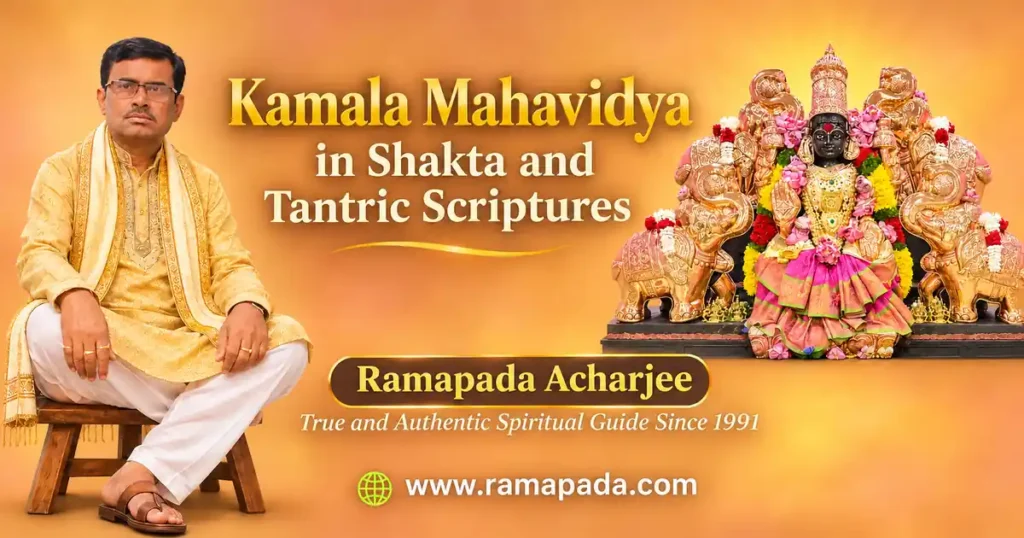
By Ramapada Acharjee
Kamala Mahavidya in Shakta and Tantric Scriptures reveals how the tenth Mahavidya connects ancient Lakshmi worship with the later theological traditions of the Divine Mother. Varsh 1991 pasun mazya adhyatmik sadhana ani margadarshanacha anubhavane me he sangato ki shastracha abhyas kartaana pratyek granthachi mul bhumika samjun ghene atyant aavashyak ahe.
Kamala occupies a distinctive position among the ten Mahavidyas. Her golden appearance, lotus throne, elephants, and associations with prosperity closely connect her with Goddess Lakshmi.
However, understanding her scriptural background requires more than collecting religious quotations.
The Vedic tradition preserves important ideas concerning Sri, auspiciousness, nourishment, and abundance. Puranic literature develops the identity of Lakshmi through elaborate religious narratives. Meanwhile, Shakta and Tantric traditions place Kamala within a collective framework of ten divine wisdom forms.
These traditions overlap, yet their historical development and theological emphasis differ.
Therefore, careful study must distinguish the sources that discuss Lakshmi from those that specifically identify Kamala as a Mahavidya.
বাংলার দীর্ঘ ধর্মীয় ও আধ্যাত্মিক পরম্পরায় লক্ষ্মী ও কমলার উপাসনার বিশেষ গুরুত্ব রয়েছে। তবে বৈদিক স্তোত্র, পুরাণ এবং তান্ত্রিক গ্রন্থের বক্তব্যকে এক ধরনের বলে ধরে নেওয়া উচিত নয়। বিভিন্ন শাস্ত্রের উদ্দেশ্য ও প্রেক্ষাপট বুঝে আলোচনা করলে দেবীর পরিচয় আরও স্পষ্ট হয়ে ওঠে।
Understanding Kamala Mahavidya in Shakta Literature
Kamala is traditionally recognised as the tenth goddess in the commonly followed Dasha Mahavidya sequence.
Her name derives from the Sanskrit word Kamala, meaning lotus.
The goddess represents auspiciousness, fertility, prosperity, beauty, and nourishment.
However, the Mahavidya tradition provides a distinctive religious setting for these familiar qualities.
The earlier article on Kamala Mahavidya: The Tenth Mahavidya introduces her broader identity.
Within Shakta philosophy, divine feminine power does not depend upon a single appearance.
Instead, the goddess manifests through many forms representing different dimensions of existence.
Kamala expresses the auspicious and life-supporting dimension of this theological framework.
শাক্ত দর্শনে দেবীশক্তির বিভিন্ন প্রকাশকে বিশেষ গুরুত্ব দেওয়া হয়। কমলার সমৃদ্ধিময় রূপ সেই বৃহত্তর শক্তিতত্ত্বের একটি অংশ। তাই তাঁর পরিচয় শুধু আর্থিক প্রাপ্তির মধ্যে সীমাবদ্ধ না রেখে মঙ্গল, জীবনধারণ ও প্রকৃতির প্রাচুর্যের সঙ্গে যুক্ত করে বোঝা প্রয়োজন।
What Does the Term Mahavidya Mean?
The Sanskrit term Mahavidya combines Maha, meaning great, with Vidya, meaning knowledge or wisdom.
In Tantric religious contexts, the word can also carry specialised associations with sacred knowledge and mantra traditions.
The ten Mahavidyas form a distinctive group within Shakta theology.
Their appearances and traditional associations differ considerably.
Some display fierce or unconventional characteristics. Others express beauty, sovereignty, or auspiciousness.
Consequently, the group demonstrates the diversity of divine feminine symbolism.
মহাবিদ্যা শব্দটির সঙ্গে জ্ঞান ও গভীর ধর্মতাত্ত্বিক উপলব্ধির সম্পর্ক রয়েছে। দশটি দেবীর রূপ আলাদা হলেও তাঁদের একই বৃহত্তর শক্তিপরম্পরার মধ্যে আলোচনা করা হয়। এই বৈচিত্র্য শাক্ত দর্শনের একটি গুরুত্বপূর্ণ বৈশিষ্ট্য।
The Vedic Background of Sri and Lakshmi
The earliest background to Kamala’s prosperity symbolism lies in the wider history of Sri and Lakshmi traditions.
However, a critical distinction must remain clear.
An early reference to Sri or Lakshmi does not automatically establish a reference to the later Mahavidya form of Kamala.
The term Sri carries associations with splendour, prosperity, beauty, and auspiciousness.
Lakshmi eventually develops a prominent divine identity across several strands of Hindu literature.
The Vedic Heritage Portal’s Rigveda collection offers an authoritative starting point for studying Vedic hymns and their organisation.
This historical background provides useful context without requiring every early reference to be interpreted through later Tantra.
বৈদিক সাহিত্যে মঙ্গল, ঐশ্বর্য এবং সমৃদ্ধির ধারণা গুরুত্বপূর্ণ। তবে পরবর্তী সময়ের কমলা মহাবিদ্যার সম্পূর্ণ পরিচয় প্রাচীন বৈদিক স্তোত্রের মধ্যে সরাসরি উপস্থিত ছিল বলে দাবি করা যথাযথ নয়। ধর্মীয় ধারণার ঐতিহাসিক বিকাশকে স্বীকার করা প্রয়োজন।
Sri Sukta and the Worship of Prosperity
The Sri Sukta holds an important place in Lakshmi devotion.
Traditional worshippers recite this hymn in connection with auspiciousness, abundance, and divine grace.
The hymn forms part of the Vedic-associated Sri tradition and is commonly transmitted with the Rigvedic supplementary material.
However, its textual status should not be confused with that of every hymn belonging to the oldest core Rigvedic collection.
Its language and imagery connect prosperity with nourishment, splendour, and life-supporting resources.
These themes later appear prominently within Kamala’s religious identity.
শ্রীসূক্তে মঙ্গল ও সমৃদ্ধির যে ধারণা প্রকাশ পায়, তা লক্ষ্মী উপাসনার একটি গুরুত্বপূর্ণ ভিত্তি। কমলার সঙ্গে এই ঐতিহ্যের গভীর সম্পর্ক রয়েছে। তবে শ্রীসূক্তকে সরাসরি দশমহাবিদ্যার সম্পূর্ণ তান্ত্রিক সাধনাপদ্ধতি হিসেবে উপস্থাপন করা উচিত নয়।
Is Kamala Directly Named in the Earliest Vedas?
This question requires historical care.
The goddess Kamala, specifically as one member of a group of ten Mahavidyas, belongs to a later theological framework.
Earlier Vedic and Vedic-associated traditions provide important religious vocabulary concerning Sri, abundance, and auspiciousness.
However, these older references should not be presented as proof that the complete ten-Mahavidya classification already existed.
The distinction protects the historical integrity of both traditions.
প্রাচীন বৈদিক সাহিত্যে সমৃদ্ধির ধারণা থাকলেই দশমহাবিদ্যার পূর্ণাঙ্গ শ্রেণিবিন্যাস সেখানে উপস্থিত ছিল, এমন সিদ্ধান্তে পৌঁছানো যায় না। শাস্ত্রের সময়কাল ও পরিভাষার পার্থক্য বিবেচনা করা প্রয়োজন।
Kamala and the Puranic Tradition of Lakshmi
Puranic literature develops several important narratives concerning Sri Lakshmi.
Among the best-known examples is the churning of the cosmic ocean, or Samudra Manthan.
Traditional accounts describe Lakshmi’s appearance during this cosmic event.
Her emergence expresses auspicious abundance within a larger religious narrative.
The previous article on Kamala Mahavidya Origin and Traditional Stories examines this connection in greater detail.
Nevertheless, the story primarily concerns Lakshmi.
Kamala’s association with the narrative arises through her close theological identification with Lakshmi.
Therefore, the two should not be treated as automatically identical literary accounts.
পুরাণে লক্ষ্মীর আবির্ভাব ও মঙ্গলময় পরিচয়ের বিস্তৃত আলোচনা রয়েছে। কমলা মহাবিদ্যার সঙ্গে সেই ঐতিহ্যের সম্পর্ক গুরুত্বপূর্ণ হলেও পরবর্তী তান্ত্রিক পরিচয়কে পুরোপুরি একই ঐতিহাসিক স্তরে রাখা যায় না। এই পার্থক্য শাস্ত্রচর্চায় বজায় রাখা জরুরি।
The Symbolism of Samudra Manthan
The churning of the cosmic ocean describes an extraordinary undertaking involving gods and asuras.
The narrative contains cooperation, conflict, danger, and the emergence of valuable divine treasures.
Lakshmi appears within this larger account of cosmic events.
A modern symbolic interpretation may connect the churning with effort, uncertainty, and eventual discovery.
However, such interpretation remains distinct from the original narrative.
The Puranic story deserves attention within its own theological and literary context.
সমুদ্র মন্থনের কাহিনিকে প্রচেষ্টা ও প্রাপ্তির প্রতীক হিসেবে ব্যাখ্যা করা যায়। তবে এই ধরনের আধুনিক জীবনদর্শনের আলোচনা এবং মূল পুরাণকাহিনির ধর্মীয় অর্থ এক বিষয় নয়। উভয় স্তরকে পৃথকভাবে বোঝা অধিক উপযোগী।
Kamala in the Collective Mahavidya Tradition
The Mahavidya tradition presents ten divine forms within a collective Shakta framework.
Although the commonly followed sequence ends with Kamala, historical sources do not always preserve identical lists or arrangements.
Different texts may vary in the names and ordering of goddesses.
Consequently, a single list should not automatically be treated as the only arrangement throughout the history of Tantric literature.
David Kinsley’s scholarly study, Tantric Visions of the Divine Feminine, examines the Mahavidyas both collectively and individually.
The study includes a separate chapter devoted to Kamala as the Lotus Goddess.
This approach helps distinguish the religious identity of Kamala from broader assumptions about Tantra.
দশমহাবিদ্যার তালিকা ও ক্রম নিয়ে বিভিন্ন পরম্পরায় কিছু পার্থক্য দেখা যায়। প্রচলিত তালিকায় কমলা দশম স্থানে থাকলেও সেটিকে দেবীর আধ্যাত্মিক শ্রেষ্ঠত্ব বা হীনতার মাপকাঠি হিসেবে দেখা উচিত নয়। শাস্ত্রীয় বৈচিত্র্যের প্রতি সচেতন থাকা জরুরি।
The Meaning of Kamala’s Tenth Position
Kamala commonly appears after Matangi in the familiar ten-goddess sequence.
Her placement introduces an auspicious form following several goddesses associated with fierce or unconventional symbolism.
This arrangement encourages philosophical reflection.
However, the interpretation that Kamala represents the final reward after passing through nine spiritual stages should not be presented as a universal scriptural rule.
The sequence may inspire such reflection, but different traditions assign different meanings to its organisation.
কমলার দশম অবস্থানকে সম্পূর্ণতা বা সমৃদ্ধির প্রতীক হিসেবে ব্যাখ্যা করা সম্ভব। তবে সব তান্ত্রিক গ্রন্থে একই ব্যাখ্যা দেওয়া হয়েছে, এমন দাবি করা উচিত নয়। পরম্পরাগত ক্রম এবং আধুনিক প্রতীকী ব্যাখ্যার পার্থক্য পরিষ্কার রাখা দরকার।
The Todala Tantra and the Mahavidya Framework
The Todala Tantra belongs to the texts frequently discussed in connection with the Mahavidya tradition.
Accounts of this work describe relationships among the Mahavidyas and other Hindu divine forms.
The text is especially relevant because it treats the goddesses within an interconnected Tantric system.
A catalogue of Sanskrit manuscripts discussing the Todala Tantra records its treatment of the ten Mahavidyas and corresponding divine associations.
However, a manuscript catalogue summarises a text rather than replacing direct examination of its Sanskrit passages.
Specific claims about Kamala should therefore rely upon identifiable passages and dependable translations.
তোড়ল তন্ত্রের মতো গ্রন্থে দশমহাবিদ্যার পারস্পরিক সম্পর্ক নিয়ে আলোচনা পাওয়া যায়। কিন্তু কোনো গ্রন্থের নাম উল্লেখ করলেই নির্দিষ্ট বক্তব্য প্রমাণিত হয় না। সংশ্লিষ্ট শ্লোক, পাণ্ডুলিপি বা নির্ভরযোগ্য সংস্করণ যাচাই করা বিশেষ জরুরি।
Why Textual Versions Matter
Tantric literature has a complex history of manuscript copying, regional transmission, and interpretation.
Different editions may contain textual variations.
Translations can also reflect the decisions of individual editors.
Therefore, a Sanskrit quotation should ideally include the name of the text, chapter, verse, and edition.
Without those details, readers may struggle to verify its authenticity.
This is particularly important for claims involving specialised ritual procedures.
তান্ত্রিক গ্রন্থের বিভিন্ন পাণ্ডুলিপি ও সংস্করণে পাঠভেদ থাকতে পারে। তাই শ্লোকের সঠিক উৎস উল্লেখ করা গবেষণার একটি গুরুত্বপূর্ণ দায়িত্ব। অস্পষ্ট উৎস থেকে পাওয়া উদ্ধৃতিকে নিশ্চিত শাস্ত্রীয় নির্দেশ হিসেবে প্রচার করা উচিত নয়।
Kamala and the Philosophy of Shakti
Shakta philosophy regards divine feminine power as fundamental to the religious understanding of existence.
Different traditions express this principle through different theological systems.
The Mahavidyas provide one important framework for discussing the diversity of divine power.
Kamala represents an auspicious dimension associated with fertility, nourishment, abundance, and prosperity.
However, her identity should not be reduced to a mechanism for obtaining wealth.
Her symbolism also belongs to wider theological ideas concerning divine sovereignty and the sustaining conditions of life.
শাক্ত দর্শনে শক্তিকে সৃষ্টির মৌলিক ধর্মীয় নীতিরূপে বিবেচনা করা হয়। কমলার মধ্যে সেই শক্তির মঙ্গলময় ও জীবনধারণকারী দিকটি বিশেষভাবে প্রকাশ পায়। তাই তাঁর তত্ত্বকে শুধু অর্থপ্রাপ্তির প্রত্যাশায় সীমাবদ্ধ করা ঠিক নয়।
Independent Divinity in Shakta Worship
Within many Vaishnava traditions, Lakshmi appears in close theological association with Vishnu.
In the Mahavidya framework, Kamala frequently receives emphasis as an independent manifestation of the Supreme Goddess.
This difference concerns religious interpretation rather than a complete separation between two unrelated divine identities.
The connection resembles the importance of context in understanding Matangi Mahavidya: The Ninth Mahavidya.
Distinct traditions may emphasise different dimensions of a goddess while preserving shared symbolism.
লক্ষ্মী ও কমলার ধর্মতাত্ত্বিক পরিচয়ের মধ্যে মিল এবং পার্থক্য দুটোই রয়েছে। শাক্ত পরম্পরায় কমলার স্বতন্ত্র শক্তিরূপ বিশেষ গুরুত্ব পায়। এই ব্যাখ্যাকে বোঝার জন্য সংশ্লিষ্ট উপাসনা-পদ্ধতির প্রেক্ষাপট বিবেচনা করা দরকার।
Kamala’s Dhyana and Traditional Iconography
Tantric literature often contains dhyana descriptions that help devotees visualise particular divine forms.
Kamala’s familiar imagery includes a golden appearance, lotus flowers, and auspicious gestures.
Elephants frequently appear around her.
The Metropolitan Museum of Art’s Goddess Kamalatmika preserves a nineteenth-century Kolkata representation with these characteristic features.
Its historical record helps identify the established iconography.
However, museum descriptions and Sanskrit dhyana verses represent different forms of evidence.
The former documents artistic objects; the latter belongs to religious textual traditions.
কমলার ধ্যানরূপে পদ্ম, স্বর্ণাভ বর্ণ এবং হাতির উপস্থিতি পরিচিত বৈশিষ্ট্য। ঐতিহাসিক ছবির সঙ্গে শাস্ত্রীয় বর্ণনার তুলনা করলে দেবীমূর্তির রূপ সম্পর্কে ভালো ধারণা পাওয়া যায়। তবে শিল্পকর্ম এবং মূল সংস্কৃত পাঠকে একই ধরনের উৎস হিসেবে দেখা উচিত নয়।
The Lotus and Sacred Abundance
The lotus represents a longstanding symbol of purity, beauty, fertility, and auspicious emergence.
Kamala’s name itself reflects her connection with this flower.
The article on Kamala Mahavidya Iconography and Sacred Symbolism explores these visual details.
Within a contemporary reflective interpretation, the lotus can also represent personal growth despite difficult circumstances.
However, this modern application should not replace its older religious associations.
পদ্মফুল কমলার অন্যতম প্রধান পরিচয়চিহ্ন। এর সঙ্গে সৌন্দর্য, পবিত্রতা ও প্রাচুর্যের সম্পর্ক রয়েছে। প্রতিকূল পরিবেশেও বিকাশের সম্ভাবনা এই প্রতীক থেকে উপলব্ধি করা যায়, তবে সেটি একটি ব্যবহারিক ব্যাখ্যা।
Elephants and the Nourishment of Life
Elephants pouring water over Kamala connect her with the Gaja-Lakshmi image.
The scene communicates auspiciousness, power, and fertility.
Water also carries obvious significance for agriculture and life.
Nevertheless, the complete image belongs to a religious artistic tradition rather than a modern environmental illustration.
A balanced interpretation recognises both its historical meaning and its possible relevance to contemporary life.
কমলার মূর্তিতে হাতির জলধারা জীবনধারণ, উর্বরতা ও প্রাচুর্যের ধারণাকে প্রকাশ করে। বর্তমান সময়ে জল সংরক্ষণ ও পরিবেশের গুরুত্বের সঙ্গেও প্রতীকটির একটি ব্যবহারিক সম্পর্ক খুঁজে পাওয়া যায়। তবে এই আধুনিক ব্যাখ্যার সঙ্গে প্রাচীন শিল্পরীতির পার্থক্য বজায় রাখা প্রয়োজন।
Kamala, Lakshmi and the Development of Religious Texts
The relationship between Kamala and Lakshmi illustrates how religious identities can develop within different theological settings.
Older Lakshmi traditions provide a foundation of auspiciousness, fertility, and prosperity.
Puranic narratives expand her mythological identity.
The Mahavidya tradition presents Kamala within a distinctive Shakta framework.
The British Museum’s Tantra: Enlightenment to Revolution guide provides wider historical context for the development of Tantric traditions and divine feminine symbolism.
This background helps prevent the assumption that every religious concept appeared simultaneously.
লক্ষ্মী ও কমলার সম্পর্ক ভারতীয় ধর্মীয় ইতিহাসের ধারাবাহিক বিকাশকে বোঝার একটি গুরুত্বপূর্ণ উদাহরণ। বৈদিক, পুরাণিক এবং তান্ত্রিক স্তরে দেবীর পরিচয়ের বিভিন্ন দিক গুরুত্ব পেয়েছে। এই পরিবর্তনকে স্বীকার করেই সামগ্রিক পরিচয় বোঝা সম্ভব।
Why a Single Text Cannot Explain Everything
No single surviving text necessarily contains every aspect of Kamala’s identity.
Her visual symbolism draws upon older goddess traditions.
Her theological position belongs to the Mahavidya framework.
Household devotional practices may reflect additional regional customs.
Therefore, a responsible study compares different categories of evidence.
Historical chronology, textual interpretation, and living tradition should remain connected without becoming confused.
একটি মাত্র শাস্ত্রের সাহায্যে কমলা মহাবিদ্যার সমস্ত পরিচয় ব্যাখ্যা করা কঠিন। বিভিন্ন উৎসের বক্তব্য মিলিয়ে দেখলে বিষয়টির ঐতিহাসিক ও ধর্মীয় বৈচিত্র্য স্পষ্ট হয়। এই পদ্ধতি অতিরঞ্জিত দাবির সম্ভাবনাও কমায়।
The Difference Between Scripture and Ritual Instructions
Historical and philosophical study does not automatically provide the qualifications required for specialised Tantric practice.
Traditional ritual systems may involve initiation, prescribed mantras, visualisation, and lineage-specific procedures.
Such material requires contextual understanding.
Ordinary devotional prayer and advanced ritual practice should therefore remain distinct.
The previous article on Matangi Worship and Sadhana: Ethical Guidance discusses this distinction.
The same principle applies when interpreting Kamala-related ritual literature.
শাস্ত্র অধ্যয়ন এবং নির্দিষ্ট তান্ত্রিক সাধনা পরিচালনা এক বিষয় নয়। সাধারণ পাঠকের পক্ষে ধর্মীয় ইতিহাস ও দর্শন বোঝা সম্ভব হলেও বিশেষ মন্ত্র বা সাধনাপদ্ধতির ক্ষেত্রে পরম্পরাগত নিয়ম আলাদা হতে পারে। এই সীমারেখা বজায় রাখা গুরুত্বপূর্ণ।
Why Mantra Sources Require Verification
Mantras frequently circulate online without complete textual references.
Some sources omit pronunciation, context, or information about the associated tradition.
Others combine materials from different religious systems.
Consequently, a mantra found on a website should not automatically be presented as an authoritative instruction from an ancient text.
Reliable study requires identifiable sources and appropriate guidance.
অনলাইনে প্রচলিত মন্ত্রের ক্ষেত্রে উৎস যাচাই করা জরুরি। শুধু সংস্কৃত অক্ষরে লেখা থাকলেই কোনো মন্ত্র নির্ভরযোগ্য প্রমাণিত হয় না। গ্রন্থ, পাঠভেদ এবং সংশ্লিষ্ট উপাসনা-পদ্ধতির তথ্য জানা প্রয়োজন।
Kamala in Bengal’s Historical Religious Culture
Bengal preserves a rich heritage of Shakta literature and devotional art.
Printed religious images became especially significant during the nineteenth century.
Kamala appeared in lithographs alongside other Mahavidya goddesses.
The Wellcome Collection’s historical Kamala chromolithograph identifies a Kolkata-produced image belonging to a Mahavidya series.
Such historical objects demonstrate how the goddess appeared within regional devotional culture.
However, a printed image cannot independently establish the date or wording of an ancient Sanskrit scripture.
বাংলার পুরনো দেবীমূর্তির ছাপচিত্র ধর্মীয় সংস্কৃতির ইতিহাস বোঝার একটি মূল্যবান উৎস। এগুলিতে আঞ্চলিক শিল্পরীতি ও দেবীর প্রচলিত প্রতীক সংরক্ষিত রয়েছে। তবে একটি ঐতিহাসিক ছবি কোনো প্রাচীন গ্রন্থের নির্দিষ্ট শ্লোক প্রমাণ করে না।
How Devotional Images Complement Written Sources
Images and texts communicate religious ideas in different ways.
A Sanskrit text may describe divine attributes or ritual contexts.
A painting communicates visual appearance through colour, composition, and symbolism.
Regional customs contribute further interpretations.
These sources complement one another when researchers acknowledge their different limitations.
Consequently, comprehensive study requires more than one kind of evidence.
শাস্ত্র ও শিল্পকর্ম একসঙ্গে অধ্যয়ন করলে দেবীর পরিচয়ের নানা দিক প্রকাশ পায়। লিখিত বর্ণনা এবং মূর্তিরূপের মধ্যে মিল বা অমিল উভয়ই গবেষণার বিষয় হতে পারে। প্রতিটি উৎসের নিজস্ব সীমাবদ্ধতা মনে রাখা উচিত।
Ethical Lessons from Kamala’s Scriptural Traditions
Kamala’s religious associations invite reflection on the responsible meaning of prosperity.
Abundance supports nourishment and security.
Financial resources can provide education, shelter, healthcare, and family stability.
However, wealth alone cannot guarantee peaceful relationships or ethical conduct.
The broader symbolism of Kamala encourages a more balanced understanding of well-being.
These practical reflections should remain distinct from claims about guaranteed spiritual or financial results.
কমলার সমৃদ্ধিময় পরিচয়কে সৎ উপার্জন ও দায়িত্বশীল জীবনযাপনের সঙ্গে যুক্ত করে বোঝা সম্ভব। অর্থের প্রয়োজনীয়তা অস্বীকার করা যায় না, কিন্তু তার যথাযথ ব্যবহারও সমান গুরুত্বপূর্ণ। এই বাস্তব দৃষ্টিভঙ্গি ধর্মীয় আলোচনাকে আরও অর্থপূর্ণ করে।
Prosperity Without Greed
Financial prosperity can improve practical circumstances.
Nevertheless, greed may encourage dishonesty, waste, and unnecessary conflict.
Responsible management of resources requires planning and restraint.
Traditional religious symbolism can inspire reflection on these responsibilities.
However, ethical conduct depends upon actual decisions rather than devotional claims alone.
সম্পদ অর্জনের সঙ্গে সততা ও সংযমের সম্পর্ক অত্যন্ত গুরুত্বপূর্ণ। অতিরিক্ত লোভ অনেক সময় ভুল সিদ্ধান্তের কারণ হতে পারে। তাই সমৃদ্ধিকে দায়িত্ববোধ থেকে বিচ্ছিন্ন করা উচিত নয়।
Faith Alongside Practical Responsibility
Religious devotion may provide emotional comfort and personal meaning.
Yet practical difficulties require suitable practical responses.
Financial problems may call for budgeting, professional advice, or employment-related decisions.
Health concerns require appropriate healthcare.
Likewise, relationship difficulties often demand communication and mutual respect.
Spiritual practice should complement these responsibilities rather than replace them.
আধ্যাত্মিক চর্চা জীবনে শান্তি ও মনোসংযোগ আনতে সহায়ক হতে পারে। তবে অর্থনৈতিক, শারীরিক বা পারিবারিক সমস্যার বাস্তব সমাধানও প্রয়োজন। উপাসনা এবং দায়িত্বশীল কার্যকলাপ পরস্পরের পরিপূরক হতে পারে।
Frequently Asked Questions About Kamala Mahavidya Scriptures
Is Kamala mentioned in the Vedas?
Earlier Vedic and Vedic-associated traditions preserve important ideas concerning Sri and prosperity. However, Kamala’s specific identity as the tenth Mahavidya belongs to a later theological framework.
বৈদিক সাহিত্যের সমৃদ্ধির ধারণা এবং পরবর্তী দশমহাবিদ্যা পরিচয়কে একই ঐতিহাসিক স্তর হিসেবে দেখা উচিত নয়।
Is Sri Sukta related to Kamala Mahavidya?
Sri Sukta belongs to the wider Sri-Lakshmi devotional tradition. Its themes of auspiciousness and abundance also inform the religious background of Kamala.
শ্রীসূক্তের সঙ্গে কমলার সম্পর্ক লক্ষ্মী ঐতিহ্যের মাধ্যমে বোঝা যায়। তবে সেটি সরাসরি সম্পূর্ণ মহাবিদ্যা সাধনাপদ্ধতির সমার্থক নয়।
Which Tantric texts discuss the Mahavidyas?
Works such as the Todala Tantra and other Shakta Tantric literature feature discussions of the Mahavidyas. Specific references should be checked against reliable textual editions.
তান্ত্রিক গ্রন্থের নাম উল্লেখের পাশাপাশি সংশ্লিষ্ট অধ্যায় ও শ্লোক যাচাই করাও জরুরি।
Is Kamala always the tenth Mahavidya?
Kamala occupies the tenth position in the commonly followed list. However, historical Mahavidya lists and their ordering can vary.
প্রচলিত দশমহাবিদ্যা ক্রমে কমলা দশম স্থানে থাকলেও সব পরম্পরার তালিকা সম্পূর্ণ একই নয়।
Are Kamala and Lakshmi identical in every scripture?
They share a close theological identity. Nevertheless, Vaishnava and Shakta traditions may place different emphasis on their divine roles.
দুই দেবীর ঘনিষ্ঠ সম্পর্ক থাকলেও উপাসনার ধর্মীয় প্রেক্ষাপটে পার্থক্য দেখা যায়।
Does the Samudra Manthan story describe Kamala’s birth?
The famous Puranic narrative primarily describes Lakshmi’s emergence. Kamala’s connection with the story follows from her identification with Lakshmi.
সমুদ্র মন্থনের কাহিনিকে সরাসরি কমলা মহাবিদ্যার একমাত্র উৎপত্তিকথা বলে উল্লেখ করা যথাযথ নয়।
Are Kamala’s dhyana descriptions identical everywhere?
No. Different texts and artistic traditions may describe or represent her attributes differently.
ধ্যানরূপের বিবরণে পার্থক্য থাকলে সংশ্লিষ্ট গ্রন্থ ও পরম্পরা যাচাই করা উচিত।
Can beginners read Shakta and Tantric literature?
Yes. General historical, philosophical, and literary study is different from performing specialised rituals.
শাস্ত্রের ইতিহাস ও দর্শন অধ্যয়ন এবং বিশেষ তান্ত্রিক সাধনা পরিচালনা আলাদা বিষয়।
Does Kamala worship guarantee financial prosperity?
No responsible religious interpretation can establish guaranteed financial outcomes. Practical decisions and external circumstances remain important.
উপাসনার মাধ্যমে নিশ্চিত অর্থলাভের প্রতিশ্রুতি দেওয়া উচিত নয়। বাস্তব পরিশ্রম ও বিচক্ষণ সিদ্ধান্তের গুরুত্ব অপরিহার্য।
Why are historical museum records useful?
Museum records document artworks, materials, dates, and visual traditions. They complement textual research without replacing scriptural evidence.
ঐতিহাসিক শিল্পকর্ম দেবীমূর্তির রূপ ও আঞ্চলিক সংস্কৃতি সম্পর্কে তথ্য দেয়। তবে শাস্ত্রের মূল বক্তব্য যাচাইয়ের জন্য লিখিত উৎসও প্রয়োজন।
A Practical and Spiritual Perspective
Kamala Mahavidya in Shakta and Tantric Scriptures demonstrates how a goddess’s religious identity can develop across several connected traditions.
The wider Sri-Lakshmi heritage provides important associations with auspiciousness and abundance.
Puranic literature contributes familiar narratives concerning divine prosperity.
Shakta and Tantric traditions present Kamala within the collective framework of the Mahavidyas.
Historical artworks preserve her lotus throne, elephants, golden appearance, and auspicious gestures.
However, these sources should not be treated as interchangeable.
Each contributes a different form of evidence.
A careful interpretation respects the distinction between religious belief, historical documentation, and modern symbolic reflection.
Kamala’s tradition also raises practical questions about the meaning of prosperity.
Financial stability matters.
So do food, water, health, education, and responsible relationships.
Moreover, resources become more valuable when their use supports dignity and well-being.
বাংলার শাক্তধর্ম ও লক্ষ্মী উপাসনার দীর্ঘ ঐতিহ্যের মধ্যে কমলা মহাবিদ্যার একটি বিশেষ অবস্থান রয়েছে। বৈদিক সমৃদ্ধির ধারণা, পুরাণের লক্ষ্মীকথা, তান্ত্রিক শক্তিতত্ত্ব এবং ঐতিহাসিক মূর্তিরূপ—সবকিছুর সমন্বয়ে তাঁর পরিচয় আরও স্পষ্ট হয়। এই অধ্যয়নে শাস্ত্রীয় তথ্য, ঐতিহাসিক প্রমাণ এবং ব্যবহারিক জীবনদর্শনের মধ্যে ভারসাম্য বজায় রাখা গুরুত্বপূর্ণ।
Ultimately, Kamala’s scriptural identity extends beyond the desire for material gain.
Her place in the Mahavidya tradition invites a broader understanding of abundance, nourishment, auspiciousness, and responsible living.
Prosperity becomes more meaningful when knowledge, restraint, and responsibility accompany it.
Jai Maa Kamala.
— Ramapada Acharjee
Connect with the Best in Kolkata
Stop wandering in uncertainty. Your stars have a story to tell, and Ramapada Acharjee is here to help you read it. With a legacy built on truth, 35 years of experience, and a mission to bring peace to every household, your journey toward clarity starts here.
📍Consultation available in Kolkata, Guwahati, Siliguri, Tarapith & online.
📞 Call/WhatsApp: +91-98749 54063
🌐 Visit Website
You may also read:
- Kamakhya Temple Tantra – Secrets of Divine Power
- How Can We Identify a Genuine Tantrik?
- হাজার বছরের পুরনো বাঙালি তান্ত্রিক কাহিনি
Related Category: Tantra
