
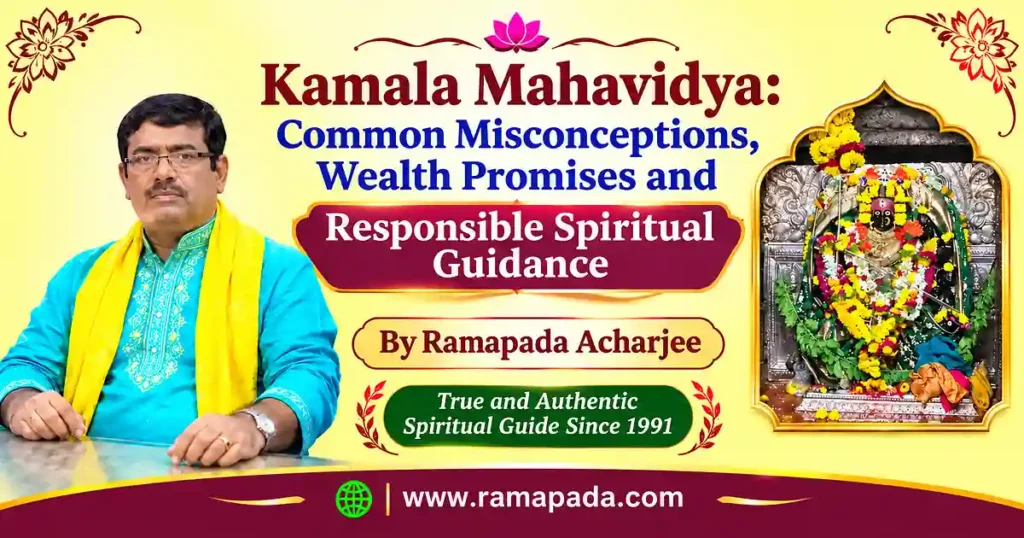
Promises of sudden wealth often sound attractive when someone is struggling financially. During difficult times, people naturally search for reassurance. Some individuals turn to practical advice, while others find comfort in prayer and traditional spiritual practices.
Kamala Mahavidya is frequently mentioned in discussions about prosperity. As the tenth goddess of the Dasha Mahavidya tradition, she shares a close relationship with Sri Lakshmi. Her familiar symbols include the lotus, elephants, auspiciousness, and abundance.
However, misunderstandings arise when these religious associations turn into promises of guaranteed financial results.
Someone might hear that a particular ritual will remove every obstacle. Another person might be told that an expensive ceremony must be arranged immediately. In my view, such statements deserve careful consideration.
Since beginning my astrological practice in 1991, distinguishing religious belief from unrealistic promises has remained central to my approach. Over more than three decades of meeting people from all walks of life, I have observed how vulnerable financial stress can make a household.
Traditional teachings deserve deep respect. Equally, people seeking spiritual guidance deserve clear explanations, reasonable expectations, and freedom from unnecessary fear.
In this article, I examine common misconceptions surrounding Kamala Mahavidya, particularly claims about wealth, mantras, rituals, spiritual authority, and the ethical responsibilities of those offering guidance.
For a broader introduction, you may explore The Ten Mahavidyas of Hinduism.
কমলা মহাবিদ্যা সম্পর্কে আলোচনা করতে গেলে ধনসম্পদ ও সমৃদ্ধির প্রসঙ্গ স্বাভাবিকভাবেই আসে। কিন্তু অর্থলাভের প্রত্যাশাকে কেন্দ্র করে বিভিন্ন ভুল ধারণাও প্রচলিত রয়েছে। বিশেষত আর্থিক সমস্যায় থাকা মানুষ দ্রুত সমাধানের প্রতিশ্রুতিতে প্রভাবিত হতে পারেন। তাই ধর্মীয় বিশ্বাসকে সম্মান করার পাশাপাশি বাস্তবতা, সততা এবং দায়িত্বশীল পরামর্শের গুরুত্ব বোঝা প্রয়োজন।
Why Misconceptions About Kamala Mahavidya Arise
Religious traditions develop through scriptures, family customs, regional practices, and interpretations passed down across generations.
Kamala’s connection with Lakshmi gives her a familiar place in discussions of prosperity. Nevertheless, her theological position within Shakta Tantra deserves separate attention.
The University of Lethbridge’s research on Kamala discusses her religious identity, symbolic qualities, and relationship with the wider Mahavidya tradition. Problems arise when an interpretation belonging to one tradition is presented as a universal rule.
Furthermore, modern promotional material often adds another layer of confusion. Short advertisements simplify complicated religious subjects into dramatic promises. As a result, readers encounter bold statements about Kamala worship without knowing their original source.
Religious Symbolism Is Not a Financial Guarantee
A goddess associated with prosperity does not automatically represent a method of producing money.
Religious symbolism may express an aspiration, a philosophical principle, or a devotional belief. By contrast, a financial guarantee makes a specific claim about a measurable outcome. Through my long years of consultation, I always remind seekers that these two categories must remain distinct.
ধর্মীয় প্রতীক ও বাস্তব ফলাফলের নিশ্চয়তা এক বিষয় নয়। কমলা মহাবিদ্যার সঙ্গে ঐশ্বর্য ও মঙ্গলের সম্পর্ক রয়েছে। কিন্তু সেই সম্পর্ক থেকে নির্দিষ্ট সময়ে অর্থলাভের নিশ্চয়তা দেওয়া যায় না। শাস্ত্রীয় বক্তব্য এবং আধুনিক প্রচারমূলক দাবির পার্থক্য বোঝা জরুরি।
Misconception 1: Kamala Worship Guarantees Instant Wealth
Among popular claims about Kamala Mahavidya, this idea is one of the most misleading.
Some advertisements suggest that a single ritual can immediately improve your finances. Others promise extraordinary business profits within a fixed number of days.
Such assurances should never be confused with established evidence.
Income depends on employment, professional ability, economic conditions, sound decisions, and many circumstances outside an individual’s control. Devotional worship certainly holds deep personal meaning. Nevertheless, no ritual can reliably guarantee a particular financial result.
Why Fixed-Day Promises Are Problematic
Consider an announcement promising wealth within seven or eleven days.
First, we must ask whether the claimed outcome has any credible basis. Second, we should consider the emotional pressure such promises create.
Someone who does not receive the expected result might be encouraged to purchase additional ceremonies. Consequently, this produces a cycle of expenditure without ever addressing the original financial difficulty.
My earlier discussion of Kamala Mahavidya Worship and Sadhana explains why household devotion and specialised religious practice should never be reduced to commercial transactions.
কমলা মহাবিদ্যার পূজা করলে নির্দিষ্ট কয়েক দিনের মধ্যে নিশ্চিত ধনলাভ হবে—এমন প্রতিশ্রুতি গ্রহণযোগ্য নয়। ব্যবসা, চাকরি বা আর্থিক উন্নতির জন্য বাস্তব পরিশ্রম ও পরিকল্পনা প্রয়োজন। ধর্মীয় উপাসনা ব্যক্তিগত বিশ্বাসের অংশ হতে পারে, কিন্তু তা আর্থিক সমস্যার নিশ্চিত সমাধান নয়।
Misconception 2: Expensive Rituals Always Produce Better Results
A second widespread misunderstanding concerns the financial cost of spiritual ceremonies.
Religious events sometimes involve flowers, lamps, food offerings, ceremonial materials, and the work of people assisting with arrangements. Such expenses are completely reasonable when clearly explained and voluntarily accepted.
However, greater expenditure never establishes greater spiritual sincerity.
An elaborate ceremony carries cultural or family significance. A modest prayer, meanwhile, remains equally meaningful to someone following a simpler devotional tradition.
Understanding Ritual Expenses
Based on my experience advising families since 1991, three considerations deserve close attention before committing to any ritual:
- Transparency: Anyone arranging a ceremony should understand its proposed expenses beforehand. Clear information supports informed decisions.
কোনো পূজা বা ধর্মীয় অনুষ্ঠানের খরচ থাকলে আগে বিস্তারিতভাবে জানা উচিত। কোন উপকরণের জন্য কত টাকা লাগছে, সেই বিষয়ে স্বচ্ছতা থাকা জরুরি।
- Affordability: Religious expenditure must reflect household circumstances. Essential needs such as food, education, healthcare, and housing should never be neglected.
পরিবারের আর্থিক সামর্থ্য বিবেচনা না করে ব্যয়বহুল অনুষ্ঠান করা উচিত নয়। সংসারের প্রয়োজনীয় খরচ বন্ধ রেখে বা অপ্রয়োজনীয় ঋণ নিয়ে পূজা আয়োজন করা যুক্তিযুক্ত নয়।
- Freedom of Choice: Every person must be able to decline a ceremony without being threatened with supernatural consequences.
ধর্মীয় আচার গ্রহণ বা প্রত্যাখ্যান করার স্বাধীনতা থাকা দরকার। কোনো অনুষ্ঠান না করলে ভয়ংকর বিপদ ঘটবে—এমন কথা বলে কাউকে অর্থব্যয়ে বাধ্য করা উচিত নয়।
Devotion Should Not Become a Competition
Families naturally differ in their customs and financial resources.
Consequently, one household may arrange a large celebration while another follows a simple daily prayer routine. Neither the size of a ceremony nor the cost of its materials measures the depth of someone’s devotion.
ভক্তির সঙ্গে লোকদেখানো আয়োজনের সম্পর্ক থাকা উচিত নয়। সামাজিক প্রতিযোগিতার কারণে বড় অনুষ্ঠান করলে আর্থিক চাপ সৃষ্টি হতে পারে। আন্তরিকতা ও নিজস্ব ধর্মীয় রীতির মর্যাদা বজায় রাখাই গুরুত্বপূর্ণ।
Misconception 3: Kamala and Lakshmi Have Exactly the Same Ritual Traditions
Kamala shares a profound theological relationship with Sri Lakshmi.
Their imagery frequently includes the lotus, auspicious blessings, and elephants associated with fertility and abundance. Nevertheless, Kamala’s placement among the ten Mahavidyas introduces a particular Shakta context.
The Metropolitan Museum of Art preserves a nineteenth-century Kamala and Bhairavi print from Kolkata. Its historical description identifies Kamala as an expression of Lakshmi within the Mahavidya tradition.
While this connection is historically important, it does not establish that every Lakshmi household custom follows specialised Kamala Tantric instructions.
Why the Distinction Matters
A family usually performs familiar Lakshmi prayers according to local custom.
Specialised Kamala sadhana, on the other hand, involves distinct texts, specific ritual arrangements, and strict lineage requirements. Therefore, you should avoid applying one set of instructions indiscriminately to every form of worship.
Further historical context appears in Kamala Mahavidya Origin and Traditional Stories.
কমলা ও মহালক্ষ্মীর মধ্যে গভীর আধ্যাত্মিক সম্পর্ক রয়েছে। কিন্তু শাক্ত তন্ত্রের বিশেষ কমলা সাধনা এবং প্রচলিত গৃহস্থ লক্ষ্মীপূজার সব নিয়ম এক নয়। দেবীর ঐক্য স্বীকার করেও বিভিন্ন উপাসনাপদ্ধতির স্বাতন্ত্র্য বোঝা প্রয়োজন।
Misconception 4: Every Kamala Mantra Can Be Used in the Same Way
Mantras hold an important position within many Hindu religious traditions.
However, this single term covers several different kinds of sacred recitation. A familiar devotional hymn is meant for ordinary household worship. Certain specialised Tantric mantras, conversely, belong to particular ritual systems.
This distinction becomes especially vital when instructions circulate online without their original context.
Mantra Meaning and Ritual Practice Are Different
Learning a mantra’s meaning forms a valuable part of religious education.
Performing a specialised ritual, however, is a completely separate matter. Many traditions prescribe formal initiation, careful preparation, and specific methods of instruction. Therefore, seeing a mantra on a public website does not mean every reader should undertake the associated practice.
My article Kamala Mahavidya Mantra Meaning and Spiritual Significance examines these crucial distinctions separately.
Why Repetition Is Not a Guaranteed Formula
A mantra carries deep religious significance for sincere practitioners.
Yet the mere number of repetitions cannot serve as reliable evidence that a business will succeed, a loan will disappear, or a particular event will occur. Practical circumstances and personal effort always matter.
মন্ত্রের অর্থ জানা এবং নির্দিষ্ট তান্ত্রিক নিয়মে মন্ত্রসাধনা করা আলাদা বিষয়। কিছু বিশেষ সাধনায় দীক্ষা ও পরম্পরাগত নির্দেশের গুরুত্ব রয়েছে। তাই অনলাইনে পাওয়া যেকোনো মন্ত্রকে নির্বিচারে ব্যবহার করা ঠিক নয়। পাশাপাশি মন্ত্রজপের সংখ্যার ভিত্তিতে নিশ্চিত পার্থিব ফলের প্রতিশ্রুতিও দেওয়া উচিত নয়।
Misconception 5: Kamala’s Symbols Predict Financial Success
Kamala’s traditional image is rich in visual symbolism.
The goddess commonly appears seated on a lotus, surrounded by flowers, auspicious gestures, and elephants pouring water. These elements carry profound historical and religious meanings. Still, they should never be treated as devices for predicting income or future wealth.
The Metropolitan Museum of Art’s Goddess Kamalatmika artwork, dated approximately 1880–1885, beautifully illustrates several of these traditional features.
What the Lotus Represents
The lotus commonly conveys ideas of purity, beauty, fertility, and auspiciousness.
Modern readers also interpret the flower as a reminder of grace and dignity during difficult circumstances. However, such an inspiring interpretation does not mean that displaying a lotus picture guarantees financial gain.
পদ্ম কমলা মহাবিদ্যার প্রধান প্রতীকগুলির একটি। এর সঙ্গে পবিত্রতা, সৌন্দর্য ও মঙ্গলের ধারণা যুক্ত। কিন্তু পদ্মচিহ্ন ব্যবহার করলেই অর্থলাভ নিশ্চিত হবে—এমন দাবি করা উচিত নয়।
Understanding the Elephants
Elephants in Gaja-Lakshmi imagery symbolize abundance, dignity, fertility, and nourishing water.
Their representation belongs to a long artistic and religious heritage. The Smithsonian National Museum of Asian Art’s Wisdom of the Goddess provides useful context for understanding divine feminine imagery across South and Southeast Asia.
A fuller discussion is available in Kamala Mahavidya Iconography and Sacred Symbolism.
গজরাজ ও জলধারা প্রাচুর্য এবং প্রকৃতির পুষ্টিদায়ী শক্তির সঙ্গে সম্পর্কিত। দেবীচিত্রে এগুলির উপস্থিতি ঐতিহাসিক ও ধর্মীয় তাৎপর্য বহন করে। তবে এই প্রতীকগুলিকে ভবিষ্যৎ আর্থিক ফল নির্ধারণের নিশ্চিত উপায় হিসেবে দেখা ঠিক নয়।
Misconception 6: Every Modern Ritual Claim Comes from Ancient Scripture
A claim sounds far more convincing when someone presents it as ancient or scriptural.
Yet religious literature developed across different periods, regions, and communities. Some customs hold longstanding local importance without appearing in every classical text. Other interpretations are relatively recent.
Neither possibility automatically makes a tradition meaningless. Rather, the essential task is to identify its background accurately.
Three Questions for Examining Scriptural Claims
Whenever you encounter a supposedly ancient rule, ask these three questions:
- Which text contains the instruction? A named scripture and identifiable passage provide a much stronger foundation than a vague statement about ancient authority.
কোনো ধর্মীয় নিয়মকে শাস্ত্রসম্মত বলা হলে সংশ্লিষ্ট গ্রন্থের নাম জানা উচিত। সম্ভব হলে নির্দিষ্ট অংশের প্রেক্ষাপটও পরীক্ষা করা প্রয়োজন।
- Does the instruction belong to a particular tradition? Ritual procedures vary widely across regions and communities. Consequently, one local method should not automatically be presented as the only acceptable practice.
একটি পরম্পরায় প্রচলিত আচার অন্য সব সম্প্রদায়ের জন্য বাধ্যতামূলক নাও হতে পারে। তাই আঞ্চলিক বৈচিত্র্যকে সম্মান করা উচিত।
- Is the statement historical or interpretive? An artwork documents religious imagery from a specific period. Meanwhile, a philosophical interpretation explains how someone understands that imagery.
ঐতিহাসিক প্রমাণ এবং ব্যক্তিগত ব্যাখ্যার মধ্যে পার্থক্য রাখা জরুরি। একটি পুরনো দেবীচিত্র নির্দিষ্ট সময়ের শিল্পরীতি দেখাতে পারে, কিন্তু তার প্রতিটি বৈশিষ্ট্য প্রাচীন শাস্ত্রে একইভাবে রয়েছে—এমন সিদ্ধান্ত স্বয়ংক্রিয়ভাবে নেওয়া যায় না।
My existing study of Kamala Mahavidya in Shakta and Tantric Scriptures discusses the importance of examining sources within their proper contexts.
শাস্ত্রের যথার্থতা রক্ষা করতে হলে উৎস যাচাই করা প্রয়োজন। লোকাচার, ধর্মীয় সাহিত্য, শিল্পকর্ম এবং আধুনিক ব্যাখ্যার নিজস্ব গুরুত্ব রয়েছে। তবে সব ধরনের তথ্যকে এক করে উপস্থাপন করলে পাঠকের মধ্যে বিভ্রান্তি তৈরি হতে পারে।
Misconception 7: Spiritual Guidance Should Never Be Questioned
Genuine respect for religious learning never requires abandoning your personal judgment.
A spiritual consultant offers interpretations rooted in a particular tradition. Nevertheless, clients must clearly understand the nature and limitations of the service.
Asking questions about fees, practices, expected outcomes, and personal responsibilities is completely reasonable. Above all, a healthy professional relationship relies on open, clear communication.
When Fear Becomes a Warning Sign
Over my decades of practice, I have advised countless people to watch out for specific red flags. Certain statements always deserve particular caution:
- Claims of unavoidable disaster: Someone might tell you that refusing a ceremony will bring severe misfortune. Such predictions create unnecessary distress, and fear should never force a decision.
কোনো পূজা না করলে নিশ্চিত বিপদ ঘটবে—এই ধরনের বক্তব্য মানুষকে ভীত করতে পারে। ভয় দেখিয়ে সিদ্ধান্ত গ্রহণে বাধ্য করা উচিত নয়।
- Pressure to pay immediately: Urgent demands for money prevent you from calmly reviewing the proposed service.
হঠাৎ করে বড় অঙ্কের অর্থ দিতে চাপ সৃষ্টি হলে সিদ্ধান্তের আগে বিষয়টি যাচাই করা উচিত। খরচের বিবরণ ও কাজের উদ্দেশ্য পরিষ্কারভাবে জানা প্রয়োজন।
- Promises of complete control over outcomes: No consultant can guarantee another person’s choices, future income, or every event affecting a household.
মানুষের জীবন বহু বাস্তব পরিস্থিতির ওপর নির্ভর করে। তাই ভবিষ্যতের সমস্ত ঘটনা কিংবা অন্যের সিদ্ধান্ত সম্পূর্ণ নিয়ন্ত্রণ করার নিশ্চয়তা দেওয়া যুক্তিসংগত নয়।
- Requests to conceal information: Unnecessary demands for secrecy regarding payments or services should immediately encourage closer examination.
অর্থপ্রদান বা সেবার বিষয়ে অকারণ গোপনীয়তার চাপ থাকলে সতর্ক হওয়া উচিত। প্রয়োজনে বিশ্বস্ত পরিবারের সদস্য বা উপযুক্ত পেশাদারের সঙ্গে আলোচনা করা ভালো।
The US Federal Trade Commission’s guide to avoiding scams describes common warning signs such as urgent payment pressure and attempts to exploit fear. Although it is not a religious authority, its practical consumer-safety advice remains highly relevant when evaluating suspicious financial demands.
দায়িত্বশীল আধ্যাত্মিক পরামর্শে স্বচ্ছতা, যুক্তিসংগত প্রত্যাশা এবং ব্যক্তিগত স্বাধীনতা থাকা উচিত। ধর্মীয় বিশ্বাসকে ব্যবহার করে কাউকে ভয় দেখানো বা আর্থিকভাবে নির্ভরশীল করে তোলা গ্রহণযোগ্য নয়।
How to Choose Responsible Spiritual Guidance
Choosing a spiritual consultant requires much more than reading impressive promotional claims.
Experience, authentic knowledge, honest communication, and ethical behaviour all deserve careful attention. From my perspective as a practitioner since 1991, these five principles help seekers make informed decisions:
- Look for Clear Explanations: A consultant should clearly describe the general nature of the proposed service. Religious terminology often feels unfamiliar to beginners. Therefore, explanations must remain understandable without misrepresenting the tradition.
পরামর্শের বিষয়বস্তু সহজভাবে বুঝিয়ে দেওয়া উচিত। কঠিন ধর্মীয় পরিভাষার আড়ালে অস্পষ্ট প্রতিশ্রুতি দেওয়া ঠিক নয়। প্রয়োজন হলে পাঠক বা পরামর্শগ্রহীতার প্রশ্নের উত্তর দেওয়া দরকার।
- Understand the Financial Commitment: Before agreeing to a ceremony, ask directly about the likely expenses and what they cover. Professional services involve reasonable fees, yet unexpected charges and repeated demands deserve immediate scrutiny.
কোনো অনুষ্ঠান বা পরামর্শ গ্রহণের আগে খরচ সম্পর্কে পরিষ্কার ধারণা থাকা প্রয়োজন। আগে থেকে জানানো হয়নি এমন অতিরিক্ত অর্থদাবির ক্ষেত্রে সতর্ক হওয়া উচিত।
- Expect Respectful Communication: Anyone seeking spiritual advice may be experiencing deep personal difficulties. Such delicate circumstances call for patience and sensitivity. Fear, humiliation, and pressure have zero place in an ethical consultation.
মানুষ প্রায়ই সমস্যার সময় পরামর্শ নিতে আসেন। তাই তাঁদের কথা মনোযোগ দিয়ে শোনা এবং সম্মানের সঙ্গে উত্তর দেওয়া জরুরি। দুর্বল পরিস্থিতির সুযোগ নেওয়া উচিত নয়।
Balancing Spiritual Advice with Practical Action
- Keep Practical Responsibilities in View: Spiritual reflection peacefully accompanies everyday decisions. Nevertheless, medical treatment, financial planning, and legal advice require appropriate professional expertise. Religious consultation should never discourage necessary practical action.
শারীরিক অসুস্থতার ক্ষেত্রে চিকিৎসক, আর্থিক সমস্যায় উপযুক্ত আর্থিক পরামর্শ এবং আইনগত বিষয়ে সংশ্লিষ্ট বিশেষজ্ঞের সাহায্য প্রয়োজন হতে পারে। আধ্যাত্মিক আলোচনাকে এসব বাস্তব ব্যবস্থার বিকল্প হিসেবে ব্যবহার করা ঠিক নয়।
- Avoid Guarantees That Cannot Be Verified: A responsible consultant always distinguishes traditional interpretation from demonstrable fact. Bold claims about guaranteed wealth, supernatural control, or exact future outcomes deserve healthy skepticism.
নির্দিষ্ট পার্থিব ফলের নিশ্চয়তা দেওয়ার আগে তার বাস্তব ভিত্তি থাকা প্রয়োজন। ধর্মীয় বিশ্বাসের ব্যাখ্যা এবং যাচাইযোগ্য তথ্যের মধ্যে পরিষ্কার পার্থক্য রাখাই দায়িত্বশীল আচরণ।
Kamala Mahavidya, Dharma and the Ethics of Wealth
The relationship between wealth and ethical conduct forms a vital theme in Indian philosophy.
Within the traditional four purusharthas, Artha concerns material resources and economic goals, while Dharma involves moral and ethical considerations. The Internet Encyclopedia of Philosophy’s overview of Hindu philosophy explains these foundational concepts and their relationship within classical thought.
Although the purushartha framework is not itself a specific Kamala ritual manual, it offers a valuable philosophical comparison. Material prosperity and ethical responsibility need not be treated as opposing goals.
Earning, Spending and Sharing
Money supports essential daily needs, including food, housing, education, and healthcare.
Responsible earnings help maintain household security. Thoughtful expenditure naturally reduces unnecessary financial pressure. Furthermore, where circumstances permit, generosity contributes meaningfully to the welfare of others.
These habits represent practical human responsibilities rather than promised supernatural outcomes.
অর্থ উপার্জন গৃহস্থ জীবনের স্বাভাবিক প্রয়োজন। তবে উপার্জনের পদ্ধতি, ব্যয়ের পরিকল্পনা এবং অন্যের প্রতি দায়িত্বও গুরুত্বপূর্ণ। কমলা মহাবিদ্যার সমৃদ্ধির প্রতীক থেকে অনুপ্রাণিত হয়ে এই বিষয়গুলি নিয়ে চিন্তা করা যায়।
Religious Practice and Personal Accountability
Someone may sincerely follow devotional customs every single day.
However, that commitment never removes the personal responsibility for honest conduct. Professional decisions, family obligations, and financial commitments still require steady attention.
Consequently, spiritual values become far more meaningful when they accompany responsible daily behaviour.
ধর্মীয় উপাসনা এবং দৈনন্দিন আচরণের মধ্যে সামঞ্জস্য থাকা উচিত। পূজা করার পাশাপাশি কর্মক্ষেত্রে সততা, পারিবারিক দায়িত্ব এবং মানবিক আচরণ বজায় রাখা প্রয়োজন। এভাবেই আধ্যাত্মিক মূল্যবোধ বাস্তব জীবনের সঙ্গে যুক্ত হতে পারে।
What Genuine Devotion Should Not Depend On
Religious sincerity cannot be measured through a single external factor.
Neither the size of an offering, the cost of a ceremony, nor the number of public declarations reveals everything about an individual’s devotion. People follow diverse customs according to family background, community, and personal circumstances.
For many individuals, prayer remains a quiet and private expression of faith.
Respecting Different Circumstances
Someone with limited financial means naturally follows simple household worship.
Another family might organise a larger ceremony to mark an important milestone. Both choices hold genuine meaning within their own contexts, and neither should become a reason to judge another person’s spiritual worth.
ভক্তির মূল্য ব্যয়ের পরিমাণ দিয়ে নির্ধারণ করা যায় না। এক পরিবারের পূজার আয়োজন অন্য পরিবারের তুলনায় বড় হতে পারে। কিন্তু সামর্থ্য ও পারিবারিক ঐতিহ্যের পার্থক্যকে অসম্মানের কারণ বানানো উচিত নয়।
Keeping Expectations Realistic
Devotional practice offers personal meaning, emotional reassurance, and a comforting sense of continuity with religious tradition.
However, inner experiences differ widely among individuals. Thus, promising identical results to everyone would be deeply misleading. Moreover, religious participation must always remain compatible with physical health, family duties, and financial stability.
প্রার্থনা ও ধর্মীয় অনুষ্ঠান অনেকের কাছে মানসিক প্রশান্তির উৎস হতে পারে। তবে প্রত্যেকের অভিজ্ঞতা একরকম নয়। তাই নির্দিষ্ট ফলের নিশ্চয়তা না দিয়ে বাস্তবসম্মত প্রত্যাশা বজায় রাখা উচিত।
Frequently Asked Questions About Kamala Mahavidya Misconceptions
1. Does Kamala Mahavidya worship guarantee wealth? No. While Kamala is traditionally associated with prosperity, worship alone cannot guarantee income, business profits, or sudden financial success.
কমলা মহাবিদ্যা সমৃদ্ধির সঙ্গে সম্পর্কিত হলেও পূজার মাধ্যমে নিশ্চিত অর্থলাভের প্রতিশ্রুতি দেওয়া যায় না। বাস্তব আর্থিক উন্নতির জন্য উপযুক্ত সিদ্ধান্ত ও পরিশ্রম প্রয়োজন।
2. Are expensive Kamala rituals more powerful? The financial cost of a ceremony never establishes its spiritual value. Furthermore, customs and ritual requirements vary, while unnecessary expenditure often creates avoidable financial pressure.
পূজার খরচ বেশি হলেই তার আধ্যাত্মিক মূল্য বেশি হবে—এমন সিদ্ধান্ত গ্রহণযোগ্য নয়। সামর্থ্য অনুযায়ী উপাসনার ব্যবস্থা করা উচিত।
3. Is Kamala Mahavidya identical to Sri Lakshmi? Indeed, Kamala shares a close theological relationship with Lakshmi.. Nevertheless, her place in the Mahavidya tradition belongs to a distinct Shakta context.
কমলা ও মহালক্ষ্মীর মধ্যে গভীর সম্পর্ক রয়েছে। তবে শাক্ত তন্ত্রে কমলার বিশেষ পরিচয় ও সাধনাগত প্রেক্ষাপট রয়েছে।
4. Can anyone study Kamala mantras? Generally, readers can freely study their historical and philosophical significance. Certain specialised ritual practices, however, carry strict requirements defined by particular traditions.
মন্ত্রের অর্থ ও শাস্ত্রীয় তাৎপর্য অধ্যয়ন করা যায়। তবে বিশেষ সাধনায় পরম্পরাগত নির্দেশ বা দীক্ষার প্রয়োজন হতে পারে।
5. Does a lotus image attract guaranteed financial prosperity? There is no reliable basis for promising wealth through an image alone. Instead, the lotus serves as a traditional religious symbol associated with purity and auspiciousness.
পদ্ম ধর্মীয় প্রতীক হিসেবে গুরুত্বপূর্ণ। কিন্তু পদ্মচিত্র রাখলেই নিশ্চিত ধনলাভ হবে—এমন দাবি করা উচিত নয়।
Questions on Identifying Misleading Claims and Debt Relief
6. How can someone identify misleading spiritual promises? Common warning signs include fear-based pressure, urgent demands for money, unclear charges, and guarantees of specific outcomes.
ভয় দেখানো, তাড়াহুড়ো করে অর্থ আদায়ের চেষ্টা এবং অবাস্তব প্রতিশ্রুতি সতর্কতার বিষয়। সিদ্ধান্ত নেওয়ার আগে তথ্য যাচাই করা উচিত।
7. Is formal initiation necessary for every Kamala prayer? Not necessarily. Ordinary household prayers and specialised Tantric practices follow entirely different requirements.
সাধারণ গৃহস্থ প্রার্থনা ও বিশেষ তান্ত্রিক সাধনার নিয়ম এক নয়। সংশ্লিষ্ট পরম্পরার প্রেক্ষাপট বুঝে বিষয়টি বিচার করা উচিত।
8. Can Kamala worship remove debt? In reality, no religious ceremony can guarantee debt removal. Practical repayment planning and suitable financial advice remain essential.
ঋণমুক্তির জন্য বাস্তব আর্থিক পরিকল্পনা প্রয়োজন। উপাসনাকে ঋণ পরিশোধের নিশ্চিত বিকল্প হিসেবে দেখা উচিত নয়।
9. Should spiritual consultants explain their fees? Yes. Clear, upfront information about consultation fees and proposed ceremonial expenses supports informed decisions.
পরামর্শ বা ধর্মীয় অনুষ্ঠানের খরচ থাকলে তা আগে জানানো উচিত। আর্থিক স্বচ্ছতা বিশ্বাসযোগ্যতার একটি গুরুত্বপূর্ণ অংশ।
10. What is the most important lesson of responsible Kamala devotion? Above all, religious devotion should always coexist with honesty, realistic expectations, respect for others, and responsible financial behaviour.
কমলা মহাবিদ্যার উপাসনার সঙ্গে সততা, সংযম, মানবিকতা এবং বাস্তব দায়িত্বের সমন্বয় থাকা উচিত। ভক্তির নামে ভয় বা অযৌক্তিক প্রতিশ্রুতিকে উৎসাহ দেওয়া ঠিক নয়।
Final Reflections: Faith Deserves Clarity, Not Fear
Kamala Mahavidya occupies a deeply respected place within Shakta spiritual traditions.
Her sacred relationship with Lakshmi, the lotus, and auspicious abundance offers devotees a rich religious and philosophical heritage to explore. Unfortunately, those same associations are sometimes oversimplified into commercial promises.
Anyone facing financial difficulty deserves practical assistance and clear information. Similarly, someone seeking spiritual understanding deserves explanations that respect their beliefs without exploiting uncertainty.
My decades of spiritual study and consultation since 1991 have continuously reinforced the importance of that distinction.
Religious traditions should never be reduced to advertisements for immediate success. Equally, responsible criticism of misleading claims should never turn into disrespect towards sincere devotion. Ultimately, the wiser approach preserves both heartfelt faith and sound judgment.
Kamala’s symbols invite quiet reflection on nourishment, prosperity, dignity, and generosity. Their meaning becomes far more valuable when practised alongside ethical conduct and responsible living. Above all, authentic spiritual guidance helps you understand your own choices rather than surrender control over them.
কমলা মহাবিদ্যার ঐতিহ্য অত্যন্ত সমৃদ্ধ। তাঁর সঙ্গে মঙ্গল, ঐশ্বর্য, পুষ্টি এবং প্রকৃতির জীবনদায়ী শক্তির সম্পর্ক রয়েছে। কিন্তু এই ধর্মীয় ভাবনাকে অবাস্তব আর্থিক প্রতিশ্রুতির সঙ্গে যুক্ত করা উচিত নয়।
দীর্ঘদিনের আধ্যাত্মিক অধ্যয়ন ও পরামর্শদানের অভিজ্ঞতায় স্বচ্ছতা ও দায়িত্ববোধের গুরুত্ব বিশেষভাবে উপলব্ধি করা যায়। মানুষের বিশ্বাসকে সম্মান করার পাশাপাশি তাঁর বাস্তব পরিস্থিতি সম্পর্কে সচেতন থাকা প্রয়োজন।
ভক্তির উদ্দেশ্য যেন ভয় সৃষ্টি বা অযথা অর্থব্যয়ের চাপ তৈরি করা না হয়। ধর্মীয় ঐতিহ্যকে শ্রদ্ধা করে, তথ্য যাচাই করে এবং সততার সঙ্গে জীবনযাপন করাই একটি ভারসাম্যপূর্ণ পথ।
Jai Maa Kamala.
Ramapada Acharjee – Spiritual Guidance Specialist – Practising Since 1991
Connect with the Best in Kolkata
Stop wandering in uncertainty. Your stars have a story to tell, and Ramapada Acharjee is here to help you read it. With a legacy built on truth, 35 years of experience, and a mission to bring peace to every household, your journey toward clarity starts here.
📍Consultation available in Kolkata, Guwahati, Siliguri, Tarapith & online.
📞 Call/WhatsApp: +91-98749 54063
🌐 Visit Website
You may also read:
How Real Tantriks Perform Vashikaran
Signs You Are Affected By Negative Energy
Tantra Practice Eligibility – Who Can & Who Can’t
Tantric Remedy for Financial Blockage
Difference Between Tantrik and Astrologer—Truth vs Myth
Related Category: Tantra
Disclaimer: This article is intended for educational, cultural, and religious understanding. It does not provide personalised Tantric initiation or guarantee financial
