
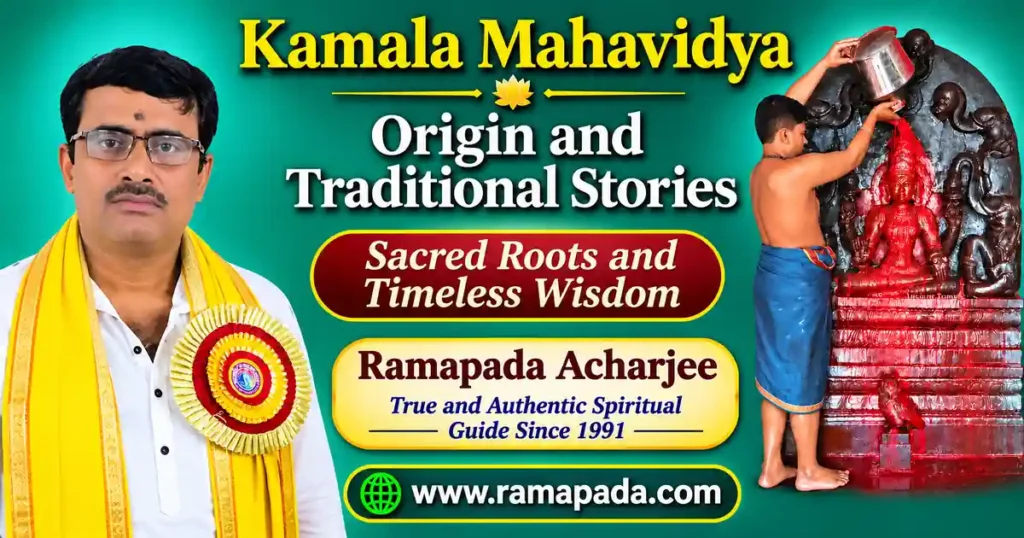
Sacred Roots and Timeless Wisdom
By Ramapada Acharjee
True and Authentic Spiritual Guide Since 1991
When people come to me with questions about Tantra, they often expect a single dramatic birth story for every goddess. However, Kamala Mahavidya Origin and Traditional Stories reveal something far more profound. Her identity brings together ancient Vedic Lakshmi worship, sacred lotus symbolism, Shakta philosophy, and refined Tantric teachings.
Unlike deities linked to a solitary mythological event, Kamala emerges across several interconnected spiritual traditions. The sacred story of Sati and Shiva explains her position as the tenth Mahavidya. Meanwhile, the celebrated Samudra Manthan (churning of the cosmic ocean) narrative illuminates her intimate bond with Goddess Lakshmi. Furthermore, historical stone sculptures, nineteenth-century devotional lithographs from Bengal, and regional literature add rich layers to her living presence.
Over my thirty-five years of spiritual practice since 1991, I have constantly reminded seekers that mythology, theology, and historical evidence address different aspects of truth. Mythological accounts express inner spiritual realities, while historical records reveal how visual art and devotional practices evolved across generations.
বাংলার আধ্যাত্মিক পরম্পরায় দেবদেবীর উৎপত্তিকথার বিশেষ গুরুত্ব রয়েছে। তবে একই দেবীর একাধিক কাহিনি প্রচলিত থাকা অস্বাভাবিক নয়। প্রতিটি কাহিনির ধর্মীয় প্রেক্ষাপট এবং প্রতীকী অর্থ পৃথকভাবে বোঝার চেষ্টা করলে বিষয়টি অনেক বেশি স্পষ্ট ও অর্থপূর্ণ হয়ে ওঠে।
Who Is Kamala Mahavidya in the Shakta Tradition?
Kamala occupies the tenth and concluding place within the sacred Dasha Mahavidya sequence. Her name originates from the Sanskrit word Kamala, meaning the pure lotus. Her traditional epithet, Kamalatmika, describes one whose very soul and substance is the blooming lotus.
In Shakta philosophy, the Divine Mother manifests through ten distinct wisdom forms. While earlier forms reveal fierce liberation or ascetic withdrawal, Kamala stands for:
- Auspiciousness (Mangala)
- Fertility and life-sustaining nourishment (Pushti)
- Natural elegance and aesthetic harmony (Saundarya)
- Inner and outer abundance (Aishwarya)
Her classical dhyana depicts her with a golden complexion, seated upon a fully opened lotus, while celestial elephants pour streams of sacred nectar over her. In my earlier guide on Kamala Mahavidya: The Tenth Mahavidya, I explored how her abundance transcends simple monetary calculations.
Ancient Vedic Lakshmi Worship
          +
Lotus & Elephant Iconography (Gaja-Lakshmi)
          +
Shakta Tantric Philosophy
          =
Kamala Mahavidya (The Tenth Wisdom)
A remarkable historical example is preserved at The Metropolitan Museum of Art in New York. Their nineteenth-century Kolkata lithograph identifies Kamalatmika directly as the Tantric manifestation of Lakshmi. However, the Shakta framework gives Kamala an autonomous, sovereign dignity. She is not merely an agent of financial gain; she embodies the ethical balance, mindful consumption, and generous distribution of resources.
কমলা মহাবিদ্যার পরিচয় শুধু ধনসম্পদের মধ্যে সীমাবদ্ধ নয়। খাদ্য, প্রকৃতি, সৌন্দর্য, সংসারের স্থিতি এবং জীবনের শুভ দিকগুলিও তাঁর প্রতীকের সঙ্গে যুক্ত। তাই দেবীর পরিচয় বোঝার সময় ধর্মীয় বিশ্বাসের পাশাপাশি এই বৃহত্তর অর্থগুলিকেও গুরুত্ব দেওয়া প্রয়োজন।
The Sacred Story of Sati and the Manifestation of the Mahavidyas
The most widely known Shakta narrative connecting the ten Mahavidyas emerges from the domestic dispute between Sati and Lord Shiva.
According to this classical narrative, Sati desired to attend the grand sacrificial ritual (yajna) organised by her father, King Daksha. Shiva gently advised against going, knowing that Daksha’s deep hostility toward him would lead to insult and public humiliation for Sati. A painful disagreement arose between the divine couple.
When Shiva stood firm in his refusal, Sati chose to reveal her true cosmic nature. She expanded into ten terrifying and majestic forms, surrounding Shiva in the ten directions of space. Confronted by this infinite revelation of supreme authority, Shiva stepped aside and granted his assent.
Why Sati Manifested Ten Divine Forms
In Shakta theology, this dramatic manifestation demonstrates that the Divine Feminine (Para Shakti) cannot be bound by patriarchal control or domestic definitions. Each of the ten forms reflects a distinct face of ultimate reality:
- Some forms, like Kali and Bhairavi, convey fierce destruction of ego and cosmic dissolution.
- Other forms, like Tara and Bhuvaneshvari, represent protection, compassion, and sovereign space.
- Ascetic forms, such as Dhumavati and Chhinnamasta, reveal renunciation and self-sacrifice.
- Finally, forms like Matangi and Kamala express creative speech, cosmic harmony, and nourishing plenty.
Various regional traditions preserve variations of this episode. Yet, the underlying truth remains consistent: divine power functions through infinite expressions of existence.
সতীর দশরূপ প্রকাশের কাহিনিতে শক্তির স্বাধীন ও বহুমাত্রিক পরিচয় প্রকাশ পায়। এখানে ভয়ংকর এবং মঙ্গলময়—উভয় ধরনের দেবীরূপের উপস্থিতি বিশেষ তাৎপর্যপূর্ণ। এই কাহিনির বিভিন্ন সংস্করণ থাকায় একটি নির্দিষ্ট বর্ণনাকেই সর্বজনস্বীকৃত বলে ধরে নেওয়া উচিত নয়।
Kamala’s Position in the Sati Narrative: The Gift of Balance
Kamala’s presence among the ten manifestations introduces gentle auspiciousness and radiant peace into a circle containing formidable forms.
Consider the sequence:
- Kali strips away temporal illusions and death.
- Dhumavati exposes grief, loneliness, and material loss.
- Matangi transcends rigid orthodox boundaries through knowledge and art (as detailed in my study of Matangi Mahavidya: The Ninth Mahavidya).
- Kamala, arriving at the end, brings healing, grace, and life-supporting warmth.
This structure illustrates the completeness of Shakta Tantra. The traditional order is not merely a chronological timeline; it represents an internal spiritual curriculum. After you survive the storms of struggle, grief, and ego-purification, Kamala arrives to grant steady equilibrium and peace.
দশমহাবিদ্যার মধ্যে কমলার অবস্থান একটি গুরুত্বপূর্ণ ভারসাম্যের ইঙ্গিত দেয়। জীবনে পরিবর্তন, ক্ষতি ও অনিশ্চয়তার পাশাপাশি প্রাপ্তি, মঙ্গল এবং সমৃদ্ধিরও গুরুত্ব রয়েছে। এই বৈচিত্র্য দশমহাবিদ্যা দর্শনকে বিশেষভাবে সমৃদ্ধ করেছে।
The Ocean Churning Narrative (Samudra Manthan) and Goddess Lakshmi
The Samudra Manthan narrative from the Puranas is among the greatest stories in Sanatana Dharma.
According to this ancient account, the devas (gods) and asuras (demons) joined forces to churn the vast cosmic ocean (Kshirasagara) to recover amrita, the nectar of immortality. Mount Mandara served as the churning rod, and the great serpent Vasuki acted as the rope.
The churning churned up turbulent venom (Halahala) before producing divine treasures, celestial gems, and auspicious beings. At the very height of this emergence, Goddess Lakshmi manifested from the churning waves, seated atop a pristine lotus with celestial elephants honoring her arrival.
| Aspect | The Puranic Samudra Manthan | The Shakta Mahavidya Tradition |
|---|---|---|
| Primary Context | Vaishnava / Puranic cosmology | Shakta Tantra / Esoteric philosophy |
| Goddess Form | Sri Lakshmi, consort of Vishnu | Kamala / Kamalatmika, sovereign Mahavidya |
| Cosmic Dynamic | Partner in the preservation of the cosmos | Self-existent supreme consciousness (Svatantra Shakti) |
| Devotional Focus | Domestic well-being, virtuous fortune | Radical transformation of desire into spiritual fullness |
Because Kamala shares deep theological ties with Lakshmi, this churning story provides a valuable backdrop. However, one should not treat the churning of the ocean as the sole, rigid origin story of Kamala Mahavidya. The two traditions share roots, but Tantra views Kamala through an autonomous lens.
সমুদ্র মন্থনের কাহিনি ভারতীয় ধর্মীয় সাহিত্যের অত্যন্ত পরিচিত একটি অংশ। এই কাহিনিতে লক্ষ্মীর আবির্ভাবের সঙ্গে মঙ্গল ও ঐশ্বর্যের সম্পর্ক প্রকাশ পায়। তবে লক্ষ্মীর উৎপত্তিকথা এবং কমলা মহাবিদ্যার স্বতন্ত্র পরিচয়কে সম্পূর্ণ এক করে দেখলে শাস্ত্রীয় পার্থক্য অস্পষ্ট হয়ে যেতে পারে।
Inner Symbolism of the Cosmic Churning
Beyond external storytelling, the churning of the ocean offers clear life guidance. Churning represents patient human effort, discipline, mental friction, and navigating obstacles.
In everyday life, before you achieve lasting stability, you inevitably encounter turmoil, self-doubt, and setbacks. If you endure those tests with patience, genuine abundance (Lakshmi-tattva) eventually surfaces. While modern symbolic readings inspire us, we must still respect the original Puranic texts without altering their core philosophy.
বাংলা ধর্মীয় আলোচনায় সমুদ্র মন্থনের কাহিনি প্রায়ই প্রচেষ্টা ও প্রাপ্তির প্রতীক হিসেবে ব্যাখ্যা করা হয়। এই ধরনের প্রতীকী ব্যাখ্যা চিন্তার নতুন দিক খুলতে পারে। তবে মূল পুরাণকাহিনি এবং আধুনিক জীবনদর্শনের ব্যাখ্যার মধ্যে পার্থক্য বজায় রাখা প্রয়োজন।
Did Kamala Exist Before the Mahavidya Tradition?
A question I encounter frequently is: Did Kamala exist before the formal crystallization of the ten Mahavidyas?
The historical and textual answer requires separating the ancient visual imagery from the later doctrinal system:
Ancient Indus & Maurya-Sunga Era (Lotus & Water Motifs)
                      ↓
Classical Era: Early Gaja-Lakshmi Sculptures (1st-2nd Century BCE)
                      ↓
Medieval Shakta Tantras (Formalization of the 10 Mahavidyas)
                      ↓
19th Century Devotional Printmaking in Bengal (Bhairavi, Kamala Lithographs)
- Pre-Mahavidya Antiquity: Archaeological excavations, coins from the Maurya and Sunga periods, and railings at Bharhut and Sanchi demonstrate that the imagery of a goddess flanked by elephants pouring water (Gaja-Lakshmi) flourished long before the medieval Mahavidya lists appeared.
- Medieval Shakta Integration: Between the 7th and 11th centuries CE, Shakta Tantric masters gathered diverse goddess traditions into the coherent system of the Dasha Mahavidyas. Within this setting, ancient Lakshmi imagery became Kamala, the tenth wisdom.
Thus, her symbolic motifs belong to the dawn of Indian art, while her systematic placement in Tantra represents a later doctrinal evolution.
প্রাচীন শিল্পকর্ম এবং পরবর্তী তান্ত্রিক গ্রন্থকে একই ধরনের প্রমাণ হিসেবে দেখা উচিত নয়। একটি মূর্তি নির্দিষ্ট সময়ের দেবীচিত্র সম্পর্কে তথ্য দেয়, অন্যদিকে শাস্ত্র ধর্মীয় দর্শন ও উপাসনার ব্যাখ্যা প্রদান করে। দুই ধরনের উৎস একসঙ্গে বিবেচনা করলে অধিক পরিষ্কার ধারণা পাওয়া যায়।
Visual Lineage: The Enduring Motif of Gaja-Lakshmi
The imagery of Gaja-Lakshmi depicts a radiant goddess crowned with jewels, holding lotuses, while two or four mighty elephants shower her with holy water.
In early agricultural India, elephants symbolized thunderclouds (Megha), rain, physical strength, and fertility. Water represented the life force required for crops, grain, and survival. By preserving these elements, the visual tradition reminds us that true wealth is inseparable from ecological balance and clean natural resources.
গজলক্ষ্মীর প্রাচীন মূর্তি ও চিত্রে হাতি এবং জলের উপস্থিতি বিশেষভাবে লক্ষণীয়। কৃষিনির্ভর সমাজে বৃষ্টি, উর্বরতা এবং খাদ্যের প্রাচুর্যের গুরুত্ব ছিল অত্যন্ত বেশি। ফলে এই প্রতীকগুলির সামাজিক ও সাংস্কৃতিক তাৎপর্যও গভীর।
Kamala and Lakshmi Across Different Traditions
While Kamala and Lakshmi share deep spiritual bonds, each tradition highlights different dimensions of the Divine Mother:
1. Lakshmi in Vaishnava Devotion
In Vaishnava traditions, Lakshmi appears as the affectionate consort of Lord Vishnu. She represents preservation, mercy, grace, and auspicious domestic well-being. In traditional households across Bengal, Lakshmi Puja focuses on cleanliness, hospitality, food security, and mutual care within the family.
2. Kamala as an Autonomous Shakta Deity
Within the Mahavidya circle, Kamala appears as an independent and supreme manifestation. She does not require an external male consort to define her authority. Here, she stands alongside Kali, Tara, and Bhuvaneshwari, expressing the sovereign power of the cosmos to nourish and delight all living beings.
Understanding these theological distinctions helps us appreciate both traditions without causing unnecessary confusion.
শাক্ত দর্শনে দেবীর স্বতন্ত্র শক্তিরূপকে বিশেষ গুরুত্ব দেওয়া হয়। সেই কারণে কমলার পরিচয় আলোচনার সময় লক্ষ্মীর প্রচলিত গৃহস্থালি উপাসনার পাশাপাশি মহাবিদ্যার তাত্ত্বিক দিকটিও বিবেচনা করা উচিত।
Sacred Symbolism of the Lotus and Kamala’s Name
The lotus (Kamala or Padma) is the primary emblem of the goddess. Across millennia of Indian art, the lotus represents purity, creative unfolding, and detachment.
The Lotus as a Guide for Personal Growth
The lotus germinates deep in murky, stagnant pond mud. Yet it rises through the dark water and blooms untouched on the surface, entirely unstained.
This natural cycle offers direct encouragement for our daily struggles. Regardless of financial crisis, family turmoil, or personal heartbreak, an individual can cultivate inner character and rise above difficult circumstances.
পদ্মের প্রতীক প্রতিকূল পরিবেশেও বিকাশের সম্ভাবনাকে স্মরণ করিয়ে দেয়। বাস্তব জীবনে উন্নতির জন্য সুযোগ, শিক্ষা, শ্রম এবং সহায়তা গুরুত্বপূর্ণ। তবুও কঠিন পরিস্থিতির মধ্যে আশা ও আত্মসংযম বজায় রাখার শিক্ষা এই প্রতীক থেকে গ্রহণ করা সম্ভব।
Ecological Wisdom and Prosperity
Kamala’s imagery surrounds her with pristine water, blossoming flowers, fresh vegetation, and noble wildlife. This reveals an essential spiritual truth: human society cannot thrive without healthy natural resources. Real wealth is not paper currency; it is clean water, fertile land, wholesome food, and stable communities.
প্রকৃতি ও সমৃদ্ধির সম্পর্ক অত্যন্ত গভীর। বৃষ্টি, জল, উর্বর জমি এবং খাদ্য ছাড়া কোনো সমাজ দীর্ঘদিন সুস্থভাবে চলতে পারে না। কমলার প্রতীকী রূপ এই মৌলিক বাস্তবতার কথাও স্মরণ করিয়ে দেয়।
Kamala and Dhumavati: Abundance and Impermanence Side by Side
One of the deepest insights of Shakta Tantra lies in contrasting Kamala with Dhumavati, the seventh Mahavidya.
Dhumavati manifests as a lone, aged widow in threadbare attire, associated with hunger, disappointment, and the inevitability of loss. Kamala, by contrast, shines in royal gold, seated upon a blooming lotus, surrounded by abundance.
       [ LIFE'S DUAL CYCLE ]
             ↙       ↘
   DHUMAVATI            KAMALA
  (Loss, Emptiness,    (Grace, Abundance,
   Impermanence)        Responsible Enjoyment)
Why do both goddesses exist in the same sacred group?
- Dhumavati warns us that material security can dissolve overnight.
- Kamala shows us how to enjoy prosperity mindfully, without greed or conceit.
During my sadhana years in Kamakhya, where the holy shrine of Dhumavati rests quietly on the hill, this balance became very real to me. When you remember impermanence, you manage wealth with humility and care.
দশমহাবিদ্যার এই দুটি রূপ মানবজীবনের ভিন্ন অভিজ্ঞতার কথা স্মরণ করিয়ে দেয়। একদিকে ক্ষতি ও অভাব, অন্যদিকে প্রাপ্তি ও সমৃদ্ধি। জীবনের পরিবর্তনশীল বাস্তবতা বোঝার ক্ষেত্রে এই প্রতীকী বৈপরীত্য বিশেষ তাৎপর্যপূর্ণ।
Kamala in Bengal’s Devotional Art and Lithography
During the late nineteenth century, Bengal, particularly Kolkata, became a vibrant hub for sacred printmaking and lithography. Studios near the sacred Kalighat and Battala produced prints that carried Mahavidya iconography directly into ordinary homes.
The Metropolitan Museum of Art preserves historic prints from this era, such as their c. 1885–1890 Kamala and Bhairavi depictions. These artworks illustrate how regional artists portrayed the deity with distinctive Bengali features, jewelry, and draped sarees.
While a nineteenth-century artwork cannot verify an ancient mythological text, it provides invaluable physical proof of how living communities visualized and honored the Divine Mother.
বাংলার পুরনো দেবদেবীর ছাপা ছবিগুলি ধর্মীয় ইতিহাসের মূল্যবান উপাদান। এগুলির মাধ্যমে একটি নির্দিষ্ট সময়ের শিল্পরীতি, দেবীমূর্তির প্রচলিত বৈশিষ্ট্য এবং ভক্তিসংস্কৃতির বিভিন্ন দিক সম্পর্কে ধারণা পাওয়া যায়।
Spiritual Lessons from Kamala’s Origin Traditions
Reflecting upon the origins of Kamala Mahavidya offers practical guidance for modern daily life:
- Prosperity Must Be Paired with Ethics: Money alone does not produce happiness or peace. How you earn your wealth and how you spend it determine your mental well-being.
- Context Matters in Study: We must read sacred literature carefully. A Puranic story carries a devotional mood, whereas a Tantric text serves direct sadhana. To explore the broader science of sacred sound, consult my dedicated guide on Tantra Mantra.
- Harmonizing Faith and Practical Work: Worship should inspire disciplined action. Prayer cannot substitute for financial planning, continuous learning, and professional responsibility.
উপাসনার সঙ্গে বাস্তব জীবনের দায়িত্বের কোনো বিরোধ থাকা প্রয়োজন নেই। নিয়মিত কাজ, সৎ উপার্জন এবং প্রয়োজনীয় পরিকল্পনার পাশাপাশি আধ্যাত্মিক চর্চা ব্যক্তিগত জীবনে অর্থপূর্ণ স্থান পেতে পারে।
Frequently Asked Questions About Kamala Mahavidya
What is the primary origin of Kamala Mahavidya?
Kamala’s spiritual lineage weaves ancient Vedic Lakshmi traditions with the medieval Shakta Tantric framework of the ten Mahavidyas. Her origins reflect both mythological events and centuries of philosophical development.
How is Kamala linked with Goddess Sati?
In Shakta scriptures, Sati manifested ten divine forms during a dispute with Shiva regarding her visit to Daksha’s sacrifice. Kamala appeared as the tenth form, representing supreme fullness and grace.
Did Kamala emerge during the Samudra Manthan?
The Samudra Manthan narrative specifically describes the appearance of Goddess Lakshmi from the cosmic ocean. Because Kamala is recognized as the Tantric manifestation of Lakshmi, this story provides an important theological foundation.
Why is Kamala depicted upon a lotus?
The lotus represents spiritual purity, life force, beauty, and non-attachment. Blooming untouched above murky water, it symbolizes the soul’s ability to remain peaceful amidst worldly pressure.
Is Kamala Mahavidya older than the other Mahavidyas?
While the unified Mahavidya group solidified in medieval Tantric texts, the visual and devotional motifs of Kamala (such as the Gaja-Lakshmi motif) appear on ancient temple carvings and coins from centuries before.
Are Kamala and Goddess Lakshmi identical?
They share a core spiritual identity, but their theological focus differs. Popular Lakshmi represents the consort of Lord Vishnu in domestic worship, whereas Kamala functions as an autonomous, self-existent wisdom deity in Shakta Tantra.
Why do four celestial elephants bathe Kamala?
Elephants symbolize strength, sovereignty, and rain clouds. Bathing the goddess with jars of nectar represents the continuous renewal of cosmic nourishment, agricultural plenty, and ethical prosperity.
Can worshipping Kamala Mahavidya guarantee financial wealth?
No authentic spiritual teacher promises automatic riches through ritual. Kamala’s grace grants clarity, emotional balance, and contentment, which support focused professional effort and prudent financial decisions.
Closing Thoughts on Kamala Mahavidya
Kamala Mahavidya origin and traditional stories show that the path to abundance is built on patience, ethical conduct, and respect for nature. From the ancient Sati revelation to the cosmic churning of the ocean, her sacred roots teach us that fullness emerges only after we embrace life’s struggles with integrity.
True abundance is not judged by the balance in your bank account; it is reflected in how peaceful, compassionate, and generous you remain in the world.
If you are facing financial distress or seeking grounded direction for your spiritual journey, you are always welcome to reach out for a personal astrological consultation through my website. We can discuss your life path openly, without fear and without false promises.
Jai Maa Kamala.
— Ramapada Acharjee
Astrologer & Spiritual Guide
You May Also Read
🔗 Related Category: Hindu Rituals
📞 Call to Action
For an accurate, personalized and transformative Astro Prediction session,
Contact Ramapada Acharjee today.
📞 Call/WhatsApp: +91 98749 54063
🌐 Contact Ramapada Acharjee
🌐 Official Portal
