
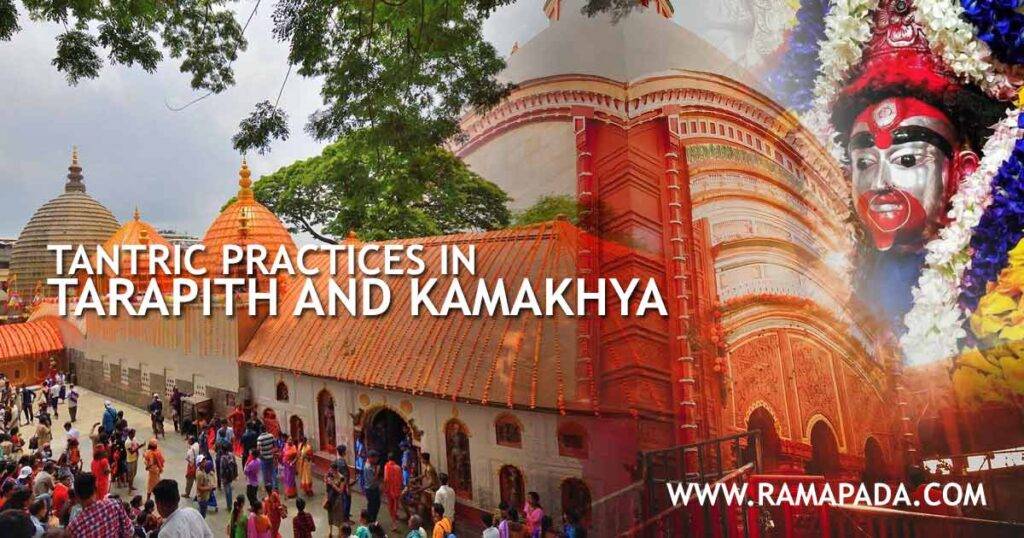
Among the countless spiritual traditions in India, Tantra stands as one of the most powerful, mysterious, and deeply revered. At the heart of this practice are two sacred Shakti Peethas: Tarapith in West Bengal and Kamakhya in Assam. Both places are known for their profound energy, centuries-old rituals, and the presence of Tantric practitioners who dedicate their lives to spiritual advancement. For seekers, pilgrims, and even scholars, exploring the Tantric practices in Tarapith and Kamakhya provides invaluable insights into the ancient blend of devotion, discipline, and mysticism that continues to thrive even today.
The Sacred Significance of Tarapith
Tarapith, located in the Birbhum district of West Bengal, is dedicated to the fierce and compassionate Goddess Tara, a form of Maa Kali. The temple is not only a pilgrimage site but also a living ground for Tantric sadhana.
- Rituals and Practices: Devotees often witness daily worship involving offerings, chanting of mantras, and homa (fire rituals). Tantric practitioners perform meditation and invoke the goddess for spiritual enlightenment.
- Cremation Ground Sadhana: One of the most unique aspects of Tarapith is its cremation ground rituals. For Tantrics, the cremation ground symbolizes the impermanence of life and the direct path to liberation. Here, advanced sadhaks practice meditation on life, death, and rebirth.
- Living Saints: Tarapith has produced great Tantric saints like Bamakhepa, who spent his life in devotion to Maa Tara. His legacy still inspires countless seekers.
For those exploring the depths of Tantra, Tarapith offers an intense and transformative experience.
The Mystical Power of Kamakhya
Kamakhya Temple, situated atop Nilachal Hill in Guwahati, Assam, is one of the most revered Shakti Peethas in the world. Dedicated to Goddess Kamakhya, it represents the powerful union of Shakti and Shiva.
- The Yoni Symbolism: The sanctum does not have an idol but a stone representing the Yoni of the Goddess, symbolizing the source of creation and divine feminine energy.
- Ambubachi Mela: This annual festival marks the menstruation of Goddess Kamakhya. During these days, the temple remains closed, and devotees celebrate the fertility of Mother Earth. It is one of the most significant events for Tantrics across India.
- Tantric Practices: Kamakhya is known for its strong Tantric tradition, especially Aghori practices, Shakti sadhana, and rituals for fulfillment of desires, protection, and spiritual upliftment. The temple is regarded as the spiritual heartland of Indian Tantra.
Kamakhya remains a place where Tantra is not hidden but openly revered as a legitimate spiritual path.
Similarities Between Tarapith and Kamakhya
While both temples are unique, they share several similarities that make them central to the Tantric tradition:
- Both are Shakti Peethas, associated with goddess worship.
- They attract Tantrics, saints, and devotees from all over India.
- Rituals include mantras, yantras, and offerings to invoke divine energy.
- Cremation ground sadhana in Tarapith and secret Tantric rites in Kamakhya highlight their deep mystical nature.
Together, they form two powerful pillars of Tantra in India.
Tantra as a Path of Transformation
Tantra is often misunderstood as mere rituals or occult practices. In truth, Tantra is a science of spiritual transformation. It teaches the balance of energies, the unity of body and soul, and the realization of divine power within.
At Tarapith, the focus is on surrender and liberation through the worship of Maa Tara. At Kamakhya, the emphasis lies on the creative and life-giving force of Shakti. Both paths guide seekers toward ultimate knowledge and freedom.
Modern Relevance of Tantric Practices
In today’s fast-paced world, Tantric traditions continue to attract seekers for their:
- Spiritual Healing—balancing negative energies and restoring inner peace.
- Relationship Harmony—rituals for love, marriage, and family peace.
- Material and Mental Growth—mantras and meditations for prosperity and clarity.
The ancient wisdom of Tarapith and Kamakhya still addresses modern challenges, proving that Tantra is timeless.
Personal Experience and Guidance
Many visitors describe a unique vibration upon entering these temples. The atmosphere is charged with devotion, chants, and rituals that make one feel connected to higher energies. However, practicing Tantra requires guidance from a genuine mentor or practitioner.
For new seekers, simply observing the practices, participating in pujas, and meditating at these sacred spaces can be transformative. For advanced practitioners, both Tarapith and Kamakhya remain living centers of Tantric mastery.
To Summarize
Tarapith and Kamakhya stand as eternal beacons of Tantra in India. They are not merely temples but gateways to profound spiritual experience, where seekers come to connect with the deepest truths of existence.
With 35+ years of experience, Ramapada Acharjee has established deep connections with Tantric sadhaks across India. His Tantric Institutes in Guwahati and Tarapith continue this living tradition, where he visits frequently to guide and support spiritual seekers. For anyone wishing to understand the essence of Tantric Practices in Tarapith and Kamakhya, these temples and the wisdom shared by genuine practitioners like him provide an authentic path to discovery.
You may also read:
- Mantra, Yantra, and Tantra
- Role of Tantra in Kundali Matching
- Vashikaran and Law: Warning & Safety Guide
🔗 Related Category: Tantra
