
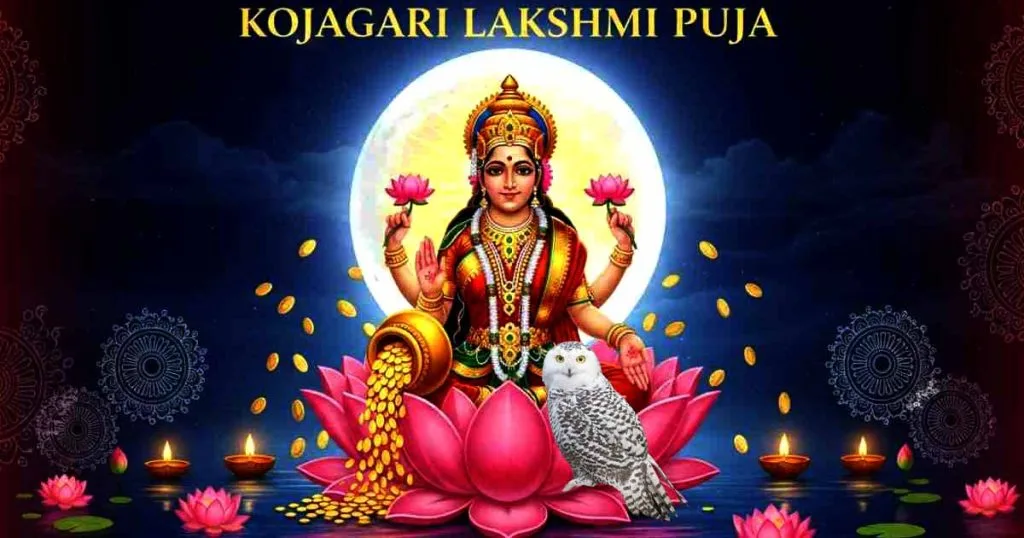
Kojagori Laxmi Puja is one of the most auspicious nights in the Hindu lunar calendar, celebrated with devotion and joy across Bengal and many parts of India. This is the night Goddess Laxmi visits her devotees. She is the divine embodiment of wealth, prosperity, and purity. On this night, she descends to bless every home. Observed on the full moon day (Purnima) of the Bengali month of Ashwin, Kojagori Laxmi Puja carries deep spiritual meaning and cultural heritage that binds generations together in faith and celebration.
Origin and Mythological Significance
The word Kojagori comes from the Sanskrit phrase “Ko Jagarti,” meaning “Who is awake?” Legend says that on this full moon night, Goddess Lakshmi walks the earth asking that very question, and those who stay awake and worship her sincerely receive her blessings of wealth, peace, and happiness. The story teaches that alertness and devotion always triumph over laziness and ignorance.
As per Hindu mythology, Goddess Lakshmi rose from the sea in the Samudra Manthan. She chose Lord Vishnu as her husband. Many people think of her only as the goddess of money. She means much more. Like, her devotees believe she brings health, joy, and peace. Real wealth is not just coins and gold.
The Time and Tithi of Kojagori Laxmi Puja
Devotees celebrate Kojagori Laxmi Puja on Sharad Purnima, which usually occurs in September or October each year. The full moon shines as the brightest of the year on this sacred night. In 2025, the festival will fall around October 12 (Sharad Purnima).
Usually, the puja begins in the evening after sunset. It continues til midnight.. Devotees stay awake through the night, chanting hymns, reciting Laxmi Chalisa, and reading Laxmi Panchali, as a sign of devotion and to answer the Goddess’s divine question — “Ko Jagarti?”
Preparations and Rituals at Home
Preparations for Kojagori Laxmi Puja begin days in advance. Houses are cleaned and decorated to welcome Goddess Laxmi, as it is believed she only enters clean and pure homes.
Ritual Highlights:
- Alpana Design: Devotees draw beautiful white rice paste motifs (Alpana) on the floor and walls, featuring lotus flowers, conch shells, and Laxmi’s footprints leading into the house.
- Lighting of Diyas: The earthen lamps are lightened in Kojagori Laxmi Puja. They place these lamps near the tulsi plant, at the entrance, and beside the puja altar. The glowing lamps welcome divine blessings and create a peaceful atmosphere.
- Idol or Image Worship: Devotees place a clay idol or picture of Goddess Laxmi on a decorated platform and offer fruits, sweets, and flowers.
- Offerings (Bhog): Families prepare a variety of traditional foods as offerings to Goddess Lakshmi. These include khichuri, luchi, payesh (sweet rice pudding), bananas, and coconut. Each offering reflects devotion, gratitude, and the hope for prosperity.
- Chanting and Mantras: Devotees recite the Sri Laxmi Sahasranama and other prayers seeking wealth, health, and happiness.
- Staying Awake: The tradition of staying awake symbolises alertness to opportunities and readiness to receive divine blessings.
Kojagori Laxmi Puja in Bengal
In West Bengal, Kojagori Laxmi Puja holds a special emotional and cultural place. Durga Puja celebrates power and victory. Kojagori Lakshmi Puja brings calm, wealth, and happiness to every home.
This night, every Bengali home glows with lamps, laughter, and devotion. In many homes, Alpana designs cover courtyards, and dhuno (fragrant incense) fills the air. The night is illuminated with soft lights, symbolising the removal of ignorance and the arrival of wisdom.
Families gather around the puja altar, chanting Laxmi Panchali and narrating stories of the Goddess’s benevolence. The sound of conch shells and bells resonates through the night as people pray for wealth, happiness, and family harmony.
Kojagori Laxmi Puja: Spiritual Meaning and Traditions
Kojagori Laxmi Puja (কোজাগরী লক্ষ্মী পূজা) is celebrated on the night of Sharad Purnima (শরৎ পূর্ণিমা), the full moon day of the Bengali month of Ashwin. On this Purnima tithi, families across Bengal worship Goddess Laxmi (লক্ষ্মী পূজা) with devotion. The name Kojagori comes from the Sanskrit phrase “Ko Jagarti”, which means “Who is awake?” As per beliefs, the goddess visits homes on this night and blesses those who stay awake and pray sincerely. Devotees clean their homes, draw Alpana (আলপনা) and Laxmi’s footprints (লক্ষ্মীর পা), and read the Laxmi Panchali (লক্ষ্মী পাঁচালি). They believe that Maa Laxmi stays forever in homes where people live with honesty, kindness and gratitude. For the exact puja timing in your city, always check a trusted local panjika.
Spiritual Message Behind the Festival
Kojagori Laxmi Puja celebrates prosperity. The festival represents much more. Its deeper meaning includes devotion, gratitude, and inner peace. True prosperity involves kindness, honesty, and moral values. As far as traditions go, Goddess Laxmi blesses those who follow a righteous path. Staying awake this night symbolises spiritual awareness and responsibility.
Even today, this spiritual message remains relevant. Like, cleaning the home reflects purity and renewal. Personal reflection encourages inner peace and gratitude. Devotees learn to balance material success with spiritual well-being.
Kojagori Laxmi Puja and the Full Moon Connection
The Sharad Purnima full moon plays a vital role in this festival. Scientifically, it represents the harvest season. Spiritually, it represents completeness and divine illumination.
People of Bengal and other regions prepare kheer (sweet rice pudding) and keep it under the moon overnight. The next morning, it is shared as prasad, symbolising nourishment from nature and blessings from the Goddess.
Cultural Expressions of Devotion
Kojagori Laxmi Puja is a religious ceremony and a celebration of art, music, and community. Traditional songs like “Kojagori Lokkhi Elo Gharer Dware” fill neighbourhoods with melody, and elders narrate folk tales about the Goddess. In rural Bengal, women gather in groups to sing and share offerings, reinforcing unity and gratitude.
In urban areas, people decorate balconies and rooftops with fairy lights and diyas, turning cities into shimmering seas of devotion. Children often stay up late, listening to stories and enjoying the festive atmosphere.
Kojagori Laxmi Puja Beyond Bengal
Bengal celebrates this day with deep emotion, and other parts of India observe Sharad Purnima or Kumar Purnima on the same night with regional variations. In Odisha, unmarried girls worship the Moon and Lord Kartikeya for good fortune. Whereas Maharashtra and Gujarat, devotees perform Laxmi Puja and enjoy Dudh Kheer under the moonlight.
In North India, the night is associated with Raas Lila, the divine dance of Lord Krishna and Radha under the full moon — symbolising love, devotion, and the bliss of divine union.
How to Celebrate Kojagori Laxmi Puja for Positive Energy
To celebrate Kojagori Laxmi Puja meaningfully, one should focus on external rituals and on inner purity. Here are a few spiritual tips:
- Declutter your home and mind — remove negativity and unnecessary attachments.
- Chant the Laxmi mantra: “Om Hreem Shreem Lakshmibhyo Namah.”
- Light diyas in all corners to invite positive vibrations.
- Donate to the needy — sharing wealth multiplies blessings.
- Express gratitude for everything you already have.
To Summarise
Kojagori Laxmi Puja is a night of divine awakening, where the Goddess asks humanity, “Who is awake?” Those who respond with sincerity and devotion are blessed. The festival reminds us that true wealth lies not in gold or possessions; it is in kindness, wisdom, and inner peace.
By observing this sacred night with faith and gratitude, we awaken the light within — a light that continues to shine long after the lamps have faded.
Shri Mahālakshmi Namaha
You May Read
Related Category: Hindu Rituals
