
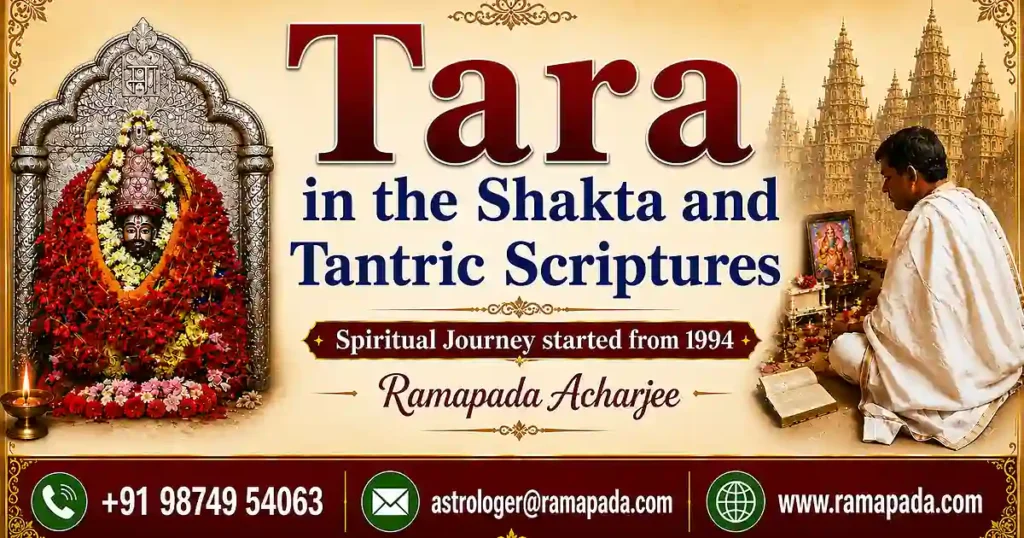
What the Ancient Traditions Have Taught Me
When people first encounter Goddess Tara Mahavidya, they immediately notice Her extraordinary form. Her striking color, unusual ornaments, intense posture, and powerful iconography instantly attract attention. However, during my spiritual journey since 1994, I realized a vital truth. Goddess Tara cannot be understood through her visual image alone.
Her deeper spiritual identity unfolds when we explore the Shakta and Tantric lineages. Seekers have contemplated Her in these traditions for generations. For me, this shift marked a crucial transition in practice. Instead of asking, “Why does Maa Tara look like this?” I began inquiring, “What fundamental spiritual truth is Her form trying to express?”
“মা তারার মূর্তি প্রথমে আমাদের চোখকে আকর্ষণ করে। কিন্তু বহু বছর ধরে এই বিষয়গুলি নিয়ে ভাবতে ভাবতে আমার মনে হয়েছে—মূর্তির রূপটা যেন দরজা; আসল যাত্রা শুরু হয় সেই দরজার ভিতরে প্রবেশ করার পরে। এই কারণেই শাক্ত ও তান্ত্রিক দর্শনের মধ্যে মা তারাকে বোঝা আমার কাছে এত গুরুত্বপূর্ণ।“
(Mother Tara’s idol first captures our eyes. Yet after reflecting on these themes for decades, I feel Her physical form acts as a gateway; the true journey begins after stepping through that door. Understanding Mother Tara within Shakta and Tantric philosophy remains vital to me.)
Readers unfamiliar with the Mahavidya tradition may first read Tara Mahavidya, the Second Mahavidya
Tara Within the Dasha Mahavidya Tradition
Goddess Tara is traditionally recognized as the Second Mahavidya in classical Shakta sequences. She appears immediately after Goddess Kali. This traditional position carries deep philosophical significance. Indeed, the Mahavidyas are not ten unrelated deities placed randomly in a list. Rather, they represent distinct dimensions of Mahashakti—the Supreme Divine Feminine Reality.
Goddess Kali confronts us with time, dissolution, and human ego limitations. In contrast, Goddess Tara introduces another powerful spiritual concept: crossing over. Her name connects with carrying someone safely across turbulence. Therefore, I never viewed Goddess Tara merely as a terrifying deity. Instead, Her deeper nature embodies protective strength, wisdom, compassion, and guidance through uncertainty.
“দশ মহাবিদ্যাকে আমি কখনও দশজন সম্পূর্ণ বিচ্ছিন্ন দেবী হিসেবে দেখি না। আমার উপলব্ধিতে, একই মহাশক্তির বিভিন্ন গভীর প্রকাশ হিসেবে তাঁদের বোঝার চেষ্টা করলে অনেক বিষয় পরিষ্কার হয়। মা কালীর মধ্যে যে শক্তিকে একভাবে অনুভব করি, মা তারার মধ্যে সেই মহাশক্তির আরেকটি বিশেষ দিক সামনে আসে।“
(I never view the Ten Mahavidyas as ten completely separate goddesses. In my realization, striving to understand them as distinct expressions of one supreme power clarifies many aspects. The energy I perceive in Mother Kali manifests another unique dimension within Mother Tara.)
An accessible scholarly starting point for studying Tara in the Mahavidya tradition is David Kinsley’s Tantric Visions of the Divine Feminine.
Understanding Tara Through the Shakta Tradition
The Shakta tradition places Shakti at the very center of ultimate spiritual reality. This philosophy is far richer than simply stating that Shaktas worship a female deity. Shakti represents the dynamic Divine Power through which cosmic existence manifests and transforms. Consequently, the Divine Mother is not a symbolic figure placed beside a male deity. She is fundamental to existence itself.
This core understanding has profoundly shaped my personal approach to Goddess Tara. When I utter “Maa Tara,” the word “Maa” is not merely emotional. It expresses a personal relationship while acknowledging cosmic power.
“বাংলায় আমরা খুব সহজে বলি—“মা তারা।” এই “মা” শব্দটার মধ্যে আমার কাছে একটা আশ্চর্য গভীরতা আছে। একদিকে সন্তান মায়ের কাছে আশ্রয় খোঁজে। অন্যদিকে সেই মা—ই আবার মহাশক্তি—যাঁকে আমাদের ছোট ব্যক্তিগত চাওয়া-পাওয়ার মধ্যে সীমাবদ্ধ করা যায় না। এই দুই অনুভূতি একসঙ্গে থাকলেই মা তারাকে বোঝার পথটা আমার কাছে আরও গভীর হয়।”
(In Bengali, we casually say “Maa Tara.” Yet the word “Maa” holds an extraordinary depth for me. On one hand, a child seeks shelter in the mother; on the other hand, that mother represents Mahashakti, who cannot be restricted to small personal desires. Holding both feelings together deepens my understanding of Mother Tara.)
Her name and philosophical identity can then be explored through the origin and meaning of Tara Mahavidya.
Tara in the Tantric Understanding
The term “Tantra” is surrounded by widespread misunderstandings today. For some, Tantra immediately suggests mystery. For others, it means supernatural powers associated with fear. Having spent decades close to traditional practices since 1994, I remain cautious regarding simplified interpretations.
Authentic Tantra is far broader than popular assumptions. It develops complex systems of philosophy, sacred mantras, meditation, and discipline. Within these traditions, the human mind, body, and cosmos are not separate. Therefore, Tantric iconography forces us to confront deep aspects of existence directly.
“তন্ত্র নিয়ে মানুষের মধ্যে যে ভুল ধারণা আছে, সেটা আমি বহু বছর ধরে দেখে আসছি। তন্ত্র মানেই ভয়ংকর কিছু, অলৌকিক ক্ষমতা বা অন্যের ক্ষতি করার পদ্ধতি—এই ধারণা তন্ত্রের বিশাল দর্শনকে খুব ছোট করে দেয়। আমার কাছে তন্ত্রের গুরুত্বপূর্ণ একটি দিক হল—নিজের ভয়, আসক্তি, অহংকার এবং সীমাবদ্ধতার সামনে দাঁড়ানোর সাহস।”
(I have observed misconceptions regarding Tantra for many years. Reducing Tantra to something scary, miraculous claims, or harmful methods diminishes its vast philosophy. To me, a key aspect of Tantra is the courage to stand before one’s own fear, attachment, ego, and limitations.)
For broader historical discussion of Shakta doctrine and scripture, readers may consult John Woodroffe’s Shakti and Shakta.
Why Tara’s Fierce Form Makes Sense in Tantra
Once we comprehend Tantra, Goddess Tara’s fierce iconography looks completely different. A fierce deity does not denote evil. Likewise, intensity does not signify human anger. Within spiritual symbolism, a powerful form represents the force required to dismantle human ignorance and fear.
Consider a mother defending her child from harm. Her compassion does not vanish when she assumes a formidable posture. In fact, her intensity arises directly from maternal love. This remains one of my favorite ways to understand Goddess Tara.
“মায়ের কোমল রূপ আমরা খুব সহজে গ্রহণ করি। কিন্তু মা যখন সন্তানকে রক্ষা করতে কঠোর হন, তখনও তো তিনি মা-ই। তাই মা তারার উগ্রতার মধ্যে আমি শুধু ভয় দেখি না। আমি সেখানে রক্ষাকারী মাতৃশক্তিকেও দেখি।“
(We easily accept a mother’s gentle form. Yet when she turns firm to protect her child, she remains that same mother. Thus, I do not see fear in Mother Tara’s intensity; I perceive protective maternal power.)
Tara, Sound, and Sacred Knowledge
Goddess Tara’s traditions connect deeply with sacred sound, mantras, and transformative wisdom. However, this subject requires a careful approach. A mantra should never be treated as a magical formula. Authentic mantra practice involves proper pronunciation, concentration, discipline, and guidance.
When discussing Goddess Tara in scriptures, I highlight the principle behind sacred sound. Focused sound serves as a vehicle for concentration. Repetition disciplines attention. Furthermore, sustained attention gradually transforms our relationship with our own mind.
“আমার অভিজ্ঞতায় অনেকেই প্রথমে জানতে চান—“কোন মন্ত্র বললে কী ফল হবে?” আমি বরং তার আগে আর একটা প্রশ্ন করতে বলি—“মন্ত্র জপ করার সময় আপনার মনটা কোথায় আছে?” শব্দ মুখে চলছে অথচ মন সম্পূর্ণ অন্যদিকে—তাহলে শুধু সংখ্যা গুনলেই আধ্যাত্মিকতার গভীরে পৌঁছানো যায় কি না, সেটা ভেবে দেখা দরকার।“
(In my experience, many ask first: “Which mantra gives what result?” I ask them to consider another question first: “Where is your mind while chanting?” If words repeat while the mind wanders elsewhere, we must question whether counting numbers reaches spiritual depth.)
Scriptural descriptions of the Goddess become clearer when studied alongside the symbolism and divine form of Tara Mahavidya.
Tara as Knowledge That Helps Us Cross
One of the best ways I understand Goddess Tara is through wisdom and crossing over. People often assume divine protection means removing external danger. However, wisdom itself protects.
Imagine someone standing beside a turbulent river. One form of assistance is carrying that person across. Another form is teaching them how to swim safely. Spiritually, I perceive Goddess Tara in that second manner. She does not always erase every difficult situation. Instead, She grants the wisdom enabling us to pass through experiences safely.
“এই জায়গাটাই মা তারার দর্শনের মধ্যে আমাকে সবচেয়ে বেশি আকর্ষণ করে। আমরা সাধারণত মায়ের কাছে বলি—“আমার বিপদটা সরিয়ে দাও।” কিন্তু বয়স এবং অভিজ্ঞতার সঙ্গে আমার প্রার্থনার অর্থ কিছুটা বদলেছে। এখন আমার মনে হয়, কখনও হয়তো বলা যায়—“মা, বিপদ যদি থাকেই, তাহলে সেটা পার হওয়ার বুদ্ধি আর শক্তিটা দাও।” আমার কাছে এই প্রার্থনার মধ্যে গভীর আধ্যাত্মিকতা আছে।“
(This aspect of Mother Tara’s philosophy attracts me most. We usually pray, “Remove my danger.” Yet with age and experience, my prayer transformed. Now I feel one can pray: “Mother, if danger persists, grant me the wisdom and strength to cross it.” To me, that prayer holds deep spirituality.)
Another extensive traditional study is Principles of Tantra by Sir John Woodroffe.
Why Scripture Should Not Be Read Without Context
A vital lesson I learned over thirty-five years is that ancient spiritual texts require proper context. Extracting a single line from a Tantric scriptural text creates misunderstanding. Translations vary, and symbols carry multiple layers of meaning. In addition, different lineages interpret the same deity in distinct ways.
Therefore, I avoid claiming that a single interpretation explains every symbol of Goddess Tara. Doing so would diminish the rich heritage of Shakta traditions.
“প্রাচীন শাস্ত্রকে আজকের একটি Facebook post-এর মতো পড়লে অনেক সময় ভুল বোঝাবুঝি হয়। একটি শ্লোক বা একটি প্রতীককে তার আগের-পরে কী বলা হয়েছে, কোন ধারায় বলা হয়েছে এবং তার ব্যাখ্যা কী—এসব না দেখে সিদ্ধান্ত নেওয়া ঠিক নয়। ৩৫ বছরের বেশি সময় এই জগতের সঙ্গে যুক্ত থেকে আমি অন্তত এটুকু শিখেছি—যত জানি, তার থেকেও না-জানার জায়গাটা অনেক বড়। এই বিনয়টা শাস্ত্র পড়ার সময় খুব দরকার বলে আমার মনে হয়।”
(Reading ancient scriptures like a social media post leads to misunderstandings. Judging a verse or symbol without exploring its context, lineage, and commentary is improper. Over 35 years, I learned that what I know is far smaller than what remains unknown. Humility is essential when reading scriptures.)
Shakta Philosophy Has Changed My Understanding of Worship
When I was younger, worship appeared primarily as an external action. It involved offering flowers, lighting lamps, reciting prayers, and conducting rituals. However, over time, I discovered an internal dimension. Worship is fundamentally about what transforms within the practitioner.
Does devotion reduce arrogance? Does it increase empathy? Does practice help us face uncertainty calmly? Moreover, does it make us more responsible toward others? These questions hold primary importance to me today.
“আজ আমার কাছে পুজোর একটা খুব সহজ পরীক্ষা আছে। ঠাকুরের সামনে বসে আমি কতটা ভক্ত—সেটা এক দিক। কিন্তু পুজো শেষ করে উঠে আমি অন্য মানুষের সঙ্গে কেমন ব্যবহার করছি, সেটাও আমার কাছে সাধনার অংশ। মায়ের পুজো করে যদি মানুষের প্রতি মমতা না বাড়ে, তাহলে নিজের সাধনার দিকে আর একবার তাকানো দরকার।“
(Today I have a simple test for worship: how devout I feel before the altar is one side, but how I treat others after worship forms an integral part of sadhana. If worshiping Mother does not increase empathy toward people, one must re-examine their practice.)
The role of sacred sound within these traditions is discussed in Tara Mahavidya mantra—meaning and spiritual significance.
Tara Is Not Only About the Supernatural
Modern discussions surrounding Tantra are frequently dominated by claims of supernatural powers. I remain cautious regarding this approach. The Goddess Tara I understand that through Shakta scriptures, it is far deeper than promises of miraculous outcomes.
She confronts us with fear and teaches us to accept impermanence. Furthermore, she embodies wisdom, protection, and inner transformation. Reducing this profound philosophy to supernatural claims misses the heart of the tradition completely.
“মা তারাকে যদি শুধু “কী অলৌকিক ফল পাওয়া যাবে”—এই প্রশ্নের মধ্যে আটকে দিই, তাহলে তাঁর দর্শনের বিশাল অংশই বাদ পড়ে যায়। আমার কাছে আধ্যাত্মিকতার বড় অলৌকিকতা হল মানুষের ভিতরের পরিবর্তন। রাগ একটু কমল। ভয়কে একটু ভালোভাবে সামলাতে শিখলাম। অহংকার একটু কমল। অন্যের কষ্ট বুঝতে শিখলাম। এগুলো ছোট পরিবর্তন মনে হলেও আমার কাছে খুব বড় সাধনা।”
(If we restrict Mother Tara to “what miraculous result will I get,” we miss a vast part of her philosophy. To me, the greatest miracle of spirituality is internal change: reducing anger, managing fear, lessening ego, and understanding others’ pain. These seem small, yet represent significant sadhana.)
Readers interested in examining an English translation of a classical Tantra may explore the Mahanirvana Tantra.
My Personal Understanding After Decades on This Path
The longer I remain engaged with spiritual traditions since 1994, the less interested I become in making absolute claims. Instead, I learned to observe quietly, ask thoughtful questions, and realize that faith and inquiry walk together.
We can hold sincere faith while asking questions. Likewise, we can respect ancient traditions while seeking context. We bow before Maa Tara while recognizing her symbolism contains philosophical depths that take a lifetime to explore.
“আমার কাছে ভক্তি মানে প্রশ্ন বন্ধ করে দেওয়া নয়। বরং কখনও কখনও গভীর ভক্তি থেকেই গভীর প্রশ্ন আসে। “মা কে?” “এই রূপ কেন?” “এই প্রতীকের অর্থ কী?” “এই দর্শন আমার জীবনকে কী শেখাচ্ছে?” এই প্রশ্নগুলোই আমাকে এত বছর ধরে শাক্ত ও তান্ত্রিক দর্শনের প্রতি আগ্রহী রেখেছে।”
(To me, devotion does not mean stopping inquiry. Often deep devotion raises profound questions: “Who is Mother?” “Why this form?” “What does this symbol mean?” “What does this philosophy teach my life?” These queries have kept me engaged with Shakta philosophy for decades.)
Because ancient texts use layered language and symbolism, I also recommend reading this note about approaching Tantric texts.
Final Reflection—The Tara I Have Come to Understand
When I contemplate Maa Tara today, I perceive several spiritual dimensions at once. She is the Second Mahavidya, the powerful expression of Shakta Tantra, and the compassionate Divine Mother. She reminds us that wisdom asks us to confront what we routinely avoid—fear, uncertainty, change, and limitations.
Perhaps this is why Goddess Tara’s form appears fierce while her essence remains deeply compassionate.
“আমার এই দীর্ঘ আধ্যাত্মিক যাত্রায় মা তারাকে যত বুঝতে চেষ্টা করেছি, ততই মনে হয়েছে—তাঁর ভয়ংকর রূপের ভিতরে একটা আশ্চর্য আশ্বাস লুকিয়ে আছে। সেই আশ্বাস যেন বলে—“অন্ধকার আছে বলে পথ শেষ হয়ে যায়নি।” মানুষ সব সময় জানবে না সামনে কী আছে। আমিও জানি না। কিন্তু বিশ্বাস, জ্ঞান, সংযম এবং সাহস নিয়ে সেই অজানা পথের দিকে এগিয়ে যাওয়া যায়। আমার কাছে মা তারার অন্যতম গভীর শিক্ষা এটাই।”
(In my spiritual journey, the more I strove to understand Mother Tara, the more I felt a reassuring promise hidden within her intense form. That promise says, “Darkness does not mean the path has ended. “Humans will not always know what lies ahead; I do not know either. Yet with faith, wisdom, restraint, and courage, one can advance into the unknown. That stands as her deepest lesson to me.)
— Ramapada Acharjee
In the spiritual journey since 1994
Several other historical translations and resources are collected in the Internet Sacred Text Archive’s Tantra library.
Frequently Asked Questions About Tara in Shakta and Tantric Scriptures
Q1. Who is Tara in the Dasha Mahavidya tradition?
Goddess Tara is traditionally revered as the Second Mahavidya following Goddess Kali. She represents a distinct expression of Mahashakti, embodying protective strength, wisdom, and guidance through uncertainty.
“মা তারা হলেন দশ মহাবিদ্যার দ্বিতীয় রূপ, যিনি ভয় ও অনিশ্চয়তা পার হওয়ার শক্তি দেন।”
(Mother Tara is the Second Mahavidya who grants the strength to cross fear and uncertainty.)
Q2. Is Tara Mahavidya part of the Shakta tradition?
Yes, Goddess Tara holds a prominent place in Shakta and Tantric traditions. In these traditions, Shakti is revered as the dynamic Divine Power underlying creation.
“মা তারাকে বুঝতে গেলে শুধু তাঁর মূর্তি নয়, শাক্ত দর্শনে শক্তির ধারণাটাও বোঝা দরকার।”
(To understand Mother Tara, one must grasp not just her idol but the concept of Shakti in Shakta philosophy.)
Q3. Why does Goddess Tara possess a fierce appearance?
Her fierce appearance symbolizes protective and transformative energy. In sacred art, intensity denotes the strength required to destroy ignorance rather than cruelty.
“মায়ের উগ্র রূপ নিষ্ঠুরতা নয়; তা হলো ভয় ও অজ্ঞতা বিনাশ করার প্রকাণ্ড শক্তি।“
(The Mother’s intensity is not cruelty; it is the powerful force that destroys fear and ignorance.)
Q4. Is Tantra focused solely on secret rituals and supernatural claims?
No. Authentic Tantra encompasses comprehensive systems of philosophy, meditation, mantra science, and discipline. Reducing Tantra to supernatural claims creates a misleading impression.
“প্রকৃত তন্ত্র একটি গভীর দর্শন ও অনুশাসন; একে কেবল অলৌকিক ক্ষমতার খেলা মনে করা ভুল।“
(Authentic Tantra is a deep philosophy and discipline; treating it merely as a game of miraculous claims is incorrect.)
Q5. Are Goddess Tara and Goddess Kali identical?
Goddess Tara and Goddess Kali are distinct Mahavidyas. Although they share symbolic connections within Shakta traditions, each carries unique philosophical emphases.
“কালী ও তারা এক নন; এই বিষয়টি আমরা Part 5E-তে বিস্তারিতভাবে আলোচনা করব।“
(Kali and Tara are not identical; we shall discuss this topic in detail in Part 5E.)
Q6. Can ancient Tantric texts be interpreted literally?
Not always. Tantric literature utilizes layered symbolism and requires historical and philosophical context. Lineages may also interpret specific symbols differently.
“তান্ত্রিক শাস্ত্রের রূপক ও প্রতীককে বিচার করতে হলে সঠিক মার্গদর্শন ও প্রসঙ্গ বোঝা প্রয়োজন।”
(Interpreting metaphors and symbols in Tantric scripture requires proper guidance and context.)
Q7. What is Goddess Tara’s primary spiritual message?
Her deepest message is not that every difficulty will vanish automatically. Rather, she grants the wisdom and inner strength needed to navigate fear bravely.
“মা তারা আমাদের সব বাধা রাতারাতি দূর করেন না, কিন্তু তা পার হওয়ার শক্তি দান করেন।“
(Mother Tara does not erase every obstacle overnight; rather, she grants the power to cross them.)
Q8. What have I personally learned from studying Goddess Tara?
I learned that genuine faith and thoughtful inquiry walk together. Studying Goddess Tara reinforces the necessity of humility, compassion, and courage in spiritual life.
“সাধনা আমাদের শেখায় অহংকার ছেড়ে বিনয়ী হতে এবং মানুষের প্রতি সহানুভূতির হাত বাড়িয়ে দিতে।“
(Sadhana teaches us to abandon pride, remain humble, and extend compassion toward humanity.)
Connect with the Best in Kolkata
Stop wandering in uncertainty. Your stars have a story to tell, and Ramapada Acharjee is here to help you read it. With a legacy built on truth, 35 years of experience, and a mission to bring peace to every household, your journey toward clarity starts here.
📍Consultation available in Kolkata, Guwahati, Siliguri, Tarapith & online.
📞 Call/WhatsApp: +91-98749 54063
🌐 Visit Website
You may also read:
- Kamakhya Temple Tantra – Secrets of Divine Power
- How Can We Identify a Genuine Tantrik?
- হাজার বছরের পুরনো বাঙালি তান্ত্রিক কাহিনি
Related Category: Tantra
