
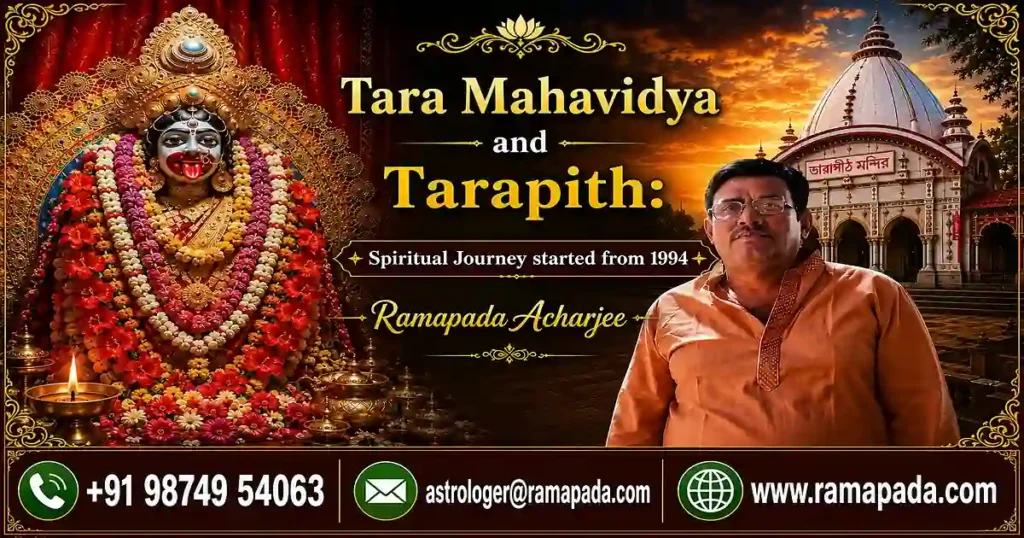
My Spiritual Experience with Tara Maa and the Sadhana Tradition
When we travel across sacred lands, we visit some places as ordinary travelers. However, certain holy sites gradually become an essential part of our inner spiritual life. For me, Tarapith belongs directly to that second category.
My spiritual journey began in 1994. Over the decades, I visited numerous temples, met realized practitioners, observed diverse lineages, and studied Tantra through personal experience rather than books alone. Nevertheless, Tarapith has always held a deeply sacred place in my heart. Whenever I contemplate Goddess Tara Mahavidya, I cannot separate the philosophical concept of the Divine Mother from the living spiritual atmosphere of Tarapith.
“তারাপীঠ আমার কাছে শুধু একটি মন্দির বা তীর্থস্থান নয়। বহু বছর ধরে সেখানে যাওয়া, সাধকদের দেখা, মায়ের সামনে বসা এবং চারপাশের পরিবেশ অনুভব করার মধ্যে দিয়ে তারাপীঠ আমার আধ্যাত্মিক জীবনের একটি অংশ হয়ে উঠেছে।“
(To me, Tarapith is not merely a temple or pilgrimage site. Visiting there over many years, meeting practitioners, sitting before Mother, and experiencing the sacred environment made Tarapith an integral part of my spiritual life.)
To understand why Tarapith holds such importance, readers may first explore Tara Mahavidya, the Second Mahavidya.
Tara Mahavidya and the Living Tradition of Tarapith
In the Shakta lineage, Goddess Tara is traditionally recognized as the Second Mahavidya, appearing right after Goddess Kali. Her sacred name embodies the concepts of carrying across, guiding, and protecting seekers. However, when you step into Tarapith, Goddess Tara is no longer merely a topic of scriptural debate.
Here, she is simply revered as Maa Tara. Devotees stand before Her carrying diverse human emotions—some seek relief from suffering, others express deep gratitude, and many bring quiet questions they cannot share elsewhere. This intimate bond between mother and child forms the most beautiful aspect of Tarapith. For many devotees, formal philosophy arrives later; faith comes first.
“মানুষ মায়ের কাছে সব সময় কোনও অলৌকিক ঘটনা চাইতে যায় না। অনেক সময় মানুষ শুধু এমন একটি জায়গা খোঁজে যেখানে নিজের দুঃখ, ভয় বা অসহায়তাকে নিঃশব্দে রেখে আসতে পারে। তারাপীঠের শক্তি আমার কাছে এখানেই।“
(People do not always visit Mother seeking miracles. Often, they simply look for a sacred space where they can silently deposit their grief, fear, or helplessness. To me, the true power of Tarapith resides right here.)
For factual information about the location, temple and traditions of Tarapith, readers can consult the official West Bengal Tourism page on Tarapith.
Why Tarapith Is So Important in the Tara Tradition
Located in the Birbhum district of West Bengal, Tarapith has long been associated with Shakta worship and Tantric spiritual lineages. However, its true significance cannot be grasped by evaluating rituals alone. Tarapith represents a unique, personal approach to the Divine Mother.
Here, Goddess Tara does not feel distant or unreachable. Seekers approach Her as a loving mother before whom they can express fear, sorrow, confusion, hope, and devotion. Over the years, I noticed that many visitors arrive carrying burdens that words cannot easily describe. Although they may stand before Maa Tara for only a few brief moments, those moments become deeply transformative.
“তারাপীঠের আসল গুরুত্ব কেবল বাহ্যিক আচারের মধ্যে নেই। এটি এমন এক পবিত্র স্থান যেখানে মা এবং সন্তানের সম্পর্ক অত্যন্ত নিবিড় ও অমলিন।”
(The real significance of Tarapith lies not merely in outer rituals. It represents a sacred space where the bond between mother and child remains deeply personal and pure.)
The Image of Maa Tara at Tarapith
One distinctive feature of Tarapith is the sacred form in which Maa Tara is worshipped. For someone viewing the shrine for the first time, the experience differs greatly from artistic illustrations found in books or modern paintings.
This visual difference teaches us a vital lesson: a deity cannot be understood merely through external artistic depictions. Behind the sacred form lies generations of devotion, tradition, and symbolism. Therefore, when I stand before Maa Tara, I avoid analyzing every detail intellectually, because genuine devotion begins where intellectual analysis turns quiet.
“দেবীমূর্তি কেবল দেখার বিষয় নয়। বাহ্যিক রূপের পেছনে যে শতাব্দীর ভক্তি ও সাধনার ধারা রয়েছে, তাকে অনুভব করাই মূল কথা।”
(A sacred image is not merely something to look at. Feeling the centuries of devotion and sadhana behind the visible form remains the core essence.)
The spiritual meaning of her sacred name is discussed more deeply in the origin and meaning of Tara Mahavidya.
Tarapith and the Tantric Sadhana Tradition
Tarapith is globally famous for its deep association with Tantra and traditional sadhana. Regrettably, the word “Tantra“ is surrounded by widespread misunderstandings today. Popular culture often misrepresents Tantra as something terrifying or connected solely with miraculous claims.
My personal experience since 1994 reveals a completely different reality. Genuine sadhana demands quiet virtues: self-discipline, patience, restraint, mental concentration, devotion, and responsibility. Without these internal qualities, external rituals carry little spiritual meaning.
“তন্ত্র মানে কয়েকটি মন্ত্র মুখস্থ করা বা কোনও রহস্যময় ক্রিয়া করা নয়। দীর্ঘদিনের সাধনা আমাকে শিখিয়েছে—সংযম, ধৈর্য, নিয়ম এবং নিজের মনকে বোঝার চেষ্টা না থাকলে শুধু বাহ্যিক আচারে আধ্যাত্মিক উন্নতি হয় না।”
(Tantra does not mean memorizing mantras or performing secret rites. Decades of practice taught me that without restraint, patience, discipline, and self-understanding, outer rituals yield no spiritual progress.)
The connection between Tara, Mahavidya worship and Tarapith also appears within David Kinsley’s study of the Ten Mahavidyas.
What I Learned from Observing Sadhana
Throughout my journey, I observed various spiritual practices and practitioners across different traditions. Not everyone follows the same methodology, nor should a practice be copied casually simply because it appears mysterious.
Authentic spiritual traditions operate within proper context, discipline, and guidance. Reading regarding a ritual and practicing it correctly are two entirely different matters. Therefore, I strongly advocate that spiritual curiosity must always walk alongside humility and responsibility.
“সব সাধনা সবার জন্য নয়। কৌতুহল থাকা ভালো, কিন্তু দায়িত্ববোধ ও বিনয় ছাড়া আধ্যাত্মিক পথে এগোনো কঠিন।“
(Not every sadhana applies to everyone. Curiosity is fine, but advancing along the spiritual path without responsibility and humility remains difficult.)
Tarapith Mahashmashan and the Idea of Impermanence
Another profound element shaping Tarapith’s atmosphere is the Mahashmashan (great cremation ground). To an ordinary observer, a cremation ground symbolizes physical death. However, within Tantric philosophy, it serves as a powerful reminder of impermanence.
Everything we strive to accumulate—wealth, social status, personal pride, and even the physical body—is temporary. Accepting impermanence is not pessimistic; on the contrary, it makes daily life far more meaningful by teaching us what truly deserves our focus.
“জীবনের ক্ষণস্থায়ী রূপকে স্বীকার করে নেওয়াই মহাশ্মশানের বড় শিক্ষা। এটি আমাদের অহংকার ত্যাগ করে শান্ত হতে শেখায়।“
(Accepting the impermanence of life stands as the greatest lesson of the Mahashmashan. It teaches us to relinquish pride and cultivate inner peace.)
Tarapith’s traditions are closely associated with spiritual discipline, making Tara Mahavidya Sadhana an important related topic.
Bamakhepa and the Spiritual Memory of Tarapith
Any discussion regarding Tarapith inevitably leads to Saint Bamakhepa, one of the most revered spiritual figures associated with Maa Tara. While stories regarding saints naturally absorb devotional lore over generations, Bamakhepa’s impact on Tarapith remains undeniable.
What inspires me most is not miraculous tales, but his intense, childlike bond with Maa Tara. Approaching the Divine through unconditional love and complete surrender continues to define the spiritual character of Tarapith today.
“বামাক্ষ্যাপার জীবন আমাদের শেখায় যে জটিল নিয়মকানুনের চেয়ে মায়ের প্রতি সরল ও কৃত্রিমতাহীন ভালোবাসার জোর অনেক বেশি।“
(Saint Bamakhepa’s life demonstrates that simple, unfeigned love for Mother carries far greater strength than complex procedural rules.)
For a broader academic discussion of Tara within Hindu goddess traditions, see Hindu Goddesses by David Kinsley.
What Tara Maa Has Come to Mean to Me
After decades on this path, my understanding of Maa Tara has become simpler and clearer. I no longer believe spirituality consists of chasing extraordinary phenomena. Instead, spirituality means learning to remain steady during times of uncertainty, cultivating compassion, accepting what cannot be altered, and walking forward bravely.
In this practical sense, the symbolism of Tara—she who carries us across—has become deeply meaningful to my personal life.
“বয়স ও অভিজ্ঞতার সঙ্গে আমার কাছে সাধনার অর্থও বদলেছে। আগে হয়তো অনেক রহস্য জানার আগ্রহ ছিল। এখন মনে হয়, সাধনার বড় শিক্ষা হল নিজের অহং কমানো, মনকে স্থির করা এবং জীবনের অনিশ্চয়তার মধ্যেও ভিতরের শক্তিটুকু ধরে রাখা।”
(With age and experience, the meaning of sadhana transformed for me. Earlier I sought secret mysteries. Now I realize the greatest lesson is reducing ego, steadying the mind, and retaining inner strength during trials.)
Tarapith Beyond Miracles
Many visitors travel to holy sites expecting instant solutions to material problems. While faith provides emotional strength, I prefer not judging spirituality solely by fulfilled desires.
A sacred place influences human consciousness in quieter ways—making us calmer, offering new perspectives on struggles, and instilling patience where fear once dominated. Although these internal shifts look subtle, they truly transform a human life.
“পবিত্র তীর্থ আমাদের সমস্যা রাতারাতি মিটিয়ে দেয় না, কিন্তু সেই সমস্যাকে নতুন দৃষ্টিভঙ্গি ও ধৈর্যের সাথে মোকাবিলা করার শক্তি দেয়।”
(A sacred pilgrimage does not erase problems overnight; rather, it grants the strength and patience to face those problems with fresh clarity.)
Readers seeking historical background on Shakta sacred traditions may also consult Shakti and Shakta.
Devotion and Discipline Must Walk Together
If there is one primary lesson I wish to share with younger seekers, it is this: devotion should never replace good judgment, nor should knowledge destroy devotion. Both remain necessary for a balanced life.
Faith without discernment degenerates into superstition, while knowledge without humility turns into intellectual pride. A balanced spiritual journey requires both a compassionate heart and a clear mind.
“ভক্তি ও বিবেক—দুই-ই সাধনার জন্য প্রয়োজন। বিবেকহীন ভক্তি অন্ধবিশ্বাসে পরিণত হয়, আর বিনয়হীন জ্ঞান অহংকার তৈরি করে।”
(Both devotion and discernment are essential for sadhana. Unreasoned devotion turns into blind faith, while knowledge without humility fosters ego.)
The textual background behind many Tara traditions can be explored through Tara in the Shakta and Tantric scriptures.
My Final Reflection on Tara Maa and Tarapith
Whenever I reflect upon Tarapith today, I recall far more than ancient temples or traditional rituals. I remember a profound spiritual sanctuary where everyday people stand before Maa Tara with private struggles.
Spirituality does not always deliver immediate answers; rather, it transforms the individual asking the questions. To me, that stands as Maa Tara’s deepest and most enduring teaching.
Joy, Maa Tara!
— Ramapada Acharjee
In the spiritual journey since 1994
My experiences surrounding this tradition have also shaped these lessons learned from Tara Mahavidya Sadhana.
Frequently Asked Questions About Tara Mahavidya and Tarapith
Q1. Is Tara Mahavidya the same as Tara Maa of Tarapith?
They are deeply connected within Shakta tradition. Goddess Tara represents the universal Second Mahavidya, while Tara Maa at Tarapith embodies a vibrant, localized devotional tradition.
“তারাপীঠের মা তারা এবং দশ মহাবিদ্যার মা তারা শাক্ত দর্শনে একইভাবে অভিন্ন মহাশক্তি হিসেবে পূজিত হন।“
(Mother Tara of Tarapith and Goddess Tara of the Dasha Mahavidya are revered as identical Mahashakti in Shakta philosophy.)
Q2. Why is Tarapith deeply associated with Tantra?
Tarapith carries a long heritage of Shakta practitioners, sacred sadhana lineages, and its famous Mahashmashan, making it a primary pilgrimage center for Tantric study.
“তারাপীঠের মহাশ্মশান ও সাধক-পরম্পরা এই স্থানকে শাক্ত সাধনার প্রধান কেন্দ্রে পরিণত করেছে।“
(Tarapith’s Mahashmashan and saintly lineage established this shrine as a premier center for Shakta sadhana.)
Q3. Is Tantra focused mainly on supernatural powers?
No. That is a common misconception. Authentic Tantra focuses on spiritual discipline, philosophical study, self-control, and structured meditation practices.
“তন্ত্র কেবল অলৌকিক ক্ষমতার বিষয় নয়; এটি আত্মসংযম ও দর্শনের এক গভীর অনুশাসন।“
(Tantra is not merely about miraculous claims; it represents a deep discipline of self-restraint and philosophy.)
Q4. Can anyone practise Tara Sadhana?
General devotional worship and simple prayers are open to everyone. However, specialized Tantric procedures traditionally require proper understanding and initiation from a qualified guide.
“ভক্তিভরে মাকে ডাকা সবার জন্য উন্মুক্ত, কিন্তু বিশেষ তান্ত্রিক ক্রিয়ার জন্য উপযুক্ত নির্দেশনার প্রয়োজন।“
(Calling Mother with devotion is open to all, but specialized Tantric rituals require proper guidance.)
Q5. What can modern people learn from Goddess Tara?
Goddess Tara symbolizes guidance through fear, grief, and uncertainty, encouraging modern individuals to cultivate courage, patience, compassion, and mental stability.
“মা তারার মূল শিক্ষা হলো জীবনের কঠিন পরিস্থিতির মুখোমুখি দাঁড়িয়ে ভয় না পেয়ে স্থির থাকা।“
(Mother Tara’s core lesson is remaining steady amidst life’s difficult trials without surrendering to fear.)
The broader Tantric context surrounding sacred places, worship and ritual can be explored through the IGNCA material on Tantra.
Connect with the Best in Kolkata
Stop wandering in uncertainty. Your stars have a story to tell, and Ramapada Acharjee is here to help you read it. With a legacy built on truth, 35 years of experience, and a mission to bring peace to every household, your journey toward clarity starts here.
📍Consultation available in Kolkata, Guwahati, Siliguri, Tarapith & online.
📞 Call/WhatsApp: +91-98749 54063
🌐 Visit Website
You may also read:
Vashikaran Specialist in Kolkata
How to find a genuine Tantrik in India
Love Problem Solution Specialist
Difference Between Vedic Tantra and Black Magic
Top Signs of a Genuine Tantric in India
How Tantra Helps in Modern Life Problems
Difference Between Tantrik and Astrologer—Truth vs Myth
Related Category: Tantra
