
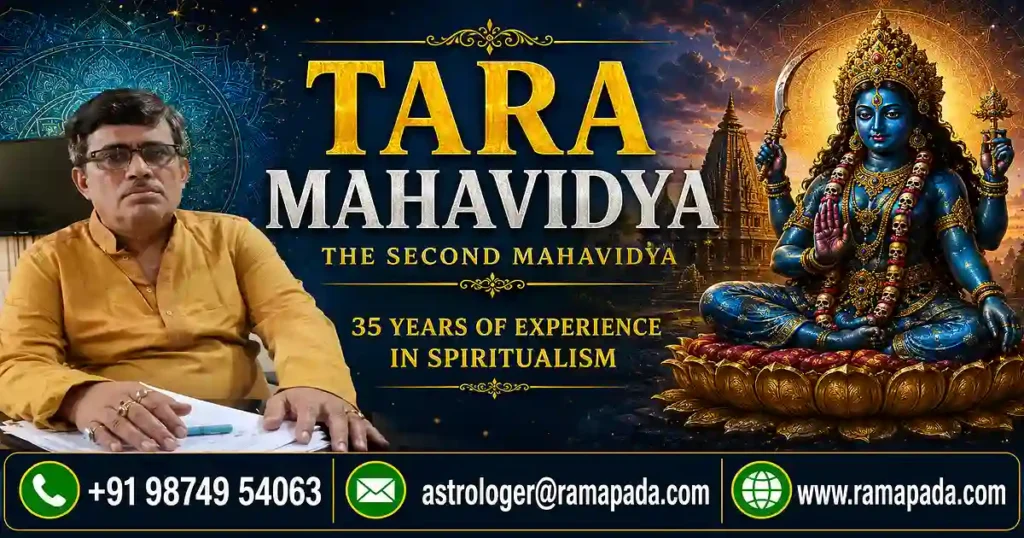
The Compassionate Mother Who Guides Us Through Fear and Suffering
“আমার কাছে মা তারা শুধু শাস্ত্রে বর্ণিত একটি দেবীমূর্তি নন। জীবনের এমন সময় আসে, যখন মানুষ নিজের বুদ্ধি, শক্তি বা অভিজ্ঞতা দিয়েও পথ খুঁজে পায় না। সেই অসহায় মুহূর্তে মায়ের প্রতি যে আত্মসমর্পণ জন্মায়, মা তারার ভাবকে আমি তার মধ্যেই অনুভব করি।”
(To me, Mother Tara is not merely a scriptural deity; rather, She represents that supreme surrender when human wisdom and strength feel exhausted during life’s darkest hours.)
After reflecting upon Goddess Kali, we naturally arrive at Tara Mahavidya, the second of the Ten Mahavidyas. However, in my personal experience, moving from Kali to Tara does not simply signify moving from one deity to another. Instead, it feels like discovering another profound expression of the same infinite Divine Mother—one who appears when a seeker feels lost, frightened, or unable to see a clear way forward.
For more than thirty-five years, I have studied Vedic astrology, Tantra, Shakta traditions, and the personal struggles of seekers who visited me during difficult periods of their lives. Throughout these decades, one truth has become increasingly clear to me: spiritual knowledge becomes truly meaningful only when it helps us understand daily life more deeply. Indeed, Tara Mahavidya represents that compassionate guidance.
To explore her identity more deeply, continue with the origin and meaning of Tara Mahavidya
Who Is Tara Mahavidya?
The Sanskrit root of the name Tara connects directly with the concept of crossing over or being safely carried across. Therefore, traditional devotees have always revered Tara Mahavidya as the Divine Mother who helps the seeker cross turbulent ocean currents of fear, confusion, and worldly suffering.
However, this spiritual truth should not be reduced to a quick promise that every material difficulty will vanish instantly through ritual worship. In my understanding, Goddess Tara’s deeper teaching remains far more subtle. Sometimes, the challenging situation around us does not alter overnight; instead, our internal capacity to confront that situation transforms completely.
Tara’s place alongside other important Hindu goddesses is also discussed in Hindu Goddesses: Visions of the Divine Feminine in the Hindu Religious Tradition.
Although fear may persist for a short time, courage quietly begins to grow within our hearts. Likewise, confusion may linger, yet the mind gradually becomes clearer and more tranquil. As I often share with my visitors:
“অনেকেই মনে করেন দেবীর কৃপা মানে জীবনের সব সমস্যা সঙ্গে সঙ্গে দূর হয়ে যাবে। আমার দীর্ঘ অভিজ্ঞতায় বিষয়টিকে আমি একটু অন্যভাবে দেখেছি। কখনও পরিস্থিতি একই থাকে, কিন্তু সেই পরিস্থিতির সামনে দাঁড়ানোর মতো শক্তি মানুষের ভিতরে তৈরি হয়। আমার কাছে এটিও মায়ের কৃপা।“
(Many assume divine grace means instant removal of all life problems. Through my long experience, I view this differently: sometimes external situations remain, but the inner strength to confront them grows. To me, that internal strength is the true grace of Mother Tara.)
That internal fortitude represents the true grace of Goddess Tara.
For an academic overview of Tara specifically within the Ten Mahavidyas, readers may begin with David Kinsley’s Tantric Visions of the Divine Feminine.
My First Understanding of Tara Was Not About Fear
When I was younger, the fierce iconographic forms of the Divine Mother naturally raised many questions in my mind. Naturally, her appearance could seem mysterious, intense, or even intimidating at first glance. Nevertheless, years of study, temple visits, and spiritual observation gradually transformed that initial perspective.
I began to realise that a fierce appearance does not signify cruelty; rather, it symbolises supreme protective power. A loving mother becomes gentle when her child needs comfort, yet the same mother becomes formidable when her child requires protection from danger. Indeed, strength and compassion are not opposites; at times, true compassion requires immense strength.
For a broader understanding of the Goddess as supreme Shakti, readers may explore John Woodroffe’s Shakti and Shakta.
This vital understanding helped me approach Goddess Tara with a fresh perspective. Consequently, I stopped asking only why the Goddess appears in such a fierce form; instead, I began inquiring what fundamental truth about human existence Her form teaches us. As a personal reflection states:
“ছোটবেলায় বা সাধনার প্রথম দিকে দেবীর উগ্র রূপ দেখে প্রশ্ন জাগা খুব স্বাভাবিক। কিন্তু বয়স, অভিজ্ঞতা এবং অধ্যয়নের সঙ্গে আমি বুঝেছি—মায়ের উগ্রতা সব সময় ভয়ের প্রতীক নয়। সন্তানকে রক্ষা করার সময় মায়ের যে কঠোর রূপ দেখা যায়, তার ভিতরেও ভালোবাসাই থাকে।”
(In youth or early practice, questioning fierce forms is natural. Yet with age and study, I realized Her fierceness does not symbolize fear; behind a mother’s protective firmness resides deep maternal love.)
That deeper reflection opened a profound door of understanding in my spiritual journey.
Her extraordinary appearance and sacred attributes are explained in the iconography and symbolism of Tara Mahavidya.
Frequently Asked Questions About Tara Mahavidya
Q1. Who is Tara Mahavidya?
Tara Mahavidya is traditionally revered as the Second Mahavidya in the Shakta lineage. She symbolises divine compassion, spiritual guidance, protection, and the inner strength that enables a seeker to navigate through fear and uncertainty.
“আমার উপলব্ধিতে মা তারা সেই মাতৃশক্তির প্রতীক, যিনি জীবনের কঠিন সময়ে ভক্তকে সাহস, আশ্রয় এবং অন্তরের পথ খুঁজে নেওয়ার শক্তি দেন।”
(In my realization, Mother Tara symbolizes that divine power giving courage, shelter, and inner clarity during life’s trials.)
The larger intellectual and ritual setting of Shakta Tantra can be studied through Principles of Tantra.
Q2. Why is Tara called the Second Mahavidya?
Tara is generally placed after Kali in classical Shakta lists. However, this sequence should not be viewed as a hierarchical ranking, because each Mahavidya expresses a distinct dimension of the Divine Feminine and offers a unique path of understanding.
“দশমহাবিদ্যার মধ্যে কে বড় বা কে ছোট—আমি বিষয়টিকে সেভাবে দেখি না। প্রতিটি মহাবিদ্যার রূপের মধ্যেই আলাদা তত্ত্ব ও শিক্ষা রয়েছে।”
(I do not view the Mahavidyas in terms of higher or lower rank; each form carries its own distinct philosophy and teaching.)
Another important dimension of this tradition is Tara Mahavidya mantra and its spiritual significance.
Q3. What does the name Tara mean?
The name Tara signifies “she who carries across.” Spiritually, this represents crossing over internal fear, confusion, grief, and the limitations of ordinary human awareness.
“আমার কাছে ‘পার করে দেওয়া’ কথাটির অর্থ শুধু বাইরের বিপদ থেকে উদ্ধার নয়। নিজের ভিতরের ভয়, দুর্বলতা ও অন্ধকার অতিক্রম করাও এক ধরনের পার হওয়া।”
(To me, ‘carrying across’ means more than rescue from outer danger; overcoming internal fear and weakness is also a true crossing.)
Q4. Is Goddess Tara a frightening deity?
Her visual forms can appear intense in certain traditions. However, fierce imagery does not denote cruelty; rather, within Shakta philosophy, it represents protective power, transformation, and the courage to confront darkness.
“মায়ের রূপ দেখে শুধু ভয় পেলে তাঁর তত্ত্ব বোঝা কঠিন। অনেক সময় কঠোর রূপের আড়ালেই গভীর মাতৃস্নেহ ও রক্ষার ভাব থাকে।”
(Judging her form by fear alone hides Her true philosophy behind Her stern appearance lies deep maternal affection.)
Tara’s continuing sacred association with Bengal can also be understood through the official West Bengal Tourism information on Tarapith.
Q5. Are Goddess Tara and Goddess Kali the same deity?
While Goddess Tara and Goddess Kali share symbolic similarities, seekers recognise them as distinct Mahavidyas. Kali relates strongly with time, dissolution, and ultimate transcendence, whereas Tara is approached through themes of compassionate guidance and crossing beyond fear.
“মা কালী ও মা তারার মধ্যে গভীর যোগ থাকলেও তাঁদের সম্পূর্ণ এক করে দেখা ঠিক হবে না। পরবর্তী আলোচনায় আমি এই মিল ও পার্থক্য আরও বিস্তারিতভাবে ব্যাখ্যা করব।”
(Though deeply connected, viewing Kali and Tara as identical is inaccurate; I shall elaborate on their distinct aspects in upcoming chapters.)
Readers interested in the discipline behind Tara worship may continue with Tara Mahavidya Sadhana.
Q6. Is Tara Mahavidya connected with Tantra?
Yes, Goddess Tara holds an important place in Tantric and Shakta lineages. However, genuine Tantra is a disciplined spiritual path that should never be reduced to sensational claims or superstition.
“৩৫ বছরের অভিজ্ঞতায় আমি দেখেছি, Tantra নিয়ে মানুষের মধ্যে অনেক ভুল ধারণা রয়েছে। প্রকৃত তন্ত্রকে বুঝতে হলে শাস্ত্র, সাধনা এবং আত্মসংযম—সবকিছুকেই গুরুত্ব দিতে হয়।”
(Over 35 years, I have seen many misconceptions about Tantra; authentic practice requires scriptural wisdom, discipline, and self-control.)
Q7. Is Tara Mahavidya connected with Tarapith?
Yes, Goddess Tara connects deeply with Tarapith in West Bengal—one of the most sacred centres of Shakta sadhana. Because Tarapith carries a rich heritage of saintly traditions, I shall explore this holy pilgrimage separately in this series.
“তারাপীঠকে শুধু একটি বিখ্যাত মন্দির হিসেবে দেখলে তার সম্পূর্ণ আধ্যাত্মিক ঐতিহ্য বোঝা যায় না। মা তারা, সাধনা, ভক্তি এবং সাধক-পরম্পরা—সব মিলিয়ে তারাপীঠের একটি আলাদা গভীরতা রয়েছে।”
(Viewing Tarapith merely as a temple overlooks its spiritual depth; Mother Tara, sadhana, and the saintly lineage create its true sacredness.)
Q8. What can Tara Mahavidya teach us in modern life?
Her symbolism encourages us to face uncertainties bravely, cultivate compassion, and maintain inner clarity. In addition, her message reminds us that strength and tenderness exist together harmoniously.
“আজকের মানুষের জীবনেও মা তারার শিক্ষা অত্যন্ত প্রাসঙ্গিক। ভয়ের মধ্যেও স্থির থাকা, সঠিক পথ খোঁজা এবং মানবিকতা না হারানো—আমার কাছে মা তারার শিক্ষার একটি গুরুত্বপূর্ণ দিক।”
(Mother Tara’s guidance remains highly relevant today; staying calm during trials and retaining humanity represents Her core teaching.)
Q9. Does worshipping Goddess Tara guarantee instant problem solutions?
Spiritual devotion should never be presented as a magical solution to every material problem. While faith offers inner resilience and discipline, practical problems also require practical, responsible actions.
“আমি কখনও মনে করি না যে শুধু পূজা করলেই জীবনের প্রতিটি সমস্যা অলৌকিকভাবে শেষ হয়ে যাবে। ভক্তির সঙ্গে বুদ্ধি, কর্ম, দায়িত্ব এবং বাস্তব সিদ্ধান্তও জরুরি।”
(I never claim rituals alone solve all problems magically; sincere devotion must walk alongside practical action and wisdom.)
Q10. What is the most important spiritual message of Tara Mahavidya?
Her deepest message is simple: facing fear does not mean our journey must end; rather, confronting fear becomes the exact point where deeper understanding begins.
“মা তারা আমাকে এই কথাটিই বারবার মনে করিয়ে দেন—অন্ধকার এলেই পথ শেষ হয়ে যায় না। কখনও সেই অন্ধকারের মধ্য দিয়েই মানুষ নিজের ভিতরের আলোকে নতুন করে চিনতে শেখে।”
(Mother Tara reminds me that darkness does not mark the end of the path; often through darkness, we discover our inner light.)
For the classical philosophical background, explore Tara in the Shakta and Tantric scriptures.
Connect with the Best in Kolkata
Stop wandering in uncertainty. Your stars have a story to tell, and Ramapada Acharjee is here to help you read it. With a legacy built on truth, 35 years of experience, and a mission to bring peace to every household, your journey toward clarity starts here.
📍Consultation available in Kolkata, Guwahati, Siliguri, Tarapith & online.
📞 Call/WhatsApp: +91-98749 54063
🌐 Visit Website
You may also read:
More to read:
Best Tantrik in Kolkata | Black Magic Specialist | Love Problem Solution | Astrology Consultation | Best Astrologer Kolkata | Best Tantrik in India | Best Palmist in India
Related Category: Tantra
