
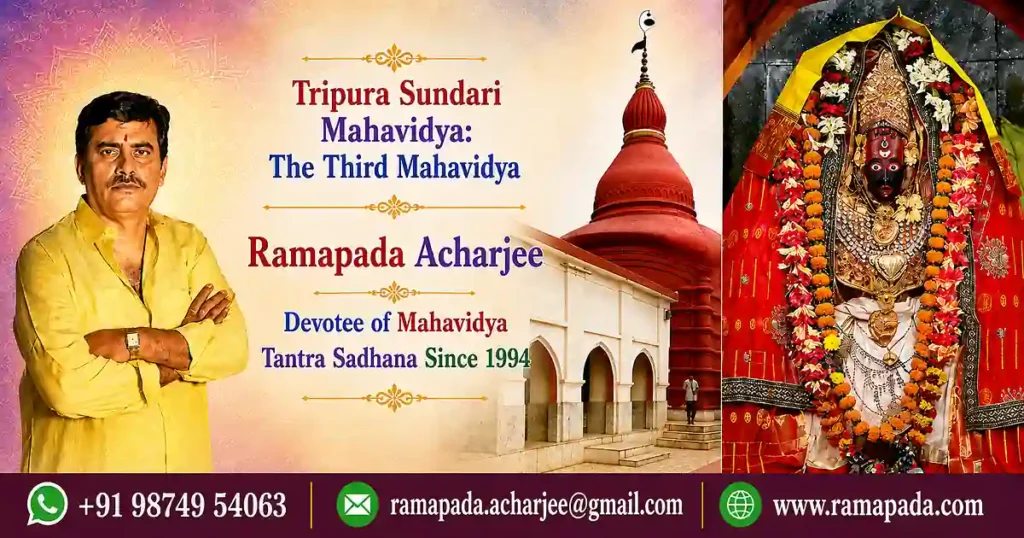
By Astrologer Ramapada Acharjee
Certain divine archetypes first capture our attention through their raw power. In contrast, other sacred forms make us pause due to their veil of mystery. However, throughout my spiritual journey, Tripura Sundari Mahavidya has always guided my contemplation toward something much deeper: the eternal relationship between beauty, supreme consciousness, inner harmony, and spiritual wisdom.
For more than 35 years since 1994, I have studied traditional lineages, interacted with individuals from diverse cultures, visited revered pilgrimage sites, and explored how ancient metaphysics speak to modern human psychology.
During this lifelong journey, I have learned one fundamental truth: genuine spiritual beauty is not merely an external image we observe with our eyes; rather, it is an elevated state of consciousness we gradually awaken within ourselves.
বাংলায় সহজ করে বললে—সুন্দর মানেই শুধু বাহ্যিক রূপ নয়। মনের সামঞ্জস্য, চিন্তার স্বচ্ছতা, আত্মসংযম, নিষ্কাম ভালোবাসা এবং নিজের ভিতরের প্রশান্তিকে আমি প্রকৃত সৌন্দর্যের অবিচ্ছেদ্য অংশ বলে মনে করি।
In this introductory article, I want to present Tripura Sundari, the Third Mahavidya, through established traditional philosophy alongside my personal realizations gathered across decades of study.
Her divine appearance carries profound philosophical meaning, which I explain in detail in the iconography and symbolism of Tripura Sundari.
Who Is Tripura Sundari Mahavidya?
Within the sacred lineage of the Dasha Mahavidyas, classical traditions revere Tripura Sundari as the third manifestation of the Divine Mother.
Indeed, she represents a profound expression of Supreme Divine Shakti. Her very name invites contemplative inquiry:
- Tripura carries multi-layered metaphysical interpretations across classical schools.
- Sundari translates literally as “the beautiful one” or “she who personifies absolute grace.”
However, limiting her spiritual significance to physical attractiveness completely misses her transcendent essence. In authentic Shakta philosophy, Tripura Sundari personifies the divine synthesis of cosmic beauty, universal harmony, pure consciousness (Chit), eternal bliss (Ananda), and the creative kinetic energy of the cosmos.
To me, this philosophical distinction is paramount.
মা ত্রিপুরাসুন্দরীর ‘সুন্দর’ শব্দটিকে আমি কখনো শুধু বাহ্যিক সৌন্দর্যের মধ্যে সীমাবদ্ধ করে দেখি না। আমার কাছে গভীরতর প্রশ্নটি হলো—কোন চেতনা মানুষের জীবনকে সত্যিই সুন্দর এবং অর্থপূর্ণ করে তোলে?
Why Is She Called Tripura Sundari?
The sacred name Tripura Sundari contains profound cosmological depth.
Etymologically, “Tri” signifies the number three. Consequently, classical commentators associate “Tripura” with sovereignty over three distinct cosmic planes, three conscious states, and three primordial energies:
- The Three States of Consciousness: Waking (Jagrat), Dreaming (Svapna), and Deep Sleep (Sushupti), culminating in the transcendent fourth state (Turiya).
- The Three Sacred Gunas: Sattva (harmony), Rajas (action), and Tamas (inertia).
- The Three Realms: The physical, subtle, and causal planes of existence.
Because different Shakta and Tantric lineages explain these dimensions with unique nuances, I prefer not to impose a single rigid dogma on seekers.
Instead, I view her holy name as a spiritual invitation to perceive the divine consciousness that illuminates all tripartite dimensions of existence. Therefore, her beauty points directly toward the harmony of the cosmic soul.
For a comprehensive scholarly introduction to Tripura Sundari as one of the Ten Mahavidyas, readers may consult David Kinsley’s Tantric Visions of the Divine Feminine.
Tripura Sundari as the Third Mahavidya
Within the structured sequence of our ongoing exploration:
- Mother Kali stands as the First Mahavidya (Cosmic Time and Dissolution).
- Mother Tara follows as the Second Mahavidya (Compassion and Liberation).
- Mother Tripura Sundari arrives as the Third Mahavidya (Harmony, Consciousness, and Radiant Beauty).
Nevertheless, I must reiterate a crucial principle: this numerical order does not represent a spiritual ranking or competition of power.
The First Mahavidya is not superior to the Third, nor is the Third less powerful than the First. In reality, each Mahavidya opens a distinct window into the boundless nature of the Supreme Mother.
একই আকাশকে আমরা ভোরে একভাবে দেখি, দুপুরে আর একভাবে, আবার সন্ধ্যায় সম্পূর্ণ অন্যভাবে দেখি। আকাশ কিন্তু কখনো বদলে যায় না; আমাদের দেখার দৃষ্টি ও অভিজ্ঞতা বদলে যায়। দশমহাবিদ্যাও আমাদের চেতনাকে পরম মহাশক্তির ভিন্ন ভিন্ন রূপ অনুধাবন করতে সাহায্য করে।
To understand her traditional foundations more deeply, continue with Tripura Sundari in Shakta and Tantric scriptures.
From Kali and Tara to Tripura Sundari
This metaphysical progression from Kali and Tara to Tripura Sundari offers a fascinating spiritual transition.
In our earlier studies, we contemplated Kali and Tara. For beginners, their fierce imagery—marked by dark complexions, cremation grounds, and formidable weapons—can appear startling.
In contrast, Tripura Sundari radiates regal grace, aesthetic splendor, luminous harmony, and sovereign tranquility.
At first glance, these divine forms might seem contradictory. However, through decades of contemplation, I realized that this contrast teaches us a magnificent truth: Divine Shakti cannot be reduced to a single human emotion.
Life inherently contains both creation and dissolution, fierce challenges and peaceful grace, dynamic desire and pure detachment. Thus, the Mahavidyas invite us to embrace this entire cosmic spectrum without fear.
My First Understanding of Tripura Sundari
During my earlier years of study, I naturally approached spirituality with academic curiosity.
I frequently asked:
- What are the precise textual definitions of this archetype?
- In addition, what do the ancient manuscripts prescribe regarding her emblems?
- Why does her iconography diverge so completely from the fierce aspects of Kali?
Eventually, with age, life experience, and extensive client consultations, my inquiries shifted toward practical human transformation.
I began reflecting on deeper life questions:
- Can external beauty bring lasting peace without inner psychological balance?
- Similarly, can material comfort provide satisfaction if the mind remains chaotic?
- Furthermore, can personal ambition remain healthy without ethical awareness?
These are not abstract theological puzzles; rather, they are fundamental dilemmas that every human being confronts daily.
What 35+ Years of Experience Have Taught Me
Throughout more than three decades of spiritual consultation, I have interacted with thousands of individuals from all walks of life.
I have observed people who possessed vast wealth yet suffered from chronic internal restlessness. In contrast, I have met individuals who lived in simple circumstances yet possessed extraordinary mental equilibrium and self-respect.
Consequently, these clinical and spiritual observations reshaped my personal definition of prosperity and grace.
বয়স বাড়ার সঙ্গে সঙ্গে আমি একটি সত্য গভীরভাবে উপলব্ধি করেছি—জীবনে অনেক পার্থিব সম্পদ থাকা আর জীবন সুন্দর হওয়া কখনো এক কথা নয়।
A person may accumulate recognition, property, and luxuries, yet live in mental distress. Conversely, someone who cultivates gratitude, sincere relationships, and inner calm experiences authentic joy.
This insight does not suggest that material comfort is negative, nor does authentic spirituality demand ascetic deprivation.
Instead, the true question is: Can we appreciate the blessings of life without allowing worldly desires to enslave our minds?
Traditional praise of Tripurasundari and descriptions of her divine form can be found in the Tripurasundari Stotra translated by John Woodroffe.
Tripura Sundari and the Meaning of Beauty
Contemporary society routinely conditions us to evaluate beauty solely through physical appearance and youth.
However, sacred Shakta traditions inspire us to look much deeper. Authentic spiritual beauty expresses itself through:
- A serene, grounded, and focused intellect.
- Thoughtful speech accompanied by genuine empathy.
- Ethical self-respect and emotional maturity.
- Harmonious, supportive interpersonal relationships.
- Disciplined desires aligned with higher purpose.
- Pure creativity and inner spiritual mindfulness.
সৌন্দর্য শুধু বাহ্যিক চোখ দিয়ে দেখার বিষয় নয়; আসল সৌন্দর্য মন দিয়ে উপলব্ধি করতে হয়। একটি শান্ত পরিবার সুন্দর, ক্ষমাশীল মন সুন্দর, আর জীবনের প্রতিকূলতাকে শান্তভাবে গ্রহণ করার প্রজ্ঞাও এক পরম সৌন্দর্য।
Is Tripura Sundari the Goddess of Physical Beauty?
This common misunderstanding requires immediate clarification.
Because the word Sundari means beautiful, casual readers frequently assume she is merely a deity of superficial glamour. That perspective is exceptionally shallow.
Physical attractiveness, youthful vitality, and social status are inherently temporary. If our perception of beauty relies solely on external forms, our peace remains fragile.
In contrast, Tripura Sundari personifies the eternal, unblemished consciousness (Shuddha Chaitanya) that remains serene amid life’s changing tides.
An important question concerns her different names, explored in my article on Shodashi, Lalita, and Tripura Sundari.
Tripura Sundari, Desire, and Spiritual Life
Another vital dimension of Tripura Sundari concerns the healthy understanding of human desire (Kama).
In modern spiritual discussions, desire is often subjected to extreme interpretations:
- Some traditions claim that spiritual growth requires the forceful suppression of all desires.
- Other commercialized platforms claim spirituality exists merely to manifest selfish cravings.
In my view, both extremes are flawed.
Desires for security, loving companionship, family stability, and intellectual success are entirely natural. Therefore, the core spiritual question is not whether desire exists, but rather: Are our desires serving our growth, or are they controlling our consciousness?
বাংলায় বললে—মনের ভেতর ইচ্ছা বা সংকল্প থাকা দোষের নয়। কিন্তু সেই ইচ্ছাই যদি আমাদের হিতাহিত বিচারবুদ্ধিকে গ্রাস করে ফেলে, তখনই জীবনে অশান্তির সূচনা হয়।
Tripura Sundari and Inner Balance
Cultivating dynamic balance sounds simple in theory, yet it remains one of humanity’s greatest challenges.
For example, we must pursue professional excellence, yet we require mental rest. Similarly, extending love to others must be balanced with preserving our self-respect. Furthermore, financial stability is necessary, yet money cannot resolve internal existential grief.
When I meditate upon Tripura Sundari, dynamic balance emerges as her supreme lesson. She does not advocate retreating from worldly responsibilities; rather, she teaches us to participate fully in life with unwavering self-awareness.
Why Tripura Sundari Is Important in Shakta Tradition
Tripura Sundari holds a paramount position within Shakta Tantra, serving as the central sovereign deity of the renowned Sri Vidya tradition.
However, sacred subjects like Sri Vidya, Sri Yantra (Sri Chakra), Panchadasi Mantra, and esoteric worship require careful, disciplined exposition. Compressing these profound sciences into dramatic soundbites only creates superstition.
Throughout this series, we will examine each aspect methodically, ensuring clear boundaries between verified scriptures, philosophical commentaries, and personal realizations.
Tripura Sundari, Shodashi and Lalita
In classical literature, seekers will encounter three sacred names used in close relation:
- Tripura Sundari: The supreme sovereign beauty of the three realms.
- Shodashi: The divine maiden embodying the eternal, uncorrupted sixteen-fold creative consciousness.
- Lalita: The playful, graceful Mother whose divine play (Lila) animates the cosmos.
While these names represent the same primordial consciousness, specific lineages emphasize distinct ritual and theological nuances. We will explore these distinctions in a dedicated chapter.
Her wider philosophical tradition can then be understood through Sri Vidya and Tripura Sundari.
A Personal Reflection on Growing Older
As the decades pass, our emotional relationship with beauty inevitably matures.
During youth, we naturally direct our gaze outward—toward physical appeal, material achievements, and social status. With maturity, however, life gently compels us to look inward.
In this stage, we prioritize mental peace and treasure reliable relationships. In addition, we place higher value on physical health, time, and emotional clarity.
আমার নিজের জীবনেও বয়সের সঙ্গে সঙ্গে ‘সুন্দর জীবন’-এর সংজ্ঞা সম্পূর্ণ বদলে গেছে। আজ আমার কাছে সুন্দর জীবন মানে সমস্যাবিহীন কোনো কাল্পনিক জীবন নয়; বরং হাজারো প্রতিকূলতার মধ্যেও নিজের আত্মমর্যাদা ও মনের প্রশান্তি ধরে রেখে অর্থপূর্ণভাবে বেঁচে থাকাই হলো সুন্দর জীবন।
Tripura Sundari Is Not About Supernatural Promises
Whenever esoteric traditions are discussed online, misleading commercial claims invariably surface.
Some individuals promise instant wealth, guaranteed attraction, or supernatural control over others through Tantra. I categorically reject such sensationalized narratives.
Tripura Sundari Mahavidya must never be degraded into a commercial shortcut for worldly manipulation. Therefore, the purpose of this series is strictly educational, ethical, and contemplative.
মানুষের আধ্যাত্মিক বিশ্বাসকে ভয় দেখিয়ে বা অলৌকিক প্রলোভন দিয়ে ব্যবহার করা অনুচিত—এই নীতি আমি আমার সাধনজীবনের শুরু থেকেই মেনে চলেছি।
Her important relationship with Sri Vidya is examined in this Cambridge University Press research on the Sri Vidya tradition.
What Tripura Sundari Can Teach Modern Life
Even for modern readers exploring this philosophy from an intellectual standpoint, her symbolism provides timeless, practical guidance:
- What defines true, lasting beauty in my daily life?
- Are my material ambitions nurturing my peace or multiplying my anxiety?
- Can I achieve professional success without compromising my emotional integrity?
- Furthermore, can I love deeply without losing my identity?
Consequently, these questions make ancient Shakta wisdom directly applicable to 21st-century living.
My Personal Understanding of Tripura Sundari
After more than 35 years of spiritual practice and consultation since 1994, I summarize my understanding very simply:
Tripura Sundari teaches us that spiritual enlightenment does not require renouncing the world, family duties, or joy. Rather, it means experiencing worldly existence with elevated consciousness, refined aesthetic grace, and profound ethical balance.
His approach maintains clarity: শাস্ত্রের সিদ্ধান্তকে শাস্ত্রের মর্যাদায় এবং নিজের অভিজ্ঞতাকে নিজের অনুভূতি হিসেবে উপস্থাপন করাই একজন দায়িত্বশীল লেখকের কর্তব্য।*
Historical iconographic information about Lalita and Tripura Sundari is also available through the IGNCA study of South Indian divine images.
What We Will Explore Next
This introductory article marks the beginning of our comprehensive Tripura Sundari Mahavidya Series.
In the upcoming article, we will examine:
- The Iconography and Symbolism of Tripura Sundari Mahavidya: Her four arms, the sugarcane bow, flower arrows, noose, goad, the lotus throne, and their metaphysical meanings.
Subsequent articles will methodically address classical Shakta scriptures, the Sri Yantra, Lalita Sahasranama philosophy, and common misconceptions.
Final Reflection
Looking back over three decades of study, one timeless truth stands firm: spiritual depth never arises from haste.
The Mahavidyas are sacred portals of wisdom that require patience, intellectual honesty, and deep meditation.
মা ত্রিপুরাসুন্দরীকে নিয়ে এই নতুন যাত্রার শুরুতে আমার আন্তরিক বার্তা—সৌন্দর্যকে কেবল বাহ্যিক চোখ দিয়ে খুঁজবেন না। মন যখন শান্ত ও স্থির হয়, তখন জীবনের এমন অনেক অনুপম সৌন্দর্য প্রকাশিত হয়, যা ব্যস্ততার ভিড়ে আমাদের চোখ এড়িয়ে যায়।
Another essential part of this tradition is the sacred geometry explained in Sri Chakra and Tripura Sundari.
Frequently Asked Questions About Tripura Sundari Mahavidya
Insights & Perspectives by Astrologer Ramapada Acharjee
1. Who is Tripura Sundari Mahavidya?
Answer: Tradition reveres Tripura Sundari as the Third of the Ten Mahavidyas in classical Shakta metaphysics. She personifies the supreme synthesis of divine beauty, cosmic harmony, transcendent consciousness, and the kinetic joy of existence.
মা ত্রিপুরাসুন্দরী কেবল কোনো কাল্পনিক রূপ নন; তিনি বিশ্বব্রহ্মাণ্ডের পরম সামঞ্জস্য ও বিশুদ্ধ আনন্দের জীবন্ত প্রতীক।
2. What does the name Tripura Sundari mean?
Answer: The name combines Sundari (the personification of supreme grace) with Tripura (she who transcends the three worlds, three states of consciousness, and three Gunas). Therefore, her name signifies the unblemished beauty that illuminates all three planes of reality.
তিনটি লোক এবং মানুষের জাগ্রত, স্বপ্ন ও সুষুপ্তি—এই তিন অবস্থার অতীত যে পরম চৈতন্যময়ী সৌন্দর্য, তিনিই হলেন মা ত্রিপুরাসুন্দরী।
3. Is Tripura Sundari only associated with physical beauty?
Answer: Absolutely not. Reducing her meaning to physical glamour is a major superficial misconception. In contrast, her symbolism points toward an internal state of refined consciousness, emotional poise, intellectual clarity, and spiritual illumination.
বাহ্যিক রূপ পরিবর্তনশীল ও ক্ষণস্থায়ী; কিন্তু অন্তরের প্রজ্ঞা ও মনের শান্ত ভাবই হলো প্রকৃত চিরন্তন সৌন্দর্য।
4. Why is Tripura Sundari called the Third Mahavidya?
Answer: In the classical sequence of the Dasha Mahavidyas, Kali is placed first, Tara second, and Tripura Sundari third. However, this sequential order represents complementary dimensions of cosmic reality rather than a hierarchy of importance.
দশমহাবিদ্যার ক্রমিকে কোনো রূপ বড় বা ছোট নয়; প্রতিটি রূপই অখণ্ড পরমব্রহ্মের এক একটি পূর্ণ প্রকাশ।
5. Are Tripura Sundari and Shodashi the same?
Answer: Classical traditions closely integrate Tripura Sundari and Shodashi. In particular, the title Shodashi highlights her sixteen-fold cosmic perfection and eternal youth. In upcoming chapters, we will explore the precise philosophical nuances between these sacred names.
নামের কিছু তাত্ত্বিক পার্থক্য থাকলেও তাঁরা একই পরম চৈতন্যের দুটি অবিচ্ছেদ্য প্রকাশ।
6. Is Lalita the same as Tripura Sundari?
Answer: Yes, particularly within the sacred framework of Sri Vidya. The name Lalita emphasizes her playful cosmic grace (Lila) and boundless maternal affection, while Tripura Sundari emphasizes her transcendent majesty over the three realms.
ললিতা রূপটি মায়ের পরম করুণাময়ী ও বাৎসল্যময় ভাবকে প্রকাশ করে, যা শ্রীবিদ্যার অন্যতম প্রধান স্তম্ভ।
7. What is the connection between Tripura Sundari and Sri Vidya?
Answer: Tripura Sundari resides at the absolute core of Sri Vidya. Because Sri Vidya is one of the most sophisticated, mathematically precise, and philosophically elevated traditions within Shakta Tantra, it requires dedicated study.
শ্রীবিদ্যা কোনো সাধারণ তন্ত্রাচার নয়; এটি জ্ঞান, বিজ্ঞান ও আত্মদর্শনের এক পরম সূক্ষ্ম মার্গ।
8. What is the connection between Tripura Sundari and Sri Chakra?
Answer: The Sri Chakra (or Sri Yantra) is the supreme geometric and energetic representation of Tripura Sundari. Its interlocking triangles map the union of cosmic consciousness and creative energy within both the universe and the human body.
শ্রীযন্ত্র হলো মহাশক্তির সৃষ্টিতত্ত্বের এক পরম জ্যামিতিক নকশা, যার কেন্দ্রে মা ত্রিপুরাসুন্দরী স্বয়ং বিরাজিতা।
9. Is Tripura Sundari worship about fulfilling desires?
Answer: Reducing her worship to mere transactional material gain is a distortion. While classical texts acknowledge that her grace aligns life with rightful prosperity (Dharma, Artha, Kama, Moksha), authentic practice focuses on purifying desires and elevating human awareness.
কামনা-বাসনার দাস না হয়ে, আত্মশুদ্ধির মাধ্যমে জীবনকে একটি সুন্দর শৃঙ্খলায় নিয়ে আসাই মায়ের প্রকৃত আরাধনা।
10. Can ordinary people learn about Tripura Sundari?
Answer: Yes, absolutely. Sincere seekers, students of philosophy, and householders are entirely welcome to study her history, iconography, and metaphysical wisdom. However, specialized Tantric rituals require dedicated preparation and qualified guidance.
শাস্ত্রের জ্ঞান ও দর্শনের আলো সবার জন্য উন্মুক্ত; কিন্তু উপযুক্ত দিশা ছাড়া কোনো জটিল তন্ত্রসাধনায় হাত দেওয়া উচিত নয়।
11. What is the most important lesson I associate with Tripura Sundari?
Answer: After more than 35 years of spiritual study, the greatest lesson I draw from Mother Tripura Sundari is dynamic equilibrium. Specifically, she teaches us to fulfill our life duties, enjoy rightful happiness, and love unconditionally—while remaining firmly anchored in inner spiritual peace.
জীবনকে ত্যাগ না করেও জীবনের প্রতি অতিরিক্ত মোহ থেকে মুক্ত থাকা—এই অপূর্ব সামঞ্জস্যই মা ত্রিপুরাসুন্দরীর শ্রেষ্ঠ শিক্ষা।
Readers wishing to explore one of the central traditional texts associated with Lalita Tripura Sundari may consult the Lalita Sahasranama reference text.
Connect with the Best in Kolkata
Stop wandering in uncertainty. Your stars have a story to tell, and Ramapada Acharjee is here to help you read it. With a legacy built on truth, 35 years of experience, and a mission to bring peace to every household, your journey toward clarity starts here.
📍Consultation available in Kolkata, Guwahati, Siliguri, Tarapith & online.
📞 Call/WhatsApp: +91-98749 54063
🌐 Visit Website
You may also read:
Tantric Practices in Tarapith and Kamakhya
Best Tantrik in Kolkata
Best Tantrik in Delhi
Best Tantrik in Mumbai
Best Tantrik in Ujjain—Unlock your Spiritual Path
Related Category: Tantra
