
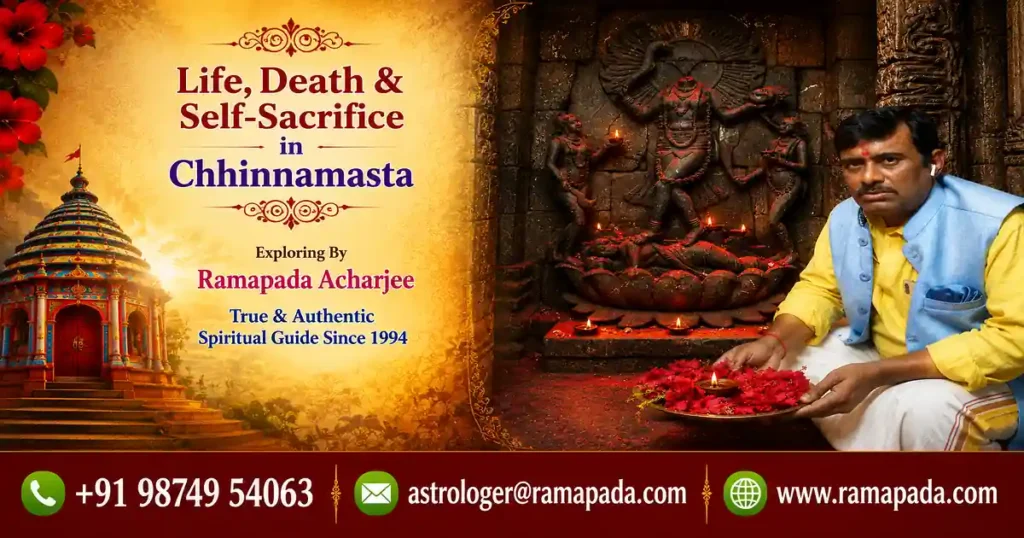
Life Force, Mortality, Sacrifice & Transformation
Chhinnamasta Mahavidya presents a profound paradox within the Dasha Mahavidya tradition. Specifically, life and death appear together within the same sacred image. Her head is severed from the body. Moreover, blood flows vigorously from her neck. Yet, she never appears lifeless. Instead, the flowing blood becomes immediate nourishment for herself and her attendants.
ছিন্নমস্তার রূপের একটি বিশেষ বৈশিষ্ট্য রয়েছে। এখানে জীবন ও মৃত্যুকে সম্পূর্ণ বিপরীত হিসেবে দেখানো হয়নি। দেবীর মস্তক বিচ্ছিন্ন হয়েছে। একই সাথে তাঁর গ্রীবা থেকে রক্ত প্রবাহিত হচ্ছে। তবুও দেবীর জীবনীশক্তি শেষ হয়ে যায়নি। বরং সেই রক্তই তাঁর এবং দুই সহচরীর পুষ্টির প্রধান উৎস। দীর্ঘ ৩৪ বছরের শাস্ত্রীয় সাধনার অভিজ্ঞতায় আমি এটি গভীরভাবে প্রত্যক্ষ করেছি। এই রূপকটি আসলে মহাজাগতিক প্রাণপ্রবাহ ও মানবজীবনের অনিবার্য রূপান্তরের এক পরম দর্শন।
This extraordinary symbolism shows that Chhinnamasta is not merely a Goddess of destruction. Furthermore, her imagery serves as a deep meditation on life force, mortality, giving, renewal, and spiritual transformation.
এই কারণে ছিন্নমস্তাকে শুধুমাত্র ধ্বংসের দেবী হিসেবে দেখা ভুল। তাঁর রূপ আমাদের জীবনীশক্তি ও ত্যাগের গভীর তত্ত্ব শেখায়। এছাড়া এটি মৃত্যুর ভয় কাটিয়ে নতুন জীবনের উপলব্ধির পথ তৈরি করে।
The conjunction of life, death, sexuality and awakened consciousness within Mahavidya symbolism is examined in David Kinsley’s academic study of the Ten Mahavidyas.
Life and Death Are Present Together
Most people instinctively separate life and death. For instance, life represents growth, movement, and vital energy. Conversely, death represents an absolute ending.
সাধারণভাবে আমরা জীবন ও মৃত্যুকে দুটি বিপরীত প্রান্ত হিসেবে বিবেচনা করি। জীবন মানে সৃষ্টি ও চলমানতা। পক্ষান্তরে, মৃত্যু মানেই সমাপ্তি। কিন্তু ছিন্নমস্তার প্রতীক এই সরল ধারণাকে প্রশ্নের মুখে দাঁড় করায়।
In Chhinnamasta’s iconography, however, apparent death never stops the movement of life.
ছিন্নমস্তার মস্তক শরীর থেকে বিচ্ছিন্ন। তবুও তাঁর দিব্যশক্তি থেমে যায়নি। এই অলৌকিক দৃশ্যটি কোনো পার্থিব ঘটনা নয়। বরং এটি একটি আধ্যাত্মিক ও দার্শনিক প্রতীক।
Blood continues to flow steadily. Meanwhile, the Goddess remains conscious and active. The very substance normally linked to injury becomes pure nourishment.
Chhinnamasta’s self-decapitated form and its layers of symbolic meaning are explored extensively in Elisabeth Anne Benard’s dedicated monograph.
রক্ত এখানে শুধু ক্ষতের চিহ্ন নয়। প্রকৃতপক্ষে, সেটিই আবার পরম পুষ্টির মাধ্যম। ফলে একই প্রতীকের মধ্যে ক্ষয় এবং স্থায়িত্ব একসাথে প্রকাশ পায়। একইভাবে মৃত্যু এবং জীবন এখানে সহাবস্থান করে।
Therefore, this visual paradox gives Chhinnamasta’s imagery its immense philosophical depth.
এই পরম বৈপরীত্যই ছিন্নমস্তার রূপকে এত গভীর করে তোলে। তিনি আমাদের মনে করিয়ে দেন যে, সমাপ্তি মানেই বিলুপ্তি নয়। কখনও কখনও একটি সমাপ্তিই নতুন পরিবর্তনের সূচনা ঘটায়।
The wider philosophical foundation behind this paradox begins with understanding the meaning and origin of Chhinnamasta as the Fifth Mahavidya.
Blood as a Symbol of Life Force
Blood is undeniably one of the most striking elements in Chhinnamasta’s form.
ছিন্নমস্তার মূর্তিতে রক্তের উপস্থিতি অত্যন্ত স্পষ্ট। তাই প্রথম দর্শনে অনেকের মনে ভয়ের সৃষ্টি হতে পারে। কিন্তু প্রতীকী অর্থে রক্তকে শুধু হিংসা হিসেবে দেখলে ভুল হবে। এর ফলে মূর্তির আসল তাৎপর্য হারিয়ে যায়।
Blood sustains physical existence in all living beings. Consequently, it symbolically represents vitality, energy, nourishment, and the continuous movement of life.
রক্ত আমাদের জীবনের প্রধান ধারক। তাই আধ্যাত্মিক প্রতীকের ভাষায় এটি প্রাণশক্তি ও পুষ্টির নির্দেশক। এছাড়া এটি জীবনের অবিরাম গতিও প্রকাশ করে।
The Goddess does not allow this vital force to disappear into nothingness. Instead, it circulates purposefully toward herself and others.
দেবীর শরীর থেকে নিঃসৃত শক্তি শূন্যে নষ্ট হয় না। বরং সেই শক্তি নিজের এবং অন্যের মধ্যে প্রবাহিত হয়। এর মাধ্যমে তাঁর রূপে আত্মদান ও বেঁচে থাকা একসাথে যুক্ত হয়।
Thus, the image represents the active circulation and redistribution of cosmic life energy.
অর্থাৎ এখানে হারানোর কোনো স্থান নেই। শক্তি শুধু এক অবস্থা থেকে অন্য অবস্থায় স্থানান্তরিত হয়। এই অবিরাম প্রবাহ ছিন্নমস্তার রূপের একটি অত্যন্ত গুরুত্বপূর্ণ দার্শনিক ভিত্তি।
To understand how blood, the severed head, the divine companions, and other visual elements work together, read Chhinnamasta Mahavidya Iconography and Symbolism.
The Three Streams: Giving and Receiving
The three streams of blood are central to understanding Chhinnamasta.
ছিন্নমস্তার গলা থেকে নির্গত তিনটি রক্তধারা অত্যন্ত অর্থবহ। তাঁর সামগ্রিক দর্শন বোঝার জন্য এগুলির বিশেষ গুরুত্ব রয়েছে।
Traditionally, the streams nourish the Goddess herself and her two attendants, Dakini and Varnini.
প্রচলিত শাস্ত্রে দেখা যায়, একটি ধারা দেবী স্বয়ং গ্রহণ করেন। একই সাথে অন্য দুটি ধারা ডাকিনী ও বর্ণিনী গ্রহণ করেন। এর ফলে এক প্রাণশক্তি তিনটি ভিন্ন ধারায় প্রবাহিত হয়।
The Goddess gives generously, but she also receives simultaneously.
এই বিষয়টি অত্যন্ত তাৎপর্যপূর্ণ। দেবী যেমন অন্যকে দিচ্ছেন, তেমনই নিজেও গ্রহণ করছেন।
This dynamic creates a mature understanding of self-sacrifice. Indeed, true giving does not demand complete self-erasure or destruction.
এর ফলে ত্যাগের এক গভীর অর্থ প্রকাশিত হয়। অন্যের জন্য ত্যাগ মানেই নিজেকে সম্পূর্ণ নিঃশেষ করা নয়। অন্যকে দেওয়ার পাশাপাশি নিজের সত্তাকে টিকিয়ে রাখাও সমান গুরুত্বপূর্ণ।
Therefore, Chhinnamasta’s symbolism maintains a perfect balance between giving to others and sustaining oneself.
এই দৃষ্টিতে ছিন্নমস্তা এমন এক ভারসাম্যের প্রতীক। এখানে জগতের প্রতি দায়িত্ব পালনের সাথে নিজের আত্মিক শক্তি রক্ষার শিক্ষা দেওয়া হয়েছে।
Certain traditions also relate these three streams symbolically to subtle channels and Kundalini, a subject explored in Chhinnamasta and Kundalini: Tantric Symbolism.
What Does Self-Sacrifice Mean Here?
The concept of sacrifice is often misunderstood in modern times.
“ত্যাগ” শব্দটির অর্থ অনেকেই ভুল বোঝেন। অনেকে মনে করেন, নিজের সব অস্তিত্ব মুছে ফেলাই বুঝি ত্যাগ। কিন্তু আধ্যাত্মিক অর্থে এটি আরও সূক্ষ্ম।
Chhinnamasta’s imagery suggests letting go of limited attachments to attain a higher truth.
ছিন্নমস্তার রূপ আসলে এক উচ্চতর ত্যাগের প্রতীক। এখানে বৃহত্তর উপলব্ধির জন্য সংকীর্ণ মানসিকতা বিসর্জন দিতে হয়।
Often, what must be sacrificed is not the physical body. Instead, one must release ego, pride, fear, or outdated mental habits.
অনেক সময় ত্যাগের অর্থ দেহত্যাগ নয়। বরং অহংকার, ক্ষতিকর মোহ এবং বহুদিনের ভয় ত্যাগ করাই আসল উদ্দেশ্য। এই অভ্যাসগুলি মানুষের আত্মিক বিকাশ আটকে রাখে।
In this sense, sacrifice is directly linked to internal spiritual transformation.
এই কারণে ছিন্নমস্তার দর্শনে ত্যাগ ও রূপান্তর একে অপরের পরিপূরক। কিছু পুরনো সংস্কার না ছাড়লে নতুন উপলব্ধি অসম্ভব।
The inner meaning of sacrifice is closely connected with freedom from excessive ego and attachment, which is examined in Why Chhinnamasta Holds Her Own Severed Head.
Sacrifice Is Not Self-Neglect
One crucial lesson from Chhinnamasta is that self-sacrifice must never become self-neglect.
আধুনিক জীবনে এই শিক্ষাটি বিশেষভাবে প্রয়োজনীয়। পরিবার বা কাজের জন্য ত্যাগ করতে গিয়ে অনেকে নিজের স্বাস্থ্য নষ্ট করেন। সেটি কখনো সুস্থ ত্যাগ হতে পারে না।
The Goddess nourishes her companions, yet she sustains her own being as well.
ছিন্নমস্তা সহচরীদের শক্তি দিচ্ছেন। কিন্তু একই সাথে তিনি নিজের জীবনীশক্তিও বজায় রাখছেন। এই প্রতীক শেখায় যে, নিজেকে শূন্য করে দেওয়া ধর্মের শিক্ষা নয়।
Healthy service always requires an awareness of one’s personal boundaries and limits.
অন্যের সেবা করতে হলে নিজের শক্তির সীমা বুঝতে হয়। কারণ নিজের প্রাণশক্তি শেষ হয়ে গেলে কাউকে সাহায্য করা সম্ভব নয়।
Consequently, her iconography teaches sustainable compassion and personal responsibility.
এই কারণে ছিন্নমস্তার রূপ সহমর্মিতা ও আত্মরক্ষার সমন্বয় শেখায়। অন্যের কল্যাণ এবং নিজের যত্ন নেওয়া—দুটিই একসাথে করা সম্ভব।
This balance between helping others and protecting one’s own physical and emotional strength also has practical relevance in Spiritual Lessons from Chhinnamasta Mahavidya for Modern Life.
Mortality and the Fear of Death
Chhinnamasta fearlessly confronts the viewer with the truth of physical mortality.
ছিন্নমস্তার মূর্তির সামনে দাঁড়ালে নশ্বরতার কথা মনে পড়ে। তাঁর ছিন্ন মস্তক মানুষের গভীর মৃত্যুভয়কে সরাসরি সামনে এনে দাঁড় করায়।
Human beings naturally seek permanence and security. However, aging, change, loss, and death remain inevitable realities of existence.
মানুষ চিরকাল স্থায়িত্ব চায়। আমরা চাই সম্পর্ক ও সম্পদ চিরকাল অটুট থাকুক। কিন্তু বার্ধক্য ও মৃত্যু জীবনের বাস্তব অংশ।
The spiritual purpose of remembering mortality is never to generate depression.
মৃত্যুর কথা ভাবার উদ্দেশ্য হতাশ হওয়া নয়। বরং জীবনের প্রতিটি মুহূর্তকে আরও সচেতনভাবে গ্রহণ করা।
Instead, an awareness of impermanence makes our lived experience far more meaningful.
জীবন ক্ষণস্থায়ী—এই সত্য বুঝলে বর্তমান সময়ের মূল্য বোঝা যায়। ফলে আমাদের কর্ম ও সম্পর্কের গভীরতা বৃদ্ধি পায়।
Thus, her fierce form reminds us that how we live our limited time truly matters.
এই অর্থে ছিন্নমস্তা আমাদের সচেতন করেন। জীবন সীমাবদ্ধ বলেই প্রতিদিনের সৎ আচরণ ও কর্তব্য এত গুরুত্বপূর্ণ।
A nineteenth-century representation of this powerful symbolism can be viewed through the Metropolitan Museum’s Chinnamosta collection entry.
Death as Transformation
Within Indian philosophy, death is rarely viewed as absolute destruction.
ভারতীয় দর্শনে মৃত্যুকে সম্পূর্ণ বিলুপ্তি হিসেবে দেখা হয় না। শাস্ত্রের বহু ধারায় মৃত্যুকে এক পরম রূপান্তর বলে গণ্য করা হয়।
Chhinnamasta visually demonstrates this truth. A form appears to end, yet spiritual energy continues to move without pause.
ছিন্নমস্তার বিগ্রহে এই ভাবটি স্পষ্ট। এখানে একটি রূপের সমাপ্তি ঘটছে, কিন্তু শক্তির ধারা কখনোই স্তব্ধ হচ্ছে না।
Symbolically, this indicates transformation, where an ending becomes the seed of a new beginning.
প্রতীকী দৃষ্টিতে এটি এক মহান রূপান্তর। একটি পুরনো অবস্থার শেষ থেকেই নতুন জীবনের জন্ম হয়।
Indeed, we experience smaller forms of this renewal throughout daily life.
আমরা নিজেদের জীবনেও এর বহু প্রমাণ পাই। যেমন একটি কাজ শেষ হয়ে নতুন কাজ শুরু হয়। পুরনো ভুল ধারণা ভেঙে নতুন জ্ঞানের বিকাশ ঘটে।
Not every ending is pleasant, and pain should not be romanticized. However, difficult life transitions often generate deep spiritual wisdom.
সব পরিবর্তন সহজ বা আরামদায়ক হয় না। কিন্তু কঠিন সময়ের মধ্য দিয়েই মানুষের আত্মিক পরিপক্কতা গড়ে ওঠে।
Destruction and Creation Are Not Always Opposites
Her symbolism proves that destruction and creation are not irreconcilable opposites.
ছিন্নমস্তার রূপ দেখায় যে ধ্বংস ও সৃষ্টি পরস্পর বিচ্ছিন্ন নয়। অনেক সময় পুরনো বিন্যাস না ভাঙলে নতুন কিছু তৈরি হয় না।
For example, a seed must surrender its outer shell before a plant can grow. Similarly, old negative habits must dissolve before true mental health develops.
যেমন একটি বীজ নষ্ট না হলে চারাগাছ জন্মায় না। একইভাবে কু-অভ্যাস বর্জন না করলে মানসিক শক্তির বিকাশ ঘটে না।
This does not imply that mindless destruction is beneficial or holy.
এর অর্থ এই নয় যে সব ধ্বংসই ভালো। অন্যায় আঘাত বা হিংসাকে কখনোই সমর্থন করা যায় না।
Instead, the vital question is: what inner limitation must we release to awaken higher consciousness?
মূল প্রশ্ন হলো—উচ্চতর জীবনের জন্য আমাদের কোন ভুল ধারণাটি ত্যাগ করতে হবে?
Life Force and Desire
Chhinnamasta is frequently depicted standing atop Kama and Rati.
ছিন্নমস্তার পদতলে কাম ও রতির অবস্থান অত্যন্ত তাৎপর্যপূর্ণ। কামনা শুধুমাত্র প্রবৃত্তি নয়, এটি সৃষ্টির মূল চালিকাশক্তি।
The Goddess does not deny vital energy. Instead, she holds a position of supreme mastery over it.
দেবী এই জীবনশক্তিকে অস্বীকার করছেন না। বরং তিনি কামনার ঊর্ধ্বে অবস্থান করে আত্মনিয়ন্ত্রণের বার্তা দিচ্ছেন।
This distinction is crucial for understanding Shakta Tantra across the Mahavidya Series.
তান্ত্রিক দর্শন বোঝার জন্য এই পার্থক্যটি খুবই জরুরি। তন্ত্র কামনাকে পাপ বলে না, আবার কামের অন্ধ দাসত্বও সমর্থন করে না।
The deeper spiritual practice involves directing and elevating our vital instincts toward enlightenment.
আসল লক্ষ্য হলো নিজের জৈবিক শক্তিকে সচেতনভাবে আত্মিক শক্তিতে রূপান্তর করা।
Transformation Requires Letting Go
Releasing familiar habits is often the most challenging part of personal growth.
পরিচিত অভ্যাস ত্যাগ করা মানুষের জন্য সবচেয়ে কঠিন কাজ। এমনকি ক্ষতিকর অভ্যাসও মানুষ কেবল পরিচিতির মোহে আঁকড়ে ধরে থাকে।
Chhinnamasta expresses this radical transformation through an uncompromising visual metaphor.
ছিন্নমস্তার রূপ এই কঠিন রূপান্তরকে অত্যন্ত স্পষ্ট ভাষায় তুলে ধরে। গভীর পরিবর্তনের জন্য পুরনো পরিচয়ের মায়া ত্যাগ করতেই হয়।
However, this does not advocate reckless or impulsive actions.
এর অর্থ হঠকারী কোনো সিদ্ধান্ত নেওয়া নয়। পরিবর্তনের সাথে সুস্থ বিচারবুদ্ধি থাকা আবশ্যক।
Meaningful growth occurs only when life choices are guided by conscious awareness.
ক্রোধ বা আবেগের বশে নেওয়া সিদ্ধান্ত কল্যাণকর হয় না। বরং আত্মসচেতনতার সাথে গৃহীত পদক্ষেপই জীবনে প্রকৃত উত্তরণ আনে।
For broader academic context on how Tantric traditions use unconventional imagery and practices, readers may consult Oxford Academic’s overview of Tantra.
Chhinnamasta and Personal Responsibility
Importantly, the transformative action originates directly from the Goddess herself.
ছিন্নমস্তার রূপের মূল ক্রিয়াটি তাঁর নিজের সংকল্প থেকে উৎপন্ন। তিনি নিষ্ক্রিয় নন। এটি আত্মদায়িত্বের পরম প্রতীক।
We cannot control external circumstances, but we retain complete authority over our inner choices.
জীবনের সব ঘটনা আমাদের নিয়ন্ত্রণে থাকে না। কিন্তু প্রতিকূল পরিস্থিতিতে আমরা কেমন আচরণ করব, তা সম্পূর্ণ আমাদের হাতে।
Therefore, spiritual transformation requires self-reliance rather than passive dependence on miracles.
অতএব অলৌকিক আশায় বসে না থেকে নিজের ত্রুটি সংশোধনে সচেষ্ট হওয়াই আসল সাধনা।
Her fierce autonomy teaches us that real breakthrough begins when we courageously confront ourselves.
দেবীর এই স্বাধীন রূপ আমাদের স্মরণ করায় যে, আত্মবিশ্লেষণের মাধ্যমেই জীবনের সবচেয়ে বড় পরিবর্তন সম্ভব হয়।
Self-Sacrifice and Compassion
Because her blood sustains her attendants, her imagery embodies sublime compassion.
দেবীর রক্ত সহচরীদের প্রাণ বাঁচায়। তাই তাঁর রূপের মধ্যে এক পরম মাতৃস্নেহ ও সহমর্মিতা নিহিত রয়েছে।
However, compassion without discernment leads directly to emotional exhaustion.
কিন্তু কাণ্ডজ্ঞানহীন অতিরিক্ত ত্যাগ মানুষকে মানসিকভাবে পঙ্গু করে দিতে পারে। অন্যের সব দায়িত্ব নিজের কাঁধে নিলে ভারসাম্য নষ্ট হয়।
Thus, her imagery advocates mature compassion that helps others without destroying personal well-being.
ছিন্নমস্তার প্রতীক সেই পরিণত সেবার কথা বলে, যেখানে পরোপকারের পাশাপাশি আত্মসম্মানও বজায় থাকে।
This balanced wisdom remains deeply relevant to family and professional vocations.
পারিবারিক ও সামাজিক জীবনে এই শিক্ষা অত্যন্ত মূল্যবান। চরম স্বার্থপরতা এবং আত্মঘাতী ত্যাগের মাঝামাঝি ভারসাম্য রক্ষা করাই জীবনের মূল শিল্প।
My Understanding of Life and Death in Chhinnamasta
In my personal understanding, Chhinnamasta never encourages a morbid obsession with death. Rather, she inspires us to value life more deeply because it is impermanent.
আমার উপলব্ধিতে ছিন্নমস্তার শিক্ষা মৃত্যুর প্রতি আকর্ষণ তৈরি করা নয়। বরং জীবন অনিত্য বলেই প্রতিটি দিনকে অর্থপূর্ণভাবে যাপন করার প্রেরণা।
Her blood flows continuously after decapitation. To me, this reveals that energy never perishes; rather, it changes its mode of expression.
মস্তকচ্ছেদের পরেও প্রাণপ্রবাহ অব্যাহত থাকে। আমার কাছে এটি প্রমাণ করে যে, শক্তির কোনো বিনাশ নেই; শুধু তার গতিপথ পরিবর্তিত হয়।
Furthermore, her image proves that genuine spiritual sacrifice must always be guided by wisdom.
তাছাড়া এই রূপ শেখায় যে, জ্ঞানের আলো ছাড়া কোনো ত্যাগই সার্থক হতে পারে না।
Serving the world while protecting your inner core represents the highest spiritual harmony.
নিজের আত্মিক শক্তি বজায় রেখে জগতের সেবা করাই ছিন্নমস্তার শ্রেষ্ঠ আধুনিক শিক্ষা।
What Chhinnamasta Can Teach Modern Life
Modern culture relentlessly pushes individuals to accumulate more wealth, status, and validation.
বর্তমান সমাজ মানুষকে কেবল আরও বেশি সঞ্চয় ও খ্যাতির দিকে ধাবিত করে। কিন্তু কখন কী বর্জন করতে হবে, সেই শিক্ষা সমাজ দেয় না।
Chhinnamasta introduces the necessary inquiry: what burdens must I let go of to grow?
ছিন্নমস্তার প্রতীক উল্টো প্রশ্নটি সামনে আনে—উন্নতির জন্য আমাকে আর কী ছাড়তে হবে?
Sometimes it is false pride, lingering resentment, chronic anxiety, or an outgrown self-image.
কখনও সেই বোঝা হলো অহেতুক অহংকার, রাগ কিংবা কোনো পুরনো ব্যর্থতার ভয়।
True transformation is not merely about accumulating new things. Instead, it begins with releasing old mental burdens.
রূপান্তর মানে শুধু নতুন কিছু পাওয়া নয়। বরং পুরনো আবর্জনা মন থেকে পরিষ্কার করাই হলো আসল শুরু।
The wider religious context of fierce Goddess imagery can also be studied through David Kinsley’s Hindu Goddesses.
FAQ About Life, Death & Self-Sacrifice in Chhinnamasta
Does Chhinnamasta represent death?
Chhinnamasta includes imagery of mortality. However, her deeper symbolism encompasses life force, nourishment, sacrifice, and continuous transformation.
ছিন্নমস্তার রূপে মৃত্যুর দৃশ্য থাকলেও এর মূল ভাব হলো জীবনশক্তি, পুষ্টি, ত্যাগ এবং রূপান্তর।
Why is blood so important in her imagery?
Blood represents vitality and cosmic life force. In her form, it actively nourishes both the Goddess and her attendants.
রক্ত এখানে প্রাণশক্তি ও জীবনীশক্তির প্রতীক। এটি দেবী ও তাঁর সঙ্গিনীদের ক্ষুধা নিবৃত্তি করে।
Does Chhinnamasta teach self-sacrifice?
Yes, but her form illustrates conscious sacrifice without self-harm or chronic self-neglect.
হ্যাঁ, তবে এই ত্যাগের অর্থ নিজের ক্ষতি করা বা নিজেকে অবহেলা করা নয়।
Why does Chhinnamasta drink her own blood?
This detail demonstrates that while sustaining others, one must preserve one’s own life force.
এর মাধ্যমে বোঝানো হয়েছে যে, বিশ্বকে পুষ্ট করার পাশাপাশি নিজের শক্তি বজায় রাখাও আবশ্যক।
Is Chhinnamasta’s imagery about physical violence?
No. Her fierce iconography belongs strictly to esoteric symbolism and never promotes physical harm.
না। এটি পুরোপুরি তান্ত্রিক রূপক এবং কোনো শারীরিক হিংসার নির্দেশ দেয় না।
What does transformation mean in Chhinnamasta symbolism?
It signifies releasing ego attachments and fears to allow higher spiritual consciousness to unfold.
এর অর্থ হলো অহংকার ও মানসিক বন্ধন ছিন্ন করে আত্মজ্ঞান লাভ করা।
What is the modern lesson of Chhinnamasta’s self-sacrifice?
The primary lesson is maintaining a sustainable balance between serving others and honoring oneself.
এর আধুনিক শিক্ষা হলো পরোপকার এবং আত্মরক্ষার মধ্যে সঠিক ভারসাম্য বজায় রাখা।
Key Takeaways
- Unified Reality: Chhinnamasta brings life and death together within a single vision. জীবন ও মৃত্যু একই প্রতীকের মধ্যে সুন্দরভাবে প্রকাশিত।
- Living Energy: Flowing blood represents the continuous circulation of vital life force. রক্তধারা হলো প্রাণশক্তি ও জীবনীশক্তির অবিরাম প্রবাহ।
- Conscious Surrender: Self-sacrifice does not mean personal destruction or self-harm. প্রকৃত ত্যাগ মানে নিজের আত্মবিনাশ নয়।
- Inner Balance: Sustaining oneself while supporting others is central to her wisdom. অন্যকে দেওয়ার সাথে নিজেকে রক্ষা করাই মূল সাধনা।
- Embracing Impermanence: Contemplating mortality enriches our everyday appreciation of life. অনিত্যতার বোধ জীবনকে আরও বেশি অর্থবহ করে তোলে।
- Courage to Release: Spiritual evolution requires shedding outgrown habits and identities. উত্তরণের জন্য পুরনো অহং বর্জন করা আবশ্যক।
- Purely Allegorical: Her fierce imagery communicates spiritual philosophy rather than physical injury. এই রূপ আধ্যাত্মিক তত্ত্বের প্রতীক, কোনো শারীরিক আঘাতের নির্দেশ নয়।
Final Reflection
Chhinnamasta stands at the sacred point where life meets death and sacrifice meets self-preservation.
ছিন্নমস্তার রূপে জীবন, মৃত্যু, ত্যাগ এবং আত্মরক্ষা একসাথে মিলিত হয়েছে।
Her form may seem frightening on the surface, but beneath lies a profound inquiry into how we use our vital energy.
বাইরের রূপ ভয়ংকর হলেও এর ভিতরের সত্য হলো আমাদের প্রাণশক্তিকে সৎভাবে পরিচালনা করা।
Ultimately, true transformation demands both the courage to let go and the wisdom to protect what truly matters.
যা অপ্রয়োজনীয় তা ত্যাগ করার সাহস এবং যা সত্য তাকে রক্ষা করার প্রজ্ঞাই হলো ছিন্নমস্তার আসল শিক্ষা।
Continue the Chhinnamasta Mahavidya Series
- Previous Post:
- Chhinnamasta Mahavidya: The Fifth Mahavidya — Introduction, Meaning & Origin
- Chhinnamasta Mahavidya: Iconography & Symbolism — The Severed Head, Three Streams of Blood, Dakini & Varnini
- Chhinnamasta in Shakta & Tantric Scriptures — Scriptural References & Philosophy
- Why Chhinnamasta Holds Her Own Severed Head—The Deeper Meaning of Her Fierce Form
- Current Post: Life, Death & Self-Sacrifice in Chhinnamasta—Life-Force, Mortality, Sacrifice & Transformation
- Next Post: Chhinnamasta and Kundalini: Understanding the Tantric Symbolism: পরের পর্বে Kundalini, subtle energy, Chhinnamasta symbolism, এবং এগুলির মধ্যে তান্ত্রিক সম্পর্ক অতিরঞ্জন ছাড়া সহজভাবে আলোচনা করা হবে।
Connect with the Best in Kolkata
Stop wandering in uncertainty. Your stars have a story to tell, and Ramapada Acharjee is here to help you read it. With a legacy built on truth, 35 years of experience, and a mission to bring peace to every household, your journey toward clarity starts here.
📍Consultation available in Kolkata, Guwahati, Siliguri, Tarapith & online.
📞 Call/WhatsApp: +91-98749 54063
🌐 Visit Website
You may also read:
Shava Sadhana: A Controversial Tantrik Practice
Navamundi Asana—Advanced and esoteric yoga posture
Panchamundi Asana—Five-Skull Yoga Posture
🔗 Related Category: Tantra
