
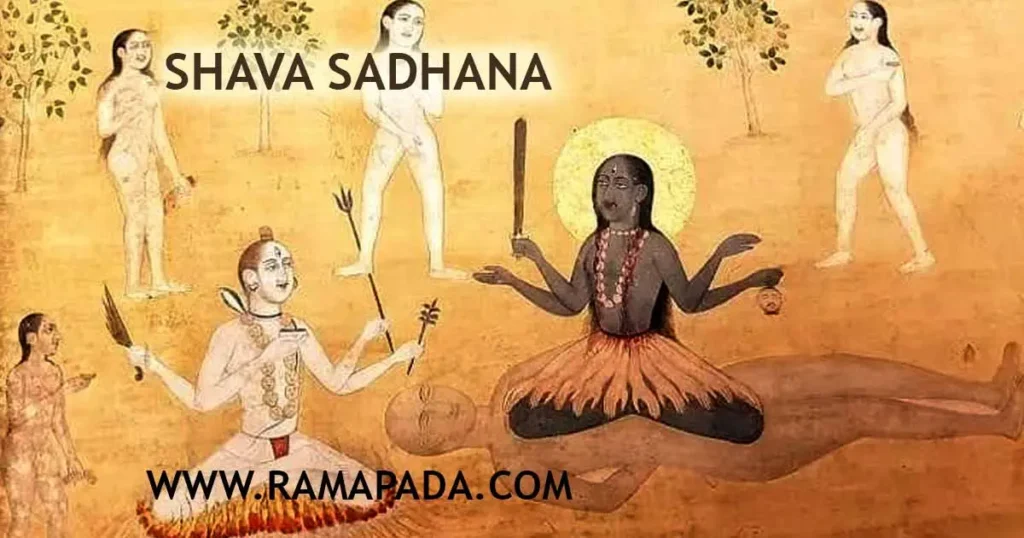
Shava Sadhana is one of the most secret, misunderstood, and intensely debated spiritual disciplines within the Shakta Tantric tradition.
Often viewed through sensational lenses by the general public, this practice involves deep meditation conducted in the presence of a lifeless body.
However, historical Tantra does not approach this ritual as an act of sorcery, harm, or fascination with death.
During my years of spiritual practice, I have observed that esoteric disciplines are frequently reduced to grotesque folklore.
Genuine guidance should demystify such rituals by explaining their true philosophical foundations.
In traditional Shakta philosophy, the human body represents a temporary vessel of consciousness.
Therefore, confronting death directly serves as an uncompromising spiritual exercise to dissolve fear, ego, and attachment.
Readers seeking broader historical context can also read my guide on Genuine Tantrik in India.
Shava Sadhana and the Tantric Philosophy of Non-Duality
Shava Sadhana embodies the core Advaitic principle that divine consciousness pervades all existence, without distinction between pure and impure.
While orthodox ritual traditions avoid cremation grounds and corpses, Tantra systematically confronts these taboos to transcend dualistic perception.
The Oxford Handbook of Tantric Studies analyzes how transgressive rituals in Tantra function as intentional spiritual methods to achieve cognitive and metaphysical transformation.
Consequently, the corpse serves as an ultimate symbol of impermanence.
By meditating upon it, the practitioner confronts mortality without evasion.
Patience becomes critical in such advanced practice.
Disciplined inner focus remains non-negotiable.
Ethical grounding protects the mind from delusion.
Without profound emotional maturity, attempting extreme esoteric contemplation leads only to psychological disorientation.
Historical Origins and the Role of Cremation Grounds
Cremation grounds, known traditionally as Smashana, hold immense importance in esoteric Tantric geography.
These spaces represent the final boundary where social identities, wealth, caste, and physical vanity dissolve into ash.
Historical documentation from the Smithsonian National Museum of Asian Art highlights how imagery of cremation grounds and fierce deities serves as a profound contemplation of life, death, and liberation in early Tantric art.
The practitioner enters this space not to disturb the deceased, but to confront existential reality.
Urban life often encourages people to ignore death.
Modern habits cultivate the illusion that material stability lasts forever.
In contrast, the cremation ground strips away pretense.
Therefore, classic Tantric masters chose solitary sites specifically to shatter everyday comfort zones.
The Symbolic Meaning of the Ritual Elements
Every traditional element associated with esoteric Tantra carries deep symbolic meaning.
The ritual utilizes a corpse specifically because it lacks vital life force, symbolizing inert matter without consciousness.
Simultaneously, the practitioner invokes the Goddess to awaken divine consciousness within that still space.
Academic research in the Oxford overview of Tantra demonstrates that Tantric rituals deliberately integrate cosmology, mantra, and sacred embodiment into structured transformative acts.
When approaching such practices, fear must be replaced with profound reverence.
The ritual should never be confused with superstition.
Similarly, sensationalizing death rituals distorts the sacred context of liberation.
To understand traditional deity worship and its symbolism further, you may explore my article on Kamakhya Temple Tantra.
Shava Sadhana and Goddess Worship
The ritual of meditating upon a corpse is intimately linked with Goddess Kali, Tara, and Bhairavi.
In classical iconography, Mother Kali is depicted standing upon the motionless form of Lord Shiva.
This sacred posture illustrates that without Shakti, pure consciousness remains unmanifest and still.
Scholarly resources from the Oxford overview of Shakta Tantra emphasize that Shakta traditions center around the transformative and liberating energy of the Supreme Goddess.
Devotees worship the Mother through complete surrender.
Rather than running from mortality, the devotee embraces the full cycle of birth and destruction.
Spiritual discipline thus deepens through devotional surrender.
Inner fear begins to lose its hold on daily life.
Why Sensational Claims Distort Reality
The modern internet has unfortunately turned secret Tantric practices into shocking entertainment.
Misleading advertisements often claim that rare rituals can grant immediate supernatural wealth, control over enemies, or impossible powers.
Such claims represent commercial exploitation rather than genuine spiritual guidance.
A responsible spiritual practitioner never encourages sensationalism.
Authentic masters preserve silence regarding advanced personal sadhana.
They never display secretive ceremonies for commercial attraction.
Readers interested in evaluating authentic practice will find my checklist on How to Identify a Genuine Tantrik beneficial.
True knowledge expresses itself through humility, calm speech, and disciplined conduct.
Mental Stability and Practical Discipline
Esoteric disciplines require an exceptionally stable and resilient nervous system.
If a practitioner harbors deep psychological insecurity, entering severe ritual environments can trigger severe trauma.
Modern medical evaluations from the National Center for Complementary and Integrative Health stress that advanced meditative practices demand psychological readiness and stability.
Meditation should build resilience rather than increase panic.
When attention wanders into frightening delusions, one must return to simple prayer.
Furthermore, basic life responsibilities must remain properly maintained.
Healthy boundaries safeguard personal sanity.
Spiritual practice should cultivate psychological clarity rather than emotional detachment from everyday life.
Ethical Boundaries and Legal Compliance
Traditional practice must operate with strict respect for law, social order, and basic human dignity.
In modern times, tampering with cremation sites or remains is both illegal and unethical.
Ancient texts prescribed rigorous moral vows before any esoteric practice could even be considered.
India’s official National Portal of India outlines the legal framework that safeguards public order and penalizes unauthorized interference with funerary grounds.
Therefore, genuine spiritual aspirants translate these ancient principles into internal meditation rather than literal or unlawful actions.
A responsible practitioner never encourages violations of the law.
Ethical boundaries preserve authentic tradition from corruption.
The Role of Mantra and Safe Daily Practice
Advanced initiatory practices are neither required nor recommended for general seekers.
Instead, consistent devotional chanting provides profound benefits without psychological risk.
A simple mantra connected to one’s family deity creates structure and inner calm.
Randomly chanting fierce or secretive formulas discovered on video platforms often produces anxiety.
Structured prayer disciplines the fluctuating mind.
Over time, sincere meditation strengthens daily concentration.
For a deeper understanding of how inner discipline supports well-being, read my comprehensive analysis on Spiritual Healing.
Clarity in spiritual practice must always take precedence over mystery.
Avoiding Fear-Based Superstition
Many individuals approach spiritual advisers out of intense anxiety regarding death, curses, or negative omens.
Predatory individuals exploit such vulnerability by demanding exorbitant fees for complex cremation ground ceremonies.
Be exceptionally cautious when someone warns that only an emergency ritual in a cemetery can save your life.
Such manipulation creates artificial dependency.
In reality, genuine spiritual advice promotes clarity, courage, and independent discernment.
If you ever experience severe anxiety or panic attacks, consult a medical doctor.
Similarly, mental health resources like the Government of India’s Tele-MANAS provide confidential, round-the-clock psychological assistance.
Healthy spirituality harmonizes with scientific and medical awareness.
A Simple Approach to Inner Contemplation
Seekers do not need macabre settings to understand the lessons of impermanence.
Begin each morning with a peaceful prayer in your home sanctuary.
Sit quietly and observe the rhythmic flow of your natural breath.
Acknowledge that every physical breath is finite, reminding yourself to value time and treat others kindly.
After meditation, identify one concrete priority that requires your attention today.
Communicate honestly with family members.
Fulfill your professional duties with full dedication.
Seek out verified spiritual literature rather than unverified rumors.
My educational guide on How to Find a Genuine Tantrik in India provides additional clarity on walking a balanced path.
When practical wisdom leads spiritual contemplation, progress becomes steady and safe.
Frequently Asked Questions
What is Shava Sadhana in Tantra?
It is an advanced, secretive Tantric meditation historically performed in the presence of a corpse to conquer existential fear and transcend worldly duality.
Is Shava Sadhana practiced commonly today?
No. It is an extremely rare, esoteric discipline that has mostly transitioned into internal, symbolic contemplation among genuine practitioners.
Can Shava Sadhana be performed by beginners?
Certainly not. Classical texts strictly restrict intense rituals to highly advanced initiates possessing extraordinary emotional stability and detachment.
Does Tantric practice encourage breaking laws?
Never. Authentic Tantra mandates rigorous ethical vows, and modern spiritual practice strictly complies with Indian laws protecting human dignity and public spaces.
What is the primary spiritual goal of this ritual?
The primary objective is the total destruction of ego, terror of mortality, and the realization of divine unity beyond physical decay.
Should I pay someone to perform cremation rituals for personal luck?
No. Paying large sums of money for miraculous cemetery rituals usually indicates commercial exploitation and fear-based fraud.
A Responsible Way Forward
Shava Sadhana reminds us that spirituality must ultimately help us conquer existential fear rather than run away from reality.
Tantra is an expansive and profound metaphysical path that cannot be defined by crude sensationalism or dark stereotypes.
During my years of spiritual practice, I have consistently found that clarity, balance, and ethical responsibility form the bedrock of genuine realization.
Inner peace must always precede advanced ritualism.
Devotion must replace superstitious dread.
Practical ethics must guide spiritual aspiration.
At the same time, seekers must remain grounded in daily duty.
Legal boundaries must always be honored.
Medical conditions require medical professionals.
Healthy relationships depend on honest communication, not occult ceremonies.
Therefore, approach the ancient mysteries with intellectual discernment and spiritual dignity.
Avoid fear-based promises of instant enlightenment.
Uphold your daily responsibilities with patience and humility.
When inner awareness, moral conduct, and devotional surrender align, spiritual life leads naturally toward profound peace and lasting clarity
You may also read:
- The Secret Power of Yantras in Tantrik Rituals
- Common Myths About Black Magic and Tantrik Practices
- Tantra Sadhana with Spiritual Guide
Related Category: Tantra
