
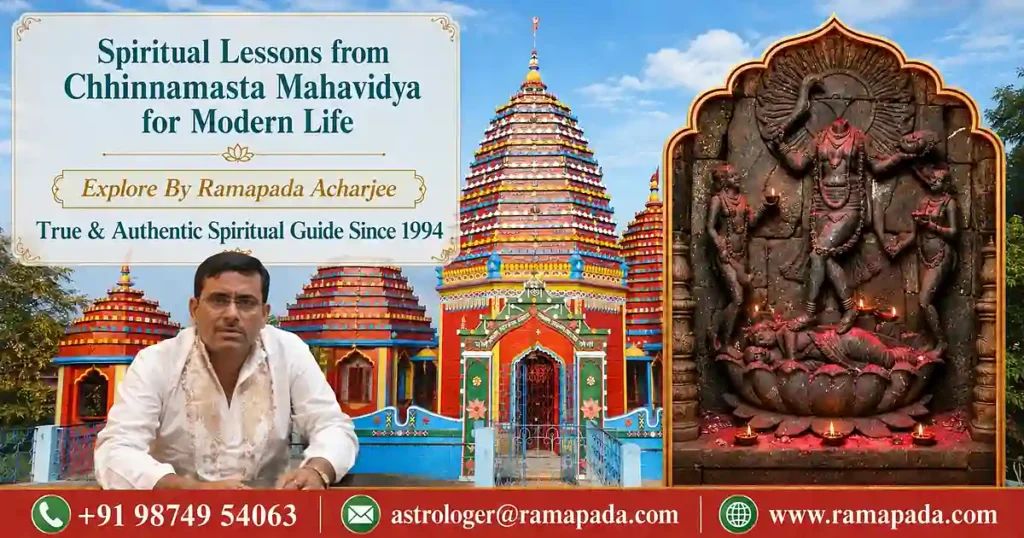
Spiritual Lessons for Modern Life
Exploring by Ramapada Acharjee
True & Authentic Spiritual Guide Since 1991 (34+ Years of Professional Experience)
Maa Chhinnamasta presents one of the most powerful and thought-provoking forms within the Dashamahavidya tradition. Her visual presence appears intense, but her deeper message is not about fear, violence, or destruction. Instead, it speaks directly about self-awareness, control over ego, conscious use of energy, courage, and inner transformation.
ছিন্নমস্তা মহাবিদ্যার রূপ প্রথম দর্শনে তীব্র বা ভয়ংকর মনে হতে পারে। কিন্তু তাঁর গভীর শিক্ষা ভয়, হিংসা বা ধ্বংসের বিষয়ে নয়। তাঁর প্রতীক আমাদের আত্মসচেতনতা, অহং নিয়ন্ত্রণ, জীবনীশক্তির সঠিক ব্যবহার, সাহস এবং অন্তরের পরিবর্তনের কথা শেখায়।
In modern life, many people struggle with stress, competition, emotional attachment, and the constant desire to prove themselves. Maa Chhinnamasta’s symbolism encourages us to pause and examine what truly controls our thoughts, decisions, and relationships.
আধুনিক জীবনে মানুষ মানসিক চাপ, প্রতিযোগিতা, আবেগের আসক্তি এবং নিজেকে প্রমাণ করার অবিরাম তাগিদের মধ্যে বাস করে। ছিন্নমস্তার প্রতীক আমাদের থামতে এবং বুঝতে শেখায়—আমাদের চিন্তা, সিদ্ধান্ত ও সম্পর্ক আসলে কোন শক্তির দ্বারা পরিচালিত হচ্ছে।
Chhinnamasta’s challenging imagery and its transformative meaning are examined within the wider Mahavidya tradition in David Kinsley’s Tantric Visions of the Divine Feminine.
The Courage to Confront the Ego
The severed head of Maa Chhinnamasta represents the conscious separation of pure awareness from an uncontrolled ego. Ego is not simple self-respect. In truth, it becomes harmful when pride, anger, jealousy, or the desire for superiority begins to govern our actions.
ছিন্নমস্তার ছিন্ন মস্তককে অনিয়ন্ত্রিত অহং থেকে চেতনাকে পৃথক করার প্রতীক হিসেবে বোঝা যায়। আত্মসম্মান এবং অহং এক বিষয় নয়। গর্ব, ক্রোধ, ঈর্ষা অথবা নিজেকে অন্যের চেয়ে শ্রেষ্ঠ প্রমাণ করার ইচ্ছা যখন আমাদের পরিচালনা করতে শুরু করে, তখন অহং ক্ষতিকর হয়ে ওঠে।
During my 34 years of spiritual consultation, I have observed that many personal and family conflicts do not arise from a lack of love. Instead, they occur because individuals hesitate to take the first step toward understanding, apology, or forgiveness.
তিন দশকেরও বেশি সময় ধরে মানুষের সমস্যার কথা শুনতে গিয়ে আমি দেখেছি, বহু ব্যক্তিগত ও পারিবারিক বিরোধ ভালোবাসার অভাবে সৃষ্টি হয় না। সমস্যা তৈরি হয় কারণ কেউ আগে এগিয়ে এসে অন্যকে বুঝতে, ক্ষমা চাইতে অথবা ক্ষমা করতে চান না।
Therefore, Maa Chhinnamasta teaches us that inner growth begins when we stop defending our pride and examine our personal weaknesses honestly.
ছিন্নমস্তা আমাদের শেখান, আত্মিক উন্নতির সূচনা অনেক সময় তখনই হয়, যখন আমরা অহংকে রক্ষা করা বন্ধ করে সততার সঙ্গে নিজের ভুল ও দুর্বলতাগুলি দেখতে শুরু করি।
The severed head is one of the clearest symbols of transcending uncontrolled ego and rigid identity; its deeper meaning is explored in Why Chhinnamasta Holds Her Own Severed Head.
Self-Control Is Greater Than Suppression
Maa Chhinnamasta does not teach the rejection of natural human desires. Her iconography points toward mindful awareness and mastery over them. Hunger, ambition, attraction, and emotional needs represent natural aspects of life, but they should never become our masters.
ছিন্নমস্তার শিক্ষা স্বাভাবিক ইচ্ছা বা প্রয়োজনকে অস্বীকার করা নয়। তাঁর প্রতীক ইচ্ছাগুলিকে সচেতনভাবে বোঝা ও নিয়ন্ত্রণ করার কথা বলে। ক্ষুধা, উচ্চাকাঙ্ক্ষা, আকর্ষণ এবং আবেগের প্রয়োজন মানুষের স্বাভাবিক অংশ; কিন্তু এগুলি যেন আমাদের নিয়ন্ত্রণ না করে।
Furthermore, suppression and genuine self-control are completely different. Suppression hides an emotion without understanding it, whereas self-control recognizes the emotion and selects a balanced response.
দমন এবং আত্মনিয়ন্ত্রণ এক নয়। দমন মানে কোনো আবেগকে না বুঝে লুকিয়ে রাখা। আত্মনিয়ন্ত্রণ মানে আবেগটিকে স্বীকার করা, তার কারণ বোঝা এবং তারপর ভারসাম্যপূর্ণ আচরণ বেছে নেওয়া।
Before reacting in anger, making an impulsive purchase, or making a hasty decision, even a brief pause restores mental clarity. This practical habit reflects a vital lesson from Maa Chhinnamasta: energy must always be directed consciously.
রাগের মাথায় প্রতিক্রিয়া জানানো, হঠাৎ অপ্রয়োজনীয় কিছু কেনা অথবা অতিরিক্ত আবেগে সিদ্ধান্ত নেওয়ার আগে কয়েক মুহূর্ত থেমে যাওয়া আমাদের চিন্তা পরিষ্কার করতে পারে। এই সাধারণ অভ্যাসের মধ্যেই ছিন্নমস্তার একটি গুরুত্বপূর্ণ শিক্ষা রয়েছে—শক্তিকে সচেতনভাবে পরিচালনা করতে হবে।
This balance between natural desire and conscious self-mastery can also be understood through the complete iconography and symbolism of Chhinnamasta Mahavidya.
Life Energy Must Continue to Flow
The streams of blood in Maa Chhinnamasta’s iconography represent the continuous movement of vital life energy. Although she holds her severed head, the energy flow never ceases. It actively nourishes herself and her divine companions.
ছিন্নমস্তার মূর্তিতত্ত্বে রক্তের ধারাগুলিকে জীবনীশক্তির অবিরাম প্রবাহের প্রতীক হিসেবে দেখা যায়। নিজের মস্তক ছিন্ন করার পরেও শক্তির প্রবাহ থেমে যায়নি। সেই শক্তি নিজেকে এবং তাঁর দুই সহচরীকে পুষ্ট করছে।
Consequently, this visual teaches us that transformation does not signify the end of hope. An apparent ending can initiate a new beginning. The loss of a job, the dissolution of a relationship, or a personal setback may be painful, but it does not define our entire future.
এই শিক্ষা আমাদের বোঝায় যে পরিবর্তন মানেই জীবন বা আশার সমাপ্তি নয়। একটি সমাপ্তি নতুন উপলব্ধির সূচনা হতে পারে। চাকরি হারানো, সম্পর্ক ভেঙে যাওয়া অথবা জীবনে বড় কোনো ব্যর্থতা অত্যন্ত কষ্টদায়ক হতে পারে, কিন্তু সেই ঘটনাই আমাদের সম্পূর্ণ ভবিষ্যৎ নির্ধারণ করবে—এমন নয়।
The essential question is not merely, “What have I lost?” We must also ask, “What can I now understand, rebuild, and transform?”
শুধু “আমি কী হারিয়েছি?”—এই প্রশ্ন করলেই হবে না। আমাদের আরও জিজ্ঞাসা করা প্রয়োজন—“এই অভিজ্ঞতা থেকে আমি কী বুঝতে, নতুনভাবে গড়ে তুলতে অথবা পরিবর্তন করতে পারি?”
For a deeper discussion of why apparent death and continuing life energy appear together in her sacred form, read Life, Death and Self-Sacrifice in Chhinnamasta.
Giving Without Exhausting Yourself
Maa Chhinnamasta represents divine nourishment and conscious self-offering. However, her wisdom should never be confused with self-neglect or tolerating exploitation.
ছিন্নমস্তার প্রতীকের সঙ্গে পুষ্টি এবং আত্মনিবেদনের ধারণাও যুক্ত। কিন্তু এই শিক্ষার অর্থ নিজের প্রয়োজনকে অবহেলা করা অথবা অন্যের অন্যায় ও শোষণ সহ্য করা নয়।
Many people give their time, resources, and emotional energy until they face total burnout. Authentic care requires equilibrium. We can support others while maintaining clear, healthy boundaries.
অনেক মানুষ অন্যকে সময়, অর্থ এবং মানসিক শক্তি দিতে দিতে একসময় নিজেরাই সম্পূর্ণ ক্লান্ত হয়ে পড়েন। প্রকৃত যত্নের জন্য ভারসাম্য প্রয়োজন। অন্যকে সাহায্য করার পাশাপাশি নিজের জন্য স্বাস্থ্যকর সীমারেখা বজায় রাখাও জরুরি।
Saying “no” to unreasonable demands is not an act of selfishness. Rather, it demonstrates responsibility toward our own physical and emotional health.
অন্যায় বা অযৌক্তিক দাবির সামনে “না” বলা সবসময় স্বার্থপরতা নয়। অনেক ক্ষেত্রে এটি নিজের শারীরিক ও মানসিক সুস্থতার প্রতি দায়িত্বশীল আচরণ।
The symbolism of giving, receiving, sacrifice, and maintaining one’s own inner strength is explained further in Chhinnamasta’s Teaching on Life, Death and Self-Sacrifice.
Accepting Life’s Opposite Realities
Maa Chhinnamasta unites apparent dualities: life and death, creation and destruction, desire and restraint, and giving and receiving. Modern living similarly requires us to find harmony within these opposing realities.
ছিন্নমস্তার প্রতীকে জীবন ও মৃত্যু, সৃষ্টি ও ধ্বংস, কামনা ও সংযম, দেওয়া ও গ্রহণ করার মতো বিপরীত সত্যগুলি একসঙ্গে উপস্থিত। আধুনিক জীবনেও আমাদের এই ধরনের বিপরীত বাস্তবতার মধ্যেই ভারসাম্য খুঁজতে হয়।
True inner strength does not mean we never feel vulnerable. Courage does not mean the absolute absence of fear. In addition, spiritual awareness never asks us to abandon our daily responsibilities.
শক্তিশালী হওয়ার অর্থ এই নয় যে আমরা কখনো দুর্বলতা অনুভব করব না। সাহস মানে ভয় একেবারে না থাকা নয়। আবার আধ্যাত্মিক সচেতনতার অর্থ সংসার ও বস্তুজগতের দায়িত্ব অস্বীকার করাও নয়।
A mature outlook accepts both aspects. We can acknowledge our anxiety and still act responsibly. We can strive for success without falling into greed.
পরিণত জীবনবোধ আমাদের বিপরীত সত্যগুলিকে স্বীকার করতে শেখায়। ভয় থাকা সত্ত্বেও আমরা দায়িত্বশীল সিদ্ধান্ত নিতে পারি। সাফল্যের চেষ্টা করেও লোভের দ্বারা নিয়ন্ত্রিত না হওয়া সম্ভব।
The broader role of fierce and compassionate forms of the Divine Feminine can be studied through David Kinsley’s Hindu Goddesses.
Freedom from the Fear of Change
One of her strongest teachings emphasizes that personal growth requires the courage to release outdated identities. People often remain stuck in painful situations because the familiar feels safer than the unknown.
ছিন্নমস্তার অন্যতম শক্তিশালী শিক্ষা হলো—পরিবর্তনের জন্য অনেক সময় পুরোনো পরিচয় বা অভ্যাস ছেড়ে দেওয়ার সাহস প্রয়োজন। পরিচিত পরিস্থিতি কষ্টদায়ক হলেও অজানা ভবিষ্যতের চেয়ে নিরাপদ মনে হওয়ায় বহু মানুষ সেখানেই আটকে থাকেন।
We frequently define ourselves through a career, relationship, status, or past achievement. When circumstances shift, we may feel as if we have lost our entire identity. Yet our true consciousness transcends any external role.
পেশা, সম্পর্ক, সামাজিক অবস্থান অথবা অতীতের সাফল্যের মাধ্যমে আমরা অনেক সময় নিজের পরিচয় তৈরি করি। পরিস্থিতি বদলে গেলে মনে হয়, নিজের অস্তিত্বই হারিয়ে ফেলেছি। কিন্তু মানুষের গভীর পরিচয় কোনো একটি ভূমিকা বা সাফল্যের মধ্যে সীমাবদ্ধ নয়।
Transformation begins when we recognize that change is natural, enabling us to consciously decide what to preserve and what to release.
পরিবর্তন তখনই শুরু হয়, যখন আমরা মেনে নিই যে পরিবর্তন জীবনের স্বাভাবিক অংশ এবং সচেতনভাবে সিদ্ধান্ত নিই—কোন বিষয় ধরে রাখতে হবে এবং কোন বিষয় ছেড়ে দিতে হবে।
Many unnecessary fears surrounding her fierce appearance come from literal interpretations, which I have addressed in Common Misconceptions About Chhinnamasta Mahavidya.
Taking Responsibility for Our Choices
Spiritual symbols provide profound guidance, but they should never serve as an excuse to avoid personal accountability. Maa Chhinnamasta’s philosophy directs our focus inward, urging us to analyze our habits, intentions, and decisions.
আধ্যাত্মিক প্রতীক আমাদের অনুপ্রাণিত ও পথনির্দেশ করতে পারে, কিন্তু ব্যক্তিগত দায়িত্ব এড়িয়ে যাওয়ার মাধ্যম হওয়া উচিত নয়। ছিন্নমস্তার শিক্ষা আমাদের নিজের অন্তরের দিকে তাকাতে বলে। নিজের অভ্যাস, উদ্দেশ্য এবং সিদ্ধান্তগুলি পরীক্ষা করতে শেখায়।
In my professional practice, I have repeatedly seen that enduring progress begins when a person stops blaming external fate and identifies areas where constructive action is possible.
দীর্ঘদিনের আধ্যাত্মিক পরামর্শের অভিজ্ঞতায় আমি বারবার দেখেছি, স্থায়ী উন্নতি তখনই শুরু হয় যখন একজন মানুষ সমস্ত কিছুর জন্য ভাগ্য অথবা অন্য মানুষকে দায়ী করা বন্ধ করেন এবং নিজের করণীয় জায়গাগুলি চিনতে শুরু করেন।
While prayer and meditation provide mental resilience, practical effort, patience, and mindful choices remain indispensable.
প্রার্থনা এবং আধ্যাত্মিক অনুশীলন মানসিক শক্তি দিতে পারে। কিন্তু বাস্তব পদক্ষেপ, ধৈর্য এবং দায়িত্বশীল সিদ্ধান্তের প্রয়োজন কখনো শেষ হয়ে যায় না।
Readers interested in the concept of Shakti as spiritual power may also explore John Woodroffe’s Shakti and Shakta.
Living with Daily Awareness
The most effective way to understand Maa Chhinnamasta is to practice mindfulness in everyday situations. We can examine our thoughts before speaking, identify emotional triggers, and evaluate whether our choices stem from wisdom or impulsive reaction.
ছিন্নমস্তার শিক্ষাকে বাস্তব জীবনে বোঝার সবচেয়ে সহজ উপায় হলো দৈনন্দিন কাজে সচেতনতা আনা। কথা বলার আগে নিজের চিন্তা লক্ষ্য করা, কোন ঘটনায় আবেগ তীব্র হয়ে ওঠে তা বোঝা এবং নিজের কাজ বিবেচনা ও প্রজ্ঞা থেকে হচ্ছে নাকি হঠাৎ আবেগ থেকে—তা পরীক্ষা করা প্রয়োজন।
Taking a few minutes for quiet reflection helps us spot repetitive mental patterns. Daily awareness does not alter everything overnight, but it unlocks meaningful personal development.
প্রতিদিন কয়েক মিনিট নীরবে আত্মপর্যালোচনা করলেও নিজের পুনরাবৃত্ত আচরণগুলি চিনতে সুবিধা হয়। সচেতনতা সঙ্গে সঙ্গে সবকিছু পরিবর্তন করে না, কিন্তু পরিবর্তনের দরজা খুলে দেয়।
A wider academic perspective on Tantra as a path concerned with transformation and liberation can be found in the Oxford Research Encyclopedia of Religion.
Chhinnamasta Mahavidya Pranam Mantra, Dhyan Mantra and Their Spiritual Significance
Chhinnamasta Mahavidya holds a distinctive place within the Dasha Mahavidya tradition. Her powerful appearance brings together the symbolism of life, death, self-offering, desire, restraint, and spiritual awareness.
In my years of studying Shakta traditions, I have found it important to distinguish devotional verses from meditation verses. A Pranam verse expresses reverence towards the Divine Mother. In contrast, a Dhyan Mantra describes her traditional form and helps readers understand its religious symbolism.
ছিন্নমস্তা মহাবিদ্যার প্রণাম ও ধ্যানশ্লোকের উদ্দেশ্য এক নয়। প্রণামশ্লোকে দেবীর প্রতি শ্রদ্ধা ও বন্দনা প্রকাশিত হয়। অন্যদিকে, ধ্যানশ্লোকে তাঁর বিশেষ রূপ, আয়ুধ এবং প্রতীকী বৈশিষ্ট্যের বর্ণনা পাওয়া যায়। এই দুটি বিষয় আলাদাভাবে বোঝা শাক্ত ঐতিহ্য অধ্যয়নের ক্ষেত্রে গুরুত্বপূর্ণ।
1. Chhinnamasta Mahavidya Pranam Verse (प्रणाम श्लोक)
The following four-line devotional passage comes from the opening two verses of the traditional Chhinnamasta Dvadasha Nama Stotram. It honours the Divine Mother through twelve sacred names and attributes.
Sanskrit Pranam Verse
छिन्नग्रीवा छिन्नमस्ता छिन्नमुण्डधराऽक्षता ।
क्षोदक्षेमकरी स्वक्षा क्षोणीशाच्छादनक्षमा ॥
वैरोचनी वरारोहा बलिदानप्रहर्षिता ।
बलिपूजितपादाब्जा वासुदेवप्रपूजिता ॥
English Transliteration (Simple English)
Chhinnagriva Chhinnamasta Chhinnamundadhara Akshata,
Kshoda Kshemakari Svaksha Kshonishachchhadana Kshama,
Vairochani Vararoha Balidana Praharshita,
Balipujita Padabja Vasudeva Prapujita.
English Translation
I revere Goddess Chhinnamasta, whose sacred names describe her distinctive divine form, including her severed head, while also recognising her essential wholeness.
She is praised through names associated with protection, well-being, beauty, and divine strength.
The goddess is also honoured as Vairochani, a radiant and revered manifestation of the Divine Mother.
Her lotus feet receive devotional worship, and the hymn celebrates the reverence offered to her within the sacred tradition.
বাংলা অনুবাদ
ছিন্নগ্রীবা, ছিন্নমস্তা এবং ছিন্নমুণ্ডধারিণী রূপে পরিচিতা দেবীকে আমি সশ্রদ্ধ বন্দনা করি। তাঁর বাহ্যিক রূপে মস্তকচ্ছেদের প্রতীক থাকলেও স্তোত্রে তাঁকে অক্ষতা অর্থাৎ অখণ্ড স্বরূপিণী বলা হয়েছে।
দেবীর বিভিন্ন নামের মাধ্যমে তাঁর মঙ্গলময় শক্তি, রক্ষাকারী ভাব এবং মহিমা প্রকাশিত হয়েছে।
বৈরোচনী নামেও তিনি বন্দিতা। তাঁর অন্যান্য নাম দেবীর সৌন্দর্য, পূজ্য অবস্থান এবং বিশেষ ধর্মীয় পরিচয় তুলে ধরে।
ভক্তদের দ্বারা পূজিতা সেই ছিন্নমস্তা মহাবিদ্যার চরণে আমি বিনম্র শ্রদ্ধা নিবেদন করছি।
Spiritual Significance of the Chhinnamasta Pranam Verse
The most striking feature of this devotional passage is the contrast between Chhinnamasta’s extraordinary appearance and her description as Akshata, meaning whole or uninjured.
This contrast offers an important opportunity for spiritual reflection. Her severed head belongs to a complex tradition of sacred imagery and should not be interpreted as an instruction to physically harm oneself.
Furthermore, the goddess’s twelve names preserve different aspects of her religious identity. They connect her striking iconography with the wider devotional traditions of the Divine Mother.
In my understanding, studying these names encourages us to look beyond the immediate appearance of a deity and consider the deeper philosophical questions expressed through sacred symbolism.
ছিন্নমস্তা মহাবিদ্যার প্রণামস্তোত্রে একটি বিশেষ বিষয় লক্ষণীয়। একদিকে দেবী ছিন্নমস্তা, অন্যদিকে তিনি অক্ষতা বা অখণ্ড স্বরূপিণী।
এই বৈপরীত্য শাক্ত প্রতীকের গভীরতা বুঝতে সাহায্য করে। দেবীর ছিন্নমস্তককে বাস্তব জীবনে আত্মক্ষতির নির্দেশ হিসেবে ব্যাখ্যা করা উচিত নয়।
দীর্ঘদিনের আধ্যাত্মিক অধ্যয়নে আমার উপলব্ধি, ছিন্নমস্তার রূপ নিয়ে আলোচনা করার সময় শাস্ত্রীয় বর্ণনা, প্রতীকী ব্যাখ্যা এবং ব্যক্তিগত উপলব্ধির মধ্যে পার্থক্য বজায় রাখা জরুরি।
2. Chhinnamasta Mahavidya Dhyan Mantra (ध्यान मन्त्र)
The following traditional Dhyan verse describes the distinctive appearance of Goddess Chhinnamasta. It includes her severed head, the ritual blade, three eyes, symbolic blood streams, and her position above the figures of Rati and Kamadeva.
These elements belong to the goddess’s sacred iconography. Their religious significance should be studied within the historical and philosophical context of Shakta Tantra.
Sanskrit Dhyan Mantra
प्रत्यालीढपदां सदैव दधतीं छिन्नं शिरः कर्त्रिकां ।
दिग्वस्त्रां स्वकबन्धशोणितसुधाधारां पिबन्तीं मुदा ॥
नागाबद्धशिरोमणिं त्रिनयनां हृद्युत्पलालङ्कृतां ।
रत्यासक्तमनोभवोपरि दृढां वन्दे जपासन्निभाम् ॥
English Transliteration (Simple English)
Pratyalidhapadam Sadaiva Dadhatim Chhinnam Shirah Kartrikam,
Digvastram Svakabandha Shonita Sudhadharam Pibantim Muda,
Nagabaddha Shiroman im Trinayanam Hridyutpalalankritam,
Ratyasakta Manobhavopari Dridham Vande Japasannibham.
English Translation
I bow to Goddess Chhinnamasta, who stands firmly in a traditional warrior-like posture, holding her severed head and a ritual blade.
She is represented without ordinary garments and drinks a stream of blood flowing from her own neck.
Her hair is adorned with a serpent, and she possesses three eyes. Sacred lotus imagery also forms part of her divine appearance.
Radiant like a red hibiscus flower, the goddess stands above Rati and Kamadeva, who are depicted together in the traditional iconography.
বাংলা অনুবাদ
প্রত্যালীঢ় ভঙ্গিতে দৃঢ়ভাবে দণ্ডায়মানা দেবী ছিন্নমস্তাকে আমি প্রণাম করি। তাঁর হাতে রয়েছে নিজের ছিন্ন মস্তক এবং কর্তৃকা নামক বিশেষ ধারালো আয়ুধ।
দেবী দিগম্বরী রূপে বর্ণিত। তাঁর ছিন্ন কণ্ঠদেশ থেকে প্রবাহিত রক্তধারা তিনি নিজেই পান করছেন—এটি তাঁর প্রচলিত ধ্যানরূপের একটি বিশেষ বৈশিষ্ট্য।
দেবীর মস্তকে সর্পের অলংকার রয়েছে। তিনি ত্রিনয়না এবং পদ্মের সঙ্গে সম্পর্কিত অলংকারে সুশোভিতা।
রক্তজবা ফুলের মতো দীপ্তিময়ী দেবী রতি ও কামদেবের মিলনরত মূর্তির ওপর দৃঢ়ভাবে অবস্থান করছেন। এই বিশেষ ধ্যানরূপে আমি ছিন্নমস্তা মহাবিদ্যাকে সশ্রদ্ধ বন্দনা করি।
Spiritual Significance of the Chhinnamasta Dhyan Mantra
The Dhyan Mantra presents a powerful visual language that differs considerably from the peaceful imagery commonly associated with many Hindu goddesses.
The Severed Head: In a reflective interpretation, Chhinnamasta’s severed head can represent the challenge of looking beyond ego, pride, and rigid personal identity.
The Flowing Blood: The three streams associated with her traditional iconography have received different interpretations within Shakta and Tantric traditions. They may invite reflection on life force, nourishment, and the relationship between giving and receiving.
The Three Eyes: Her three eyes are traditionally associated with expanded awareness and divine perception.
Rati and Kamadeva: Their presence below the goddess introduces the complex relationship between desire, creation, restraint, and spiritual transformation.
The Red Hibiscus Radiance: Her reddish appearance expresses intensity, vitality, and the powerful character of her sacred form.
In my understanding, these symbols should never be treated as encouragement for dangerous physical practices. Instead, they invite thoughtful consideration of how desire, self-awareness, discipline, and responsibility interact in human life.
ছিন্নমস্তা মহাবিদ্যার ধ্যানরূপ সাধারণ দেবীমূর্তির তুলনায় অনেক বেশি তীব্র। তাঁর ছিন্ন মস্তক, রক্তধারা, ত্রিনয়ন এবং রতি-কামদেবের ওপর অবস্থানের মধ্যে একাধিক ধর্মীয় ও দার্শনিক ব্যাখ্যার সুযোগ রয়েছে।
ছিন্ন মস্তককে অনিয়ন্ত্রিত অহং অতিক্রম করার প্রতীক হিসেবে বোঝা যেতে পারে। রক্তধারা জীবনশক্তি ও পুষ্টির সম্পর্ক নিয়ে ভাবতে সাহায্য করে। অন্যদিকে, রতি ও কামদেবের উপস্থিতি কামনা এবং সংযমের পারস্পরিক সম্পর্ককে সামনে আনে।
আমার দীর্ঘদিনের অধ্যয়নে একটি বিষয় গুরুত্বপূর্ণ বলে মনে হয়েছে। দেবীর এই রূপকে কেবল ভয়ংকর বলে চিহ্নিত করলে তাঁর গভীর ধর্মীয় তাৎপর্য উপেক্ষিত হয়।
তবে এসব প্রতীকী ব্যাখ্যাকে শাস্ত্রের প্রতিটি শব্দের সরাসরি অর্থ হিসেবে উপস্থাপন করা উচিত নয়। বিভিন্ন তান্ত্রিক পরম্পরায় ব্যাখ্যার পার্থক্য থাকতে পারে।
My Guidance on Chhinnamasta Mantra Recitation and Diksha
Public devotional verses and specialised Tantric mantra practices should not be confused with one another.
The Pranam and Dhyan verses presented here are intended to support religious study and an understanding of Chhinnamasta’s traditional identity.
However, advanced Chhinnamasta sadhana may involve initiation-dependent mantras, prescribed rituals, and specific lineage requirements.
Based on my experience of studying traditional spiritual disciplines since 1991, my recommendation is to seek qualified guidance before undertaking specialised Tantric practices.
Reading a traditional Dhyan verse for understanding is different from attempting an advanced Tantric ritual.
ছিন্নমস্তা মহাবিদ্যার প্রণাম ও ধ্যানশ্লোকের অর্থ জানা এবং বিশেষ তান্ত্রিক মন্ত্রসাধনা করা এক বিষয় নয়।
নির্দিষ্ট বীজমন্ত্র, ন্যাস, জপবিধি এবং বিশেষ আচার গুরুপরম্পরাভেদে পৃথক হতে পারে। তাই দীক্ষানির্ভর সাধনার ক্ষেত্রে উপযুক্ত শিক্ষকের নির্দেশ গ্রহণ করা উচিত।
ধর্মীয় বিশ্বাসের সঙ্গে সতর্কতা, শাস্ত্রসম্মত অধ্যয়ন এবং বাস্তব জীবনের দায়িত্ববোধ বজায় রাখাও গুরুত্বপূর্ণ।
Disclaimer: These verses are presented for religious, educational, and cultural understanding. They do not provide instructions for performing advanced Tantric rituals or guarantee supernatural outcomes.
Personal Reflection from Experience
To me, Maa Chhinnamasta represents fearless self-examination. Her presence challenges us to look beyond outer appearances and master the mental forces within.
আমার উপলব্ধিতে ছিন্নমস্তা মহাবিদ্যা নির্ভীক আত্মপর্যালোচনার প্রতীক। তাঁর রূপ আমাদের বাহ্যিক চেহারার বাইরে গিয়ে নিজের মনের মধ্যে সক্রিয় শক্তিগুলির মুখোমুখি হতে শেখায়।
Her message does not advocate self-destruction. Instead, it urges us to clear away ignorance, excessive pride, and unconscious reactions. Only then can our inner potential support a balanced, meaningful life.
তাঁর শিক্ষা নিজেকে ধ্বংস করার কথা বলে না। বরং অজ্ঞানতা, অনিয়ন্ত্রিত অহং এবং না বুঝে প্রতিক্রিয়া জানানোর অভ্যাসকে অতিক্রম করার কথা বলে। তাহলেই আমাদের অন্তরের শক্তি অর্থপূর্ণ ও ভারসাম্যপূর্ণ জীবন গঠনে সাহায্য করতে পারে।
Chhinnamasta’s powerful symbolism of self-transcendence can also be studied through Elisabeth Anne Benard’s detailed research on the Goddess
Frequently Asked Questions (FAQ)
What is the main spiritual lesson of Chhinnamasta Mahavidya?
Her primary lesson centers on the conscious regulation of ego, desire, and life force. She inspires courage, self-awareness, and internal transformation.
তাঁর প্রধান শিক্ষাকে অহং, কামনা এবং জীবনীশক্তির সচেতন নিয়ন্ত্রণ হিসেবে বোঝা যায়। তিনি সাহস, আত্মসচেতনতা এবং অন্তরের পরিবর্তনের প্রেরণা দেন।
Does Chhinnamasta teach self-destruction?
No. Her iconography is metaphysical. It illustrates the transcendence of the ego and consciousness expansion rather than physical harm.
না। তাঁর মূর্তিতত্ত্ব প্রতীকী; একে শারীরিক ক্ষতি বা আত্মধ্বংসের নির্দেশ হিসেবে দেখা উচিত নয়। এটি অহং অতিক্রম এবং চেতনার পরিবর্তনের প্রতীক।
How can her teachings help in modern life?
Her philosophy guides us to manage impulsive emotions, build healthy boundaries, embrace change, and accept accountability for our actions.
তাঁর শিক্ষা আমাদের হঠাৎ আবেগের প্রতিক্রিয়া নিয়ন্ত্রণ, সুস্থ সীমারেখা তৈরি, পরিবর্তন গ্রহণ এবং নিজের সিদ্ধান্তের দায়িত্ব নিতে সাহায্য করতে পারে।
Does spiritual sacrifice mean neglecting personal needs?
No. Healthy self-offering requires balance. Assisting others must never lead to enduring mistreatment or extreme exhaustion.
না। সুস্থ আত্মনিবেদনের জন্য ভারসাম্য প্রয়োজন। অন্যকে সাহায্য করার অর্থ নির্যাতন, শোষণ অথবা সম্পূর্ণ মানসিক অবসাদ মেনে নেওয়া নয়।
Is Chhinnamasta worship suitable for everyone?
Seekers can study her profound philosophy with reverence. However, advanced Tantric rituals and specialized mantra practices require formal preparation and qualified lineage guidance.
সাধারণ পাঠক সম্মানের সঙ্গে তাঁর প্রতীক ও দর্শন সম্পর্কে জানতে পারেন। তবে বিশেষ তান্ত্রিক উপাসনা অথবা মন্ত্রসাধনা যথাযথ পথনির্দেশ ও প্রস্তুতি ছাড়া করা উচিত নয়।
Key Takeaways
- Maa Chhinnamasta guides us to master the ego without losing healthy self-respect.
- Self-control involves understanding our emotions rather than merely suppressing them.
- Personal energy must be channeled with mindfulness and clear purpose.
- Supporting others requires establishing healthy personal boundaries.
- Life transitions offer valuable opportunities for self-renewal.
- Spiritual insight must always align with practical, accountable actions.
Final Thoughts
Maa Chhinnamasta reminds us that genuine strength originates from within. When we evaluate pride, fear, and desire with honesty, the same energy that once created confusion becomes a source of clarity and resilience.
ছিন্নমস্তা মহাবিদ্যা আমাদের মনে করিয়ে দেন যে প্রকৃত শক্তির সূচনা নিজের অন্তরে। অহং, ভয় এবং অনিয়ন্ত্রিত কামনাকে সততার সঙ্গে উপলব্ধি করতে পারলে যে শক্তি একসময় বিভ্রান্তি সৃষ্টি করত, সেই শক্তিই সাহস, স্বচ্ছতা এবং পরিবর্তনের উৎস হয়ে উঠতে পারে।
Her striking iconography delivers a clear message: understand your internal energy, accept personal responsibility, and embrace necessary change without fear.
তাঁর তীব্র রূপের অন্তর্নিহিত বার্তা হলো সচেতনভাবে জীবনযাপন করা—নিজের শক্তিকে বুঝুন, নিজের দায়িত্ব গ্রহণ করুন এবং প্রয়োজনীয় পরিবর্তনকে ভয় পাবেন না।
Internal Links & Related Guides
- Chhinnamasta Mahavidya: Introduction, Meaning & Origin
- Iconography and Tantric Symbolism of Chhinnamasta
- Why Chhinnamasta Holds Her Own Severed Head
- Chhinnamasta: Life, Death, and Self-Sacrifice
- Chhinnamasta and Kundalini: Understanding Subtle Energy
- Common Misconceptions About Chhinnamasta Mahavidya
- Complete Guide to the Das Mahavidyas
Connect with the Best in Kolkata
Stop wandering in uncertainty. Your stars have a story to tell, and Ramapada Acharjee is here to help you read it. With a legacy built on truth, 35 years of experience, and a mission to bring peace to every household, your journey toward clarity starts here.
📍Consultation available in Kolkata, Guwahati, Siliguri, Tarapith & online.
Call/WhatsApp: +91-98749 54063
🌐 Visit Website
You may also read:
Love Problem Solution Specialist in Kalighat
Love Problem Solution Specialist in Tarapith
Love problem solution specialist in Kamakhya
Related Category: Tantra
