
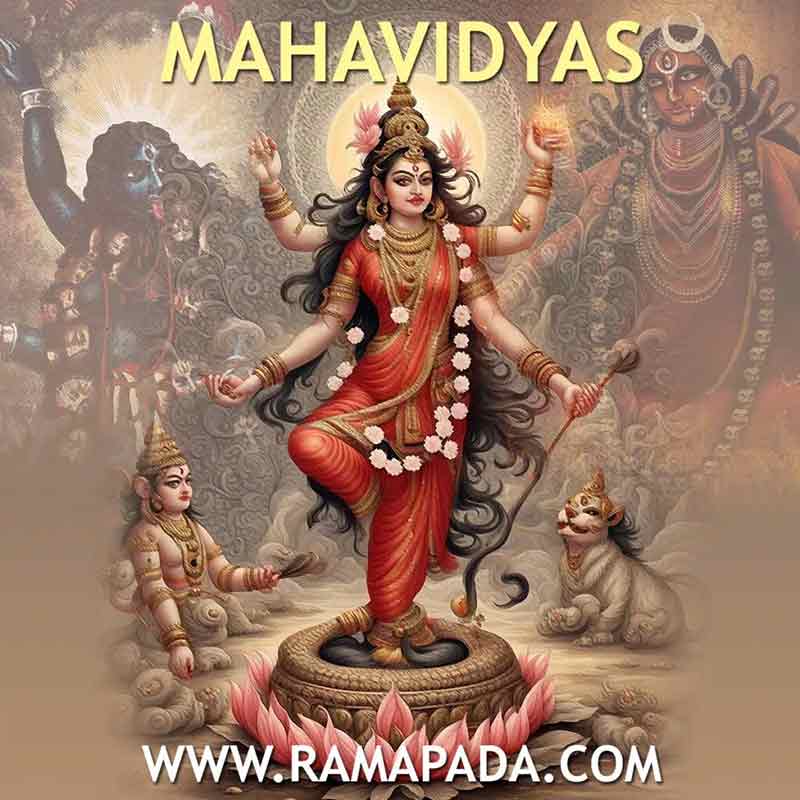
The Dasa Mahavidya tradition introduces ten powerful goddesses in Hinduism, each representing a distinctive aspect of divine feminine wisdom and spiritual transformation. Their name itself, translating to “Great Wisdoms” from Sanskrit, hints at the profound knowledge and power they embody.
Originating in Tantra:
The Dasa Mahavidya tradition developed through different streams of Shakta and Tantric worship in medieval India. Over time, various goddess traditions came together within a shared spiritual framework.
These ten forms of Shakti express wisdom, protection, transformation, and liberation. Their distinctive appearances also challenge conventional ideas of beauty, power, and the divine feminine.
Although individual goddesses have older histories, scholars generally place the development of the Mahavidyas as a collective tradition in the medieval period.
Who are the Ten Mahavidyas?
The Dasa Mahavidya tradition recognises ten principal forms of divine feminine wisdom:
- Kali: The ultimate form of Brahman, the devourer of time and illusion.
- Tara: The guiding and protective goddess, offering knowledge and liberation.
- Tripura Sundari (Shodashi): Representing beauty, love, and abundance.
- Bhuvaneshvari: The embodiment of the cosmos and ultimate reality.
- Bhairavi: The fierce form of Shakti, associated with transformation and overcoming limitations.
- Chhinnamasta: The self-decapitated goddess, symbolising self-sacrifice and liberation from desire.
- Dhumavati: The embodiment of widowhood, representing the time that has passed and impermanence.
- Bagalamukhi: The goddess who stuns and paralyses enemies, associated with overcoming challenges.
- Matangi: The embodiment of speech, communication, and transformation of the outcast.
- Kamala: Representing prosperity, wealth, and material abundance.
Worship and Significance:
In Shakta and Tantric traditions, devotees honour the ten wisdom goddesses through prayer, meditation, mantra recitation, and established ritual practices.
Each goddess carries distinct symbolism and spiritual significance. Kali represents transformation, while Tara is associated with guidance and protection. Other divine forms reflect knowledge, discipline, detachment, and prosperity.
Moreover, traditional worship emphasises devotion, self-discipline, and the pursuit of spiritual understanding. Advanced Tantric practices may require guidance from a knowledgeable and responsible teacher.
These traditions reveal the diverse expressions of Shakti within Hindu spiritual philosophy.
Spiritual Meaning of the Ten Mahavidyas
The ten Mahavidyas represent different aspects of Divine Feminine power. Kali symbolises transformation, Tara protection, and Tripura Sundari divine beauty. Bhuvaneshvari represents cosmic existence. Bhairavi symbolises spiritual discipline. Chhinnamasta reflects self-sacrifice, Dhumavati impermanence, and Bagalamukhi restraint. Matangi embodies wisdom and communication. Kamala represents prosperity and abundance.
Mahavidyas in Modern Spiritual Life
The teachings of these ten goddesses continue to hold meaning in contemporary spiritual life. Their symbolism invites reflection on fear, attachment, responsibility, knowledge, and personal growth.
For instance, Kali reminds devotees of life’s changing nature. Tara represents compassion during uncertain times. Similarly, Kamala reflects prosperity, gratitude, and the responsible use of resources.
These interpretations offer spiritual perspectives rather than guaranteed solutions to personal difficulties. Therefore, individuals can approach the tradition with devotion, thoughtful reflection, and respect for its cultural origins.
The Story Behind the Dasa Mahavidya
According to a traditional story, Sati wanted to attend a yajna held by her father, Daksha. However, Daksha had not invited Shiva. So Shiva told her not to go. Sati became angry and showed ten powerful forms. Then these forms stood in every direction around Shiva. As a result, he could not leave. These ten forms became known as the Dasa Mahavidya.
Kali and Tara: The First Two Wisdom Goddesses
Kali and Tara hold important places in Tantric traditions. First, Kali stands for time and change. She removes fear and illusion. Next, Tara guides the seeker through hard times. She gives protection and calm. For this reason, many Tantra traditions treat Kali Tara as two sides of one power.
How Mahavidya Worship Supports Spiritual Growth
Each Mahavidya teaches a different lesson. Kali teaches fearlessness. Chhinnamasta teaches letting go of ego. Kamala teaches balance with wealth. Bagalamukhi teaches control of speech and mind. Devotees do not use these goddesses as a quick fix. They use them as a path for spiritual growth, which takes patience and a teacher.
A Continuing Tradition
The Dasa Mahavidya tradition remains an important part of Shakta worship and Hindu spiritual heritage. Devotees encounter these goddesses through sacred literature, temple traditions, religious art, and regional worship practices.
Their imagery continues to inspire artists, researchers, and spiritual seekers. Historical representations also reveal how different communities have understood divine feminine power across generations.
Today, these sacred forms continue to represent spiritual wisdom, transformation, and the diversity of Hindu goddess traditions.
You may also read :
- Tantrik Astrologer in India – Ramapada Acharjee
- Top astrologer in Patna Bihar – Ramapada Acharjee
- Solution for Business Problems – Astrology Services
Related Category : Blog
