
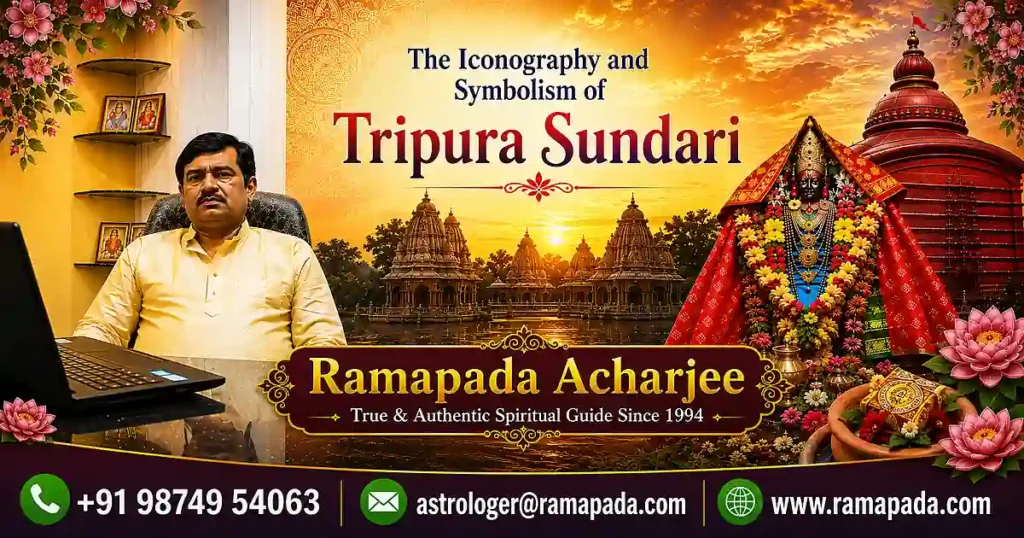
Her Form, Color, Lotus, Throne, Weapons, and Deeper Meanings
By Ramapada Acharjee (35+ years of experience and study in spiritualism and traditional spiritual practices)
After introducing Tripura Sundari Mahavidya as the Third Mahavidya in the previous part of this series, I now want to explore another vital dimension of her tradition—her sacred iconography and esoteric symbolism.
During my more than 35 years of experience and study in spiritualism and traditional spiritual practices, I have gradually learned that the visual depiction of a deity should never be judged solely by what meets the eye. Every sacred color, mudra, seated posture, and divine weapon carries a profound philosophical framework.
আমার নিজের দীর্ঘ অভিজ্ঞতায় আমি দেখেছি, দেবদেবীর ছবি বা মূর্তিকে শুধু বাহ্যিক রূপ দিয়ে বিচার করলে তার আসল ভাব অনেকটাই অধরা থেকে যায়। দেবীর হাতে কী রয়েছে, তিনি কোথায় বসে আছেন, তাঁর গায়ের বর্ণ কী—এসবের মধ্যেও গভীর আধ্যাত্মিক ও মনস্তাত্ত্বিক ইঙ্গিত লুকিয়ে থাকে।
This principle is particularly evident in the worship of Tripura Sundari Mahavidya. At first sight, her form appears graceful, youthful, serene, and exquisitely beautiful. Yet beneath this aesthetic brilliance lies an advanced spiritual blueprint concerning human consciousness, equilibrium, desire, mindfulness, and the cosmic structure of reality.
আমার কাছে ত্রিপুরা সুন্দরীর রূপের সবচেয়ে গুরুত্বপূর্ণ দিক হলো—তাঁর সৌন্দর্য শুধু চোখে দেখার সৌন্দর্য নয়। তাঁর রূপ মানুষকে বাহ্যিক আকর্ষণের মধ্য দিয়ে অন্তরের সামঞ্জস্য ও চেতনার সৌন্দর্য আবিষ্কার করতে শেখায়।
Before interpreting her visual form, it helps to understand Tripura Sundari Mahavidya and her position as the Third Mahavidya
Who Is Tripura Sundari? Beyond Conventional Aesthetics
Tripura Sundari holds an exalted place as the third of the ten Mahavidyas. Her name is frequently rendered as “The Beauty of the Three Worlds.” However, the esoteric depth of Tripura (the three realms or states of consciousness) and Sundari (beauty) reaches far beyond simple literal translation.
The term “Sundari” within authentic Shakta philosophical traditions represents wholeness, absolute balance, harmonic order, and the luminous radiance of pure consciousness.
বাংলায় সহজ করে বললে, ‘সুন্দরী’ শব্দটি শুনলেই আমরা সাধারণত শারীরিক রূপের কথা ভাবি। কিন্তু ত্রিপুরা সুন্দরীর ক্ষেত্রে এই সৌন্দর্যকে শুধু স্থূল দৈহিক রূপ হিসেবে দেখলে বিরাট ভুল হবে। আমার কাছে এখানে সৌন্দর্য মানে মানসিক পূর্ণতা, সামঞ্জস্য, শান্তি এবং আত্মচেতনার পরম প্রকাশ।
True beauty does not reside merely in transient facial features. It emerges naturally when thoughts, emotions, aspirations, and self-awareness align in complete harmony.
আমার দীর্ঘদিনের উপলব্ধিতে, মানুষের মুখ সুন্দর হওয়া এক জিনিস আর তার জীবন সুন্দর হওয়া সম্পূর্ণ অন্য জিনিস। চিন্তা, ব্যবহার, সামাজিক সম্পর্ক এবং মানসিক ভারসাম্যের মধ্যেও এক ধরনের গভীর সৌন্দর্য আছে। ত্রিপুরা সুন্দরীর প্রতীক আমাদের সেই শাশ্বত সত্যের কথাই মনে করিয়ে দেয়।
Historical descriptions of Lalita, Tripura Sundari and Rajarajeshvari—including the noose, goad, sugarcane bow and arrows—can be found in the IGNCA study of South Indian sacred images.
The Youthful and Radiant Form: Eternal Vitality
Classical scriptures describe Tripura Sundari as an eternally youthful (Nitya Yuvati) and luminous divinity. Her countenance is tranquil, compassionate, and full of grace.
Spiritual symbolism does not measure this youthfulness in physical human years. In spiritual traditions, youth represents vitality, creative potential, unblemished freshness, and a state of consciousness that continuously renews itself.
আমার মতে, এখানে দেবীর যৌবনকে সাধারণ মানুষের বয়সের সঙ্গে তুলনা করা অনুচিত। মানুষ বয়সে বৃদ্ধ হয়, শরীরের পরিবর্তন ঘটে; কিন্তু বিশুদ্ধ চেতনা, শেখার আগ্রহ এবং অন্তরের জাগরণকে কখনও বয়স দিয়ে বাঁধা যায় না। দেবীর চিরযৌবন সেই চিরনবীন আত্মশক্তিরই জীবন্ত প্রতীক।
This philosophical insight has always resonated deeply with me. Spiritual growth is not the exclusive domain of any particular stage of life; an individual can continue evolving inwardly at any age.
আমার নিজের জীবনের অভিজ্ঞতাতেও আমি বুঝেছি—বয়স বাড়লেই মানুষের জানার পরিধি শেষ হয়ে যায় না। বরং জীবনের অনেক জটিল রহস্যের গভীর অর্থ বয়স এবং বাস্তব অভিজ্ঞতার সঙ্গে আরও স্পষ্ট হয়। তাই দেবীর এই চিরনবীন রূপ আমার কাছে অত্যন্ত তাৎপর্যপূর্ণ।
For a broader scholarly interpretation of Tripura Sundari’s Mahavidya symbolism, readers may consult David Kinsley’s Tantric Visions of the Divine Feminine.
Why Is Tripura Sundari Associated with the Color Red?
Tripura Sundari is predominantly depicted in shades of crimson, vermilion, or the radiant hue of the rising dawn (Udyad-bhanu-sahasrabha).
In Shakta philosophy, the color red possesses immense symbolic significance, representing:
- Shakti: The primal, dynamic energy of the universe
- Creative Potency: The impulse of manifestation and evolution
- Vitality & Life Force: The pulsating breath of all living beings
- Love & Compassion: The unifying bond of creation
- Desire (Kama): The primordial seed of action and purpose
- Conscious Dynamism: Movement and engagement with life
Reducing this sacred red color merely to raw physical lust or emotional volatility diminishes the philosophical depth of the deity.
লাল রং দেখলেই যদি আমরা শুধু কামনা বা আবেগের কথা ভাবি, তাহলে ত্রিপুরা সুন্দরীর প্রতীকী অর্থ অনেক সীমাবদ্ধ হয়ে যায়। শক্তি, সৃষ্টি, জীবন, নিঃস্বার্থ ভালোবাসা, কর্মক্ষমতা—এই সমস্ত কিছুর মূল চালিকাশক্তির সঙ্গেও এই লাল রঙের নিবিড় যোগ রয়েছে।
Human life cannot exist in a vacuum devoid of desire. We naturally seek sustenance, security, healthy relationships, knowledge, worldly achievement, and ultimately, self-realization. Therefore, the central spiritual dilemma is not
“How can I violently eradicate every desire?“
A far more constructive and realistic question is
“How can I comprehend, refine, and consciously direct my desires?”
আমার মতে, মনের ভেতর ইচ্ছা থাকাটা কোনো অপরাধ বা সমস্যা নয়। সমস্যা তখনই দেখা দেয় যখন অনিয়ন্ত্রিত ইচ্ছা আমাদের চালনা করতে শুরু করে। আমি কী চাই, কেন চাই এবং সেই চাওয়া আমার সামগ্রিক কল্যাণের অনুকূল কি না—এই আত্মসচেতনতাই সবচেয়ে বেশি জরুরি।
Many of these symbols also have textual foundations that can be explored through Tripura Sundari scriptures and Shakta philosophy.
The Sacred Lotus: Detached Awareness Within Worldly Life
The lotus (Padma) is one of the most revered motifs across Indian spiritual heritage. Rooted in mud and submerged in water, the blossom rises completely clean and radiant above the surface.
This natural trait makes the lotus an unparalleled metaphor for inner purity, spiritual transcendence, and detached awareness.
পদ্মের প্রতীকটি আমার কাছে অত্যন্ত বাস্তবধর্মী ও অর্থপূর্ণ। পদ্ম পাঁকের মধ্যে জন্মায়, কিন্তু তার পাপড়িতে কাদার দাগ লাগে না। মানুষের জীবনও ঠিক তেমনই—সংসারে সমস্যা থাকবে, দায়িত্ব থাকবে, দুঃখ থাকবে, তবু তার মধ্যে থেকেও নিজের মনকে নিষ্কলঙ্ক ও সচেতন রাখা পুরোপুরি সম্ভব।
The lotus does not advocate escapism or renunciation of duty. It demonstrates how to remain fully engaged in everyday life while cultivating elevated awareness.
আমার কাছে এর শিক্ষা সংসার ছেড়ে অরণ্যে পালানো নয়। সংসারের প্রতিটি দায়িত্ব নিষ্ঠার সাথে পালন করেও নিজের মন, চরিত্র এবং চিন্তাকে নির্মল রাখা—এটাই হলো শ্রীবিদ্যার বাস্তবসম্মত শিক্ষা।
The Elevated Throne of Tripura Sundari
One of the most intricate aspects of Tripura Sundari’s iconography is her seat or throne, traditionally described as supported by significant cosmic deities and foundational universal principles (Pancha-Brahmasana).
While scriptural details and regional traditions present varied iconographic nuances, the core philosophical principle remains consistent: her throne symbolizes the absolute supremacy of divine consciousness (Chiti) and dynamic energy (Shakti) over the passive architecture of the cosmos.
দেবীর সিংহাসনকে আমি কেবল রাজকীয় অলঙ্করণ হিসেবে দেখি না। এর মধ্যে বিশ্বজগতের বিভিন্ন জড় ও চেতন শক্তির মধ্যে থাকা এক পরম সামঞ্জস্যের প্রকাশ ঘটে।
In Shakta metaphysics, pure existence requires dynamic kinetic energy to create, sustain, and transform reality.
সহজ বাংলায় বললে—শক্তি ছাড়া শুধু অস্তিত্ব থাকলে তো সৃষ্টি প্রক্রিয়া চলতে পারে না। সৃষ্টি, স্থিতি, পরিবর্তন, গতি, বুদ্ধি—সবকিছুর ভেতরেই মহাশক্তির সক্রিয় প্রকাশ রয়েছে। ত্রিপুরা সুন্দরীর এই উচ্চ আসন সেই শাশ্বত দর্শনেরই প্রতীক।
Traditional poetic descriptions of her divine form can also be read in the Tripurasundari Stotra preserved in the Sacred Texts archive.
The Four Arms: A Psychological Framework for Self-Mastery
Tripura Sundari is classically depicted with four arms, holding four sacred instruments:
- A Sugarcane Bow (Ikshu Dhanus)
- Five Flower Arrows (Pancha Pushpa Bana)
- A Noose (Pasha)
- A Goad (Ankusha)
Far from being mere mythological weapons, these four implements form an interconnected system for understanding the human mind, senses, attachments, and discernment.
আমার মতে, দেবীর হাতে থাকা এই চারটি উপকরণ তাঁর পুরো দর্শন বোঝার প্রধান চাবিকাঠি। এগুলোকে কেবল অলৌকিক অস্ত্র হিসেবে দেখলে ভুল হবে। মন, পঞ্চেন্দ্রিয়, মোহবন্ধন এবং আত্মনিয়ন্ত্রণ—মানবজীবনের এই চারটি মৌলিক স্তম্ভের সাথে এগুলোর সরাসরি মনস্তাত্ত্বিক সম্পর্ক রয়েছে।
                       [ TRIPURA SUNDARI ]
                                |
       +------------------------+------------------------+
       |                        |                        |
[ Sugarcane Bow ]      [ 5 Flower Arrows ]        [ Pasha & Ankusha ]
   (The Mind)             (The Senses)          (Bondage & Direction)
       |                        |                        |
 Sweet & Potent       Sight, Sound, Touch,       Recognizing Attachment
 Must be Guided        Taste, Smell Aware        & Applying Restraint
Her iconography is closely connected with her different sacred identities, discussed in Shodashi, Lalita, and Tripura Sundari.
The Sugarcane Bow: Symbol of the Mind (Manas)
The sugarcane bow represents the human mind. Sugarcane is naturally sweet and nourishing, representing how the mind can generate joy, creative imagination, sweet memories, and elevated aspirations.
Yet, an unruly mind can also become vulnerable to agitation, anxiety, obsessive attachments, and despair.
মন আমাদের সবচেয়ে বড় শক্তি ও আনন্দের উৎস হতে পারে, আবার সেই মনই লাগামহীন হলে সবচেয়ে বড় নরক তৈরি করতে পারে। বাইরে সবকিছু নিখুঁত থাকার পরেও মন যদি অস্থির থাকে, মানুষ শান্তি পায় না। আবার পরিস্থিতি প্রতিকূল হলেও মন শান্ত থাকলে মানুষ যেকোনো ঝড় সামলে নিতে পারে।
The bow serves as a direct reminder: cultivate the sweetness of the mind, but ensure you command your thoughts rather than allowing your thoughts to enslave you.
আমার ৩৫ বছরেরও বেশি সময় ধরে মানুষের মানসিক দ্বন্দ্ব ও সংকট প্রত্যক্ষ করার অভিজ্ঞতায় দেখেছি—বাস্তব সমস্যার চেয়েও সেই সমস্যা নিয়ে মনের অতিরিক্ত ভয়, অমূলক দুশ্চিন্তা ও প্রত্যাশা মানুষকে বেশি পঙ্গু করে দেয়। তাই নিজের মনকে চেনা ও সংযত রাখা সবচেয়ে গুরুত্বপূর্ণ।
The Five Flower Arrows: The Five Senses (Jnanendriyas)
The five floral arrows correspond to the five human senses through which we perceive the universe:
- Sight (Rupa)
- Hearing (Shabda)
- Smell (Gandha)
- Taste (Rasa)
- Touch (Sparsha)
The senses bridge our inner consciousness with the outer material world. Through them, we experience beauty, music, human relationships, and the richness of living.
চোখ, কান, নাক, জিভ ও ত্বক—এই পাঁচ ইন্দ্রিয় ছাড়া বাইরের জগতের কোনো উপলব্ধিই আমাদের হতো না। তাই ইন্দ্রিয়কে অশুচি বা শত্রু ভাবার কারণ নেই। সমস্যা তখনই তৈরি হয় যখন আমরা বাছবিচার না করে ইন্দ্রিয়সুখের অন্ধ দাস হয়ে পড়ি।
The flower arrows signify experiencing sensory life with gentle awareness and aesthetic appreciation without succumbing to addiction or distraction.
আমার মতে, দেবীর হাতের পাঁচটি ফুলের তীর আমাদের শেখায়—জগৎকে সুন্দরভাবে অনুভব করুন, সুখানুভূতি নিন, কিন্তু জীবনের মূল আত্মসচেতনতা এবং বিবেককে হারিয়ে ফেলবেন না।
The Noose (Pasha): Recognizing Emotional Attachment (Raga)
The noose represents the forces of attachment, obsessive desire, egoistic expectation, and emotional entanglement that bind the human psyche.
Human life naturally flourishes on love, duty, empathy, and family bonds. The spiritual teaching does not demand cold detachment but rather clear discernment between selfless love and suffocating possession.
আমার দৃষ্টিতে, মায়া-মমতা বা রক্তের সম্পর্ক নিজে কোনো বাধা নয়। সন্তান, পরিবার ও পরিজনের প্রতি স্নেহ থাকাটাই স্বাভাবিক ও মানবিক। কিন্তু সেই টান যখন এতটাই অন্ধ হয়ে যায় যে নিজের বিচারবুদ্ধি, মানসিক স্বাধীনতা ও অন্তরের শান্তি নষ্ট করে ফেলে, তখন সেটাই কালান্তক বন্ধনে পরিণত হয়।
The Pasha invites us to recognize the precise boundary between caring responsibility and unconscious emotional bondage.
এই পার্থক্যটি সবসময় মনে রাখা দরকার—ভালোবাসা আর অন্ধ মোহ এক জিনিস নয়। প্রিয়জনকে নিঃস্বার্থভাবে ভালোবাসা যায়, কিন্তু নিজের মানসিক স্থিতি সম্পূর্ণভাবে অন্যের আচরণের ওপর সঁপে দেওয়া উচিত নয়।
The Goad (Ankusha): Conscious Direction and Restraint (Krodha / Dvesha Transformation)
The elephant goad (Ankusha) symbolizes the power of discernment, self-discipline, and conscious redirection. Just as a mahout uses a goad to guide a mighty elephant, an individual must use intellectual discernment (Buddhi) to channel primal emotions.
Anger, ambition, drive, and intense passions are potent energetic forces. Suppressing them leads to neurosis; consciously guiding them leads to transformation.
রাগ, ক্ষোভ, উচ্চাকাঙ্ক্ষা বা তীব্র আবেগ—এসবকে জোর করে চেপে রাখা যায় না। আসল পরীক্ষা হলো, এই অপরিমেয় শক্তিকে আমরা কোন গঠনমূলক খাতে প্রয়োগ করছি।
The Ankusha represents the inner wisdom to halt destructive momentum, re-evaluate our direction, and return to the center when we drift into imbalance.
আমার কাছে অঙ্কুশের ব্যবহারিক শিক্ষা অত্যন্ত স্পষ্ট—কোথায় থামতে হবে এবং কখন ভুল পথ থেকে নিজেকে ফিরিয়ে আনতে হবে, তা জানা। জীবনে সবসময় অন্ধের মতো ছুটে চলাই বাহাদুরি নয়; সঠিক সময়ে থামা, পর্যবেক্ষণ করা এবং ভুল সংশোধন করাই প্রকৃত প্রজ্ঞা।
Desire Is Not the Enemy: The Tantric Middle Path
Tripura Sundari’s philosophy resolves one of the greatest misconceptions surrounding spirituality.
Popular misunderstandings often split into two extremes:
- Misinterpreting Tantra as unrestrained physical self-indulgence.
- Believing genuine spirituality requires ascetic self-denial and the total destruction of desire.
Both extremes fail to grasp the deeper Shakta viewpoint.
আমার মতে, এই দুই চরমপন্থী মনোভাবের কোনোটিই সঠিক নয়। মানুষ যতদিন বাঁচবে, তার অন্তরে কিছু না কিছু বাসনা থাকবেই। সম্পূর্ণ নিষ্কাম বা ইচ্ছাহীন হয়ে সাধারণ সংসারে বেঁচে থাকা কার্যত অসম্ভব।
Desire fuels human creativity, learning, artistic expression, professional achievement, and even the yearning for spiritual liberation. The critical factor is whether desire is conscious (Viveka-yukta) or compulsive (Moha-yukta).
আমি সবসময় একটি কথা বলি—ইচ্ছাকে জোর করে দমন করার আগে সেই ইচ্ছার মূল উৎসটি পরীক্ষা করা উচিত। ‘আমি কেন এটা চাই? এটা পেলে আমার কী লাভ হবে? না পেলে কী ক্ষতি?’—এই আত্মজিজ্ঞাসা মানুষকে নিজের অন্তর্লোক সম্পর্কে স্বচ্ছ ধারণা দেয়।
When understood, desire becomes a creative instrument. When ignored, it becomes a psychological cage.
এখানেই ত্রিপুরা সুন্দরীর ধনু, বাণ, পাশ ও অঙ্কুশ—এই চারটি প্রতীক একসঙ্গে এক অপূর্ব সমন্বিত জীবনদর্শনের শিক্ষা তুলে ধরে।
The Meaning of Beauty: True Harmony
If Tripura Sundari represented only physical symmetry or youth, her spiritual value would be transitory.
External youth fades, physical appearance alters with time, material wealth fluctuates, and social recognition comes and goes. Building one’s inner worth entirely upon external foundations inevitably leads to psychological distress.
আমরা বাস্তব জীবনে দেখি—যৌবন চিরকাল থাকে না, রূপ পরিবর্তিত হয়, অর্থসম্পদ আসে যায়। তাই শুধু বাইরের চাকচিক্যের ওপর জীবনের ভিত্তি তৈরি করলে জীবনে হতাশা আসতে বাধ্য।
The beauty embodied by Tripura Sundari is the harmony of integrated living:
- Harmony in intellectual clarity
- Harmony in daily speech and conduct
- Harmony in familial and professional relationships
- Harmony between outer obligations and inner tranquility
আমার কাছে সত্যিকারের সৌন্দর্য হলো—চিন্তার সৌন্দর্য, আচরণের পরিচ্ছন্নতা, সম্পর্কের ভারসাম্য এবং মানসিক শান্তি। এই দৃষ্টিতে উপলব্ধি করলে ‘সুন্দরী’ শব্দটির তাৎপর্য বহু গুণ গভীর হয়ে ওঠে।
Sacred geometry adds another important dimension to these symbols, particularly through Sri Chakra and Tripura Sundari.
Cultivating Inner Balance in the Modern World
Modern lifestyle continuously fragments our attention. People constantly compare their status, wealth, appearance, and achievements with others on digital platforms, resulting in chronic anxiety and restlessness.
Tripura Sundari’s iconography offers an enduring compass for balanced modern living:
- Savor life’s blessings while maintaining steady self-awareness.
- Love deeply and protect relationships, without losing personal emotional independence.
- Pursue goals and material success, without letting possessions own your mind.
- Appreciate worldly beauty, without mistaking outer appearances for lasting truth.
- Utilize the intellect actively, without letting repetitive mental chatter dominate your peace.
আজকের যুগে এই শিক্ষার প্রয়োজনীয়তা সবচেয়ে বেশি। মানুষ বাইরের প্রাচুর্য পেলেও অন্তরের ভারসাম্য হারিয়ে ফেলছে। অথচ অন্তরের শান্তি না থাকলে কোনো বৈষয়িক প্রাপ্তিই দীর্ঘস্থায়ী আনন্দ দিতে পারে না।
Inner equilibrium does not require withdrawing from societal duties. It teaches us how to participate fully in worldly affairs without being consumed by them.
সংসারে দায়িত্ব সামলাব, কাজ করব, পরিবারের জন্য উপার্জন করব, জীবনের ভালো জিনিস উপভোগ করব—কিন্তু কোনো বাহ্যিক বিষয় যেন আমার মনের নিয়ন্ত্রণ কেড়ে না নেয়। দেবী ত্রিপুরা সুন্দরীর রূপতত্ত্ব থেকে আমি এই বাস্তব ও মূল্যবান শিক্ষাই লাভ করেছি।
Core Symbolic Summary
| Iconographic Symbol | Literal Attribute | Esoteric Dimension | Practical Life Lesson |
|---|---|---|---|
| Youthful Form (Nitya Yuvati) | Luminous girl | Timeless Consciousness | Continual learning, mental adaptability, and inner renewal across all ages. |
| Red Radiance (Rakta Varna) | Crimson/Rising sun | Dynamic Shakti & Life Force | Transforming emotional drives and desires into conscious creative action. |
| Lotus (Padma) | Immaculate flower | Pure Awareness in Worldly Life | Fulfilling daily responsibilities while maintaining inner purity and detachment. |
| Sacred Throne (Pancha-Brahmasana) | High seat | Primacy of Divine Consciousness | Recognizing awareness as the foundation of all thought, form, and activity. |
| Sugarcane Bow (Ikshu Dhanus) | Sweet bow | The Human Mind (Manas) | Guiding thought patterns to create positive, constructive life experiences. |
| Five Flower Arrows (Pushpa Bana) | Five floral darts | The Five Senses (Jnanendriyas) | Experiencing sensory perception with mindful appreciation rather than addiction. |
| The Noose (Pasha) | Binding cord | Attachment & Passion (Raga) | Distinguishing healthy compassionate love from destructive possessiveness. |
| The Goad (Ankusha) | Iron hook | Discernment & Self-Control | Directing primal impulses and knowing when to halt unproductive habits. |
My Personal Perspective After 35+ Years of Study
Over more than three and a half decades of immersion in traditional spiritualism, my perception of sacred iconography has transformed from outer reverence to inner inquiry.
Initially, one naturally admires the artistic and mythological form of a deity. With time, reflective study prompts deeper questions:
- Why is this specific hue prescribed?
- Why this seated posture?
- Why this particular flower?
- Why these exact four implements in her hands?
These inquiries unlock the psychological wisdom preserved by our ancient traditions.
আমার নিজের জীবনেও ঠিক এমনটাই ঘটেছে। যত সময় গেছে, ততই উপলব্ধি করেছি যে বাহ্যিক স্তুতি বা রূপের চেয়ে দেবদেবীর প্রতীকের অন্তর্নিহিত দর্শন বোঝা মানবজীবনের জন্য অনেক বেশি কল্যাণকর।
When viewed collectively, Tripura Sundari’s symbols reveal a complete map of human existence:
- The bow mirrors the mind.
- The Five Arrows mirror the senses.
- The Noose mirrors our attachments.
- The Goad mirrors conscious self-direction.
- The Lotus mirrors detachment amid worldly chaos.
- The Crimson Radiance mirrors the dynamic pulse of life.
- The beauty mirrors harmonious living.
আমার চোখে এই সমস্ত প্রতীক পরস্পরের থেকে বিচ্ছিন্ন নয়। সবকটিকে একত্রে মেলালে যেন সম্পূর্ণ মানবজীবনকেই তুলে ধরা হয়—যেখানে মন, অনুভূতি, ইচ্ছা এবং মায়ার উপস্থিতি যেমন বাস্তব, তেমনই সেই সবকিছুকে সচেতনভাবে পরিচালনা করার ঈশ্বরপ্রদত্ত ক্ষমতাও মানুষের নিজের ভেতরেই বিদ্যমান।
The relationship between her form and Sri Chakra symbolism can be explored further through this university study of Sri Chakra worship and Lalita Tripurasundari.
A Respectful Note for Seekers and Readers
Tripura Sundari represents the pinnacle of the classical Shakta and Sri Vidya traditions. Her profound sacred symbology should never be cheapened into sensational claims, supernatural shortcuts, or commercialized promises of instant fortune.
Furthermore, authentic scriptures, Sampradayas (traditional lineages), and spiritual teachers may articulate distinct levels of commentary regarding these symbols.
আমি পাঠকদের বিশেষ অনুরোধ করব—মহাবিদ্যা বা তান্ত্রিক প্রতীক নিয়ে ইন্টারনেটে ছড়ানো চটুল বা অতিপ্রাকৃত গুজবে বিভ্রান্ত হবেন না। কোনো একটি বিশেষ ব্যাখ্যাকেই একমাত্র চূড়ান্ত সত্য ধরে নেওয়া ঠিক নয়; শাস্ত্র ও ঐতিহ্যভেদে ভিন্ন ভিন্ন ব্যাখ্যার অবকাশ থাকে।
My sincere intention throughout this series is to present these traditional concepts respectfully and accessibly to earnest seekers, maintaining clear boundaries between scriptural canonical records, traditional symbolism, and my personal experiential reflections.
এই আলোচনায় কোনো অলৌকিক দাবি করা আমার উদ্দেশ্য নয়। আমার একমাত্র লক্ষ্য হলো—শাস্ত্রের মূল ভাবধারাকে বজায় রেখে দৈনন্দিন জীবনের উপযোগী করে এই প্রতীকী সত্যগুলো সাধারণ মানুষের সামনে সহজ ও সাবলীল ভাষায় তুলে ধরা।
The symbolism becomes especially meaningful when applied to everyday experience through these spiritual lessons from Tripura Sundari for modern life.
Frequently Asked Questions About Tripura Sundari Iconography
1. Why is Tripura Sundari traditionally visualized in red?
Red represents the dynamic, creative cosmic energy (Shakti), vital life force, and the spark of consciousness in manifestation. In Tripura Sundari, it indicates active, harmonious participation in the cosmos rather than passive stagnation.
দেবীর লাল বর্ণ প্রাণশক্তি, সৃষ্টিশীলতা ও গতিশীলতার প্রতীক। একে কেবল সংকীর্ণ অর্থে শারীরিক কামনা হিসেবে দেখা শাস্ত্রীয় দর্শনের পরিপন্থী।
2. What is the spiritual significance of the sugarcane bow?
The sugarcane bow represents the human mind (Manas). It illustrates that while the mind has the potential to generate sweet and noble experiences, it requires mindful stewardship so it does not become unstable or turbulent.
আখের মতো মন সুন্দর অনুভূতি দিতে পারে, কিন্তু অসাবধান হলে সেই মনই যন্ত্রণার কারণ হয়। তাই মনের ওপর সদা জাগ্রত দৃষ্টি রাখা দরকার।
3. What do the five flower arrows symbolize?
The five flower arrows represent the five senses: sound, touch, sight, taste, and smell. They instruct us to perceive the beauty of creation consciously without becoming trapped in sensory craving.
পাঁচটি বাণ পঞ্চেন্দ্রিয়ের প্রতীক। ইন্দ্রিয়কে ধ্বংস না করে বিচারবুদ্ধি সহকারে ব্যবহার করাই হলো এই প্রতীকের মূল শিক্ষা।
4. What is the deeper meaning of the noose (Pasha)?
The noose signifies emotional attachment (Raga), mental conditioning, and possessiveness. It teaches us to cultivate genuine affection and responsibility without falling into blinding obsession.
পাশ আমাদের মনে করিয়ে দেয়—ভালোবাসা সুন্দর, কিন্তু সেই ভালোবাসা যেন অতিরিক্ত মোহে রূপ নিয়ে নিজের ও অন্যের মানসিক স্বাধীনতা হরণ না করে।
5. What does the goad (Ankusha) represent?
The goad represents discernment (Viveka), restraint, and the power to steer our thoughts, anger, and impulses toward constructive outcomes.
অঙ্কুশ হলো আত্মনিয়ন্ত্রণের প্রতীক। নিজের ভুল চিন্তা বা বিপথগামী আবেগকে সঠিক সময়ে আটকে সঠিক পথে চালিত করার শক্তিই অঙ্কুশ।
6. Why is the lotus central to her iconography?
The lotus symbolizes pristine purity and spiritual growth. Growing out of mud yet remaining untouched by dirt, it reminds the householder to live purposefully within worldly duties while keeping the mind elevated.
পাঁকে জন্মালেও পদ্ম যেমন নিষ্কলঙ্ক থাকে, তেমনই পার্থিব টানাপোড়েনের মাঝেও মানুষের মন ও চরিত্রকে সুন্দর রাখার অনুপ্রেরণা দেয় পদ্ম।
7. Is Tripura Sundari merely a deity of physical beauty?
No. In the Shakta Sri Vidya school, Sundari signifies the wholeness of reality, absolute cosmic equilibrium, and the divine harmony of awareness.
দেবীর রূপ কেবল বাহ্যিক সৌন্দর্য নয়; এটি অন্তরের শান্তি, চরিত্রের নির্মলতা এবং চিন্তার ভারসাম্যের সমন্বিত রূপ।
8. Does the worship of Tripura Sundari require renouncing desire?
Not at all. Her tradition teaches that desire is natural; it must be understood, refined, and directed with wisdom (Viveka) rather than mindlessly indulged or violently suppressed.
ইচ্ছা থাকা দোষের নয়। ইচ্ছাকে অন্ধের মতো অনুসরণ না করে আত্মসচেতনতার সঙ্গে ভালো কাজে প্রয়োগ করাই হলো সঠিক দৃষ্টিভঙ্গি।
9. Are all traditional interpretations of her symbols identical across texts?
No. Interpretations vary gracefully across classical treatises, Shakta traditions, Sri Vidya transmissions, and revered lineage commentators.
শাস্ত্র ও পরম্পরা ভেদে প্রতীকের ব্যাখ্যায় কিছুটা বৈচিত্র্য থাকা স্বাভাবিক, তবে সবার মূল দার্শনিক সুরটি সর্বদা সামঞ্জস্য ও আত্মজাগরণের কথাই বলে।
Additional academic discussion of Lalita Tripurasundari’s imagery and religious significance is available in Cornell University research on the Goddess tradition.
My Final Reflection
For me, the iconography of Tripura Sundari presents a supremely practical philosophy for living.
Spiritual life does not require the harsh denial of everything pleasant or creative. Nor does a fulfilled life come from drifting aimlessly after every momentary craving.
Between these two extremes lies conscious awareness.
- The mind must be understood.
- The senses must be guided.
- Attachment must be recognized.
- Desire must be examined.
- Beauty must be experienced as inner harmony.
আমার এত বছরের অভিজ্ঞতায় একটি বিষয় ধ্রুব সত্য বলে বুঝেছি—জীবন শুধু অন্ধ ত্যাগেরও নয়, আবার অনিয়ন্ত্রিত ভোগেরও নয়। জীবনের আসল শিল্প হলো—কোনটা গ্রহণ করব, কতটুকু করব এবং কোথায় নিজেকে সংযত রাখব, সেই সূক্ষ্ম ভারসাম্য রক্ষা করা।
Tripura Sundari’s iconography reflects this ultimate middle path. Her outward form captures our attention, but her profound symbols invite us to awaken our deepest inner truth.
তাঁর রূপ আমাদের চোখকে মুগ্ধ করে, আর তাঁর প্রতীকগুলো আমাদের মনকে পরিশুদ্ধ করে সত্যের সন্ধান দেয়।
— Ramapada Acharjee
35+ years of experience and vast knowledge in spiritualism
Continue the Tripura Sundari Mahavidya Series
- Previous Article : Tripura Sundari Mahavidya: The Third Mahavidya – Introduction, Meaning, Origin, My Personal Understanding, and Why She Is Called Tripura Sundari(আগের পর্বে আমরা ত্রিপুরা সুন্দরী কে, তাঁর নামের অর্থ এবং কেন তাঁকে তৃতীয় মহাবিদ্যা বলা হয়—সেই প্রাথমিক বিষয়গুলো বিশদভাবে আলোচনা করেছি।)
- Next Article: Tripura Sundari in Shakta and Tantric Scriptures—Scriptural Traditions, Sacred References, and Philosophical Understanding (পরের পর্বে আমরা শাক্ত ও তান্ত্রিক শাস্ত্রের মূল সূত্রগুলির আলোকে ত্রিপুরা সুন্দরীর দার্শনিক ও সাধনতত্ত্ব সহজভাবে পর্যালোচনা করব।)
Connect with the Best in Kolkata
Stop wandering in uncertainty. Your stars have a story to tell, and Ramapada Acharjee is here to help you read it. With a legacy built on truth, 35 years of experience, and a mission to bring peace to every household, your journey toward clarity starts here.
📍Consultation available in Kolkata, Guwahati, Siliguri, Tarapith & online.
📞 Call/WhatsApp: +91-98749 54063
🌐 Visit Website
You may also read:
Tantrik Website – Your Pathway to Spiritual Guidance
Best Tantrik in Ujjain—Unlock Your Spiritual Path
Genuine Tantrik Astrologer in Madurai – Resolve life’s Struggles
Related Category: Tantra
