
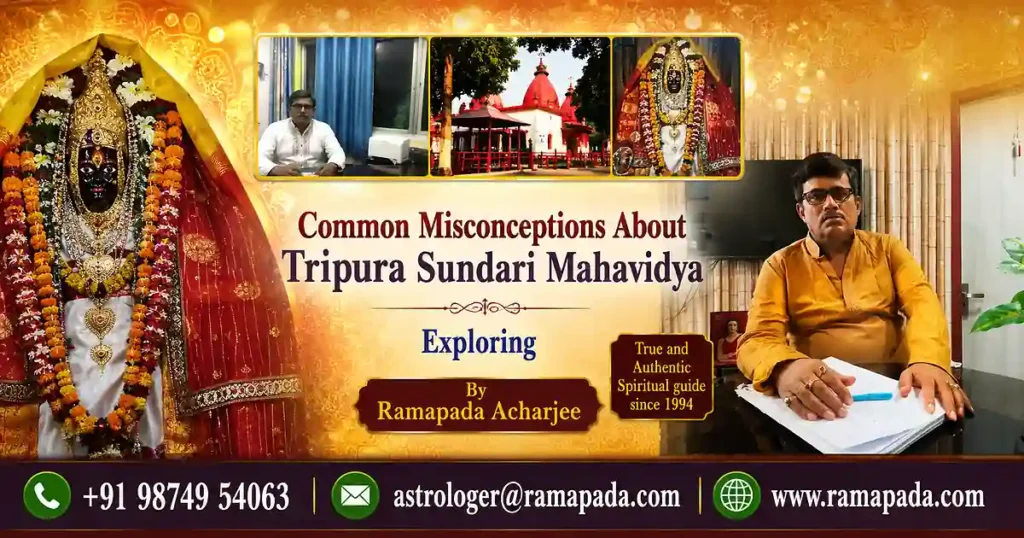
Tantra, Beauty, Desire, Rituals, and Spiritual Understanding
The more we explore Tripura Sundari Mahavidya, the more important it becomes to separate traditional spiritual ideas from modern misconceptions.
Tripura Sundari connects deeply with beauty, Sri Vidya, Sri Chakra, Shakti, desire, consciousness, and several sophisticated philosophical traditions. Unfortunately, modern discussions often simplify or sensationalize these profound subjects. For instance, some people see Tripura Sundari only as a Goddess of physical beauty. Others connect her worship strictly with attraction, relationships, money, or the instant fulfillment of desires. Still others assume that anything related to Tantra must involve secret or frightening rituals.
In my long journey of more than 35 years through spiritualism, Shakta philosophy, Tantra-related traditions, astrology, and the study of the Mahavidyas, I have encountered many such ideas.
আমার অভিজ্ঞতায় দেখেছি, কোনও বিষয় যত রহস্যময় বলে প্রচার করা হয়, তাকে ঘিরে ভুল ধারণাও তত দ্রুত তৈরি হয়। Tripura Sundari-এর ক্ষেত্রেও ঠিক সেটাই হয়েছে। তাঁর তত্ত্ব অত্যন্ত গভীর, কিন্তু অনেক সময় সেই গভীরতার বদলে শুধু sensational কিছু বিষয় সামনে চলে আসে।
In this article, I want to discuss some of the most common misconceptions about Tripura Sundari Mahavidya in a simple, structured, and balanced way.
A clear introduction to Tripura Sundari Mahavidya and her place as the Third Mahavidya can help prevent many of these misunderstandings.
Misconception 1: Tripura Sundari Is Only the Goddess of Physical Beauty
Perhaps the most obvious misunderstanding begins with the word Sundari.
Sundari means beautiful. Therefore, some people immediately assume that Tripura Sundari connects mainly with physical attractiveness. However, this interpretation is far too narrow. Within the wider philosophical understanding of Tripura Sundari, beauty can represent harmony, balance, consciousness, order, completeness, and the beauty inherent in existence itself.
Physical beauty is temporary. On the contrary, the concept represented by Tripura Sundari goes much deeper.
আমার কাছে সৌন্দর্য শুধু মুখের সৌন্দর্য নয়। সুন্দর ব্যবহার, সুন্দর চিন্তা, একটা balanced জীবন, সম্পর্কের মধ্যে সম্মান এবং নিজের ভিতরের শান্তি—এগুলোও সৌন্দর্য। বয়স বাড়ার সঙ্গে সঙ্গে এই কথাটা আরও পরিষ্কারভাবে বুঝেছি।
Therefore, when I use the word “beauty” while discussing Tripura Sundari, I use it in a much wider spiritual sense.
To separate later popular assumptions from established Mahavidya traditions, readers can begin with David Kinsley’s academic treatment of Tripura Sundari.
Misconception 2: Worshipping Tripura Sundari Will Automatically Make Someone Beautiful
Another popular claim suggests that worshipping Tripura Sundari automatically improves physical beauty or makes someone more attractive.
I would be very careful with such claims. Spiritual traditions can certainly influence how a person thinks, behaves, and understands life. Furthermore, greater confidence, peace, discipline, and emotional balance can positively affect how someone presents themselves. But that wholesome personal growth is very different from promising a supernatural physical transformation.
আমি এমন কোনও guarantee দিতে চাই না যে কোনও দেবীর পূজা করলেই মানুষের চেহারা বদলে যাবে। আমার কাছে spirituality-কে এইভাবে advertise করা ঠিক নয়।
Tripura Sundari’s symbolism of beauty deserves a much deeper and mature interpretation.
Misconception 3: Tripura Sundari Is Mainly About Love and Attraction
Because Tripura Sundari connects with beauty and desire in certain philosophical contexts, people sometimes present her online almost entirely in terms of romance or attraction.
This is another major simplification. Human desire certainly forms part of the philosophical discussion surrounding her. However, desire is not the whole philosophy of Tripura Sundari. Her symbolism extends far beyond romance to awareness, harmony, consciousness, fullness, and the relationship between the individual and the wider reality.
মানুষের জীবনে প্রেম বা আকর্ষণ গুরুত্বপূর্ণ হতে পারে, কিন্তু মানুষের জীবন শুধু এটুকু নয়। পরিবার, দায়িত্ব, অর্থ, মানসিক শান্তি, আত্মসম্মান, জ্ঞান—সবকিছু মিলিয়েই জীবন। Tripura Sundari-এর তত্ত্বকেও শুধু relationship বা attraction-এর মধ্যে আটকে দেওয়া ঠিক নয়।
Focusing only on attraction reduces a profound spiritual tradition to a very small slice of human experience.
Sri Vidya itself is a complex Tantric tradition, as explained in this Cambridge University Press study of Sri Vidya practice and initiation.
Misconception 4: Tripura Sundari Is About Fulfilling Every Desire
This misunderstanding deserves special attention. Some modern explanations suggest that Tripura Sundari worship exists primarily to fulfill every personal desire.
Yet desire itself is a complicated subject. We all have natural desires:
- We want financial security.
- We want love and companionship.
- We want social recognition.
- We want physical comfort.
- We want career success.
There is nothing unusual about having these aspirations. However, the deeper spiritual question is not simply whether we have desires. Instead, the real question is whether we understand our desires consciously or let our unchecked desires control us completely.
আমার নিজের জীবনের অভিজ্ঞতা থেকে একটা জিনিস খুব পরিষ্কার—মানুষের চাওয়া শেষ হয় না। একটা ইচ্ছা পূরণ হলে আরেকটা তৈরি হয়। তাই সব ইচ্ছা পূরণ করাই যদি শান্তির পথ হত, তাহলে যাদের অনেক কিছু আছে তারা সবাই শান্তিতে থাকত। বাস্তবে আমরা তা দেখি না।
For me, cultivating an awareness of desire is far more meaningful than the endless chase after every desire.
Misconception 5: Tantra Means Black Magic
This represents one of the most widespread misconceptions about Tantra today.
The word “Tantra” covers a vast and diverse range of classical texts, philosophies, ritual systems, theological ideas, and spiritual traditions. Therefore, reducing all of Tantra to black magic is historically and philosophically misleading.
Tripura Sundari connects deeply with Sri Vidya, which developed within the wider Shakta and Tantric landscape. Yet Sri Vidya contains sophisticated non-dual philosophy, sacred geometry, devotional traditions, scriptural study, and disciplined ritual frameworks.
আমাদের সমাজে Tantra শব্দটা শুনলেই অনেকের মনে ভয়, ক্ষতি করা বা অদ্ভুত কোনও গোপন কাজের ছবি আসে। কিন্তু এত বছরের পড়াশোনা ও অভিজ্ঞতায় আমি বিষয়টাকে কখনও এত ছোট করে দেখি না। Tantra-র ইতিহাস ও দর্শন অনেক বিস্তৃত।
This historical depth is why proper context matters whenever we discuss Tantric traditions.
Some misconceptions arise from interpreting her appearance too literally, so it is useful to understand the deeper symbolism of Tripura Sundari’s iconography
Misconception 6: Every Tantric Practice Is Dangerous
The opposite misunderstanding also creates unnecessary fear. Some people assume that everything connected with Tantra is inherently dangerous and should never even be studied.
That view is also far too simplistic. There is an important difference between studying a tradition intellectually and performing specialized esoteric practices without proper understanding. Anyone can safely learn about the history, philosophy, symbolism, texts, and cultural background of Tantric traditions. Specialized ritual practices, however, remain a different matter that requires qualified personal guidance.
কোনও বিষয় সম্পর্কে জানা আর সেই বিষয়ের সব practice নিজে নিজে শুরু করে দেওয়া এক জিনিস নয়। আমি পাঠকদের এই পার্থক্যটা সবসময় মনে রাখতে বলি।
Respectful spiritual study does not require fear; it simply requires discernment and context.
Traditional iconography also helps correct misleading modern representations, and useful historical material is available in the IGNCA study of Lalita and Tripura Sundari imagery.
Misconception 7: Sri Vidya Is Just a Collection of Secret Mantras
In previous articles, I discussed Sri Vidya and Tripura Sundari in detail. Unfortunately, online content creators often present Sri Vidya mainly through lists of secret or supposedly powerful mantras.
That approach creates a distorted impression. Sri Vidya includes philosophy, theology, sacred geometry, devotional traditions, ritual structures, sacred scriptures, and lineage-based teachings (Sampradayas). Mantras certainly form a sacred part of the path, but they are not the entire tradition.
শুধু mantra সংগ্রহ করাকে আমি spiritual knowledge বলি না। কোনও mantra কোন tradition-এর, তার philosophical background কী, কেন ব্যবহার করা হয়—এই context না জানলে শুধু শব্দ মুখস্থ করায় জ্ঞানের গভীরতা আসে না।
This is why my Tripura Sundari series focuses primarily on understanding the underlying truth rather than collecting mechanical techniques.
Misconception 8: A Powerful Mantra Must Give Quick Results
The internet has made phrases such as “most powerful mantra” and “instant result mantra” extremely common.
I find this language deeply problematic. Spiritual traditions are not mechanical devices where a particular input automatically guarantees a specific material output. Human life depends on countless intertwined factors. Personal decisions, circumstances, relationships, effort, health, financial realities, and many other conditions influence outcomes.
আমার কাছে ‘এই mantra তিন দিন করুন, নিশ্চিত ফল পাবেন’—এই ধরনের কথা খুব দায়িত্ব নিয়ে বলা উচিত। মানুষের সমস্যা একেক রকম, পরিস্থিতিও একেক রকম। Spirituality-কে guaranteed formula বানিয়ে দিলে তার আসল মূল্য কমে যায়।
Spiritual practice supports discipline, reflection, devotion, and inner stability. That is entirely different from promising guaranteed external miracles.
Misconception 9: Sri Chakra Is Mainly a Money-Attracting Device
The Sri Chakra, or Sri Yantra, is one of the most celebrated symbols of Sri Vidya. Yet today, commercial websites frequently market it as an object that automatically attracts money.
This interpretation is extremely limited. The Sri Chakra maintains deep symbolic connections with Tripura Sundari, pure consciousness, manifestation, unity, multiplicity, and the relationship between the individual and the cosmos.
Prosperity certainly forms part of the wider symbolic landscape associated with Sri, but reducing the Sri Chakra to a financial talisman strips away its spiritual essence.
আমি আগের লেখাতেও বলেছি—একটা Sri Yantra কিনে ঘরে রাখলেই টাকা আসবে, এই ধরনের guarantee আমি দেব না। কোনও sacred symbol-এর philosophical depth-কে শুধু অর্থ পাওয়ার যন্ত্র বানিয়ে দিলে তার আসল গুরুত্বটাই হারিয়ে যায়।
The Sri Chakra deserves to be understood and respected before it is commercialized.
Misconception 10: Keeping a Sri Chakra at Home Solves Every Problem
A sacred symbol carries deep spiritual meaning. It can inspire someone toward a higher idea and become a peaceful focal point for devotional practice.
However, a symbol should never replace practical responsibility. If someone faces life difficulties, practical action remains essential:
- A financial problem requires sound financial planning and disciplined effort.
- A medical problem requires appropriate medical care and treatment.
- A legal dispute requires proper legal advice.
- A struggling relationship requires open communication, empathy, and behavioral adjustments.
আমার এত বছরের মানুষের সঙ্গে কাজ করার অভিজ্ঞতায় একটা জিনিস বুঝেছি—মানুষ সমস্যায় পড়লে সহজ সমাধান চায়। কিন্তু শুধু একটা বস্তু ঘরে রেখে বাস্তব জীবনের সব দায়িত্ব এড়িয়ে গেলে সমস্যার সমাধান হয় না।
Spirituality and practical action must coexist; they never replace each other.
Confusion also exists around her different names, which I discuss in Shodashi, Lalita, and Tripura Sundari.
Misconception 11: Tripura Sundari Is Only for Tantric Practitioners
Tripura Sundari has important connections with Sri Vidya and Tantric traditions. However, that historical link does not mean general readers cannot learn about her.
Anyone interested in Indian philosophy, Shakta traditions, religious history, symbolism, sacred art, or the Mahavidyas can study Tripura Sundari. The key is to distinguish between learning about a tradition and entering specialized ritual practice. This distinction makes the subject accessible without trivializing its sanctity.
Misconception 12: You Must Perform Difficult Rituals to Understand Tripura Sundari
I do not believe that complex physical rituals are necessary to grasp her essence. A seeker can begin simply by contemplating her fundamental symbolism:
- Why is she called Tripura Sundari?
- What does Shodashi mean?
- What is her relationship with Lalita?
- Why is Sri Vidya important?
- What does the Sri Chakra symbolize?
- What does beauty mean from a philosophical perspective?
These reflective questions provide a rich and meaningful introduction on their own.
সবাইকে সাধক হতে হবে এমন কোনও কথা নেই। একজন sincere reader-ও শাস্ত্র, ইতিহাস, philosophy এবং symbolism বুঝে অনেক কিছু শিখতে পারেন। আমার এই series-টার উদ্দেশ্যও সেটাই।
Understanding philosophy is itself a valid and deeply rewarding spiritual journey.
The textual tradition surrounding Tripura Sundari may be compared with Cornell University research on Lalita Mahatripurasundari traditions.
Misconception 13: Spirituality Requires Rejecting Material Life
Some people assume that spiritual life requires the complete rejection of money, comfort, family, relationships, and worldly responsibility.
Fortunately, Indian spiritual traditions are much more diverse and practical than that. Tripura Sundari’s philosophical world is particularly interesting because it allows us to reflect on the relationship between material existence and spiritual awareness.
This path does not encourage uncontrolled indulgence, nor does it demand the rejection of ordinary life. Instead, it guides us toward life balance.
আমার নিজের জীবনে আমি সংসার, কাজ, অর্থ, পরিবার এবং spirituality-কে সম্পূর্ণ আলাদা ঘরে রাখতে পারিনি। বাস্তবে এগুলো একে অপরের সঙ্গে যুক্ত। আমার কাছে আসল প্রশ্ন হল—কোনও একটা জিনিস যেন পুরো জীবনকে নিয়ন্ত্রণ না করে।
Maintaining balance between our worldly responsibilities and inner growth is what truly matters.
Misconception 14: Desire Is Always Spiritually Wrong
In many discussions, people treat desire as if it were automatically opposed to spiritual life.
Yet human beings naturally desire many basic things. Food, shelter, financial security, companionship, recognition, comfort, and achievement are normal aspects of human existence. The real issue is our internal relationship with desire:
- A healthy desire can motivate us to work honestly and support our loved ones.
- An uncontrolled desire can enslave our minds and generate constant anxiety.
ইচ্ছা থাকা আর ইচ্ছার দাস হয়ে যাওয়া এক কথা নয়। আমার কাছে এই পার্থক্যটা খুব গুরুত্বপূর্ণ।
A balanced spiritual outlook does not require the violent destruction of desire; rather, it calls for awareness, sound judgment, and healthy self-control.
Misconception 15: Beauty and Spirituality Cannot Go Together
Some people imagine spirituality solely through austerity, suffering, or total withdrawal from the senses.
However, Tripura Sundari introduces another perspective where beauty becomes an authentic spiritual symbol. We can find true beauty in many facets of life:
- Harmony in nature is beautiful.
- Wisdom and clarity are beautiful.
- Compassion toward others is beautiful.
- A balanced, supportive relationship is beautiful.
- A peaceful and tranquil mind is beautiful.
আমার কাছে সুন্দর জীবন মানে দামি জিনিসে ভরা জীবন নয়। নিজের সামর্থ্যের মধ্যে শান্তি, সম্মান, সম্পর্ক এবং স্বাধীনতার একটা balance তৈরি করতে পারাও সুন্দর জীবন।
This broader understanding of beauty is central to the way I personally approach Tripura Sundari.
Misconception 16: More Ritual Means More Spiritual Progress
It is very easy to measure external religious activity:
- How many times was a mantra repeated?
- How many hours did someone spend performing a ritual?
- How many religious objects are placed in a room?
In contrast, true inner transformation is subtler, yet far more important:
- Has a person’s anger decreased over time?
- Has their everyday judgment and patience improved?
- Has unnecessary fear and anxiety been reduced?
- Has their genuine compassion for others increased?
- Has the person become more balanced and steady?
আমার বয়স ও অভিজ্ঞতা বাড়ার সঙ্গে সঙ্গে এই প্রশ্নগুলো আমার কাছে অনেক বেশি গুরুত্বপূর্ণ হয়েছে। কেউ কত ritual জানেন তার থেকে সেই জ্ঞান তাঁর ব্যবহার এবং চিন্তায় কী পরিবর্তন এনেছে—সেটা আমার কাছে বেশি meaningful।
External practice and genuine inner development are not always the same thing.
Another frequently misunderstood subject is Sri Chakra and its spiritual connection with Tripura Sundari.
Misconception 17: Spiritual Knowledge Makes Someone Superior to Others
This misconception is not limited to Tripura Sundari or Tantra; it can appear in almost every spiritual tradition.
Spiritual learning can easily turn into another subtle form of ego. A person may begin to think:
- “I know secret things that others do not.”
- “My specific tradition is superior to all others.”
- “My spiritual practice is more powerful.”
- “I understand truths that ordinary people cannot grasp.”
Whenever this attitude appears, I consider it a clear warning sign.
আমি যত বয়স বাড়িয়েছি, ততই মনে হয়েছে—সত্যিকারের জ্ঞান মানুষের অহংকার কমানো উচিত, বাড়ানো নয়। যত পড়েছি, তত বুঝেছি কত কিছু এখনও জানি না।
Humility is not a sign of ignorance. In truth, genuine humility is the natural result of deeper learning.
Misconception 18: Every Tradition Explains Tripura Sundari in Exactly the Same Way
Indian spiritual traditions developed organically across long periods of history.
As a result, classical texts differ, lineages differ, regional practices differ, and philosophical interpretations differ. Therefore, we should always be cautious about rigid claims stating, “This is the only correct interpretation.”
When discussing Tripura Sundari, it is always helpful to ask:
- Which specific text is being quoted?
- Which tradition or Sampradaya is being followed?
- Which lineage is offering this commentary?
- What is the historical context of the teaching?
শাস্ত্র নিয়ে আলোচনা করার সময় আমি এখন খুব সহজে ‘এটাই একমাত্র সত্য’ বলতে চাই না। কারণ একটা tradition-এর ভিতরেও অনেক interpretation থাকতে পারে।
Recognizing diversity does not weaken a tradition; instead, it helps us understand its richness much more accurately.
Misconception 19: Everything Written Online About Tripura Sundari Is Authentic
In our digital age, information spreads almost instantly. Unfortunately, incorrect and sensationalized claims spread just as fast.
A baseless claim can be copied across hundreds of blogs without having any authentic scriptural foundation. This happens frequently with topics like secret rituals, miracle spells, attraction techniques, and promises of instant success.
Therefore, sincere readers should always evaluate online claims:
- Where does this information originate?
- Does the author cite an authentic traditional scripture?
- Is the quotation accurate and contextually sound?
- Is the explanation a traditional commentary or merely a modern personal opinion?
একই কথা দশটা website-এ লেখা আছে বলেই সেটা সত্যি হয়ে যায় না। অনেক সময় সবাই একই ভুল তথ্য copy করে। তাই source দেখা খুব জরুরি।
Responsible spiritual study requires the exact same critical thinking and verification that we use in other fields of knowledge.
Misconception 20: Questioning a Claim Means Disrespecting Spirituality
I strongly disagree with the idea that asking questions is disrespectful to faith.
Respect and thoughtful questioning can easily coexist. In fact, a sincere question often leads to deeper understanding. If someone asks for the textual source of a claim, that does not mean they are rejecting the tradition. Classical Indian philosophical traditions have a rich history of debate (Vada), rigorous commentary, and philosophical inquiry.
আমার কাছে বিশ্বাস মানে প্রশ্ন বন্ধ করে দেওয়া নয়। প্রশ্নের মধ্যে যদি অসম্মান না থাকে, তাহলে প্রশ্ন অনেক সময় বিশ্বাসকে আরও গভীর ও পরিষ্কার করে।
A spiritual tradition never becomes weaker when we study it carefully, thoughtfully, and honestly.
What Tripura Sundari Means to Me Beyond These Misconceptions
After more than 35 years of experience and study in spiritualism, my personal understanding of Tripura Sundari is entirely different from sensational online descriptions.
I do not see her as a source of instant attraction, magical wealth, control over others, or easy shortcuts. Instead, I see a profound philosophy of beauty, conscious awareness, balanced living, fullness, and cosmic harmony.
Her sacred symbolism asks us essential questions about our daily lives:
- Can we enjoy life’s blessings without becoming enslaved by them?
- Can we pursue healthy ambitions without sacrificing our mental peace?
- Can we build loving relationships without losing our personal integrity?
- Can we handle financial resources responsibly without making money our only measure of success?
- Can we appreciate genuine beauty without obsessing over physical appearance?
আমার কাছে এই প্রশ্নগুলোই Tripura Sundari-কে আধুনিক জীবনে এত relevant করে তোলে। দেবীর তত্ত্ব যদি আমাকে নিজের জীবন নিয়ে একটু গভীরভাবে ভাবতে না শেখায়, তাহলে শুধু ছবি, mantra বা ritual-এর মধ্যে বিষয়টা সীমাবদ্ধ থেকে যায়।
This is why I always advocate for understanding before practice and sound philosophy before sensational claims.
Readers can also examine the traditional Tripurasundari Stotra in John Woodroffe’s collection rather than relying only on modern internet interpretations.
Tripura Sundari in Modern Life
Modern life creates its own persistent illusions:
- Social media pressures everyone to look perfect.
- Commercial advertising constantly urges people to buy more.
- Intense competition demands that we achieve more at any cost.
- Social comparison convinces people that someone else is always happier or more successful.
As a consequence of these pressures, even high-achieving individuals frequently feel incomplete inside. The timeless philosophy of Tripura Sundari offers a vital counter-question: What if true beauty is balance rather than artificial perfection?
আমার মনে হয়, এই একটা প্রশ্ন আজকের মানুষের জন্য খুব দরকারি। Perfect life বলে কিছু নেই। কিন্তু imperfect জীবনের মধ্যেও একটা সুন্দর balance তৈরি করা যায়।
That perspective offers a far more realistic and compassionate spiritual lesson for our times.
For answers to other frequently raised questions, you may also read the Tripura Sundari Mahavidya FAQ.
My Personal Reflection After a Long Journey
When I was younger, the mysterious and esoteric aspects of spiritual traditions naturally caught my attention. But with age, study, and long experience, my priorities shifted fundamentally.
Today, I am less interested in asking which mantra is supposedly the most powerful. Instead, I am interested in asking whether spiritual understanding helps a person become wiser, kinder, and more grounded. I am less interested in promises of instant results and far more interested in long-term emotional balance. I am less interested in mystery for the sake of mystery and far more interested in genuine understanding.
আমার এত বছরের পথ চলার পরে মনে হয়, spirituality যদি আমাকে আরও ভীত, আরও অহংকারী বা আরও অন্ধবিশ্বাসী করে তোলে, তাহলে কোথাও একটা সমস্যা আছে। আমার কাছে আধ্যাত্মিক জ্ঞান মানুষকে আরও শান্ত, সচেতন, balanced এবং humble করার কথা।
This grounded clarity is the exact spirit in which I approach Tripura Sundari Mahavidya today.
Frequently Asked Questions About Tripura Sundari Misconceptions
1. Is Tripura Sundari only the Goddess of beauty?
No. Her symbolism extends far beyond physical aesthetics to include cosmic harmony, pure consciousness, emotional balance, spiritual fullness, and awareness.
2. Is Tripura Sundari mainly associated with love and attraction?
No. Although beauty and human desires are addressed within her broader philosophy, reducing Tripura Sundari strictly to romance or attraction oversimplifies her theological depth.
3. Does Tripura Sundari worship guarantee physical beauty?
I would not make such a guarantee. Spiritual practice refines character, self-discipline, and mental peace, but it should not be confused with supernatural physical alterations.
4. Is Tripura Sundari connected with Tantra?
Yes. Tripura Sundari connects deeply with Sri Vidya, which developed within the classical Shakta and Tantric traditions of Indian philosophy.
5. Does Tantra mean black magic?
No. Tantra refers to a vast and sophisticated body of sacred literature, philosophies, meditation methods, and rituals. Equating Tantra exclusively with black magic is inaccurate.
6. Is Sri Vidya only about secret mantras?
No. Sri Vidya encompasses non-dual philosophy, theology, sacred geometry (Sri Chakra), scriptural study, devotional hymns, and lineage teachings. Mantras are only one aspect of the path.
7. Does Sri Chakra automatically attract money?
I would not present the Sri Chakra as a guaranteed money-making device. Its authentic philosophical and spiritual significance connects with cosmic manifestation, unity, and inner awareness.
8. Can anyone study Tripura Sundari?
Yes. General readers and seekers can safely study her history, philosophy, symbolism, scriptures, and cultural background without fear. Specialized esoteric practices should be treated separately.
9. Is desire always wrong in Tripura Sundari philosophy?
No. Desire is recognized as a natural part of human existence. The philosophy emphasizes bringing conscious awareness, ethical judgment, and balance to our desires.
10. What is the biggest misconception about Tripura Sundari?
The biggest misconception is reducing a profound spiritual tradition of balance and consciousness into sensational promises of instant wealth, physical transformation, or magical control.
What Comes Next in My Tripura Sundari Mahavidya Series?
Having addressed and cleared away these common misconceptions, the next step in our series is to bring Tripura Sundari’s philosophy directly into our daily routines.
Therefore, the upcoming article will explore:
Spiritual Lessons from Tripura Sundari for Modern Life
In that guide, I will explore practical lessons on personal balance, healthy relationships, mindful ambition, self-respect, and inner harmony for ordinary modern living.
Final Thoughts
Tripura Sundari Mahavidya deserves far more than sensational headlines and commercial promises.
Her sacred tradition is not simply about physical beauty. It is not about romantic attraction, nor is it a tool for fulfilling uncontrolled desires. It is not about dark Tantric secrets, and the Sri Chakra is not merely a tool for attracting wealth.
Behind these popular misconceptions lies a profound world of Shakta philosophy, Sri Vidya, sacred symbolism, pure consciousness, proportion, balance, and spiritual maturity.
After more than 35 years of spiritual study and consultation, I firmly believe that the most valuable spiritual ideas are those that help us live ordinary life with greater clarity, peace, and kindness.
আমার কাছে শেষ কথা খুব সহজ—Tripura Sundari-কে বুঝতে হলে শুধু রহস্য খুঁজলে হবে না। সৌন্দর্যের ভিতরে balance, ইচ্ছার ভিতরে awareness, জ্ঞানের ভিতরে humility এবং সংসারের ভিতরে inner harmony খুঁজতে হবে।
Perhaps that is where her true spiritual meaning begins.
— Ramapada Acharjee
True and Authentic Spiritual Guide since 1994
Connect with the Best in Kolkata
Stop wandering in uncertainty. Your stars have a story to tell, and Ramapada Acharjee is here to help you read it. With a legacy built on truth, 35 years of experience, and a mission to bring peace to every household, your journey toward clarity starts here.
📍Consultation available in Kolkata, Guwahati, Siliguri, Tarapith & online.
📞 Call/WhatsApp: +91-98749 54063
🌐 Visit Website
You may also read:
Maa Bagalamukhi Temple in Kamakhya
Kamakhya Temple TantraBest
Tantrik in Tarapith Temple
Best Tantrik in Ujjain – Unlock your Spiritual Path
Tantric Practices in Tarapith and Kamakhya
Also Read: Powerful Tantrik in Kolkata
Related Category: Tantra
