
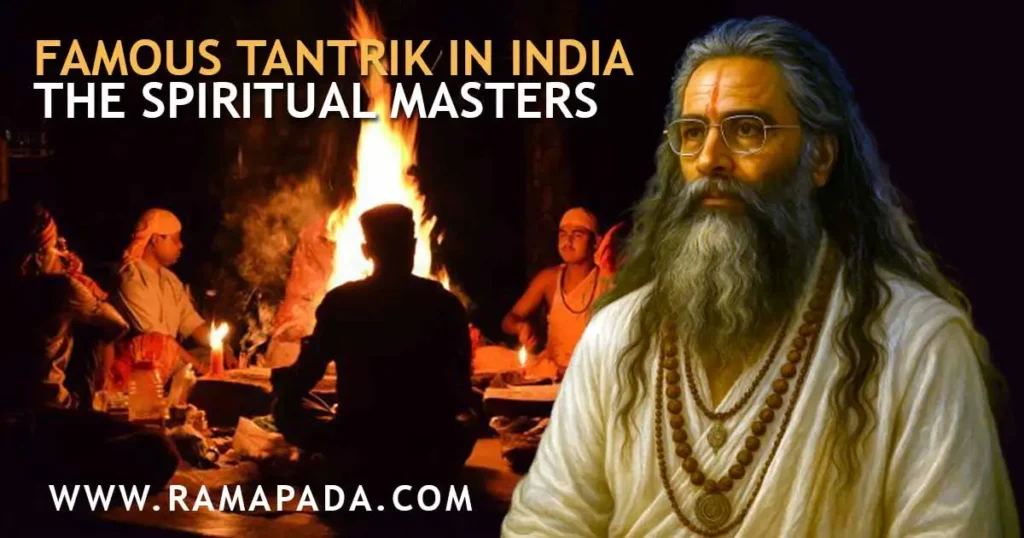
People searching for a famous tantrik in India often want more than a well-known name.
Some are facing relationship problems. Others feel worried about repeated obstacles, family tension, emotional stress, spiritual questions, or fears about negative influences.
However, popularity alone does not prove spiritual knowledge.
A high Google ranking does not automatically establish experience. Likewise, dramatic advertisements, large social-media followings, impressive photographs, or claims of supernatural power cannot verify a practitioner’s authenticity.
Therefore, a better question is:
How can someone identify an experienced, ethical and responsible practitioner of Tantra in India?
I began practising astrology and related spiritual disciplines part-time in 1991. Later, in 1996, I moved into full-time professional practice.
Over the decades, one lesson has become increasingly important to me:
Spiritual guidance should create clarity, responsibility and calmness. It should never create fear, dependency or unrealistic expectations.
Readers who want a practical verification checklist may begin with my guide on how to find a genuine Tantrik in India.
What Does “Famous Tantrik in India” Really Mean?
The phrase ‘Famous Tantrik in India’ is commonly used on search engines.
However, there is no official national ranking of Tantrik practitioners.
No government department certifies one individual as India’s “best”, “most powerful” or “number one” Tantrik.
Therefore, the word ‘famous’ should be treated as a search term rather than an official spiritual title.
A person’s reputation may arise from:
- Years of practice
- Word of mouth
- Traditional lineage
- Published work
- Public visibility
- Client recommendations
- Temple associations
- Online presence
Nevertheless, none of these factors alone proves spiritual mastery.
Tantra Is Much Broader Than Popular Internet Claims
Modern internet content often connects Tantra only with black magic, Vashikaran, attraction, enemy control or instant supernatural results.
That picture is incomplete.
Oxford Academic’s scholarly overview of Tantra describes a diverse range of South Asian ritual and philosophical traditions involving mantra, initiation, ritual, visualisation, cosmology and other spiritual practices.
Therefore, Tantra cannot be reduced to one technique or one sensational claim.
Depending on the lineage, traditional Tantra may involve:
- Mantra
- Meditation
- Deity worship
- Ritual
- Yoga
- Sacred symbolism
- Visualisation
- Initiation
- Philosophy
- Spiritual discipline
My article on Tantra in India: Ancient Wisdom, Traditions and Misconceptions explains this broader background in greater detail.
Tantra Has Hindu and Buddhist Traditions
Tantra does not belong to only one single school.
Oxford’s research overview of Tantra and the Tantric traditions of Hinduism and Buddhism explains that Tantric traditions developed in diverse forms and spread through different regions and religious communities.
Moreover, scholars emphasise that Tantra has often been misunderstood both in India and in the West.
Some people associate it entirely with sorcery.
Others reduce it to sexuality.
Both interpretations overlook a much larger religious and philosophical history.
Therefore, anyone searching for a Tantrik should first understand that the word itself covers many traditions.
Famous Spiritual Centres Matter More Than Marketing Titles
Instead of asking only who is famous, it is useful to understand the spiritual centres where Tantric traditions have historical roots.
Among the most widely discussed are:
- Kamakhya
- Tarapith
- Varanasi
- Bengal’s Shakta centres
- Assam’s traditional spiritual locations
- Himalayan Shaiva and Shakta traditions
Different regions developed their own forms of worship, ritual and spiritual practice.
Therefore, one universal model of a “Tantrik” does not exist.
Kamakhya and the Tantric Tradition
Kamakhya Temple in Guwahati has an important place in Shakta and Tantric traditions.
The official Assam Tourism page on Kamakhya Temple describes the shrine as one of India’s important Shakti centres and specifically notes its significance in Tantric practice.
The Nilachal Hill complex also includes temples associated with the Mahavidyas.
For this reason, Kamakhya remains deeply connected with Shakti worship, Tantra and the annual Ambubachi tradition.
However, visiting Kamakhya or being photographed there does not automatically make someone an accomplished Tantrik.
Years of study, discipline, character and practice still matter.
Tarapith and Shakta Tantra
Tarapith in West Bengal is another major centre associated with Shakta and Tantric worship.
The official West Bengal Tourism page on Tarapith describes the Tara temple as a prominent Tantric temple connected with the Shakta tradition.
It also discusses the nearby cremation ground and the historical association of Bamakhepa with Tara worship.
Therefore, Tarapith’s reputation has a documented religious and regional context.
At the same time, the name “Tarapith” should not become a marketing shortcut.
A practitioner should be judged by conduct and experience, not merely by association with a famous sacred place.
What the Oxford Handbook Says About Tantra
The Oxford Handbook of Tantric Studies presents Tantra as a complex field involving ritual, meditation, transformation, embodiment, language, art and social traditions.
This academic perspective is useful because it prevents a common misunderstanding.
Tantra is not simply a collection of “powerful spells”.
Instead, it developed through sophisticated religious systems with texts, ritual procedures, philosophical ideas and spiritual communities.
Therefore, a practitioner who discusses Tantra responsibly should be able to explain more than promises of quick results.
What Makes a Tantrik Genuine?
There is no single test.
However, several practical indicators can help.
Experience
Ask how long the person has practised.
A consistent professional history matters more than a dramatic title.
Background
Ask how they learned.
Traditional knowledge may develop through teachers, family traditions, disciplined study, initiation or long-term practice.
Transparency
A responsible practitioner should explain what they recommend and why.
Ethical Behaviour
Fear should never become a sales technique.
Realistic Expectations
No one can responsibly guarantee every human outcome.
Respect for Personal Freedom
A spiritual practitioner should not encourage coercion or manipulation.
For a fuller checklist, my article on how to know if a Tantrik is real or fake discusses these points in more detail.
A Famous Name Is Not Enough
A person may appear everywhere online.
However, visibility is not the same as experience.
SEO can be learned.
Advertising can be purchased.
Followers can be accumulated.
Professional videos can be produced.
Likewise, websites can be designed to look extremely authoritative.
Yet none of those things can replace decades of working with real people and complicated human situations.
Therefore, evaluate the person behind the marketing.
Be Careful With “Guaranteed Results”
Certain phrases should immediately encourage caution.
For example:
“100% guaranteed result.”
“Love back in 24 hours.”
“Enemy destroyed immediately.”
“Become rich within seven days.”
“Black magic removed permanently.”
“No failure possible.”
Human life does not work with that kind of certainty.
Relationships involve another person’s choices.
Business depends on customers, competition, planning and economic conditions.
Career outcomes depend on skill, timing and opportunity.
Therefore, spiritual claims should remain realistic.
Vashikaran Needs Ethical Boundaries
Vashikaran is one of the terms most frequently associated with Tantric practitioners online.
However, the subject raises serious ethical questions when it is presented as guaranteed control over another person’s mind.
My article on Vashikaran Mantra and responsible spiritual guidance explores this subject separately.
A more useful spiritual question may be:
Can I control my anger?
Can I speak more carefully?
Can I reduce jealousy?
Can I understand the other person’s point of view?
Can I respect another person’s decision?
Therefore, self-control should come before attempts to control someone else.
Relationship Problems Need Practical Understanding
Many people contact spiritual practitioners because a relationship is failing.
Someone may want a former partner to return.
Another person may face marital tension.
Meanwhile, somebody else may feel emotionally rejected.
These situations can be painful.
However, relationships still depend on:
- Communication
- Trust
- Consent
- Respect
- Emotional maturity
- Willingness from both people
A ritual cannot erase another person’s freedom.
Therefore, responsible spiritual guidance should support clarity rather than obsession.
Black Magic Concerns Require Caution
Some clients sincerely believe that black magic or negative spiritual influence is responsible for their difficulties.
Their fear should not be mocked.
However, fear alone does not prove a supernatural cause.
For example, financial pressure may create relationship conflict.
Poor sleep can increase anxiety.
Workplace stress may cause emotional exhaustion.
Health problems may alter mood and behaviour.
As a result, ordinary difficulties can sometimes begin to feel mysterious.
My article on responsible black magic removal guidance in India explains why practical causes should also be considered.
Kali Sadhana and the Meaning of Fearlessness
Kali occupies an important place in several Shakta and Tantric traditions.
However, Kali worship should not be reduced to frightening rituals or promises of supernatural dominance.
Her symbolism can also be interpreted through transformation, mortality, ego, courage and freedom from fear.
Readers interested in this tradition may explore my article on Kali Sadhana in Tantra.
Therefore, spiritual power should not always mean control over external events.
Sometimes the greater challenge is overcoming one’s own fear.
Spiritual Practice Should Not Replace Healthcare
This point deserves special emphasis.
A Tantrik is not automatically a doctor.
Similarly, spiritual consultation is not a substitute for mental-health care.
Someone experiencing severe depression, hallucinations, suicidal thoughts, persistent physical symptoms or major behavioural changes needs appropriate professional assessment.
Spiritual support may coexist with healthcare.
However, one should not replace the other.
Financial Problems Need Practical Analysis
A person may seek Tantra when business or finances are unstable.
Before assuming a spiritual cause, practical questions should come first.
For example:
Has income fallen?
Have expenses increased?
Is competition stronger?
Has customer demand changed?
Is debt becoming difficult to manage?
Could poor planning be involved?
Spiritual practice may support discipline or emotional stability.
Nevertheless, practical financial problems still require practical action.
Career Problems Also Have Real-World Causes
Career difficulties may arise from:
- Skill gaps
- Competition
- Workplace politics
- Economic slowdown
- Poor communication
- Lack of opportunity
- Wrong career decisions
Therefore, a practitioner should not label every professional setback as a spiritual attack.
Sometimes the most useful advice is to improve skills, change strategy or seek professional guidance.
A Responsible Tantrik Should Know When No Ritual Is Needed
This is one of the qualities I value most.
Not every consultation should end with a ritual.
Sometimes a person simply needs clarity.
At other times, better communication may help.
A medical consultation may be necessary in another case.
Likewise, legal or financial advice may be more appropriate for certain problems.
Therefore, the ability to say “no ritual is necessary” can itself be a sign of maturity.
My Professional Journey
I began practising astrology and related spiritual disciplines part-time in 1991.
In 1994, recognition at two different events helped more people become familiar with my work.
By 1996, I had entered full-time practice.
Over the years, my approach changed.
At first, like many practitioners, I was naturally interested in techniques and predictions.
However, decades of dealing with people gradually taught me something more important.
The real problem is not always the problem a client initially describes.
A person may ask about black magic when anxiety is the larger issue.
Another may request Vashikaran while a relationship has already broken down because of trust.
A business owner may seek a ritual when weak planning is causing the difficulty.
Therefore, listening must come before recommendation.
Experience Should Increase Caution
Long practice should make a practitioner less dramatic, not more dramatic.
Experience teaches that human problems overlap.
Family tension can affect work.
Financial stress may damage relationships.
Poor health can increase fear.
Anxiety can weaken judgement.
Therefore, a single explanation rarely covers everything.
I believe good spiritual consultation should examine the whole situation.
Famous Tantrik vs. Genuine Tantrik
These two ideas are not identical.
A famous practitioner may be genuine.
A genuine practitioner may also be almost unknown online.
Therefore, online visibility should remain only one piece of information.
When choosing someone, examine:
- Experience
- Professional consistency
- Ethics
- Communication
- Transparency
- Fees
- Claims
- Personal boundaries
These practical criteria are more useful than titles.
Questions to Ask Before Paying for a Ritual
Before committing to any expensive spiritual service, ask:
What exactly is being recommended?
Why is this ritual necessary?
What does the ritual involve?
What is the total fee?
Will further payments be required?
What result is realistically expected?
What happens if the expected outcome does not occur?
A responsible practitioner should not become angry because you ask questions.
Instead, clarity should be welcomed.
Never Pay Because Someone Has Frightened You
Fear-based payment demands are a serious warning sign.
Be cautious if someone says:
“Pay immediately or your family will suffer.”
“Another ritual is urgently required.”
“Your problem will become permanent if you stop.”
“Do not tell your family.”
“Only I can save you.”
These statements can create financial and emotional dependency.
If someone uses threats or fraudulent online methods to obtain money, India’s official National Cyber Crime Reporting Portal provides a reporting channel.
For financial cyber fraud in India, 1930 is the national helpline.
Digital Marketing Has Changed Spiritual Professions
In earlier decades, most people found astrologers or spiritual practitioners through personal recommendations.
Reputation grew slowly.
Word of mouth mattered enormously.
Today, discovery often starts with Google.
A person searches.
Next, they compare websites.
Then they read reviews.
Afterwards, they may watch videos or examine social-media profiles.
Finally, they decide whom to contact.
Digital visibility is useful.
However, visibility does not create experience.
SEO can help people find a practitioner.
It cannot create decades of real consultation experience.
Why Traditional Knowledge Still Matters
Traditional spiritual practice often develops differently from modern online businesses.
Older practitioners may have limited digital skills.
Some may not speak fluent English.
Others may have no professional website.
Therefore, a person’s online presentation should not be the only measure of knowledge.
At the same time, tradition alone does not guarantee honesty.
Both experience and verification matter.
Frequently Asked Questions
Who is a Famous Tantrik in India?
There is no official national ranking of Tantrik practitioners. The phrase usually refers to practitioners who have gained public recognition through experience, tradition, word of mouth or online visibility.
Who is the best Tantrik in India?
No government or recognised religious authority officially determines one “best” Tantrik in India. Experience, ethics, transparency and professional history provide more useful criteria.
What does a Tantrik do?
Depending on the tradition, a practitioner may work with mantra, meditation, deity worship, ritual, spiritual discipline or other Tantric practices.
Is Tantra the same as black magic?
No. Tantra includes diverse Hindu and Buddhist religious, philosophical and ritual traditions. Black-magic associations represent only one popular interpretation.
Is Kamakhya connected with Tantra?
Yes. Assam Tourism identifies Kamakhya as an important Shakti shrine with special significance in Tantric practice.
Is Tarapith associated with Tantra?
Yes. West Bengal Tourism describes Tarapith as a prominent Tantric temple connected with Shakta worship.
Can a Tantrik guarantee results?
No responsible practitioner should guarantee every human, financial or relationship outcome.
Can Vashikaran control another person’s mind?
Claims of guaranteed control should be treated cautiously. Personal autonomy and consent remain important.
How can I recognise a genuine practitioner?
Look for experience, transparency, realistic claims, ethical behaviour, clear fees and willingness to explain the proposed practice.
Should I pay large amounts for urgent rituals?
Never pay simply because someone has frightened you. Ask what is being recommended, why it is required and what the complete cost will be.
My Perspective After Decades of Practice
The phrase Famous Tantrik in India may attract attention, but fame is not the quality I consider most important.
Experience matters.
Ethics matter.
Transparency matters.
The ability to listen matters.
Most importantly, a practitioner should know the limits of spiritual guidance.
After decades of working with people, I have become increasingly cautious about dramatic claims.
Sometimes prayer helps.
At other times, practical action matters more.
Frequently, both can work together.
Choosing Spiritual Guidance With Clarity
If you are searching for a Famous Tantrik in India, do not choose only by title, advertisement or Google position.
First, examine the person’s background.
Next, ask questions.
Moreover, confirm the fee before starting.
At the same time, avoid guaranteed supernatural promises.
Consider practical explanations for your problem.
Most importantly, never allow fear to control an important financial or personal decision.
India’s Tantric heritage is far richer than sensational claims about instant power.
A responsible practitioner should help you become calmer, clearer, more informed and more capable of making your own decisions.
For me, that is a better measure of genuine spiritual guidance than fame alone.
— Ramapada Acharjee
Conclusion
The legacy of the famous tantrik in India is a testament to the enduring power of Tantra as a path to spiritual transformation. Their profound knowledge, unwavering devotion, and exceptional spiritual attainments have left an indelible mark on the tapestry of Indian spirituality, inspiring generations of seekers to embark on their journeys of self-discovery and spiritual awakening.
Kamakhya Ashram
- Kamakhya, Near Maa Dhumawati Mandir and Hotel Shreemoyee Inn,
Guwahati, Assam, Pin: 781010
Phone:
- +91-98749 54063
Location Map
You may also read:
- Difference Between Tantrik and Astrologer – Truth vs Myth
- How Real Tantriks Perform Vashikaran
- Kali Sadhana in Tantra – Path to Fearless Power
🔗 Related Category: Tantra
