
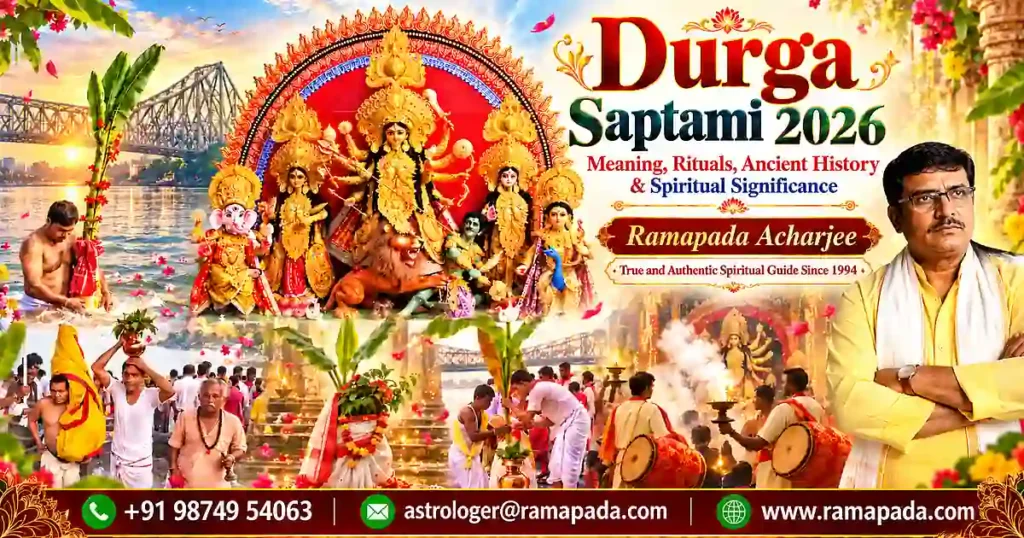
Meaning, Rituals, Ancient History and the Deeper Significance of This Sacred Day
By Ramapada Acharjee
Durga Saptami has always carried an unmistakable energy across Bengal.
While Maha Shashthi formally announces the arrival of Maa Durga, the festival truly awakens on Saptami morning. In addition, the steady beats of the dhak suddenly alter the morning stillness. Meanwhile, the fragrance of fresh shiuli flowers blends seamlessly with burning dhuno. Consequently, a quiet realization settles in that the core days of Durga Puja have finally arrived.
১৯৯৪ সাল থেকে তিন দশকেরও বেশি সময় ধরে জ্যোতিষশাস্ত্রীয় গবেষণা, শাক্ত দর্শন এবং মানুষের বিচিত্র জীবনধারা নিবিড়ভাবে পর্যবেক্ষণ করার অভিজ্ঞতায় এটি স্পষ্ট যে, সপ্তমী কেবল পঞ্জিকার কোনো সাধারণ তিথি নয়। প্রকৃতপক্ষে, এটি অন্তরাত্মার জাগরণ, প্রকৃতির আরাধনা এবং নতুন সংকল্পে জীবনকে পরিচালিত করার এক পরম লগ্ন।
In 2026, Durga Saptami falls on Sunday, 18 October.
Over the decades, Durga Puja has undergone massive outward transformations. For example, pandals have turned into architectural marvels, and high-tech illumination dazzles the night sky. Similarly, streets overflow with millions of cheerful visitors, while cameras capture every vibrant corner. Nevertheless, through decades of observing spiritual traditions, one enduring truth remains unchanged:
“বাইরের জগতের রূপ এবং পারিপার্শ্বিক চাকচিক্য যতই পরিবর্তিত হোক না কেন, দেবীর চরণে ভক্ত হৃদয়ের নিবেদন আজও অপরিবর্তিত থাকে—শান্তি, শক্তি, পরিবারের সার্বিক কল্যাণ এবং সংকট থেকে পরিত্রাণ।”
Therefore, this profound inner devotion remains the true soul of Durga Puja.
What Is Maha Saptami?
Maha Saptami represents the seventh lunar day (Tithi) of Shukla Paksha in the autumn month of Ashwin. It directly succeeds the Bodhon and Adhibas rites of Shashthi. Thus, it marks the sacred transition from quiet invocation to full-scale community worship.
Furthermore, the defining ritual of Saptami morning centers on the ceremonial dawn ablution and consecration of the Nabapatrika, widely revered as Kola Bou across Bengal.
To an onlooker, Kola Bou appears as a young banana plant draped gracefully in a traditional red-bordered sari. However, Shakta philosophy reveals a far deeper truth behind this sacred custom. In fact, an inseparable relationship between living ecology, agrarian sustainability, and divine feminine energy exists within this morning rite.
Nabapatrika and Kola Bou: What Do They Truly Represent?
The sacred term Nabapatrika literally signifies nine botanical elements bound together with the sacred Aparajita vine. Priests wash these plants in the holy waters of the river Ganga at dawn. Together, these nine plants personify nine divine aspects of Devi Durga:
- Kola (Banana plant): Devi Brahmani (manifesting creative power and fertility)
- Kachu (Colocasia plant): Devi Kalika (manifesting fierce protective energy)
- Halud (Turmeric plant): Devi Durga (manifesting purification and auspiciousness)
- Jayanti (Barley/Jayanti plant): Devi Kartiki (manifesting victory over obstacles)
- Bel (Wood apple): Devi Shiva (manifesting supreme cosmic consciousness)
- Dalim (Pomegranate): Devi Raktadantika (manifesting nourishment and vitality)
- Ashok (Ashoka plant): Devi Sokarahita (manifesting the dispelling of grief)
- Man (Arum plant): Devi Chamunda (manifesting the destruction of negativity)
- Dhan (Paddy plant): Devi Lakshmi (manifesting sustenance, grain, and abundance)
Long before global forums discussed ecological preservation, ancient Indian traditions recognized divinity within trees, water systems, soil, and agricultural harvest.
বর্তমান যুগে পরিবেশ সংরক্ষণ এবং বাস্তুতন্ত্রের ভারসাম্য নিয়ে বিস্তর আলোচনা উপস্থাপন করা হয়। অথচ স্মরণাতীত কাল থেকেই সনাতন ধর্মীয় বিধানে প্রকৃতির এই অপরিহার্যতা স্বীকৃত হয়ে এসেছে। Therefore, the Nabapatrika ritual conveys an indispensable ecological message: human existence cannot separate itself from nature.
মায়ের মৃন্ময়ী প্রতিমার আরাধনা সম্পন্ন হবে, অথচ জীবনধারণের মূল ভিত্তি জল, বায়ু ও শস্যসম্ভারকে ধ্বংসের মুখে ঠেলে দেওয়া হবে—এরূপ দ্বিচারিতা ধর্মীয় দর্শনে অনুমোদিত নয়। Hence, the dawn bathing of Kola Bou integrates living nature directly onto the sacred altar of worship.
Why Saptami Manifests the Real Awakening of Durga Puja
Preparations across Bengal commence months in advance. Markets bustle with energy, artisans in Kumartuli shape divine forms from river clay, and pandal gates open well before Shashthi.
However, from an energetic and spiritual perspective, Saptami holds a very distinct character:
- The prolonged anticipation of the preceding weeks finally concludes.
- Priests perform the vital ritual of Prana Pratishtha to invoke divine consciousness into the clay deity.
- Sacred chants, burning incense, and resonant bells fill the sanctum with spiritual vibration.
- The dhak players introduce their primary festive rhythms.
- Multi-generational families assemble together in traditional clothes to offer morning Pushpanjali.
- Communal reconnections unfold naturally across neighborhood pandals without formal invitations.
১৯৯৪ সাল পরবর্তী দীর্ঘ সময়ের রূপান্তর লক্ষ করলে দেখা যায়, একসময় নতুন পরিধেয় বস্ত্র, পাড়ার প্রাঙ্গণ, প্রত্যুষের অঞ্জলি এবং আত্মীয়-স্বজনদের মিলনই উৎসবের মূল ভিত্তি হিসেবে বিবেচিত হতো। বর্তমান তথ্যপ্রযুক্তির যুগে বাহ্যিক রূপরেখা পরিবর্তিত হলেও, সপ্তমীর সকালে মণ্ডপে উপস্থিত শিশুদের চোখে সেই আনন্দ এবং নিষ্ঠাবান ভক্তদের ভক্তি আজও সমভাবে প্রস্ফুটিত হতে দেখা যায়।
The Ancient Spiritual Meaning Behind Durga Puja
Devi worship across the Indian subcontinent has flourished for thousands of years, existing long before modern public pandals emerged.
According to Sanatan philosophy, cosmic functioning relies on Shakti—the primordial energy responsible for universal creation, preservation, and transformation. Devi Durga personifies that very Shakti in a protective, courageous, and compassionate form.
The timeless depiction of Maa Durga vanquishing Mahishasura carries a universal metaphysical doctrine: destructive imbalances within the world must ultimately yield to righteous divine energy.
এই পৌরাণিক আখ্যান কেবল দেবী ও অসুরের যুদ্ধবিগ্রহ হিসেবে সীমাবদ্ধ নয়; মানুষের অন্তঃকরণে অহর্নিশ যে শুভ ও অশুভর সংঘাত চলতে থাকে, তারই রূপক হিসেবে এটিকে বিবেচনা করা হয়। Indeed, human nature battles destructive internal tendencies every single day:
- Krodha (Anger): Uncontrolled impulses leading to relational conflict.
- Lobha (Greed): Material pursuits conducted at the expense of moral values.
- Matsarya (Jealousy): Discontent caused by the accomplishments of others.
- Bhaya (Fear): Unnecessary anxiety that paralyzes constructive action.
- Ahamkara (Arrogance): Emotional distance created by unchecked pride.
- Asat (Deceit): Unethical compromises adopted for immediate personal gains.
পরামর্শ ও অভিজ্ঞতার ভিত্তিতে এটি বারবার নিরীক্ষিত হয়েছে যে, পার্থিব জীবনের বহু সংকট ও মানসিক যন্ত্রণার উৎস নিহিত থাকে অন্তরের এই রিপুসমূহের অনিয়ন্ত্রিত রূপের মধ্যে। Consequently, Durga Puja achieves its deepest philosophical purpose when devotees ask: Which internal flaw requires conquest through spiritual discipline this year?
Durga Puja in Earlier Bengal: Community over Grandeur
The grand celebrations observed today evolved through distinct historical milestones.
Historically, elaborate Durga worship belonged to traditional Bonedi families, noble landowners, and aristocratic estates. However, by the early twentieth century, the emergence of Barowari (community-funded) celebrations completely democratized the festival.
Consequently, local neighborhood clubs transformed the festival into an open community sanctuary where social boundaries vanished. Over time, Kolkata elevated Durga Puja into the world’s greatest public art installation—a sublime confluence of craftsmanship, temporary architecture, street cuisine, and cultural harmony.
অতীতের পুজোয় আধুনিক থিম-নির্ভর জাঁকজমক অনুপস্থিত থাকলেও, পারস্পরিক আত্মীয়তা এবং সামাজিক ঐক্যের এক গভীর বাতাবরণ সংরক্ষিত ছিল। একই সাথে, সমসাময়িক কালে শিল্প, কারিগরি দক্ষতা এবং জনশিল্পকে যেভাবে বিশ্বদরবারে মর্যাদাপূর্ণ স্থানে পৌঁছে দেওয়া হয়েছে, তাও বিশেষ প্রশংসার দাবি রাখে।
Balancing Modern Grandeur with Heritage
When analyzing the festival’s trajectory over the past three decades, remarkable cultural continuity emerges alongside obvious stylistic modernization.
In earlier decades, intimacy and locality defined the celebration:
- Families gathered at the very same para mandap year after year.
- Simplicity brought genuine contentment—a traditional ekchala idol, steaming khichuri bhog, and warm evening dialogue completed the celebration.
- Visiting relatives for Bijoya Dashami sweets nurtured lifelong social bonds.
Today, creative themes draw hundreds of thousands of eager visitors every evening. A spectacular pandal design conceived by a visionary artist reaches millions globally through social media. This artistic evolution is commendable, because living traditions must evolve rather than stagnate.
তবে এই রূপান্তরের ধারায় একটি মৌলিক ভারসাম্য বজায় রাখা প্রয়োজন: অন্তরের ভগবৎ-দর্শন যেন বাহ্যিক প্রদর্শনের ভিড়ে আচ্ছন্ন হয়ে না পড়ে।
Visitors may take memorable photographs and admire the exceptional creativity of Bengal’s master artisans. Similarly, people should explore the creative installations with loved ones. However, standing quietly before the sanctum sanctorum for at least one minute remains vital. That single minute of peaceful contemplation before the Divine Mother offers far greater solace than any digital gallery.
Why Durga Puja Remains Vital for Psychological Well-being
Modern society certainly provides technological convenience and instant communication. Yet, paradoxically, emotional isolation, workplace fatigue, and severe anxiety affect countless households. Families live geographically dispersed, while professional competition drains mental vitality.
বহু মানুষের মনস্তাত্ত্বিক টানাপোড়েন এবং সামাজিক অসন্তোষ গভীরভাবে পর্যবেক্ষণ করলে উপলব্ধি করা যায়—বাহ্যিক সমৃদ্ধি থাকা সত্ত্বেও বহু ব্যক্তি অন্তরে এক ধরনের গভীর ক্লান্তি ও মানসিক চাপ বহন করছেন।
Within this context, the social and spiritual role of Durga Puja becomes deeply relevant:
- It temporarily pauses the demanding corporate cycle and offers mental relief.
- It reunites distant family members around a shared dining table.
- It softens interpersonal bitterness through shared cultural enthusiasm.
- It instills emotional stability and collective strength under the grace of the Divine Mother.
সারা বছর কাজের চাপে পারিবারিক সান্নিধ্যের ঘাটতি দেখা দিলেও, এই উৎসবের দিনগুলিতে স্নেহ ও সহমর্মিতার বন্ধনসমূহ পুনরায় সজীব হয়ে ওঠে। এটিকেই সমাজের এক অন্যতম প্রধান মনস্তাত্ত্বিক রক্ষাকবচ হিসেবে চিহ্নিত করা হয়।
What Saptami Teaches After Decades of Reflection
With the steady advance of years, human understanding regarding celebrations naturally matures. In youth, festivities center on fashion, culinary indulgence, and night-long pandal excursions. Later, however, philosophical reflections take prominence.
Time moves with incredible speed. Beloved family elders who once blessed the morning rituals may no longer occupy their seats. Children grow up and relocate to distant lands. Similarly, familiar neighborhood avenues transform under ongoing urbanization.
Nevertheless, despite perpetual change, autumn unfailingly returns with clear blue skies, blooming kash grass, resonant dhak beats, and the holy arrival of Devi Durga. That unbroken cycle serves as an invaluable spiritual anchor.
“সপ্তমী প্রতি বছর এই শাশ্বত সত্য স্মরণ করিয়ে দেয়—জীবনে যত বিপর্যয় বা প্রতিকূলতাই আসুক না কেন, নতুন করে যাত্রা শুরু করার সম্ভাবনা কখনোই নিঃশেষিত হয় না।”
Therefore, if devotees make one authentic prayer on Saptami, it should remain centered on renewal: May Maa Durga grant the resilience to start anew, especially where emotional or physical fatigue has taken hold.
Durga Saptami 2026: A Guiding Message
Celebration should be embraced with complete joy. Devotees should wear festive clothing, enjoy traditional delicacies, support local craftspeople, and appreciate Bengal’s matchless public art.
উৎসবের উচ্ছ্বাস ও আনন্দ উপভোগ করা সর্বতোভাবে সংগত, কারণ দুর্গাপূজা সার্বজনীন মিলনের মহোৎসব। তবে সেই বিপুল জনস্রোতের মধ্যেও দেবীর চরণতলে দাঁড়িয়ে আত্মানুসন্ধান করার মানসিক প্রশান্তি যেন অক্ষুণ্ণ রাখা হয়।
For a few sacred minutes, lower all digital devices. Stand before Maa Durga with complete humility. Material demands need not dominate the moment. Instead, utter a sincere prayer:
“Maa, bestow the wisdom to discern truth, the courage to uphold righteousness, and the inner strength to navigate life’s challenges with dignity.”
সহজ কথায় দেবীর চরণে আর্তি নিবেদন করা যেতে পারে: “মা, জাগতিক প্রাপ্তির থেকেও বেশি করে সৎ ও অসতের বিভেদ বোঝার প্রজ্ঞা দান করো, এবং সত্য ও ন্যায়ের পথে অবিচল থাকার অদম্য শক্তি প্রদান করো।”
Ultimately, that simple, heartfelt devotion represents the timeless essence of Maha Saptami.
Astrological Significance of Durga Saptami and Planetary Alignments
From an astrological perspective, Durga Saptami marks a powerful cosmic alignment where spiritual energies and planetary influences intersect harmoniously. In Vedic astrology, Devi Durga represents the supreme protective force that directly counters the malefic vibrations of shadow planets like Rahu and Ketu. During Devi Paksha, particularly on Maha Saptami, the celestial positioning of the Moon and the Sun enhances mental clarity, resilience, and inner vitality. Consequently, engaging in sacred mantras, meditation, and sincere prayer on this Tithi helps neutralize persistent planetary afflictions, commonly referred to as Graha Dosha. Furthermore, Saptami invokes the nine divine forms of Shakti through the sacred Nabapatrika, where each plant also channels specific cosmic and planetary energies to restore equilibrium in human life. Therefore, dedicating quiet moments to spiritual contemplation on this day not only deepens inner devotion, but it also harmonizes emotional imbalances and strengthens personal willpower against external life obstacles.
জ্যোতিষশাস্ত্রীয় দৃষ্টিকোণ থেকে সপ্তমীর তিথি অত্যন্ত তাৎপর্যপূর্ণ, কারণ দেবী দুর্গার আরাধনা কুণ্ডলীর বহু অশুভ গ্রহের প্রভাব—বিশেষত রাহু ও কেতুর বিভ্রান্তিকর শক্তিকে প্রশমিত করতে সহায়তা করে। নবপত্রিকার নয়টি পবিত্র উদ্ভিদ যেমন প্রকৃতির নয়টি রূপকে প্রকাশ করে, তেমনই তা পরোক্ষভাবে মানবদেহের শক্তিচক্র এবং গ্রহের ইতিবাচক প্রভাবের সাথে গভীরভাবে সংযুক্ত। ফলস্বরূপ, এই পবিত্র দিনে নিষ্ঠাভরে আত্মানুসন্ধান ও প্রার্থনা ব্যক্তির মানসিক দৃঢ়তা বৃদ্ধি করতে এবং জীবনের বহু প্রতিকূলতা কাটিয়ে উঠতে বিশেষ ভূমিকা পালন করে।
Astrological Remedies for Durga Saptami: Recommended Rituals and Strict Prohibitions
From a Vedic astrological perspective, observing specific spiritual disciplines on Maha Saptami brings immense cosmic benefits, while avoiding certain negative actions prevents planetary discord. First, individuals should begin the day with an early morning bath, preferably using holy water, because this cleanses the aura and balances the lunar energies governing mental peace. In addition, chanting sacred mantras such as the Durga Saptashati, Devi Kavacham, or the powerful Navarna Mantra (Om Aing Hring Kling Chamundaye Viche) directly neutralizes the malefic afflictions of Rahu, Ketu, and Saturn. Furthermore, offering yellow fruits, red flowers, and sweets made of jaggery to the deity activates positive solar and martian influences, thereby boosting self-confidence and career vitality. Similarly, donating food, grain, or clothing to needy individuals during Saptami balances personal karma and pleases Jupiter and Mercury.
On the contrary, astrological wisdom strictly advises against certain destructive behaviors on this sacred Tithi. For instance, people must avoid harsh speech, heated arguments, and deceptive actions, because negative vibrations on this high-energy day severely weaken Mercury and the Moon. Moreover, consuming non-vegetarian food, alcohol, or indulging in tamasic habits within the household disturbs spiritual sanctity and amplifies malefic planetary impacts. Finally, leaving the home in darkness or clutter during evening twilight should be avoided; instead, lighting a pure ghee or sesame oil lamp near the entrance invites auspicious planetary vibrations, removes lingering negative energies, and ensures long-lasting family prosperity.
জ্যোতিষশাস্ত্রীয় মতে, মহা সপ্তমীর দিনে সূর্যোদয়ের পূর্বে স্নান সম্পন্ন করে শুদ্ধ বস্ত্রে দেবী দুর্গার আরাধনা করা অত্যন্ত শুভ ফলদায়ক। বিশেষ করে দুর্গা সপ্তশতী পাঠ, নবাক্ষর মন্ত্র জপ এবং দুঃস্থ ব্যক্তিদের অন্ন বা বস্ত্র দান করলে কুণ্ডলীর রাহু, কেতু ও শনির অশুভ প্রভাব বহুলাংশে প্রশমিত হয়। এর বিপরীতে, এই পুণ্য তিথিতে ক্রোধ প্রকাশ, মিথ্যাচার, পারিবারিক কলহ এবং তামসিক আহার গ্রহণ থেকে সম্পূর্ণ দূরে থাকা আবশ্যক, কারণ এরূপ আচরণ চন্দ্র ও বুধের শুভ শক্তিকে দুর্বল করে মানসিক ও আর্থিক জীবনে জটিলতা ডেকে আনে।
Frequently Asked Questions About Durga Saptami
When is Durga Saptami celebrated in 2026?
Durga Saptami is observed on Sunday, 18 October 2026 throughout Kolkata, Bengal, and across the globe where Sanatan rites take place. The primary rituals of the festival commence fully from this auspicious morning.
What is regarded as the central ritual of Maha Saptami?
The central ritual of Maha Saptami is the Nabapatrika Snan and Sthapana (the dawn ablution and consecration of Kola Bou). In addition, priests perform the Prana Pratishtha and the formal Saptami Vihit Puja immediately following this event.
What spiritual significance is held by the Nabapatrika?
The Nabapatrika consists of nine sacred plants, each dedicated to a distinct aspect of Devi Shakti (such as Brahmani, Kalika, Durga, Shiva, and Lakshmi). Thus, it preserves an ancient agrarian worldview, reminding humanity that survival relies on ecological balance.
Why is Saptami acknowledged as the real commencement of the Puja?
While Shashthi involves preparatory invocations, Saptami formally initiates the entire sequence of temple and pandal worship. Consequently, daily Chandi chanting, morning Pushpanjali, and vibrant cultural programs begin in full earnest on this morning.
What spiritual message is derived from Saptami?
Maha Saptami signifies spiritual awakening, moral renewal, and the courage to initiate constructive beginnings. Therefore, it inspires individuals to conquer internal weaknesses—such as anger, greed, and ego—through consistent self-awareness.
Has the underlying spirit of Durga Puja altered over time?
Although pandal designs and digital technologies have expanded immensely, the foundational essence—reverence toward the Divine Mother, family bonding, and communal harmony—remains entirely timeless.
You May Also Read
🔗 Related Category: Hindu Rituals
📞 Call to Action
For an accurate, personalized and transformative Astro Prediction session,
Contact Ramapada Acharjee today.
📞 Call/WhatsApp: +91 98749 54063
🌐 Contact Ramapada Acharjee
🌐 Official Portal
