
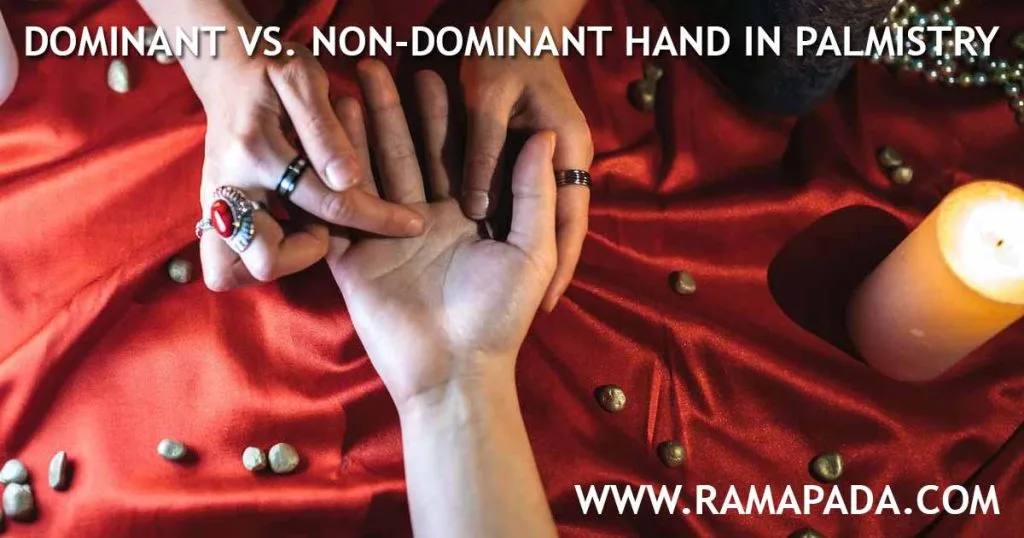
Palmistry, the ancient science of reading the lines, shapes and markings of the hand, offers powerful insight into personality, potential and life direction. One of the most important principles in palmistry is understanding the difference between the dominant hand and the non-dominant hand. Many people are unaware that both hands serve different purposes and reveal different aspects of life.
This article explains the meaning, role and interpretation of each hand in palm reading and how understanding this difference can deepen your understanding of your life path.
What Do the Hands Represent?
| Hand Type | Symbolism & Meaning |
| Dominant Hand | Reflects your present life, conscious choices, and how you shape your destiny. |
| Non-Dominant Hand | Reveals your inborn traits, subconscious tendencies, and karmic influences. |
- For right-handed individuals: right hand = dominant; left hand = non-dominant.
- For left-handed individuals: left hand = dominant; right hand = non-dominant.
Why Both Hands Matter
Palmistry relies on the balance between what is inherited and what is consciously created.
By comparing the two hands, a palmist can understand:
- How much progress you have made
- Whether you are using your potential
- What challenges you have overcome
- How life experiences have shaped your personality
- How your destiny has shifted with time
Both hands together reveal the full picture of your journey.
Key Lines and Their Dual Interpretations
| Line | Non-Dominant Hand (Potential) | Dominant Hand (Actualization) |
| Heart Line | Emotional depth, inherited sensitivity | Current emotional state, relationship patterns |
| Head Line | Natural intellect, subconscious thought patterns | Decision-making style, mental clarity |
| Life Line | Vitality and inherited health tendencies | Lifestyle choices, physical resilience |
| Fate Line | Karmic influences, latent ambitions | Career path, external influences, life direction |
Cultural Perspectives
- Indian Palmistry: Often reads the left hand for women and the right hand for men, emphasising karma and dharma.
- Western Palmistry: Focuses on dominant vs. non-dominant hand in palmistry regardless of gender, highlighting personal growth.
- Chinese Palmistry: Links the left hand to family luck and the right hand to personal achievements.
Ambidextrous Individuals
For those who use both hands equally, palmists may:
- Ask which hand feels more natural for writing.
- Compare both hands closely to detect subtle differences.
- Focus on the hand that shows more dynamic changes over time.
“Dominant vs. Non-Dominant Hand in Palmistry” unveils how each hand reflects personal growth, destiny, and karmic roots through key palm lines, according to the best Palmist in India.
🔗 Also Read:
👉 12 Houses of Astrology – Complete Meaning & Effects
👉 How Kundli Matching Works for Marriage
👉 Top Palmistry Signs That Reveal Your Future
📞 Call to Action
For an accurate, personalized and transformative Astro Prediction session,
Contact Ramapada Acharjee today.
📞 Call/WhatsApp: +91 98749 54063
🌐 Contact Ramapada Acharjee
You may also read:
Astrologer Palmist Near Me—Traditional Palmistry Services
Indian Palmistry (Samudrik Shastra)
Best palmist in Kolkata defines House of Value
Related Category : Palmistry
