
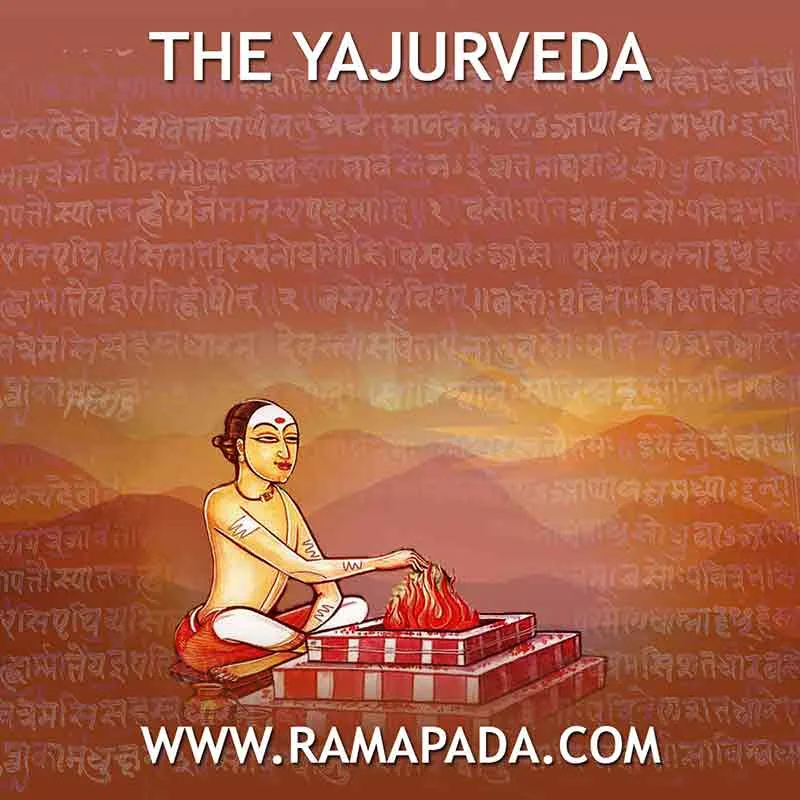
The Yajurveda, meaning “knowledge of sacrificial formulas” in Sanskrit, stands as one of the four foundational texts of Hinduism, alongside the Rigveda, Samaveda, and Atharvaveda. Unlike the Rigveda, which focuses on hymns of praise, this veda delves into the practical aspects of Vedic rituals.
Composed primarily in prose mantras,
It serves as a guidebook for the Adhvaryu priest, the figure responsible for conducting the intricate actions during a yajna (sacrifice). These mantras provide step-by-step instructions on everything from selecting the sacrificial site to offering oblations into the sacred fire.
The Yajurveda exists in two main recensions:
the Shukla Yajurveda (White Yajurveda) and the Krishna Yajurveda (Black Yajurveda). The Shukla Yajurveda presents the mantras separately from the commentary and explanations, while the Krishna Yajurveda integrates mantras with explanations, making it a more elaborate and complex text.
While primarily a ritualistic text,
It also contains philosophical elements. It lays the groundwork for the concept of Prana (life force) and Manas (mind), which would later be elaborated upon in the Upanishads. Additionally, it offers glimpses into the social life and geographical knowledge of the Vedic period.
The importance of the Yajurveda lies in its preservation of ancient sacrificial practices.
As per the best astrologer in India, it provides invaluable insights into the religious beliefs and rituals of the Vedic people. While the practice of elaborate Vedic sacrifices has declined, it continues to be studied for its historical and cultural significance.
The Yajurveda’s legacy is multifaceted.
It remains a vital source for understanding Vedic ritual practices and continues to be recited during certain Hindu ceremonies. Additionally, the text provides valuable information for historians and scholars studying ancient Indian society and religion.
Understanding it’s sheds light on the development of Hinduism and its emphasis on rituals.
It serves as a vital link between the praise-oriented hymns of the Rigveda and the philosophical explorations of the Upanishads, offering a more comprehensive picture of Vedic religion and its enduring legacy.
📍Consultation available in Kolkata, Guwahati, Siliguri, Tarapith & Online
📞 Call/WhatsApp: +91-98749 54063
🌐 Visit Website
You may also read:
Related Category : Blog
