
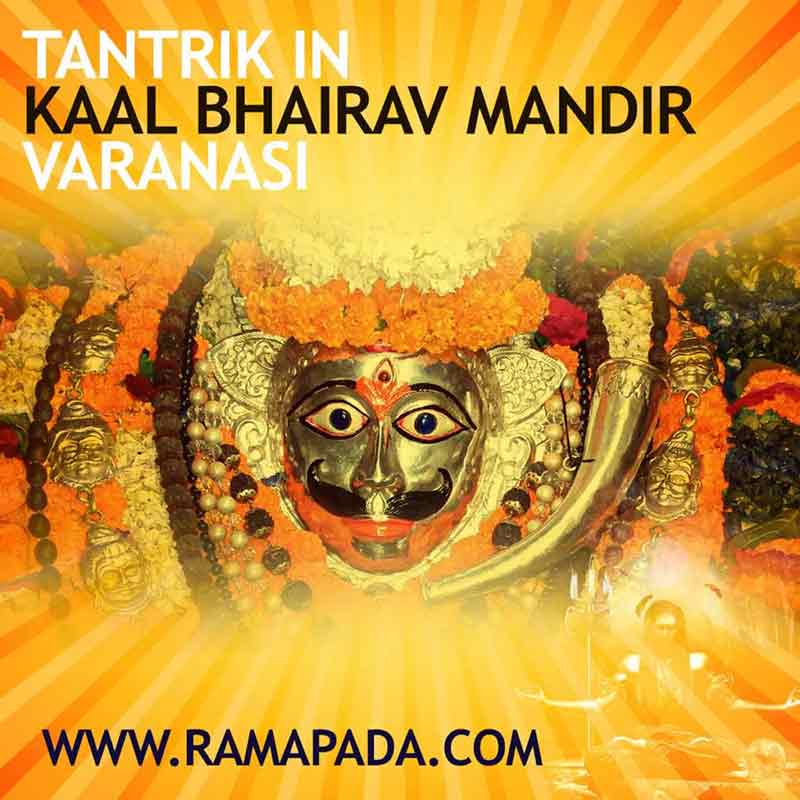
People searching for a Tantrik in Kaal Bhairav Varanasi are often drawn by the extraordinary spiritual reputation of Kashi.
Varanasi has remained one of India’s most important centres of Shiva worship, pilgrimage, ritual, philosophy, death traditions, meditation, and spiritual study.
Among its many sacred places, Kaal Bhairav Temple holds a distinctive position.
The official Government of Varanasi page on Kaal Bhairav Temple and other important temples describes Kaal Bhairav as the traditional “Kotwal of Varanasi.”
Therefore, devotees often approach the temple with a strong sense of reverence, protection, discipline, and devotion to Shiva.
However, Kaal Bhairav worship should not automatically be reduced to black magic, fear, or supernatural promises.
I began practising astrology and related spiritual disciplines part-time in 1991. Later, in 1996, I moved into full-time professional practice.
Over the decades, one principle has become increasingly important to me:
Spiritual tradition deserves respect, but mystery should never be used to frighten people or sell unrealistic promises.
Readers looking for a broader verification checklist may first read my guide on how to find a genuine Tantrik in India.
Who Is Kaal Bhairav?
Kaal Bhairav is a fierce form associated with Lord Shiva.
In the religious tradition of Kashi, he holds a particularly important place.
The Government of Varanasi identifies the Kaal Bhairav Temple as an ancient temple near Visheshwarganj and refers to the deity as the traditional guardian, or Kotwal, of Varanasi.
Therefore, devotees often understand Kaal Bhairav through themes such as:
- Protection
- Discipline
- Time
- Fearlessness
- Responsibility
- Shiva devotion
- Spiritual vigilance
However, these ideas belong to religious and symbolic traditions.
They should not be converted into guaranteed promises of wealth, revenge, control, or instant supernatural results.
Kaal Bhairav and the Spiritual Identity of Varanasi
Kaal Bhairav cannot be separated from the larger sacred identity of Kashi.
The official Shri Kashi Vishwanath Temple portal describes Kashi Vishwanath as one of Varanasi’s most famous Shiva temples and a central devotional focus of the city.
Moreover, Varanasi contains a dense network of temples, ghats, pilgrimage routes, and ritual traditions.
Therefore, someone visiting Kaal Bhairav Temple is entering a much wider spiritual landscape.
The city is not simply a destination for occult practice.
It is also a centre of:
- Shiva worship
- Pilgrimage
- Sanskrit learning
- Devotional traditions
- Funeral rites
- Meditation
- Philosophy
- Temple ritual
Kaal Bhairav Temple Is Part of a Larger Kashi Pilgrimage
The Shri Kashi Vishwanath Temple Trust now provides official Kashi tourism and temple maps, including a dedicated map for the Kaal Bhairav Temple area.
This is useful because it places the temple within Kashi’s broader network of shrines and heritage locations.
Therefore, visitors should see Kaal Bhairav Temple not as an isolated “Tantra spot”, but as one important part of Varanasi’s sacred geography.
My article on Tantrik guidance in Varanasi, Uttar Pradesh provides broader Varanasi-specific context.
Is Kaal Bhairav Worship the Same as Tantra?
Not exactly.
Kaal Bhairav worship may appear within Shaiva, devotional, ascetic, and Tantric contexts.
However, devotion to Bhairava does not automatically mean that every devotee or priest is a Tantrik.
Likewise, not every Tantric practice involves Bhairava worship.
Therefore, the two subjects should be connected carefully.
Tantra itself is a very broad field.
What Does Tantra Actually Mean?
Modern internet content often presents Tantra through a narrow group of ideas:
- Black magic
- Enemy control
- Vashikaran
- Attraction
- Instant supernatural results
- Fear-based ritual
However, academic research describes Tantra very differently.
Oxford Academic’s Tantra in South Asia describes Tantra as one of the most important and frequently misunderstood currents in Hindu and Buddhist religious history.
Depending on the lineage, Tantra may include:
- Mantra
- Meditation
- Ritual
- Visualisation
- Deity worship
- Initiation
- Yoga
- Sacred symbolism
- Philosophy
- Spiritual discipline
Therefore, Tantra should never be reduced only to sorcery.
My article on Tantra in India: Ancient Wisdom, Traditions and Misconceptions discusses this broader background.
Tantra Has Many Traditions
There is no single universal Tantra system.
Oxford Academic’s overview of Tantric traditions of Hinduism and Buddhism explains that many different Tantric traditions developed across South Asia.
Some placed greater emphasis on mantra.
Others focused more on deity worship, meditation, initiation, visualisation, or ritual.
Meanwhile, regional practices developed differently over time.
Therefore, someone claiming knowledge of “all Tantra” should be approached carefully.
The Oxford Handbook Gives a Broader Picture
The Oxford Handbook of Tantric Studies presents Tantra through ritual, meditation, transformation, embodiment, art, language, literature, and social traditions.
This broader perspective is extremely useful.
Tantra is not merely a set of mysterious spells.
Instead, it developed through texts, teachers, ritual systems, philosophical ideas, communities, and long traditions of practice.
Therefore, a responsible practitioner should be able to explain more than dramatic supernatural claims.
Is Kaal Bhairav Temple a Place for Tantrik Practice?
Kaal Bhairav Temple has a strong Shaiva and devotional identity.
Bhairava also appears within several Tantric traditions.
However, it would be inaccurate to claim that every ritual performed at the temple is Tantric or that every person associated with the temple is a Tantrik.
That distinction matters.
A sacred location should not become a marketing label.
Therefore, anyone seeking spiritual guidance should examine the practitioner’s actual experience rather than relying only on the name of a famous temple.
Are All Aghoris Tantriks?
No simple answer covers every case.
Aghora is an ascetic tradition with its own spiritual history and practices.
However, sensational internet descriptions often reduce Aghoris to extreme behaviour.
That creates distortion.
Not every ascetic follows the same practice.
Likewise, not every Tantrik is an Aghori.
Therefore, terms such as ‘Aghori’, ‘Shaiva’, ‘Tantrik’, ‘Sadhu’, and ‘priest’ should not be used interchangeably.
Avoid Sensational Claims About Aghoris
Descriptions involving extreme practices attract clicks.
However, they can easily become misleading.
A serious spiritual article should avoid presenting an entire tradition through shocking imagery.
Instead, the focus should remain on documented beliefs, spiritual disciplines, philosophy, and historical context.
Therefore, I prefer careful language rather than dramatic generalisations.
What Does “Tantrik in Kaal Bhairav Varanasi” Mean?
This phrase is often used as a Google search term.
However, there is no official authority that certifies someone as the “best Tantrik at Kaal Bhairav Mandir.”
Temple association alone does not prove spiritual knowledge.
A photograph outside the temple proves only that someone visited the location.
Therefore, practical verification remains important.
How to Identify a Responsible Practitioner
Before choosing someone, examine several factors.
Experience
Ask how long they have practised.
A consistent professional history is important.
Background
Ask how they learned and what tradition they follow.
Explanation
A practitioner should explain why a particular practice is being suggested.
Fees
Confirm the full cost before starting.
Ethics
A responsible practitioner should respect personal freedom.
Realistic Claims
Guaranteed supernatural results should raise caution.
Be Careful With “Powerful Tantrik” Claims
The internet frequently uses words such as:
“Most powerful Tantrik.”
“Number one, Tantrik.”
“Guaranteed Tantra specialist”.
“World-famous Aghori”.
“Instant result, Tantrik.”
However, there is no objective system for measuring spiritual power.
Therefore, these phrases should be understood primarily as marketing language.
Experience, conduct, transparency, and consistency are more useful criteria.
Kaal Bhairav Worship and Fear
Kaal Bhairav’s fierce image may initially create fear.
However, fierce religious symbolism does not necessarily mean evil or harmful practice.
Within Shiva traditions, frightening imagery can symbolically confront:
- Mortality
- Fear
- Ego
- Attachment
- Time
- Uncertainty
Therefore, Bhairava symbolism may also encourage courage and spiritual discipline.
Protection Should Not Become a Fear-Based Business
Some people seek Kaal Bhairav worship because they feel unsafe or spiritually threatened.
However, fear makes people vulnerable.
Be cautious if someone says:
“Your family is in immediate danger.”
“A deadly force is following you.”
“You must perform this expensive ritual today.”
“If you stop, something terrible will happen.”
These statements can create emotional dependency.
Therefore, spiritual guidance should reduce panic rather than intensify it.
Black Magic Concerns Need Careful Evaluation
Some people approach a Tantrik because they believe black magic has affected their lives.
Their fear should not be mocked.
However, fear alone cannot prove a supernatural cause.
For example, financial stress may create family tension.
Poor sleep can increase anxiety.
Relationship problems can affect concentration.
Health problems may change mood.
Workplace pressure can produce emotional exhaustion.
As a result, several ordinary difficulties may begin to feel mysterious.
Therefore, practical explanations should also be examined.
Vashikaran Needs Ethical Limits
Vashikaran is frequently linked online with Tantra.
Some websites describe it as guaranteed control over another person’s mind.
However, such claims raise serious ethical issues.
A healthier spiritual approach begins with self-control.
For example:
Can I manage anger?
Can I reduce jealousy?
Can I communicate more calmly?
Can I respect another person’s decision?
Am I respecting consent?
Therefore, personal discipline should come before any desire to control someone else.
My article on Vashikaran Mantra and responsible spiritual guidance discusses this distinction further.
Relationship Problems Cannot Be Solved by Control
Many people seek Tantra because a relationship has become difficult.
Someone may want an ex-partner back.
Another may face marital conflict.
Meanwhile, someone else may feel rejected.
However, a healthy relationship still depends on:
- Trust
- Communication
- Respect
- Consent
- Emotional maturity
- Willingness from both people
Therefore, spiritual practice should support clarity rather than obsession.
Career and Business Problems Need Practical Analysis
People may also seek Tantra during financial or professional difficulty.
However, business failure can arise from:
- Competition
- Pricing
- Marketing
- Cash flow
- Poor planning
- Customer demand
- Management problems
Likewise, career problems may involve:
- Skill gaps
- Workplace politics
- Economic conditions
- Poor communication
- Lack of opportunity
Therefore, a ritual should never replace practical analysis.
Spiritual Guidance Should Not Replace Healthcare
This point is especially important.
A Tantrik is not automatically a doctor.
Someone experiencing serious physical symptoms should seek appropriate medical evaluation.
Likewise, severe depression, hallucinations, suicidal thoughts, addiction, or major behavioural changes require qualified professional support.
Spiritual practice may coexist with healthcare.
However, one should not replace the other.
My article on spiritual healing and responsible guidance discusses this distinction further.
My Professional Journey
I began practising astrology and related spiritual disciplines part-time in 1991.
In 1994, recognition at two different events helped more people become familiar with my work.
By 1996, I had entered full-time practice.
Over the years, experience gradually changed my approach.
Rather than looking for mysterious explanations first, I became more interested in understanding the actual person and situation.
Not every difficulty is spiritual.
Sometimes prayer may help.
At other times, practical action matters more.
Frequently, both approaches can work together.
Therefore, experience should make a practitioner more cautious rather than more dramatic.
What Clients Have Taught Me
One pattern has repeated throughout my professional life.
A person may ask for Tantra when communication failure is actually damaging the relationship.
Another may fear black magic when anxiety has become the larger issue.
Meanwhile, a business owner may seek a ritual when weak planning is causing financial difficulty.
These experiences taught me an important principle:
Understanding the person should come before recommending a ritual.
Kaal Bhairav in Varanasi and Ujjain
Kaal Bhairav worship has important associations with more than one sacred city.
Varanasi has its own ancient Kaal Bhairav tradition.
Ujjain also has a well-known Kaal Bhairav Temple with its own regional customs.
Therefore, the two locations should not be treated as identical.
Readers interested in comparing the traditions may see my article on Kaal Bhairav Temple in Ujjain and Tantra traditions.
Visiting Kaal Bhairav Temple With Respect
A visitor should approach the temple primarily as a sacred place.
Simple respect matters.
Follow local temple rules.
Respect priests and devotees.
Avoid blocking rituals for photographs.
Do not treat worshippers as tourist attractions.
Moreover, avoid people who aggressively pressure you into expensive rituals.
Devotion should not become a forced financial transaction.
Questions to Ask Before Paying for a Ritual
Before paying for an expensive spiritual service, ask:
What exactly will be performed?
Why is it necessary?
What is the complete fee?
Could additional payments arise?
How long will the process take?
What result is realistically expected?
Could my problem also have a practical explanation?
A responsible practitioner should not become angry because you ask reasonable questions.
Instead, transparency should be welcomed.
Online Consultation Requires Verification
Today, many spiritual consultations happen through WhatsApp, phone calls, and websites.
This is convenient.
However, verify:
- Identity
- Professional history
- Contact information
- Fees
- Consultation process
- Claims
- Privacy
Do not assume someone is physically connected with Kaal Bhairav Temple simply because their webpage uses the temple’s name.
SEO wording does not prove temple affiliation.
Kashi Vishwanath and the Larger Shiva Tradition
Kaal Bhairav worship exists within the much larger Shaiva environment of Kashi.
The Kashi Vishwanath Temple Trust’s official information presents Shiva worship as central to the city’s religious identity.
Therefore, understanding Kaal Bhairav becomes more meaningful when seen within this larger Shaiva context.
Bhairava is not simply an “occult deity.”
He belongs to a deep religious and philosophical tradition.
Frequently Asked Questions
Who is Kaal Bhairav?
Kaal Bhairav is a fierce form associated with Lord Shiva and holds an important place in the religious tradition of Varanasi.
Where is Kaal Bhairav Temple in Varanasi?
The Government of Varanasi identifies the ancient temple near Visheshwarganj, close to the Head Post Office area.
Why is Kaal Bhairav called the Kotwal of Varanasi?
Local religious tradition regards Kaal Bhairav as the guardian or Kotwal of Kashi.
Is Kaal Bhairav worship the same as Tantra?
No. Kaal Bhairav worship appears in Shaiva, devotional, ascetic, and Tantric contexts, but the terms are not identical.
Are all priests at Kaal Bhairav Temple Tantriks?
No. Temple service or priesthood should not automatically be equated with Tantric practice.
Are all Aghoris Tantriks?
The traditions overlap in some contexts, but the terms should not be treated as identical.
Can a Tantrik guarantee protection?
Guaranteed supernatural claims should be approached cautiously.
Can Vashikaran control another person?
Claims of guaranteed mind control should be treated carefully. Consent and personal freedom remain important.
Can Tantra solve relationship problems?
Spiritual practice may support reflection and emotional calmness. However, relationships still require communication, trust, respect, and willingness from both people.
How do I identify genuine spiritual guidance?
Look for experience, ethical conduct, transparent fees, realistic claims, clear explanations,
Conclusion
Tantriks are an important part of the spiritual landscape of Kaal Bhairav Mandir. Tantrik in Kaal Bhairav Mandir Varanasi offers spiritual guidance and counselling to devotees, and they perform rituals and ceremonies that are believed to bring protection, prosperity, and enlightenment.
You may also read:
- Tarapith Tantrik – Exploring the Mystical Tradition
- Powerful Tantrik in Kalighat – Seek guidance
- Kamakhya Tantrik—Exploring the Mystical Tradition
🔗 Related Category: Tantra
