
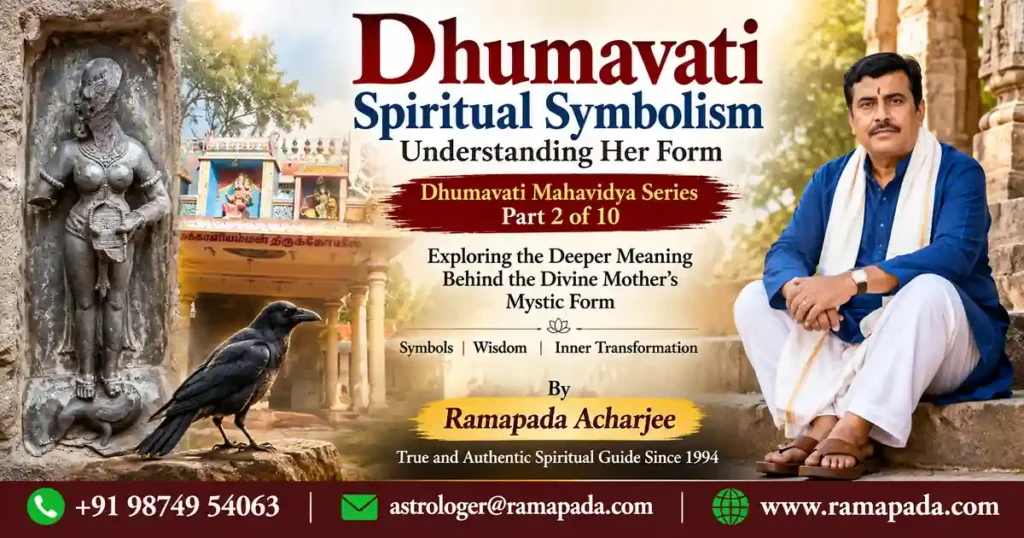
Understanding Her Form
By Ramapada Acharjee
Spiritual Guide | Practicing Since 1994
Dhumavati spiritual symbolism invites us to look beyond our first reaction to an unfamiliar sacred image. Her aged appearance, simple clothing, and unusual companions can raise questions: why does the Divine Mother take this form, and what might a devotee learn by looking more closely?
In the opening article, we introduced Maa Dhumavati and the broad themes associated with her. Here, we will spend time with the details of her imagery. A basket, a bird, or a gesture can become a starting point for reflection when we understand its context.
I distinguish traditional descriptions from my own devotional readings below. The latter offer ways of thinking about the imagery; they are not the only meanings a lineage or scholar might recognize.
মায়ের এই রূপ প্রথম দেখায় অপরিচিত লাগতে পারে। কিন্তু একটু মন দিয়ে দেখলে প্রতিটি প্রতীক নিয়ে ভাবার সুযোগ তৈরি হয়। এখানে প্রচলিত বর্ণনার পাশাপাশি আমার নিজের আধ্যাত্মিক ভাবনাও তুলে ধরছি।
How to Read a Sacred Image
Sacred imagery works through context. The same object can carry different meanings in a story, a meditation description, and a temple’s daily worship. It helps to ask three questions: what is actually shown, what does the relevant tradition say, and what am I personally bringing to the image?
Common descriptions of Dhumavati include an older widow, worn garments, loose hair, a winnowing basket, and a chariot associated with a crow. These features do not appear identically in every representation. Overview of her iconography and its variations
For a broader study of this approach, David Kinsley’s Tantric Visions of the Divine Feminine examines the Mahavidyas through texts, images, and practitioners’ interpretations. Its publisher’s description and contents provide a useful introduction to the scope of that research.
প্রতিটি ধর্মীয় প্রতীকের নিজস্ব প্রেক্ষাপট থাকে। একই ছবি বা মূর্তির অর্থ ধ্যান, মন্দির বা পুরাণে আলাদা হতে পারে। তাই মূল বিষয়টি কী, পরম্পরা কী বলে এবং আমার নিজের দৃষ্টিভঙ্গি কী—এই তিনটি প্রশ্ন দিয়ে কোনো রূপকে বোঝা উচিত।
Smoke and the Grey Appearance
Dhumavati’s name is associated with smoke. A contemporary devotional explanation from Sri Varahi Devasthanam connects this imagery with obscurity, dissolution, and the fading of attachment to outward appearances. This is one interpretation within living devotional tradition. Sri Varahi Devasthanam on Dhumavati
When I think about smoke as a metaphor, I think about the limits of certainty. Something may be present even when I cannot see its outline clearly. That does not give me permission to invent what lies beyond it.
The spiritual question is therefore a quiet one: can I acknowledge what I do not yet understand? Reverence can include patience with an unanswered question. We do not have to turn every uncertainty into either a fearful prediction or a confident promise.
ধোঁয়ার মধ্যে সবকিছু স্পষ্ট দেখা যায় না। জীবনের কোনো বিষয় বুঝতে না পারলে সঙ্গে সঙ্গে ভয় পাওয়া বা অনুমানকে সত্যি ধরে নেওয়ার দরকার নেই। কিছু প্রশ্নের উত্তর পেতে ধৈর্য লাগে।
Age, Hair, and Clothing
Descriptions emphasizing age, dishevelled hair, and plain or worn clothing place Dhumavati outside familiar images of youthful, richly adorned divinity. Natasha Polay’s research overview discusses these characteristics and also notes exceptions in paintings. Discussion of Dhumavati’s appearance
The Older Form
An aged face carries signs of time. In my reading, this asks us to consider whether our attention depends too heavily on youth and outward attractiveness. Can we recognize depth in a face that has changed or listen patiently to someone who moves more slowly than before?
Age alone does not make every judgment wise. Yet dismissing an older person can make us miss experiences that deserve a hearing. The image opens a space for that recognition.
বয়স বাড়লে মানুষের চেহারা বদলায়, কিন্তু তাঁর সম্মান কমে যায় না। বয়স্ক মানুষটির অভিজ্ঞতা ও অনুভূতির মূল্য দেওয়াও ভক্তির সঙ্গে মানানসই আচরণ।
The Loose Hair and Worn Garments
I read these details as an invitation to loosen the demand that everything must look polished before it can receive attention. We often hide uncertainty behind a carefully maintained appearance. A sacred image that does not follow that pattern allows a different conversation to begin.
Plainness need not mean neglect. A person can value cleanliness, health, and comfortable clothing while remembering that appearance tells only part of someone’s story.
বাহ্যিক পরিপাটি বা সাজসজ্জার বাইরেও মানুষের আসল সত্তা থাকতে পারে। কোনো কিছু নিখুঁত বা সুন্দর না হলেও যে তার গভীর অর্থ থাকতে পারে, দেবীর এই রূপ আমাদের সেই কথাটি মনে করিয়ে দেয়।
The Solitary Widow Figure
Widowhood is a significant feature of Dhumavati’s traditional representation. Its historical and social meanings need their own careful discussion, which we will take up in the next part of this series.
For this article, one boundary is essential: a religious symbol must not become a judgment against a real woman. A widow’s presence is no reason to question her dignity, exclude her, or regard her as a source of misfortune.
ধর্মীয় প্রতীকের অর্থ আর বাস্তব সমাজের কোনো মানুষের সম্মান এক নয়। বিধবা হওয়াকে কখনো কোনো নারীর অসম্মান বা অশুভ বলে মনে করা উচিত নয়।
The Winnowing Basket
The winnowing basket, often called a surpa, is one of Dhumavati’s recognisable attributes. It is an agricultural implement used in separating grain from lighter unwanted material. Its place in her imagery offers a particularly accessible point of reflection. Dhumavati’s basket in traditional representations
For me, the important word is discernment. Sorting does not mean rejecting everything. It means learning what deserves to be kept.
A relationship may contain affection alongside a habit that needs to change. Advice may include a useful observation alongside an exaggerated promise. A belief may be meaningful while a claim made in its name still requires examination. The basket gives me a concrete image for making these distinctions patiently.
কুলো দিয়ে সব শস্য ফেলে দেওয়া হয় না; ভালো অংশটুকু রেখে অপ্রয়োজনীয় অংশ সরানো হয়। জীবনেও কোনো বিষয়কে একেবারে ভালো বা খারাপ বলে দেওয়ার আগে তার ভিতরের পার্থক্যগুলি বোঝা দরকার।
The Crow
The crow appears in Dhumavati imagery in several ways, including as an emblem on a banner or as a mount. A bird on a banner and a bird carrying the goddess are different visual arrangements; neither should be silently substituted for the other when describing a particular picture. Examples of crow-associated representations
My reflection begins with the attention we give to an ordinary, often overlooked creature. Devotion need not depend on finding every feature immediately pleasing. Looking steadily at the whole image can expose our habit of deciding what deserves respect before we have understood it.
A crow outside the home, however, is simply an observed bird. Its presence alone does not establish that Dhumavati is issuing a warning or that a personal loss is approaching.
মায়ের ছবিতে কাকের প্রতীক আছে বলে বাড়ির কাছে কাক দেখলেই অমঙ্গল ভাববেন না। একটি ধর্মীয় ছবির অর্থ আর প্রতিদিনের সাধারণ ঘটনা আলাদা করে বুঝতে হয়।
The Chariot
A chariot without horses occurs in well-known representations, while other artworks show birds drawing it or present a different arrangement. The details depend on the image under discussion. Chariot variations in Dhumavati’s iconography
I find the horseless chariot useful as a personal metaphor for a pause. A vehicle usually suggests movement. Here, the apparent means of movement is absent, inviting us to notice stillness rather than immediately supplying a destination.
That reflection is not a prediction that the devotee’s life will stop progressing. It is an opportunity to ask whether constant movement has become a habit. Sometimes looking carefully at where we stand is more useful than demanding another immediate step.
রথের চলার কথা থাকলেও ঘোড়াবিহীন রথ আমাদের স্থির হওয়ার কথা শেখায়। জীবনের সবসময় দৌড়ে না বেড়িয়ে একটু থেমে নিজের অবস্থাকে খতিয়ে দেখাও জরুরি।
Hunger and Thirst
Hunger and thirst belong to descriptions of Dhumavati as well as to discussions of her symbolism. Polay’s overview notes an interpretation connecting these qualities with desires that remain unsatisfied. Dhumavati and unsatisfied desire
This invites an honest question: what am I actually seeking? A person may ask for more recognition while longing to feel valued or keep collecting possessions without feeling settled. Naming the deeper need can change the kind of response we choose.
Literal hunger must also receive a literal response. Someone who needs food should receive food and practical care. Spiritual interpretation loses its kindness when it turns another person’s deprivation into an abstract lesson.
সব চাহিদা একরকম নয়। কখনও জিনিসের চেয়ে স্নেহ বা স্বীকৃতির অভাব বেশি কষ্ট দেয়। আবার কেউ সত্যিই ক্ষুধার্ত হলে তাঁর প্রথম প্রয়োজন খাবার—শুধু উপদেশ নয়।
The Gesture of Blessing
Some representations show a boon-giving hand gesture, called varada mudra, or a gesture associated with knowledge. This detail deserves attention alongside the more austere features of the image. Hand gestures in descriptions of Dhumavati
In devotional contemplation, such a gesture leaves room for a relationship of trust. A devotee can approach the Mother with humility and questions, rather than treating every unfamiliar feature as a threat.
I understand that trust is something that can deepen through attention and conduct. It does not require claiming that the image guarantees a particular worldly result.
দেবীর মূর্তির রূক্ষতার পাশাপাশি তাঁর অভয় বা বরমুদ্রা ভক্তের মনে বিশ্বাসের জায়গা তৈরি করে। ভীতি বা সংঘাতের বদলে মায়ের সঙ্গে বিশ্বাসের সম্পর্ক গড়াই বড় কথা।
Why Images of Dhumavati Differ
A painting, a sculpted icon, and a dressed temple image serve different settings. Published discussions of Dhumavati describe artworks with ornaments and fuller decoration alongside more austere representations. Examples of variation in Dhumavati paintings
The useful response is to identify the particular image, its setting, and any explanation supplied by its custodians. A crown, garland, or cloth should not lead us to invent a rule covering every shrine.
Understanding Dhumavati spiritual symbolism therefore requires attention to the image actually before us. A general description helps us begin; it cannot replace the details of a particular tradition.
মন্দিরে সাজানো মূর্তি আর বইয়ের ধ্যানচিত্র দেখতে আলাদা হতে পারে। শুধু সেই পার্থক্য দেখে কোনো ছবিকে ভুল বলা ঠিক নয়। সেটি কোথাকার রূপ এবং সংশ্লিষ্ট পরম্পরায় কী ব্যাখ্যা আছে, তা জানা দরকার।
Frequently Asked Questions
What Does Dhumavati’s Basket Represent?
It is a winnowing implement. In the devotional reading offered here, its sorting function provides an analogy for discernment: considering what is valuable and what can be released. That interpretation should not be mistaken for the only possible explanation.
Must Every Image Show a Crow and a Horseless Chariot?
No. Representations vary. Describe the features that are present in the particular image rather than adding details from another version.
Does Her Austere Appearance Make Her an Evil Deity?
An austere or unsettling appearance is not enough to support that conclusion. Within Shakta devotion, she is approached as a form of the Divine Mother. Understanding the religious context is more useful than judging the image solely by its first impression.
Is Learning About These Symbols the Same as Performing Sadhana?
No. Reading and reflecting on imagery is different from undertaking a formal discipline. This article explains symbols; the series will discuss worship and the boundaries of specialized practice in Part 10.
Looking Again with Reverence
For me, Dhumavati spiritual symbolism begins to open when I stop demanding that a sacred image confirm my existing preferences. The basket invites careful judgment. The still chariot invites attention. The aged face asks whether respect can survive the changes brought by time.
These reflections can remain modest. We can listen more carefully, examine a claim before accepting it, and offer practical kindness where it is needed. Such actions give our reading a place in daily life.
মায়ের প্রতীকগুলি নিয়ে ভাবার পরে যদি মানুষের কথা একটু বেশি মন দিয়ে শুনতে পারি, বিচার করার আগে একটু থামতে পারি, তবে সেই ভাবনার একটি বাস্তব মূল্য থাকে। মায়ের কাছে প্রার্থনা, আমাদের ভক্তির সঙ্গে বিবেক ও সহমর্মিতাও যেন থাকে।
The next article in this series will explore Dhumavati’s origins and mythological stories, keeping the different accounts distinct and explaining their religious context.
About the Author
Ramapada Acharjee is a Kolkata-based astrology and spiritual guidance practitioner, practicing since 1994. His writing explores religious traditions, their symbolism, and questions of everyday life.
রমাপদ আচার্য্য কলকাতায় জ্যোতিষ ও আধ্যাত্মিক পরামর্শের কাজ করেন, ১৯৯৪ সাল থেকে এই পেশার সঙ্গে যুক্ত। তাঁর লেখায় ধর্মীয় পরম্পরা ও জীবনের সাধারণ প্রশ্নগুলিকে সহজভাবে বোঝানোর চেষ্টা থাকে।
Further Reading
For a broader academic introduction, David Kinsley’s Tantric Visions of the Divine Feminine: The Ten Mahavidyas includes a separate chapter on Dhumavati. The University of California Press book page provides bibliographic details and its contents. This is a further-reading recommendation for those who want to continue beyond an introductory article.
Readers continuing from the earlier series can also consult the Chhinnamasta references and further reading.
আরও বিশদে জানতে গবেষণামূলক বই ও নির্ভরযোগ্য আলোচনা পড়ুন। কোনটি ঐতিহ্যের বর্ণনা আর কোনটি লেখকের ব্যাখ্যা, সেই পার্থক্য বুঝে পড়লে বিষয়টি পরিষ্কার হয়।
Connect with the Best in Kolkata
Stop wandering in uncertainty. Your stars have a story to tell, and Ramapada Acharjee is here to help you read it. With a legacy built on truth, 35 years of experience, and a mission to bring peace to every household, your journey toward clarity starts here.
📍Consultation available in Kolkata, Guwahati, Siliguri, Tarapith & online.
📞 Consultant: Ramapada Acharjee
Professional Experience: True & Authentic Spiritual Guide Practicing Since 1994
📞 Phone / WhatsApp: +91 98749 54063
✉️ Official Email: astrologer@ramapada.com
🌐 Website
Consultations: By prior appointment (in-person & online)
You may also read:
Tantra Practice Eligibility – Who Can & Who Can’t
Skills of Black Magic Specialist
Left Hand, Right Hand Tantra—Two Spiritual Paths
🔗 Related Category: Tantra
