
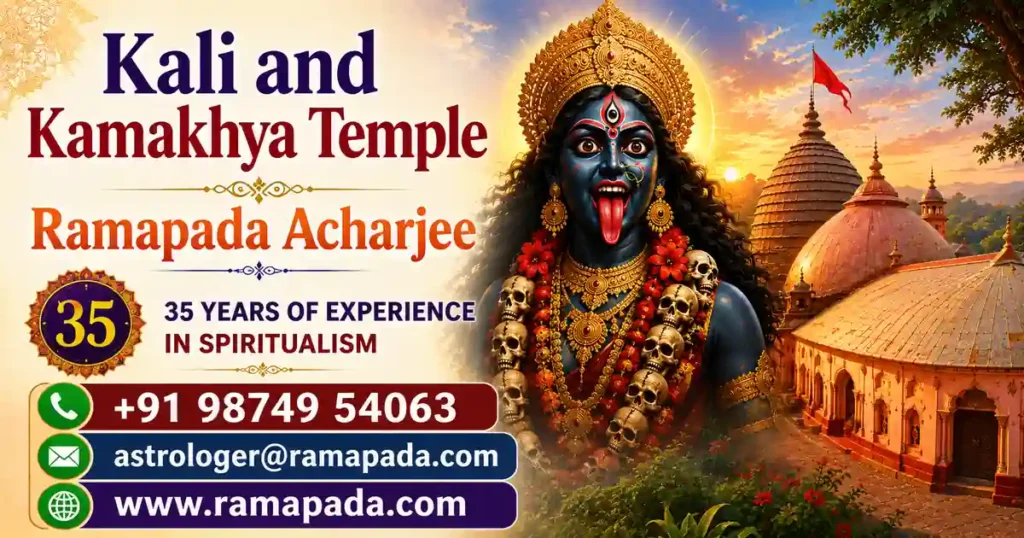
Where the Philosophy of the First Mahavidya Becomes a Living Experience
“শাস্ত্র আমাকে অনেক কিছু শিখিয়েছে। কিন্তু কামাখ্যা আমাকে শিখিয়েছে—কিছু সত্য শুধু পড়ে নয়, অনুভব করেও জানতে হয়।“
Whenever people ask me about Kali Mahavidya, they almost always ask another question soon afterwards: “Is Kali connected with Kamakhya Temple?” Over the years, I have answered this question countless times. However, I have realized that a simple “yes” or “no” can never explain the relationship properly.
To understand that connection, we must first understand what Kamakhya truly represents. Kamakhya is not simply an ancient temple, nor is it merely a famous pilgrimage destination. Furthermore, it is not only a center associated with Tantra, as many people casually describe it today.
Readers interested in the temple itself can explore the Government of India tourism portal’s guide to Kamakhya Temple in Guwahati.
In my experience, Kamakhya represents something far deeper. Indeed, it is a sacred space where philosophy, devotion, tradition, and personal transformation quietly meet.
“কামাখ্যাকে শুধু একটি মন্দির হিসেবে দেখলে তার প্রকৃত মহিমা বোঝা যায় না। এটি এক জীবন্ত আধ্যাত্মিক ঐতিহ্য।”
That is perhaps why every visit has taught me something fresh and meaningful.
Before exploring the connection with Kamakhya, readers may first understand Kali Mahavidya as the First Mahavidya.
The First Morning That Stayed in My Memory
Although I have visited Kamakhya several times over the years, one particular morning has remained with me more vividly than the others.
Before sunrise, Nilachal Hill was wrapped in deep silence. The air felt cool, and temple bells echoed softly through the morning mist. Pilgrims walked slowly toward the sanctum. For instance, some carried flowers, while others carried red cloth or held nothing in their hands except quiet faith.
As I stood silently watching them, nobody seemed interested in displaying spirituality. Likewise, nobody was trying to impress anyone else. Each person appeared to be carrying a private conversation with the Divine Mother. Consequently, that simple scene left a lasting impression on my mind.
“ভক্তির সবচেয়ে গভীর রূপ অনেক সময় নীরবতার মধ্যেই প্রকাশ পায়।”
The wider Shakti Peetha tradition can be understood through The Met’s account of Shiva, Sati and the origins of the sacred Shakti Peethas.
At that moment, I realized that Kamakhya is not a place where people come merely to ask for miracles. Rather, many come to find courage, others come to find acceptance, and many simply come because they feel that someone listens there without judgment.
The background of the Goddess can be explored in greater depth through the origin of Kali Mahavidya.
Kamakhya Is More Than a Temple
People often describe Kamakhya as one of India’s most important Shakti Peethas. While that description is certainly true, it tells only part of the story.
During my conversations with priests and long-time devotees, I gradually understood that Kamakhya also functions as a living center of Shakta philosophy. Here, seekers do not limit worship to mere rituals. Instead, every prayer carries symbolism, every tradition carries history, and every offering carries deep meaning. The Mahavidyas are not remembered merely as names from ancient scriptures; rather, they continue to inspire devotion, reflection, and spiritual inquiry even today.
Kamakhya’s relationship with the wider Goddess tradition becomes clearer when we study the Ten Mahavidyas.
“যেখানে ঐতিহ্য আজও জীবন্ত, সেখানে ইতিহাস শুধু অতীতের বিষয় হয়ে থাকে না।”
That living continuity makes Kamakhya truly unique among sacred places.
Kamakhya’s relationship with the wider Goddess tradition becomes clearer when we study the Ten Mahavidyas.
Is Goddess Kali worshipped at Kamakhya?
This question is one of the most common inquiries readers ask, and the answer deserves careful explanation. The presiding deity of the temple is Goddess Kamakhya, revered as one of the most sacred manifestations of Adi Shakti.
However, the spiritual tradition preserved at Kamakhya has, for centuries, maintained a close connection with the worship of the Ten Mahavidyas, including Kali Mahavidya. This distinction remains important. Kamakhya is not “a Kali temple” in the ordinary sense, nor do seekers understand Kali and Kamakhya as completely separate realities within the Shakta tradition. Instead, devotees experience them as different manifestations of the same Divine Mother.
A historical representation connecting Kali with the wider Mahavidya tradition can be seen in The Met’s Kali and Tara Mahavidya diptych.
শেষের দিকে
“রূপ ভিন্ন হতে পারে, কিন্তু মাতৃশক্তি এক ও অভিন্ন—এই উপলব্ধিই শাক্ত দর্শনের মূল ভিত্তিগুলির একটি।”
That fundamental understanding has helped me answer many questions over the years without creating unnecessary confusion.
The deeper meaning of her powerful appearance is discussed separately in Looking Beyond the Image.
What I Learned by Watching the Devotees
One profound lesson never came from a book; rather, it came from quiet observation. Every time I visited Kamakhya, I spent time simply watching people.
For example, I saw a young student quietly praying before an examination, parents seeking blessings for their children, and a senior couple offering flowers together after decades of married life. Also, I observed pilgrims sitting silently without asking for anything at all.
Although their prayers and backgrounds differed, their faith carried the same quiet sincerity. That sight reminded me of a very simple truth:
“মায়ের কাছে মানুষের পরিচয় নয়, মানুষের আন্তরিকতাই বড় হয়ে ওঠে।”
This, in my opinion, represents one of the greatest spiritual lessons Kamakhya offers to every visitor.
Kali and Kamakhya can also be understood within the wider spiritual framework of the Ten Mahavidyas.
Frequently Asked Questions (FAQ)
Q1. What is the connection between Kali Mahavidya and Kamakhya Temple?
Although Kamakhya Temple is primarily dedicated to Goddess Kamakhya, it has long served as one of the most important centers of the Shakta tradition. Therefore, priests and seekers have preserved the worship, philosophy, and spiritual understanding of the Ten Mahavidyas, including Kali Mahavidya, here for centuries.
“কামাখ্যা শুধু একটি দেবীর মন্দির নয়; এটি শক্তি উপাসনার এক জীবন্ত কেন্দ্র, যেখানে মহাবিদ্যা তত্ত্ব আজও শ্রদ্ধার সঙ্গে লালিত হয়।”
Q2. Is Kamakhya Temple dedicated only to Goddess Kali?
No. The presiding deity of the temple is Goddess Kamakhya, whom devotees worship as a sacred manifestation of Adi Shakti. However, Kali Mahavidya holds a deeply respected place within the broader Shakta and Tantric traditions associated with Kamakhya.
“মা কামাখ্যা ও মা কালীকে আলাদা শক্তি হিসেবে নয়, আদ্যাশক্তির ভিন্ন ভিন্ন প্রকাশ হিসেবে বোঝাই শাক্ত দর্শনের মূল শিক্ষা।”
Q3. Why do so many spiritual seekers visit Kamakhya Temple?
People visit Kamakhya for various reasons. Some come with devotion, while others arrive with spiritual curiosity or a search for inner peace. During my own visits, I have noticed that many pilgrims arrive with hope, patience, and faith rather than expectations of miracles.
“আমি বহুবার দেখেছি, মানুষ কামাখ্যায় শুধু কিছু পাওয়ার জন্য আসে না; অনেকেই আসে নিজের মনকে মায়ের কাছে সমর্পণ করতে।”
Q4. Did visiting Kamakhya change your understanding of Kali Mahavidya?
Yes. Because I visited Kamakhya repeatedly, I understood that Kali is far more than the fierce image many people first encounter. In fact, the atmosphere, prayers, traditions, and quiet faith of ordinary devotees gradually revealed a deeper, more compassionate understanding of the Divine Mother.
“কামাখ্যা আমাকে শিখিয়েছে—মায়ের রূপের আগে তাঁর করুণাকে অনুভব করতে হয়।”
Q5. Is Kamakhya Temple associated only with Tantra?
No. While Kamakhya is certainly an important center of Shakta Tantra, it also functions as a sanctuary of devotion, philosophy, tradition, and spiritual reflection. Therefore, reducing Kamakhya to Tantra alone overlooks its much broader religious and cultural significance.
“কামাখ্যা শুধু তন্ত্রের জন্য বিখ্যাত—এই ধারণা অসম্পূর্ণ। এটি ভক্তি, শাস্ত্র, ঐতিহ্য ও সাধনার এক অনন্য মিলনক্ষেত্র।”
Q6. Can an ordinary devotee visit Kamakhya Temple?
Absolutely. People from all backgrounds visit Kamakhya every day. Indeed, one does not need to be a Tantric practitioner to offer prayers or seek blessings, because respect, sincerity, and devotion are what truly matter.
“মায়ের দরজা সবার জন্য খোলা। ভক্তির জন্য বিশেষ পরিচয়ের প্রয়োজন হয় না।”
Q7. Why is Kamakhya so important in the study of the Ten Mahavidyas?
Kamakhya has preserved centuries of Shakta traditions, rituals, and philosophical teachings. Thus, for anyone who wishes to understand the Mahavidyas beyond popular myths, Kamakhya offers valuable cultural and spiritual context.
“মহাবিদ্যা বুঝতে হলে শুধু বই নয়, সেই ঐতিহ্যের জীবন্ত ধারাকেও অনুভব করা দরকার। কামাখ্যা সেই সুযোগ করে দেয়।”
Q8. What is the biggest lesson you personally learned from Kamakhya?
The greatest lesson was that true spirituality is often quiet, humble, and deeply personal. Because every visit reminded me that faith does not need to be loud, I realized it only needs to be sincere.
“মায়ের কাছে উচ্চস্বরে প্রার্থনা করার চেয়ে, নীরব বিশ্বাস অনেক সময় বেশি গভীর হয়ে ওঠে।”
For additional cultural context on Kali worship in eastern India, readers may explore the British Museum’s Kali Rises in the East.
Key Takeaways
- First, Kamakhya Temple serves as one of the most important centers of the Shakta tradition.
- Second, Kali Mahavidya connects deeply with the spiritual heritage preserved at Kamakhya.
- Furthermore, personal observation often complements scriptural study.
- In addition, faith and symbolism help us understand Kali beyond fear and misconception.
- Finally, Kamakhya continues to inspire devotees, seekers, and researchers from around the world.
“যতবার কামাখ্যায় গিয়েছি, ততবার মনে হয়েছে—মায়ের দর্শন শুধু চোখে নয়, অন্তরেও গ্রহণ করতে হয়। হয়তো সেই কারণেই প্রতিটি সফর আমাকে নতুন কিছু শিখিয়ে ফিরিয়েছে।”
These traditions also offer practical insights for everyday life, which I discuss in spiritual lessons from Kali Mahavidya for modern life.
Connect with the Best in Kolkata
Stop wandering in uncertainty. Your stars have a story to tell, and Ramapada Acharjee is here to help you read it. With a legacy built on truth, 35 years of experience, and a mission to bring peace to every household, your journey toward clarity starts here.
📍Consultation available in Kolkata, Guwahati, Siliguri, Tarapith & online.
📞 Call/WhatsApp: +91-98749 54063
🌐 Visit Website
You may also read:
- Best Tantrik in Udaipur: Overcome Life’s Barriers
- Best Tantrik in Surat—Spiritual Guide
- Best Tantrik in Ahmedabad – Vashikaran Specialist
Related Category: Tantra
