
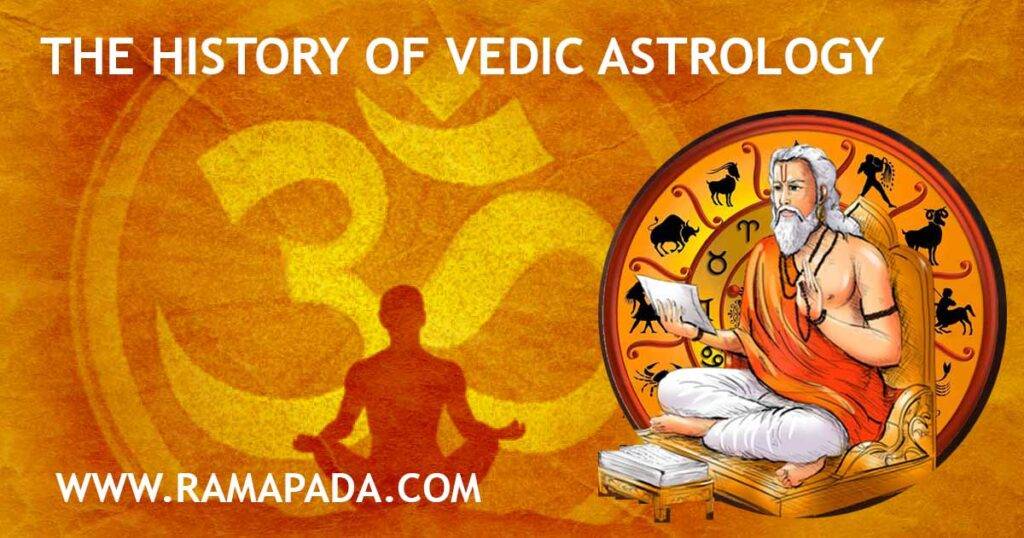
Vedic astrology, or Jyotish Shastra, has been lighting the path of human life for thousands of years.
It is more than just a system for predicting the future — it’s a way to understand how our lives connect with the cosmic energy of the universe.
From ancient sages to modern astrologers, the history of Vedic astrology shows how the stars and planets have guided human destiny and spiritual growth.
🌅 Origins in the Vedas
The roots of Vedic astrology go back to the four Vedas —
Among these, the Rigveda mentions celestial bodies and their spiritual meanings.
Later came the Vedanga Jyotisha, written around 1200 BCE, one of the oldest texts on timekeeping and planetary observation.
It explained how to track the movement of the Sun, Moon, and stars to calculate time for rituals and seasons.
This ancient scripture marked the beginning of systematic astronomy and astrology in India.
👑 Contribution of Great Sages
Many wise sages shaped the history of Vedic astrology with their deep knowledge and divine vision.
The most famous among them include the following:
- Maharishi Bhrigu – Author of the Bhrigu Samhita, a collection of astrological charts and predictions for future generations.
- Sage Parashara – Wrote the Brihat Parashara Hora Shastra, the most important text on astrology. It explains birth charts, planetary effects, yogas (planetary combinations), and dashas (planetary time periods).
- Sage Garga – Known for his work in predictive astrology and naming rituals (Garga Samhita).
These seers did not just study planets — they connected them to karma, destiny, and spiritual purpose.
Their teachings are still used by astrologers across India and the world today.
🌌 Core Principles of Vedic Astrology
To understand the history of Vedic astrology, it’s important to know its core principles.
1. Sidereal Zodiac
Unlike Western astrology (which uses the tropical zodiac), Vedic astrology follows the sidereal zodiac, which aligns exactly with the actual constellations in the sky.
2. Key Elements
Vedic astrology is built around:
- Twelve Houses (Bhavas) – Represent different aspects of life like career, family, health, and wealth.
- Nine Planets (Navagraha) – The Sun, Moon, Mars, Mercury, Jupiter, Venus, Saturn, Rahu, and Ketu.
- Twenty-Seven Constellations (Nakshatras) – Star groups that add finer details to an individual’s destiny.
3. Birth Chart (Janma Kundali)
The Janma Kundali is the heart of Jyotish.
It shows the exact position of planets at the time of birth.
From this chart, astrologers interpret the following:
- Personality traits
- Strengths and weaknesses
- Career and marriage prospects
- Health patterns
- Spiritual direction
4. Dashas and Yogas
- Dashas explain time cycles — when certain planets influence life events.
- Yogas describe special planetary combinations that can bring success, fame, or challenges.
These calculations make Vedic astrology a scientific and mathematical system of divine interpretation.
🔮 Astrology as a Spiritual Science
Vedic astrology is not just about fortune-telling — it’s a spiritual science.
It teaches that life events are shaped by past karma and the cosmic balance of energies.
The Spiritual View
- Every planet represents a divine energy or deity.
- Planetary positions show the reflection of our past actions and future lessons.
- By understanding these energies, one can live in harmony with universal laws.
Remedies for Balance
Astrology also offers spiritual remedies to reduce negative effects:
- Chanting mantras dedicated to specific planets
- Wearing gemstones that balance planetary vibrations
- Performing rituals and pujas
- Following fasting days (vrats) for spiritual purification
The goal is to create harmony between human effort and divine design.
🏛️ Astrology in Ancient Indian Society
The history of Vedic astrology shows how deeply it influenced daily life in ancient India.
1. Guidance for Kings and Rulers
Rulers never made big decisions without consulting astrologers.
They sought advice before:
- Starting wars or forming alliances
- Building temples and palaces
- Conducting royal ceremonies
2. Farmers and Common People
Astrology guided agriculture too.
- Farmers used astrological calendars to choose the right time for sowing and harvesting.
- The muhurta system (auspicious timings) ensured success in every important action.
3. Cultural and Religious Life
Festivals, marriages, house-warming ceremonies, and even business openings were all planned based on planetary alignments.
The belief was simple — “When the time is right, success follows.”
Thus, astrology was not just personal guidance; it was the cultural compass of Indian civilisation.
💻 Vedic Astrology in the Modern Era
As centuries passed, astrology evolved with society — yet its essence remained the same.
Digital Revolution
- Today, astrologers use software and mobile apps to create accurate birth charts within seconds.
- Online consultations and astrology websites make Jyotish accessible across the world.
Modern Applications
People now use astrology to seek guidance in areas like the following:
- Career and business growth
- Marriage compatibility
- Health and mental balance
- Spiritual progress
Global Recognition
The history of Vedic astrology has crossed borders.
In the West, more people are exploring Vedic astrology for its accuracy and spiritual depth.
It bridges science, psychology, and spirituality – making it relevant in today’s fast-paced, uncertain world.
📜 Comparing Vedic and Western Astrology
| Feature | Vedic Astrology | Western Astrology |
|---|---|---|
| Zodiac Type | Sidereal (fixed constellations) | Tropical (seasonal) |
| Focus | Karma, destiny, and spiritual evolution | Personality and psychology |
| Planets | 9 (including Rahu and Ketu) | 10 (including Uranus, Neptune, Pluto) |
| Time System | Planetary Dashas | Transits and progressions |
| Remedy System | Gemstones, mantras, pujas | Psychological or symbolic guidance |
This simple table shows how Vedic astrology combines spiritual insight with scientific observation.
🌠 Timeless Relevance of Jyotish Shastra
Why does the history of Vedic astrology still matter today?
Because it helps people:
- Understand their life purpose
- Make better choices
- Accept challenges as karmic lessons
- Grow spiritually and emotionally
It teaches that nothing is random — every event has divine timing.
Vedic astrology invites us to look beyond fate and use self-awareness as a tool for transformation.
When we align our life with cosmic rhythms, we live with peace, balance, and clarity.
🌞 To Summarise
The history of Vedic astrology is a journey from ancient wisdom to modern relevance.
Born in the sacred Vedas, it has survived through centuries because it connects heaven and earth, science and spirit, and karma and free will.
Key Takeaways
- Originated from the Vedas and refined by great sages like Bhrigu and Parashara.
- Based on the sidereal zodiac, nine planets, and twenty-seven nakshatras.
- Acts as a spiritual compass, not just a prediction tool.
- Continues to guide millions across the world in the digital age.
In simple words, Vedic astrology tells us:
“The stars don’t control us—they reflect our inner light.”
By understanding the universe within and around us, we walk the timeless path of wisdom, harmony, and self-realisation.
You may also read :
Occult Science Practitioners
Astrology for Students: How to Improve Focus & Success
Rahu & Ketu: Hidden Influences in Your Horoscope
Best astrologer in Chennai, Tamil Nadu | Astro Services
Best astrologer in Raipur, Chhattisgarh | Astro Services
Related Category: Astrology
