
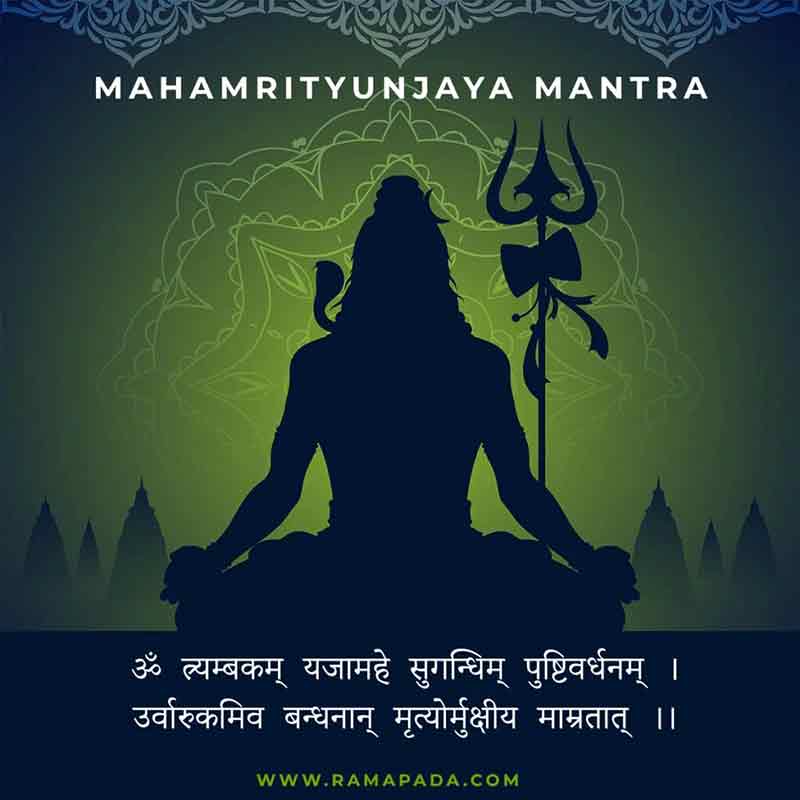
Mahamrityunjay Mantra is one of the most revered Vedic mantras dedicated to Lord Shiva. Also known as the Tryambakam Mantra, it represents spiritual strength, inner peace, and liberation from the fear of death.
For centuries, devotees have chanted this sacred verse during difficult periods of life. However, its deeper purpose extends beyond prayers for health and longevity. It encourages spiritual awareness, emotional balance, and acceptance of life’s natural changes.
Ramapada Acharjee, practising astrology since 1991, emphasizes that spiritual practices should strengthen faith while encouraging practical responsibility.
Vedic Origin of Mahamrityunjay Mantra
The sacred mantra appears in the Rigveda, Mandala 7, Hymn 59, Verse 12. The original Vedic verse invokes Rudra, a deity closely associated with Lord Shiva in later Hindu traditions.
Moreover, the mantra holds an important place in Shaiva worship and traditional Hindu spiritual practices.
Alongside the Gayatri Mantra, it remains one of the most widely respected sacred chants in Hinduism.
Its central message concerns liberation from bondage, spiritual nourishment, and freedom from the fear of mortality.
Mahamrityunjay Mantra in Sanskrit
The traditional Sanskrit version is:
ॐ त्र्यम्बकं यजामहे सुगन्धिं पुष्टिवर्धनम् ।
उर्वारुकमिव बन्धनान्मृत्योर्मुक्षीय मामृतात् ॥
Mahamrityunjay Mantra in English
Om Tryambakam Yajamahe Sugandhim Pushtivardhanam
Urvarukamiva Bandhanan Mrityormukshiya Mamritat
Bengali Pronunciation
ওঁ ত্র্যম্বকং যজামহে সুগন্ধিং পুষ্টিবর্ধনম্।
উর্বারুকমিব বন্ধনান্ মৃত্যোর্মুক্ষীয় মামৃতাৎ॥
Devotees may consult the original Vedic verse and its transliteration for a deeper understanding of the sacred text.
Meaning of Each Word in the Mantra
| Sanskrit Word | Meaning |
|---|---|
| Om | Sacred primordial sound |
| Tryambakam | The three-eyed divine being |
| Yajamahe | We worship or offer reverence. |
| Sugandhim | The fragrant one |
| Pushtivardhanam | The one who nourishes and strengthens |
| Urvarukamiva | Like a ripe cucumber or gourd |
| Bandhanan | From bondage |
| Mrityor | From death |
| Mukshiya | May I be liberated |
| Mamritat | Not from immortality |
The mantra compares spiritual liberation to a ripe fruit naturally separating from its stem. Therefore, it expresses a prayer for freedom from the bonds of mortality without separation from eternal spiritual existence.
Spiritual Meaning of Mahamrityunjay Mantra
The mantra may be understood as a prayer to the three-eyed Lord, who nourishes life and supports spiritual growth.
Its symbolism encourages devotees to overcome attachment, fear, and ignorance.
The ripe fruit represents natural release. Similarly, spiritual maturity can help individuals accept change rather than resist every uncertainty.
Furthermore, the concept of immortality in this prayer should not be understood as a guarantee of physical immortality.
Instead, many spiritual traditions interpret it through liberation, consciousness, and freedom from the fear of death.
महामृत्युंजय मंत्र भगवान शिव की उपासना से जुड़ा एक पवित्र वैदिक मंत्र है। धार्मिक परंपराओं में इस मंत्र के जप को मानसिक शांति, आत्मबल और आध्यात्मिक साधना का महत्वपूर्ण अंग माना जाता है। श्रद्धालु नियमित मंत्र जप, ध्यान और भगवान शिव की पूजा के माध्यम से अपने मन को एकाग्र करने का प्रयास करते हैं। हालांकि, इस मंत्र का आध्यात्मिक महत्व धार्मिक आस्था से जुड़ा है और इसे किसी बीमारी के उपचार या जीवन की कठिनाइयों से निश्चित मुक्ति की गारंटी नहीं मानना चाहिए।
The Legend of Sage Markandeya
One of the best-known traditional stories associated with the sacred chant concerns Sage Markandeya.
According to Hindu mythology, Sage Mrikandu and his wife prayed to Lord Shiva for a child. Shiva offered them a choice between a virtuous son with a short lifespan and a less virtuous son with a long life.
They chose the virtuous child.
Consequently, Markandeya was born and became a devoted worshipper of Lord Shiva.
According to the legend, when Yama, the deity of death, arrived to take his life, Markandeya embraced the Shiva Linga and sought divine protection.
Lord Shiva then appeared and protected the young devotee.
This traditional narrative symbolizes devotion, courage, and spiritual strength in the face of mortality. However, the story should be understood as a religious tradition rather than historical evidence that a mantra prevents physical death.
Lord Shiva and the Three-Eyed Symbolism
Lord Shiva’s third eye represents spiritual insight, awareness, and wisdom.
While the two ordinary eyes perceive the external world, the third eye symbolizes a deeper understanding of reality.
Therefore, the name Tryambaka connects the sacred chant with spiritual awakening.
Devotees also honour Shiva through practices such as Rudrabhishek Puja, which involves devotional offerings and the recitation of sacred mantras.
These practices express reverence and encourage spiritual discipline.
Traditional Benefits of Mahamrityunjay Mantra
Hindu spiritual traditions associate this chant with several devotional and personal benefits.
1. Inner Peace
Regular chanting gives devotees a quiet moment for prayer and reflection. The steady rhythm of the mantra may also help them focus and feel calmer during stressful periods.
2. Courage During Difficult Times
People often experience uncertainty during illness, family difficulties, or personal loss.
Consequently, devotional prayer may provide comfort and emotional support.
3. Spiritual Discipline
A regular chanting routine encourages patience, consistency, and concentration.
However, spiritual development requires more than the mechanical repetition of sacred words.
4. Freedom from Fear
The mantra encourages reflection on mortality and the temporary nature of worldly experiences.
As a result, devotees may develop a more balanced attitude towards life’s uncertainties.
5. Devotion to Lord Shiva
The chant provides a traditional way to express faith, gratitude, and reverence.
Furthermore, it strengthens the devotee’s connection with Shaiva spiritual traditions.
How to Chant Mahamrityunjay Mantra
- Choose a clean and peaceful place.
- Sit comfortably and maintain a relaxed posture.
- Begin with a few moments of quiet reflection.
- Chant the mantra slowly and clearly.
- Concentrate on its meaning rather than speed.
- Complete the practice with a peaceful prayer.
Many devotees use a Rudraksha Mala to count their repetitions.
However, beginners do not need expensive ritual materials or elaborate arrangements.
Sincerity, patience, and regular practice remain more important than outward display.
Best Time to Chant the Mantra
Traditional Hindu practices often recommend early morning for prayer and meditation.
Similarly, Monday holds particular significance in the worship of Lord Shiva.
Other religious occasions include:
- Maha Shivaratri
- Pradosh Vrat
- The sacred month of Shravan
- Personal Shiva Puja
- Periods of devotional reflection
Nevertheless, devotees can chant at other convenient times.
Maintaining a consistent and peaceful routine is generally more meaningful than worrying about an exact time.
Why Is the Mantra Chanted 108 Times?
The number 108 holds traditional significance in Hindu spiritual practice.
Therefore, devotees often chant the sacred verse 108 times using prayer beads.
However, beginners may start with 11 or 21 repetitions before gradually increasing their practice.
The purpose is to maintain attention and devotion rather than simply complete a numerical target.
Formal Mahamritunjay Puja and Anushthan may involve larger numbers of repetitions under traditional guidance.
Mahamrityunjay Mantra and Beej Mantras
Some Shaiva and Tantric traditions use expanded forms of the chant that include additional sacred syllables, known as Beej Mantras.
These syllables have specific meanings and ritual associations within different lineages.
However, the original Vedic verse remains complete in itself.
Beginners can therefore practise the familiar version without adding advanced ritual formulas.
Those interested in elaborate Anushthan or specialised Tantric practices should seek knowledgeable and responsible guidance.
Can Mahamrityunjay Mantra Cure Diseases?
This question deserves a careful and balanced explanation.
Traditionally, devotees chant the mantra while praying for health, recovery, and protection.
However, there is no reliable scientific evidence that chanting this particular mantra cures diseases or guarantees protection from illness or death.
Spiritual practices may offer emotional comfort during difficult experiences. Nevertheless, medical conditions require appropriate diagnosis and treatment from qualified healthcare professionals.
The National Center for Complementary and Integrative Health provides information about meditation, its potential benefits, and its limitations.
Therefore, prayer and medical treatment can coexist. Spiritual devotion should never become a reason to discontinue prescribed medication or delay necessary medical care.
Common Mistakes While Chanting
Although devotional chanting is a personal spiritual practice, several misconceptions deserve attention.
Incorrect Pronunciation: Beginners should learn the traditional pronunciation gradually rather than become anxious about every minor mistake.
Expecting Immediate Results: Spiritual practices do not guarantee instant changes in external circumstances.
Chanting Out of Fear: Devotion should encourage peace rather than create anxiety about missing a prayer.
Depending Entirely on Rituals: Prayer should accompany practical decisions and personal responsibility.
Following Unverified Claims: Seekers should remain cautious of anyone promising guaranteed recovery, immortality, or extraordinary supernatural powers.
Mahamrityunjay Mantra in Modern Life
Modern life brings many challenges, including professional stress, family responsibilities, financial uncertainty, and emotional pressure.
Consequently, a simple spiritual routine can create a meaningful opportunity for reflection.
A short period of prayer in the morning may help devotees begin their day with greater calmness.
Similarly, evening chanting may provide a quiet transition after a demanding day.
However, spiritual practices become more constructive when combined with healthy habits, practical action, and informed decisions.
Frequently Asked Questions
What is the Mahamrityunjay Mantra?
It is an ancient Vedic chant associated with Rudra and Lord Shiva. Its central themes include spiritual nourishment, liberation from bondage, and freedom from the fear of death.
Who is traditionally associated with the Mahamrityunjay Mantra?
The mantra appears in Rigveda 7.59.12 and is traditionally associated with Sage Vasishtha in the Vedic tradition. Sage Markandeya is also connected with the mantra through later devotional legends.
Can anyone chant this mantra?
Many Hindu devotional traditions permit people to chant the familiar version with respect and sincerity. However, formal Vedic recitation and advanced ritual practices may follow particular lineage traditions.
Can the mantra be chanted at night?
Yes. Many devotees chant during morning or evening prayer. Nevertheless, a convenient and peaceful time can support regular practice.
Is it necessary to chant 108 times?
No fixed number is essential for simple devotional practice. However, 108 repetitions remain a widely followed traditional approach.
Does the mantra prevent death?
The sacred verse expresses a prayer for liberation from mortality and its associated fears. However, chanting cannot guarantee physical immortality or prevent every death.
Can it be chanted without a Rudraksha Mala?
Yes. A prayer mala helps count repetitions, but it is not necessary for ordinary devotional chanting.
A Balanced Spiritual Perspective
Mahamrityunjay Mantra remains a profound expression of devotion, courage, and spiritual awareness.
Its enduring significance lies in the human search for peace, strength, and understanding during uncertain times.
Therefore, devotees should approach the mantra with sincerity rather than fear or unrealistic expectations.
Ramapada Acharjee’s approach to spiritual guidance emphasizes traditional knowledge, ethical practices, and personal responsibility. Moreover, faith becomes more meaningful when it remains connected with wisdom and practical action.
Ultimately, the sacred chant reminds devotees that spiritual strength involves facing life with patience, awareness, and inner peace.
Ramapada Acharjee
Astrology, Palmistry & Spiritual Guidance
Practising since 1991
You May Also Read
Related Category: Hindu Rituals
