
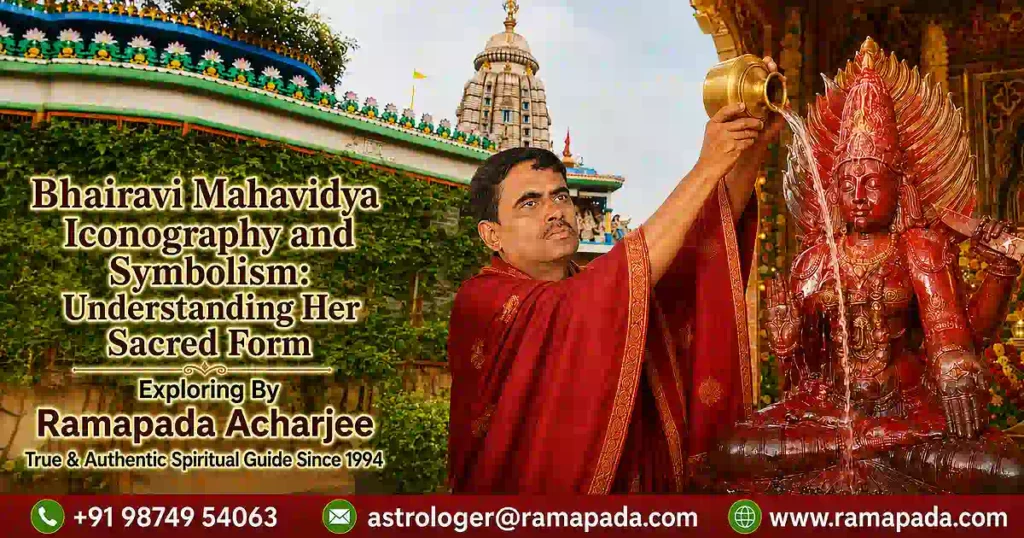
Understanding Her Sacred Form
Introduction
The sacred form of Bhairavi Mahavidya evokes different emotions in different seekers. While some feel deep devotion and reverence, others experience hesitation or wonder when observing Her intense presence.
However, the sacred image of Bhairavi is not intended to frighten anyone.
In the Shakta and Tantric traditions, every single feature of a deity carries a profound symbolic meaning. Furthermore, the colour of the body, ornaments, weapons, and gestures represent specific states of consciousness.
আমার দীর্ঘ ৩৫ বছরের উপলব্ধি : সহজভাবে বললে, ভৈরবী মায়ের রূপ ভয় দেখানোর জন্য নয়। তাঁর রূপের প্রতিটি অংশ মানুষের মন, সাহস, জ্ঞান ও আত্মপরিবর্তনের এক গভীর আধ্যাত্মিক শিক্ষা বহন করে।
My spiritual journey began in 1994. Since then, across more than 35 years of consulting, I have observed human belief, anxiety, and the continuous search for lasting inner peace.
From this long journey of experience, I have realised that Bhairavi represents the courage required to confront our inner weaknesses.
Consequently, She never asks us to escape from fear. Instead, She inspires us to understand its roots and rise above it.
In this article, we will examine Bhairavi Mahavidya iconography and uncover the spiritual meaning behind Her sacred form.
A valuable historical representation of Bhairavi from nineteenth-century Kolkata can be viewed in The Metropolitan Museum of Art’s Goddess Bhairavi collection entry.
Why Is It Important to Understand Bhairavi’s Iconography?
A sacred image should never be interpreted in a superficial manner.
This principle is essential when studying any Tantric deity. For example, many Tantric depictions include skulls, sharp weapons, severed heads, and intense symbols.
These elements may appear unsettling when separated from their philosophical context. However, in authentic Tantra, they represent the systematic destruction of ignorance, ego, and blind attachment.
Moreover, Bhairavi’s red complexion is not a symbol of unguided anger. Similarly, Her garland of heads does not represent physical violence.
Together, these features communicate the sacred language of discipline, knowledge, courage, and inner transformation.
প্রতীক ও দর্শনের যোগসূত্র : তান্ত্রিক দেবদেবীর প্রতীককে আক্ষরিক অর্থে দেখলে ভুল বোঝাবুঝি হতে পারে। প্রতীকগুলোর পেছনের আধ্যাত্মিক দর্শন বুঝলেই ভৈরবীর প্রকৃত মাতৃরূপ স্পষ্ট হয়ে ওঠে।
Misreading sacred symbols literally is one of the main causes of unnecessary fear, as explained further in Common Misconceptions About Bhairavi Mahavidya.
The Meaning of Bhairavi’s Red Complexion
Bhairavi is visualised with a brilliant, glowing red complexion. Classical descriptions compare Her radiance to the light of thousands of rising suns.
Red is traditionally the colour of dynamic energy, courageous action, and spiritual heat (Tapas).
Physical fire transforms everything that enters it. In the same way, the red radiance of Bhairavi represents the inner fire that purifies fear, laziness, and emotional stagnation.
Therefore, this is not a destructive fire. It is primarily the sacred flame of inner purification.
Human beings often carry negative habits and irrational fears for many years. Although we understand these habits are harmful, we find it difficult to leave them behind.
Consequently, Bhairavi’s red radiance reminds us that meaningful transformation requires determined action.
রক্তিম বর্ণের তাৎপর্য : ভৈরবীর রক্তিম বর্ণ ক্রোধের প্রতীক নয়; বরং এটি মানুষের ভিতরে ঘুমিয়ে থাকা সুপ্ত কর্মশক্তি, সাহস ও আত্মশুদ্ধির আগুনকে নির্দেশ করে।
Because her red radiance represents spiritual heat, discipline, and purification, you may also explore Bhairavi Mahavidya and the Power of Tapasya.
Why Does Bhairavi Wear Red Garments?
Bhairavi is depicted wearing vibrant red or crimson garments. Her clothing and complexion express the same focused spiritual energy.
These red garments teach us that spirituality cannot remain confined to passive thoughts or idle wishes. Thus, inner understanding must translate into daily action.
Simply wishing to become a better person does not change our character. For that reason, we require discipline, honesty, and consistent effort.
Similarly, wishing for anxiety to disappear is never enough. We must identify its root cause and learn to face it with clarity.
কর্ম ও চেতনার মিলন : শুধু ইচ্ছা করলেই জীবনে পরিবর্তন আসে না। শুভ ইচ্ছার সঙ্গে প্রতিদিনের নিয়মিত কর্ম, ধৈর্য এবং আত্মসংযম থাকা একান্ত প্রয়োজন।
The Symbolism of Bhairavi’s Three Eyes
Bhairavi’s three eyes are among the most essential features of Her sacred iconography.
The two physical eyes observe the external material world. In contrast, the third eye represents deep insight, intuitive wisdom, and the capacity to perceive the truth beneath visible surfaces.
Deeper Dimensions of the Three Eyes
Furthermore, the three eyes symbolise:
- Past, present, and future time
- Creation, preservation, and dissolution of experiences
- Will (Iccha), knowledge (Jnana), and action (Kriya)
- Waking, dreaming, and deep sleep states
- External observation, inward reflection, and pure spiritual awareness
The third eye should not be interpreted as a supernatural spectacle. Rather, it represents a higher dimension of conscious awareness.
People often react hastily after seeing only a small part of a situation. Later, they discover that reality was very different from their assumption.
Therefore, Bhairavi’s third eye teaches us to observe patiently and verify facts before reacting.
তৃতীয় নয়নের অন্তর্দৃষ্টি: ভৈরবীর তৃতীয় নয়ন আমাদের মনে করিয়ে দেয়—চোখে যা দেখছি, সেটিই সবসময় সম্পূর্ণ সত্য নয়। যেকোনো পরিস্থিতির গভীরে তাকানো অত্যন্ত জরুরি।
Another documented Bengali depiction can be examined in The Met’s Kamala and Bhairavi chromolithograph.
The Crescent Moon on Bhairavi’s Head
A glowing crescent moon adorns Bhairavi’s crown.
The moon is traditionally connected with the mind, emotions, and continuous mental fluctuations. Human emotions change constantly, just like the phases of the moon.
At one moment, a person feels confident. In the next moment, the same individual experiences anxiety or self-doubt.
However, the crescent moon above Bhairavi’s head shows that pure awareness remains undisturbed by the restless movements of the mind.
Feeling fear does not make that fear an absolute reality. Likewise, feeling anger does not mean we must react under its influence.
মনের পরিবর্তন ও স্থিরতা : মনের মধ্যে কোনো নেতিবাচক চিন্তা আসা মানেই সেটি সত্য নয়। আবেগের বশে প্রতিক্রিয়া না দেখিয়ে মনকে শান্তভাবে পর্যবেক্ষণ করাই আসল সাধনা।
What Does Bhairavi’s Garland of Heads Represent?
In specific traditional forms, Bhairavi wears a garland of severed heads or skulls. This remains one of the most misunderstood aspects of Her iconography.
In Tantric symbolism, the severed head does not represent physical harm. Instead, it represents the destruction of ego, rigid thought patterns, and intellectual pride.
Individuals often become attached to temporary social titles, wealth, and prestige. Over time, these temporary identities overshadow their moral character.
Thus, the garland of heads reminds us that every ego-based identity is temporary.
In addition, authentic traditions associate the fifty heads with the fifty letters (Varnamala) of the Sanskrit alphabet. From this perspective, Bhairavi is the primal source of sacred sound and mantra.
মুণ্ডমালার প্রতীকী অর্থ : মুণ্ডমালা কোনো বাহ্যিক হিংসার প্রতীক নয়। এটি মানুষের ক্ষণস্থায়ী অহংকার এবং মিথ্যা সামাজিক পরিচয়ের সীমাবদ্ধতা ভেঙে ফেলার ইঙ্গিত দেয়।
The Rosary in Bhairavi’s Hand
Bhairavi holds a sacred rosary (Akshamala) in one of Her hands.
The rosary symbolises mantra repetition, focused concentration, and unbroken spiritual practice. Every bead represents a conscious step on the path of inner refinement.
This carries a practical psychological lesson for modern living.
Many seekers begin a positive habit with great excitement. However, when quick success does not appear, they feel discouraged and quit.
Authentic personal transformation develops through small, uninterrupted daily efforts.
During my journey since 1994, I have observed that individuals who practise regular discipline build exceptional emotional stability over time.
ধারাবাহিক সাধনার শক্তি : জপমালার প্রতিটি দানা নিয়মিত সচেতন প্রচেষ্টার প্রতীক। অনিয়মিত বড় পদক্ষেপের চেয়ে প্রতিদিনের অল্প নিয়মিত কাজ অনেক বেশি ফলদায়ক।
For an academic interpretation of Bhairavi’s iconography within the Ten Mahavidyas, readers may consult David Kinsley’s Tantric Visions of the Divine Feminine.
Why Does Bhairavi Hold a Sacred Book?
Another defining element of Bhairavi Mahavidya iconography is the sacred book (Pustaka).
The book represents scriptural knowledge, intellectual enquiry, and higher wisdom. Its placement beside the rosary creates a profound balance.
- The Rosary represents daily practice and meditation.
- The Sacred Book represents discerning knowledge and clear study.
Together, they represent enlightened, conscious spiritual living.
Power without wisdom leads to error. Conversely, theoretical knowledge without practical application remains empty information.
Therefore, Bhairavi teaches us to unite clear understanding with disciplined practice.
জ্ঞান ও কর্মের মেলবন্ধন : বিশ্বাসের সঙ্গে সঠিক জ্ঞান থাকা দরকার। শুধু শাস্ত্র পড়লেই চলবে না—সেই নীতিগুলোকে বাস্তব জীবনে প্রয়োগ করতে হবে।
The scriptural and philosophical background represented by this sacred book is discussed more fully in Bhairavi Mahavidya in Shakta and Tantric Scriptures.
The Meaning of Bhairavi’s Sacred Mudras
Bhairavi’s hands display powerful gestures that balance strength with benevolence.
Abhaya Mudra: Freedom from Fear
One of Bhairavi’s hands displays the Abhaya Mudra, where the open palm faces outward. It represents divine protection and reassurance. True fearlessness does not mean the absence of caution; it means we can acknowledge fear and still make a responsible decision.
Varada Mudra: Compassion and Grace
Another hand of Bhairavi displays the Varada Mudra, the gesture of blessing and spiritual fulfilment. Firm discipline and genuine compassion are never contradictory. Her Varada Mudra shows that strict discipline contains the highest compassion when directed toward personal elevation.
মুদ্রার আধ্যাত্মিক শিক্ষা : অভয় মুদ্রা আমাদের ভয়ের মুখে অবিচল সাহস জোগায়, আর বরদা মুদ্রা মনে করিয়ে দেয় যে মায়ের কঠোর শাসনের অন্তরেও অপার করুণা রয়েছে।
Why Is Bhairavi Sometimes Seated on a Corpse?
In specific Tantric depictions, Bhairavi is shown seated upon a corpse (Shava).
A physical body devoid of life energy (Prana) remains inactive. Therefore, the corpse represents impermanence, the limitation of the material body, and the absence of spiritual awareness.
It serves as a sobering reminder that:
- The physical body is temporary and subject to decay.
- Social prestige and material possessions are impermanent.
- Egoic pride lacks any eternal foundation.
- Present time must be used consciously for noble purposes.
- Spiritual awareness alone gives true vitality to life.
Consequently, historical paintings in esteemed institutions depict fierce aspects of Goddess Bhairavi seated upon a corpse while granting blessings. This proves that destruction of illusion and maternal grace coexist harmoniously.
অনিত্যতার গভীর শিক্ষা : শবের প্রতীক মানুষকে মৃত্যুর ভয় দেখানোর জন্য নয়; বরং জীবনের ক্ষণস্থায়িত্ব মনে করিয়ে দিয়ে অহংকার ত্যাগ করতে শেখায়।
Traditional poetic descriptions of Bhairavi are also preserved in John Woodroffe’s Hymns to the Goddess.
The Symbolism of Bhairavi’s Weapons
In Her multi-armed depictions, Bhairavi carries specific weapons such as the sword, trident, noose, and goad.
- The Sword (Khadga): Represents incisive discrimination (Viveka) that cuts through delusion.
- The Trident (Trishula): Symbolises mastery across the three Gunas (Sattva, Rajas, Tamas).
- The Noose (Pasha): Reminds the seeker to break free from destructive psychological attachments.
- The Goad (Ankusha): Represents mental control that redirects wandering senses toward purposeful living.
অস্ত্রের আধ্যাত্মিক মর্ম : দেবীর অস্ত্র কোনো বাহ্যিক লড়াইয়ের জন্য নয়। এগুলো মানুষের নিজের ভেতরের কুপ্রবৃত্তি ও মানসিক দুর্বলতার বিরুদ্ধে আত্মিক সংগ্রামের হাতিয়ার।
The broader historical development of Hindu goddess imagery and symbolism can be explored through David Kinsley’s Hindu Goddesses.
My Personal Understanding of Bhairavi’s Sacred Form
Since beginning my consultations in 1994, I have observed that most individuals prefer familiar routines over necessary change.
However, life constantly presents unavoidable challenges.
Sometimes we must dismantle obsolete beliefs. At other times, we must choose quiet discipline over short-lived emotional gratification.
To me, the sacred form of Bhairavi personifies this transformative process:
- Her Red Radiance says: Awaken from lethargy and act with purpose.
- Her Third Eye says: Look beneath appearances and seek the truth.
- Her Garland says: Understand that the ego is temporary.
- Her Rosary says: Maintain patient, daily discipline.
- Her Book says: Keep discriminating wisdom beside you.
- Her Abhaya Mudra says: Stand firm in the presence of fear.
- Her Varada Mudra says: Compassion thrives through righteous discipline.
আত্মিক উপলব্ধির নির্যাস : আমার কাছে ভৈরবী মায়ের রূপ হলো মনের সমস্ত দুর্বলতা আর ভয়কে জয় করে ভেতরের আত্মবিশ্বাসকে জাগিয়ে তোলার এক পূর্ণাঙ্গ মানচিত্র।
For the wider philosophical meaning behind her courage, discipline, wisdom, and transformative power, read Bhairavi Mahavidya: Meaning, Origin and Spiritual Significance.
Conclusion
Every single element of Bhairavi Mahavidya iconography reflects an essential milestone on the human journey.
Her form brings together power, wisdom, discipline, fearlessness, and grace.
From the decades of consulting experience gathered since 1994, I believe that Mother Bhairavi’s greatest teaching is the bravery to face our inner reality.
Only when we honestly acknowledge our weaknesses can authentic spiritual transformation begin.
To see how the symbolism of Bhairavi can translate into practical conduct, relationships, emotional strength, and everyday responsibility, continue with Spiritual Lessons of Bhairavi Mahavidya for Modern Life.
Frequently Asked Questions (FAQ)
1. What are the main features of Bhairavi Mahavidya iconography?
Her primary iconography includes a radiant red complexion, red garments, three eyes, a crescent moon, a garland of heads, a rosary, a sacred book, and sacred mudras.
(ভৈরবী মায়ের প্রধান রূপের মধ্যে রক্তিম বর্ণ, রক্তবস্ত্র, ত্রিনয়ন, মাথায় অর্ধচন্দ্র, মুণ্ডমালা, জপমালা ও শাস্ত্রগ্রন্থ অন্যতম।)
2. What does Bhairavi’s red color represent?
Her brilliant red hue represents dynamic energy, spiritual austerity (Tapas), moral courage, and transformative fire.
(দেবীর রক্তিম বর্ণ কর্মশক্তি, তপস্যার তেজ, সাহসিকতা এবং রূপান্তরকে নির্দেশ করে।)
3. Does Bhairavi’s garland represent physical violence?
No. In authentic Tantric philosophy, the garland of heads symbolizes the destruction of false ego and temporary social identities.
(না, মুণ্ডমালা কোনো হিংসার প্রতীক নয়। এটি মানুষের ক্ষণস্থায়ী অহংকার ধ্বংসের প্রতীক।)
4. Why does Bhairavi hold both a rosary and a book?
The rosary represents unbroken practice, while the book represents wisdom and study. Together, they signify informed discipline.
(জপমালা হলো নিয়মিত অনুশীলনের প্রতীক এবং গ্রন্থ হলো প্রজ্ঞা ও সঠিক বিচারবুদ্ধির প্রতীক।)
5. What is the spiritual meaning of Bhairavi’s third eye?
The third eye represents intuitive insight and the capacity to perceive the deeper truth beyond visible appearances.
(তৃতীয় নয়ন হলো ভেতরের অন্তর্দৃষ্টির প্রতীক, যা বাহ্যিক রূপ ভেদ করে সত্য উপলব্ধি করতে সাহায্য করে।)
Continue the Journey
In the next part of this sacred series, we will explore:
Next Post : Bhairavi Mahavidya in Shakta and Tantric Scriptures: Texts, Philosophy, and Deeper Meaning
Connect with the Best in Kolkata
Stop wandering in uncertainty. Your stars have a story to tell, and Ramapada Acharjee is here to help you read it. With a legacy built on truth, 35 years of experience, and a mission to bring peace to every household, your journey toward clarity starts here.
📍Consultation available in Kolkata, Guwahati, Siliguri, Tarapith & online.
📞 Call/WhatsApp: +91-98749 54063
🌐 Visit Website
You may also read:
Kalighat Temple, Kolkata, West Bengal
Vaital Temple, Bhubaneswar, Orissa
Mahabaleshwar Temple, Madhya Pradesh
Jwalamukhi Temple, Himachal Pradesh
🔗 Related Category: Tantra
