
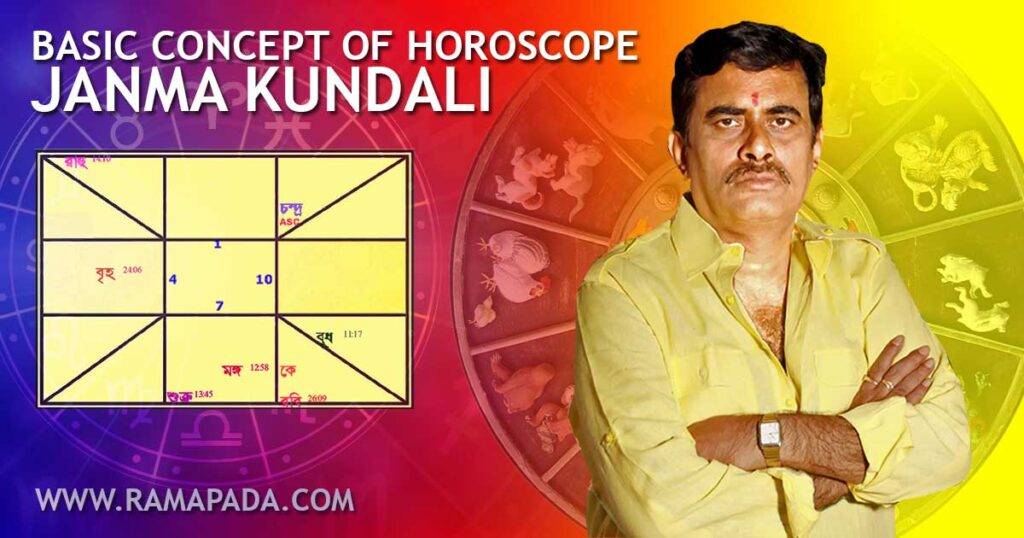
Astrology has been a guiding light for humanity for thousands of years. Among its many tools, the horoscope, also known as Janma Kundali in Vedic astrology, holds a central place. A horoscope is more than a chart of birth details; it is considered a cosmic map that reveals an individual’s destiny, personality traits, strengths, challenges, and future possibilities. Understanding the basic concept of a horoscope is essential for anyone who wishes to explore the wisdom of astrology deeply.
What is a horoscope?
A horoscope, or Janma Kundali, is a graphical representation of the sky at the exact time, date, and place of a person’s birth. It shows the positions of planets, stars, and zodiac signs in twelve distinct divisions, called houses. Each house corresponds to a different area of life, such as career, health, marriage, wealth, or spirituality.
In Vedic astrology, this chart is calculated with high precision using astronomical data. The horoscope becomes the foundation for predictions, compatibility analysis, remedies, and guidance in both personal and professional life.
Key Components of a Horoscope
1. The Twelve Houses
Each horoscope is divided into 12 houses. These represent different aspects of life:
- 1st House (Ascendant) – Personality, health, self-image.
- 2nd House – Wealth, speech, family values.
- 4th House – Home, property, emotional well-being.
- 7th House – Marriage, partnerships.
- 10th House – Career, authority, achievements.
- 11th House – Gains, income, prosperity.
The placement of planets in these houses shapes the unique life story of an individual.
2. Planets
The nine planets (Sun, Moon, Mars, Mercury, Jupiter, Venus, Saturn, Rahu, Ketu) influence different energies in life. For example, Jupiter is linked with wisdom and expansion, Venus with love and luxury, and Saturn with discipline and karmic lessons. These planets also represent opportunities and challenges in wealth creation.
3. Zodiac Signs
There are 12 zodiac signs, from Aries to Pisces, each carrying unique qualities. The signs act as a backdrop for planetary energies. For example, Mars in Aries shows courage and leadership, while Mars in Cancer may indicate emotional struggles in expressing energy.
4. Aspects and Yogas
The relationships (aspects) between planets and the unique combinations (yogas) in a horoscope add depth to interpretation. Yogas like Gaja-Kesari Yoga or Raj Yoga can indicate power, wealth, or recognition.
Importance of Horoscope in Daily Life
A horoscope is not only about predicting events; it is a spiritual guide. Some practical applications include:
- Career Guidance: Identifying suitable professions based on planetary strengths.
- Marriage Compatibility: Kundali matching ensures harmony between partners.
- Health Indications: Certain planetary placements highlight health tendencies.
- Wealth and Finance: Using financial astrology, the horoscope can reveal periods of growth, stability, or caution in money matters.
Horoscope and Timing of Events
The horoscope also connects with planetary periods (Mahadasha and Antardasha) and transits (Gochar). These determine when certain life events—marriage, career rise, property purchase, or financial success—are most likely to occur. By aligning actions with favourable planetary periods, one can maximise results and minimise challenges.
Horoscope and Spiritual Growth
While horoscopes are often used for predicting material outcomes, they also guide spiritual evolution. The 9th and 12th houses are especially linked to dharma, spirituality, and liberation. Thus, a horoscope is not just about worldly success but also about higher purpose and inner growth.
Horoscope in Modern Context
In today’s fast-paced world, horoscopes are used not only for personal predictions but also in areas like financial astrology, business planning, and even global economic forecasting. Successful investors and entrepreneurs often align their strategies with favourable planetary cycles. By combining ancient wisdom with modern needs, the horoscope remains a timeless guide.
To Summarise
The basic concept of a horoscope (Janma Kundali) is rooted in the belief that the cosmos and human life are interconnected. The positions of planets at birth act like a blueprint of destiny, offering insights into personality, relationships, wealth, and spiritual growth. Whether you seek clarity in career, finances, or life purpose, understanding your horoscope can open the door to greater self-awareness and success.
You may also read:
Law of Attraction: Authentic Astrology Service
Pranic Healing in Astrology
Reiki Healing in Astrology
Related Category: Astrology
